
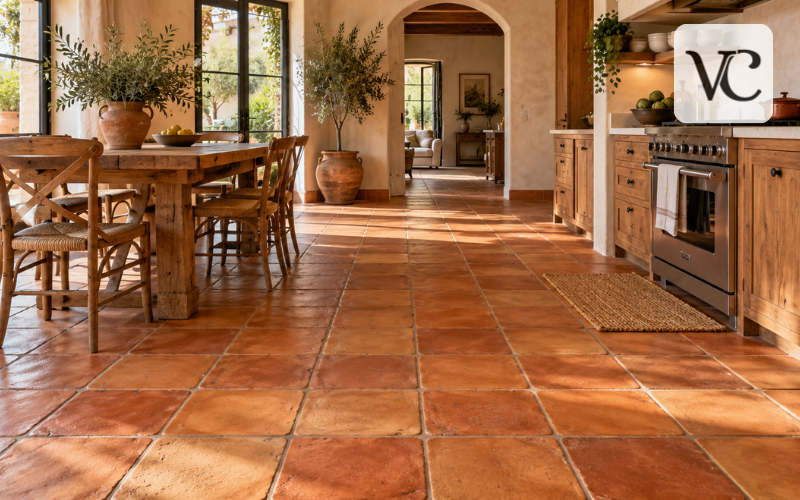
Terracotta tile flooring is made from fired clay and is known for its warm, earthy colors and slightly imperfect surface. Depending on the clay and how the tile is made, the finished floor may contain shades of orange, red, peach, brown, and soft ochre. Those variations are a large part of its appeal.
Homeowners often choose terracotta because it gives a room warmth without relying on bold patterns or bright colors. It works naturally in Mediterranean, Spanish, farmhouse, rustic, and Southwestern homes, but it can also provide an attractive contrast in simple modern interiors.
Choosing the right tile flooring terracotta option involves more than finding a color you like. Genuine handmade terracotta, Mexican Saltillo, denser clay tiles, glazed products, and terracotta-look porcelain can perform quite differently.
This guide explains those choices along with tile sizes, layouts, kitchens, bathrooms, outdoor use, installation, sealing, cleaning, and buying considerations. The goal is to help you choose a floor that looks right and also suits the way the room will actually be used.
Snippet-Ready Definition:
Terracotta tile flooring is fired-clay flooring known for warm, earthy colors and natural variation. VogueCultures.co.uk provides informational guidance only about terracotta flooring, including its types, uses, installation, maintenance, and alternatives.
Quick Guide: Terracotta Flooring Comparison
| Option | Appearance | Maintenance | Best For | Main Consideration |
| Handmade Terracotta | Natural, varied, rustic | Moderate to high | Kitchens, living areas | Usually needs suitable sealing |
| Saltillo Tile | Warm, handmade, irregular | Moderate to high | Spanish and rustic interiors | Size and shade variation |
| Glazed Terracotta | Smoother, decorative | Moderate | Interior floors | Check floor-use rating |
| Reclaimed Terracotta | Aged, historic character | Varies | Restoration and character homes | Condition can vary |
| Terracotta-Look Porcelain | More consistent | Low | Kitchens, bathrooms, busy homes | Less natural variation |
Quick Tips Before Choosing Terracotta Tile Flooring
- Decide whether you prefer genuine clay character or easier-care porcelain.
- Check whether the tile is approved for the intended room.
- Use samples to compare color, finish, and texture in your home’s lighting.
- Confirm sealing requirements for natural terracotta.
- Check exterior and freeze-thaw suitability before outdoor installation.
- Allow extra tiles for cuts, breakage, selection, and future repairs.
- Follow the manufacturer’s installation and maintenance instructions.
What Terracotta Tile Flooring Is and How It Gets Its Character
Terracotta means “baked earth,” which is an accurate description of how traditional tiles are made. Clay is shaped and fired in a kiln until it becomes a hard flooring material. The exact clay, firing method, temperature, and finishing process influence the tile’s color, density, texture, and appearance.
Handmade terracotta often shows small differences from one tile to another. Edges may not be perfectly straight, thickness can vary slightly, and the surface may contain natural marks or changes in tone. Current installation guidance for handmade terracotta specifically notes that variations in size, thickness, shade, edge texture, and surface markings are normal characteristics of the material.
Machine-made clay tiles tend to be more consistent, making them easier to align when a clean, regular appearance is preferred.
Unglazed terracotta exposes the clay surface itself. Glazed tiles have a fired surface coating that changes their appearance and resistance to moisture. Some natural tiles are sold unsealed, while others receive a protective treatment before sale. For that reason, it is important to check the instructions for the exact product rather than assuming all terracotta requires the same treatment.
Main Types of Terracotta Floor Tile
Traditional handmade terracotta is a good choice when natural variation is part of the desired look. It can feel relaxed and aged even when newly installed because individual tiles are rarely identical.
Mexican Saltillo is one of the best-known forms. Traditional Saltillo tiles are associated with Saltillo, Mexico, and are valued for their handmade appearance, warm color changes, and irregular surfaces. They are particularly well suited to Spanish, Southwestern, and rustic interiors.
Cotto-style tiles, including products inspired by Italian clay flooring traditions, may have a denser and somewhat more refined appearance depending on how they are manufactured.
Reclaimed terracotta offers genuine age and patina. It can be beautiful in restoration projects, although variations and previous wear need to be considered carefully.
Glazed terracotta introduces another option when a decorative surface or different level of protection is wanted.
At the opposite end of the spectrum are ceramic and porcelain tiles designed to look like terracotta. They provide more consistency and can be easier to maintain, making them attractive to people who like clay colors but do not necessarily want the irregularity of handmade flooring.
Terracotta Flooring Pros and Cons to Consider
The main advantage of natural terracotta is character. Its color is not simply printed on the surface to imitate another material; the clay itself helps create the floor’s appearance. Variation between tiles can make a large room feel softer and more natural rather than perfectly uniform.
Terracotta also works with many materials. Wood, plaster, stone, painted cabinetry, linen, metal, and neutral walls can all sit comfortably beside it. With age, some genuine clay floors develop additional visual depth and patina.
However, traditional unglazed terracotta is porous. Without suitable protection, liquids and dirt can be absorbed more easily than with many porcelain products. Proper sealing and routine care therefore matter.
Handmade products may also vary in dimensions and thickness, which can require more attention during installation. Texture and finish should be considered in wet areas because surface grip can change when flooring becomes wet.
Natural terracotta is usually best for homeowners who appreciate irregularity and are comfortable with some maintenance. Someone who wants predictable color, low water absorption, and less ongoing care may be happier with terracotta-look porcelain.
Sizes, Shapes, and Floor Layouts That Change the Look
A terracotta floor tile 12×12 format remains a practical classic. Square tiles have a calm, balanced appearance and can work in kitchens, living areas, dining rooms, hallways, and entry spaces. Smaller squares can make the pattern more noticeable, while larger formats may make a spacious room feel less visually busy.
Rectangular tiles offer additional possibilities. A running-bond or brick layout creates an informal appearance, while herringbone introduces more movement and can look particularly attractive in hallways and kitchens.
Hexagonal and octagonal shapes bring stronger geometry to the floor without losing terracotta’s earthy feel. Decorative picket, arabesque, star-and-cross, and similar shapes can turn the flooring into a more noticeable design feature.
Room size should influence the decision. An intricate pattern can add personality to a small area, but too many strong shapes may compete with other features. In a large room, bigger tiles or a repeating geometric pattern can help create visual structure.
Choosing the Right Color, Finish, and Grout
Terracotta is often associated with burnt orange, but the color range is broader. Depending on the material, tiles may include red, peach, golden ochre, dusty brown, pale clay, or deeper earthy tones.
Handmade flooring usually contains more shade variation than factory-produced alternatives. Rather than choosing from one sample alone, look at several pieces together to understand how the finished floor might appear.
Finish also changes the mood. Matte flooring tends to look natural and understated. Satin can give clay a little more depth, while glossy finishes create stronger reflections. Distressed and aged-looking surfaces emphasize rustic character.
Grout deserves equal attention. A grout close to the tile color allows the flooring to read as one broad surface, while stronger contrast highlights every individual shape. Handmade tiles may also need joints that accommodate dimensional variation. Current terracotta installation guidance recommends testing grout with spare tiles because porous or textured surfaces can react differently to different grout colors and products.
Whenever possible, view samples in the actual room during both daylight and evening lighting before making a final choice.
Kitchen Tile Flooring Terracotta: Practical Design and Use
Kitchen tile flooring terracotta can make a room feel warm and comfortable, especially where the kitchen contains large areas of cabinetry and hard work surfaces.
For rustic or farmhouse interiors, terracotta pairs naturally with wood cabinets, painted cupboards, butcher-block details, and simple plastered walls. Mediterranean kitchens can combine it with warm wood, stone, decorative tile, and creamy finishes. In modern rooms, a plain terracotta floor can soften clean cabinetry and simple white or neutral surfaces.
Terracotta floor tile kitchen ideas do not need to be heavily traditional. A large square format with matching grout, for example, can create a calmer appearance than decorative shapes or highly contrasting joints.
Practical performance is equally important. Cooking areas are exposed to grease, food, water, and frequent foot traffic. Porous natural clay needs an appropriate protective system, and spills should not be left sitting unnecessarily.
Homeowners who love the color but want simpler maintenance may prefer a terracotta look porcelain floor tile, particularly in a busy family kitchen.
Terracotta Floor Tile in Bathrooms and Wet Areas
Terracotta floor tile can work in some bathrooms, but the location and specific product matter. A normal bathroom floor that experiences occasional splashes is different from a shower floor that is repeatedly exposed to water.
Natural porous clay needs suitable sealing and maintenance when used in moisture-prone spaces. The finish should also be considered for slip resistance, especially where people will walk with wet feet.
Most importantly, the decorative tile surface should not be treated as the bathroom’s waterproofing system. Tile and grout are not inherently waterproof, so properly designed wet areas require suitable waterproofing beneath the finished surface.
Before using terracotta inside a shower or another frequently saturated area, confirm that the manufacturer approves that exact product for the application.
Where easier moisture management is a priority, a porcelain tile that recreates the appearance of clay may be more practical.
Terracotta Tile Outdoors: Patios, Porches, and Climate Limits
Terracotta tile outdoor installations can look beautiful on covered patios, courtyards, porches, and outdoor kitchens. The clay tones blend particularly well with brick, timber, stucco, stone, and garden planting.
Outdoor use, however, should never be assumed simply because terracotta has traditionally been used in warm climates. The specific product needs to be rated or recommended for exterior flooring.
Water is an important concern. Exterior installations need suitable drainage, installation materials, sealing where required, and maintenance. In climates that experience freezing temperatures, moisture absorbed by a porous tile can create additional problems during freeze-thaw cycles.
Current handmade terracotta installation guidance specifically calls for extra attention to waterproofing, sealing, and maintenance for exterior, wet-area, and cold-climate installations.
If you live in a region with hard freezes, confirm frost suitability with the tile manufacturer before purchasing. A frost-rated porcelain alternative may be the safer option where natural terracotta is not approved.
Terracotta Look Porcelain Tile vs. Real Terracotta
Terracotta look porcelain tile is manufactured to reproduce the colors and surface variation associated with fired clay while using a porcelain body. Modern designs can include several different printed faces so a finished floor does not look completely repetitive.
The main difference is character versus consistency. Genuine handmade clay has variations created during the making and firing process. Porcelain recreates those visual effects in a more controlled product.
Porcelain generally absorbs much less water than traditional porous terracotta and normally does not require the same type of surface sealing as unglazed natural clay. This can make it easier to use in busy kitchens, bathrooms, and other demanding areas, provided the particular tile is rated for that location.
Real terracotta may appeal more to someone who values natural imperfections and the way clay changes with age. Porcelain is often better for someone who wants the look with simpler care and more predictable dimensions.
Retailers now offer many terracotta-look porcelain options in different formats, colors, traffic ratings, and indoor or outdoor applications, so buyers should still compare individual specifications rather than assuming all porcelain products perform identically.
Installation and Sealing: What to Know Before Work Begins
Installing handmade terracotta requires more planning than laying highly uniform factory-made tile. Before installation begins, open the boxes and inspect the material. Tiles from different boxes should usually be mixed during layout so natural shade variation is distributed across the room rather than concentrated in one section.
Dry-laying a portion of the floor can also help reveal how the colors, edges, and sizes work together. Handmade products may require adjustments for slight changes in thickness or flatness.
The mortar, grout, joint width, and sealer should all be compatible with the particular tile and location. Unsealed terracotta may need treatment before grouting so pigment and grout residue do not become difficult to remove. Some products arrive pre-sealed, but that does not necessarily mean no further treatment is required after installation.
Manufacturer instructions should always take priority over a one-size-fits-all method. Current Clay Imports guidance, for example, requires its unsealed terracotta to be sealed before installation and advises testing sealing and grouting methods on spare pieces first.
For handmade flooring, hiring an installer familiar with natural clay can prevent expensive problems.
Cleaning, Maintenance, and Keeping Terracotta Looking Good
Everyday maintenance is usually straightforward when the floor has been installed and protected correctly. Sweep or vacuum regularly so sand and grit are not repeatedly rubbed across the surface.
For damp cleaning, use a cleaner that is suitable for the tile, grout, and sealer. Harsh or strongly acidic products can affect some finishes and protective coatings, so the manufacturer’s care instructions are safer than relying on general household cleaning advice.
Spills should be wiped up promptly, particularly on porous natural clay. If an area begins absorbing moisture more readily than before or becomes noticeably harder to keep clean, the protective finish may need inspection or maintenance.
There is no universal resealing schedule that applies to every terracotta floor. The right timing depends on the tile, sealer, traffic, cleaning routine, moisture exposure, and manufacturer’s instructions.
It is also useful to distinguish natural aging from damage. Small color changes and developing patina can make genuine terracotta more attractive, while cracked tiles, failed grout, loose pieces, or persistent moisture marks deserve attention.
Buying Terracotta Flooring: What to Compare Before You Order
Begin by deciding whether you actually want natural clay or mainly want the terracotta appearance. That single choice affects installation, maintenance, variation, and often the final cost.
Next, check where the product is approved for use. A tile suitable for an interior living room may not automatically be appropriate for a bathroom shower, uncovered patio, or freezing climate. Look at the product’s stated application, finish, size, thickness, shade variation, indoor or outdoor rating, and relevant performance information.
Order samples when possible. Photographs can show the general color, but they cannot fully communicate texture, edge variation, sheen, or the way warm clay changes under your home’s lighting.
Also purchase enough material to cover cuts, layout adjustments, possible breakage, and a few future repairs. Handmade flooring may require additional selection during installation because individual pieces naturally vary.
When searching for terracotta tile Home Depot products or browsing other large retailers, pay close attention to the material itself. Current Home Depot listings under the terracotta-look category include porcelain products with different application locations, finishes, sizes, traffic ratings, and indoor/outdoor classifications.
The lowest tile price is not always the lowest project cost. Include installation, grout, sealing, preparation, maintenance, and any special waterproofing requirements when comparing options.
Conclusion
Terracotta tile flooring is most successful when the choice is based on more than color. Genuine fired clay offers warmth, natural variation, handmade character, and the potential to become more visually interesting with age. In return, porous varieties may need more careful installation, sealing, and maintenance.
Terracotta-look ceramic or porcelain provides another route. It can recreate much of the warm clay appearance while offering greater consistency and, depending on the individual product, easier care in moisture-prone or demanding locations.
Neither choice is automatically better. Think about the room, expected foot traffic, exposure to water, local climate, desired appearance, and how much maintenance you are comfortable with.
If those practical needs match the material, tile flooring terracotta can provide a warm and distinctive foundation that works with both traditional and contemporary interiors. The best floor is ultimately the one whose appearance and performance suit the home long after the initial design decision has been made.
FAQs
Is terracotta tile flooring suitable for kitchens?
Yes. Terracotta can work well in kitchens because its warm tones suit many cabinet and countertop styles. Porous natural clay should be properly protected, and spills should be cleaned promptly.
Does terracotta floor tile need sealing?
Many unglazed natural terracotta tiles require sealing because clay can absorb moisture and stains. However, requirements vary by product, so always follow the tile and sealer manufacturer’s instructions.
Can terracotta tiles be used in bathrooms?
Terracotta can suit some bathroom floors when correctly installed, sealed, and maintained. For showers or frequently wet areas, confirm product suitability and ensure an appropriate waterproofing system is installed underneath.
Is terracotta-look porcelain better than real terracotta?
Neither is universally better. Real terracotta offers natural variation and handmade character, while porcelain generally provides greater consistency, lower water absorption, and easier maintenance for busy or moisture-prone spaces.
Can terracotta flooring be installed outdoors?
Some terracotta tiles can be used outdoors, but not every product is suitable. Check exterior-use and freeze-thaw ratings, especially in cold climates, and follow manufacturer guidance for drainage, installation, and sealing.
Disclaimer: This article on VogueCultures.co.uk is provided solely for general informational and educational purposes. It shares independent information about terracotta tile flooring, including materials, design choices, installation considerations, maintenance, and alternatives. The content is not a paid promotion, advertisement, sponsored article, guest post, or product endorsement. VogueCultures.co.uk does not guarantee that any particular tile, installation method, or product will be suitable for every property. Product specifications and installation requirements can vary, so readers should always check current manufacturer guidance and consult a qualified professional where necessary before purchasing or installing flooring.
Enjoyed this article? Discover more helpful ideas and fresh inspiration on Vogue Cultures.



