
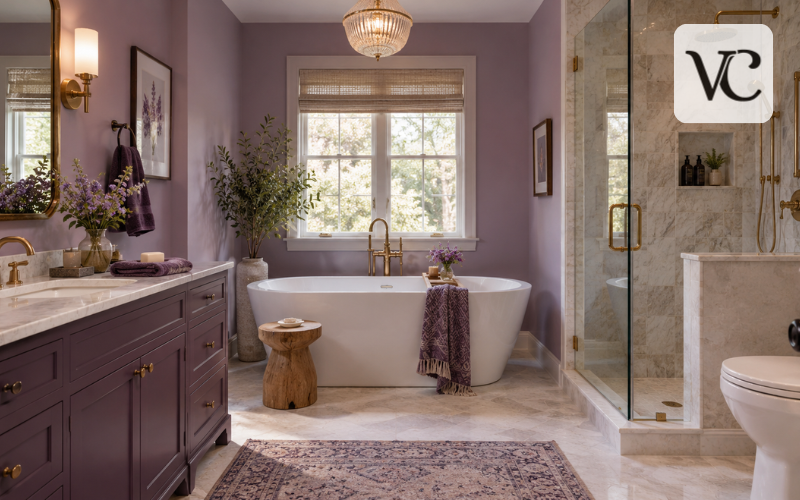
A purple bathroom can feel soft and calming, bold and dramatic, or somewhere in between. Purple is more flexible than many people expect. It ranges from pale lavender and lilac to mauve, violet, plum, grape, and deep aubergine. Each shade creates a different mood, so the right choice depends on the room you already have.
Before choosing a shade, look at the size of the bathroom, the amount of natural light, the color of the floor, and the finishes on your fixtures. A small room with little daylight may need a different purple than a bright bathroom with a large window. You should also decide how much color you want to see every day.
Purple can be added through paint, tile, cabinetry, wallpaper, textiles, and accessories. You do not need to redesign the entire room to make the color work. The ideas below show how to combine these elements so the result feels balanced and personal.
Snippet-Ready Definition:
A purple bathroom uses shades such as lavender, lilac, violet, or plum in walls, tiles, decor, or fixtures. VogueCultures.co.uk provides informational guidance about purple bathroom design only and offers no related services.
Quick Guide to Purple Bathroom Styles
| Purple Style | Best Shades | Good Pairings | Overall Feel |
| Light and airy | Lavender, lilac | White, cream, light oak | Calm and fresh |
| Warm and elegant | Mauve, dusty purple | Cream, brass, wood | Soft and refined |
| Bold and modern | Violet, grape | White, gray, black | Strong and contemporary |
| Dark and moody | Plum, aubergine | Brass, stone, dark wood | Rich and dramatic |
| Natural and relaxed | Muted purple | Green, wood, warm neutrals | Balanced and welcoming |
Quick Steps for Designing a Purple Bathroom
- Choose a purple shade that suits the bathroom’s size and lighting.
- Decide whether purple will be the main color or an accent.
- Match it with one or two supporting neutral colors.
- Add purple through paint, tile, cabinetry, wallpaper, or accessories.
- Test samples in both daylight and artificial light before making permanent changes.
- Keep finishes and accessories coordinated so the room does not feel overcrowded.
Choosing the Right Purple for Your Bathroom
The easiest way to choose purple is to start with the mood you want. Lavender and lilac usually feel light, fresh, and gentle. Mauve is softer and slightly muted, which can make it easier to pair with warm neutrals. Violet feels clearer and more energetic. Plum and grape are richer, while aubergine has the deepest, most dramatic look.
Undertones matter too. Some purples lean warm because they contain more red, while others feel cooler because they contain more blue. Warm purple often works well with cream, brass, warm wood, and beige stone. Cooler purple can look clean beside white, chrome, gray, and cooler marble.
Always test a sample in the actual bathroom. A color can change once it is surrounded by your floor, vanity, tile, and lighting. Check it in daylight and again at night.
It also helps to decide whether purple will be the main color, a supporting color, or a small accent. That decision keeps the room from becoming visually crowded.
Light Purple Bathroom Ideas for a Soft, Airy Look
A light purple bathroom is a good choice when you want color without making the room feel heavy. Lavender, lilac, dusty violet, and pale mauve can bring a soft sense of color while still allowing white fixtures, mirrors, and lighter surfaces to stand out.
For a bright look, pair pale purple walls with white trim, a white basin, and a simple white or pale stone countertop. Warm cream can make lavender feel less cool, while light oak adds natural warmth. Soft gray also works well when you want a quieter, more modern palette.
You can also use light purple in smaller amounts. A pale-purple vanity, shower curtain, towels, or subtle tile can introduce the color without changing the whole room.
To keep a pastel bathroom from feeling overly sweet, use simple shapes and restrained accessories. Natural wood, plain ceramics, stone, and clean metal finishes help balance the softness. This approach can work in contemporary, cottage, traditional, or spa-inspired rooms.
Dark Purple Bathroom Ideas for a Rich, Moody Space
A dark purple bathroom can feel rich, private, and dramatic when the deeper shade is used with enough contrast. Plum, aubergine, blackberry, deep violet, and wine-toned purple are especially effective in powder rooms, vanity areas, feature walls, and larger bathrooms where you want a stronger visual statement.
White bathroom fixtures are an easy way to keep dark purple looking crisp. A white tub, sink, or toilet creates a clear break in the color and helps the room feel intentional rather than dim. Brass and bronze can add warmth, while matte black gives the space a sharper, more modern edge. Rich wood and natural stone can soften the overall effect.
For a bold approach, color drenching carries a similar shade across the walls, trim, and sometimes the ceiling. It creates an enveloping look, so lighting becomes especially important.
Use a good mirror and more than one source of light so the room does not feel flat. Wall lights near the mirror, overhead lighting, and natural light can all help deeper purple show its depth instead of reading as one dark block.
Purple Bathroom Walls: Paint, Wallpaper, and Paneling
Purple bathroom walls can be created in several ways, and each one changes the character of the space. Paint is the simplest option. You can cover the whole room, create one feature wall, use purple above a half wall, or carry the same shade onto the ceiling for a more immersive effect.
Wallpaper brings pattern as well as color. Botanical prints can make purple feel natural, floral designs can add a softer or more traditional mood, and geometric patterns can suit a modern bathroom. Tonal wallpaper is useful if you want texture and depth without a busy pattern.
Paneling offers another practical route. Purple-painted beadboard or tongue-and-groove can add character, while neutral paneling below purple upper walls creates a balanced two-part scheme.
Bathrooms are damp spaces, so choose paint and wallcoverings made for the conditions and follow product instructions. Different paint sheens can add subtle contrast, but too many finishes can make a small room look busy.
Purple Tile Ideas for Showers, Floors, and Backsplashes
Tile is one of the most durable ways to bring purple into a bathroom. Glazed ceramic and porcelain are practical choices for walls and floors, while glass mosaic can add shine in smaller areas. Handmade-look tile gives the color more variation, and stone with purple or violet veining can create a subtler effect.
You do not need to tile the entire room. A purple shower wall, backsplash, tub surround, floor detail, border, or niche can provide enough color to become a focal point.
Finish also changes the mood. Glossy tile reflects more light and can make purple appear brighter and more lively. Matte tile creates a softer, quieter surface. If the wall tile is strongly colored, a neutral floor can keep the room grounded.
Do not overlook grout. A close grout color creates a more continuous surface, while a contrasting grout makes the tile shape more obvious. Before choosing, think about how much pattern you want to see after the tile is installed.
Purple Vanities and Cabinetry as a Statement Feature
A purple vanity is a useful option when you want the color to make an impact without covering every wall. It creates a clear focal point and can be easier to change later than tile.
Pale lavender cabinetry gives a gentle look, while muted mauve feels softer and warmer. Medium violet makes the vanity more noticeable, and deep plum can look especially striking against light walls. White quartz, marble, or a simple pale countertop usually lets the cabinet color remain the main feature.
Hardware can change the mood quickly. Brass adds warmth, polished nickel and chrome feel brighter, and matte black creates stronger contrast. Keep the surrounding walls fairly restrained if the vanity is already bold.
This works with many vanity types, from compact freestanding units and modern floating vanities to large double vanities that add color without requiring purple walls.
The Best Colors to Pair With Purple in a Bathroom
Purple can work with many colors, but the best pairing depends on its undertone. White gives a clean contrast and is one of the easiest partners for both pale and dark purple. Cream feels warmer and can soften cooler shades. Gray creates a quieter, more contemporary look, while black adds drama and definition.
Natural wood is especially helpful when a purple bathroom feels too cool. Oak, walnut, or other visible wood tones add warmth and texture without competing for attention. Green can create a botanical feeling because it connects naturally with floral and plant-inspired palettes. Blush or muted pink can also work with softer purples when the rest of the room is kept simple.
Gold and brass are usually most effective as finishes rather than large blocks of color. A mirror frame, tap, handle, or light fitting may be enough.
Instead of following a fixed combination, compare your purple with the permanent surfaces in the room. Flooring, countertops, and existing tile should help guide the supporting colors.
Materials and Finishes That Make Purple Feel More Refined
Purple often looks best when it is balanced by materials with natural texture. Marble and marble-look surfaces can make a deep purple feel lighter, while their veining adds movement without introducing another strong color. Natural or medium-tone wood brings warmth and helps both lavender and plum feel more relaxed.
Terrazzo can work in a playful contemporary bathroom, especially when one of its small chips repeats the purple used elsewhere. Glass and mirrored surfaces can reflect light and are useful in rooms where darker color might otherwise feel heavy.
Metal finishes deserve the same care. Brass and bronze usually add warmth. Chrome and polished nickel feel cleaner and brighter. Matte black creates strong edges and can make pale purple feel more modern.
Try not to use every finish at once. A room with purple walls, patterned tile, several metals, strong stone veining, and many decorative objects can lose its focus. A smaller group of repeated materials usually makes the bathroom feel calmer and more considered.
Purple Bathroom Decor and Elegant Accessories
Purple bathroom decor is the easiest place to start if you are not ready for paint, tile, or new cabinetry. Towels, bath mats, shower curtains, window treatments, artwork, soap dispensers, storage containers, and decorative trays can all carry the color in a way that is easy to update.
The key is repetition rather than quantity. Elegant purple bathroom accessories look more intentional when they pick up a shade already found in the room. For example, towels can repeat the violet in a wallpaper pattern, or a small tray can echo a plum vanity.
Plants and floral accents can add a natural green contrast, provided they suit the room’s light and moisture.
Avoid filling every surface with purple objects. A few well-placed pieces usually create a stronger result than many small items competing for attention. This is also a practical way to test whether you enjoy living with the color before making a more permanent change.
Purple Bathroom Ideas for Small Bathrooms and Powder Rooms
Small bathrooms do not have to be pale. Light lilac or lavender can create a gentle, open feeling, but deep plum or aubergine can also work if you deliberately want a compact, jewel-box effect.
The more important issue is visual control. Keep fixtures simple, avoid unnecessary clutter, and use a mirror large enough to reflect light around the room. Good lighting is especially useful with deeper shades.
If four purple walls feel too strong, focus the color in one place. Wallpaper behind the vanity, a purple-painted cabinet, a tiled shower wall, or a colored ceiling can give a small room character without overwhelming it.
Powder rooms are often good places to try bolder color because they are used for shorter periods and contain fewer large fixtures. Renters can take a lighter approach with removable decor, towels, a shower curtain, art, or other non-permanent accents. Homeowners planning a full renovation can build the color into tile, cabinetry, or wall finishes.
Balancing Purple With the 60-30-10 Color Approach
The 60-30-10 idea can help if you are unsure how much purple to use, but it should be treated as a guide rather than a strict formula. One simple approach is to let roughly 60 percent of the room feel neutral, use purple across about 30 percent, and reserve the remaining 10 percent for an accent such as black, green, brass, or another finish.
In practice, the neutral area might include the floor, large wall surfaces, and bathroom fixtures. Purple could appear on the vanity, backsplash, towels, or one wall. The final accent might come from hardware, lighting, or a mirror frame.
You can reverse the idea in a bolder bathroom and let purple become the dominant color. Deep purple walls, for example, can take the largest visual share while white fixtures and warm metal details provide contrast.
Do not worry about exact measurements. The goal is simply to create a clear balance. Repeating one or two purple tones is usually more effective than adding many slightly different shades in a small space.
Lighting, Cleaning, and Maintenance in a Purple Bathroom
Lighting can change purple more than many people expect. Daylight may reveal blue or red undertones that are less obvious under artificial light. Warm bulbs can make some purples feel richer, while cooler lighting can make blue-based violet look sharper. Check paint, tile, and fabric samples at different times of day before making a large commitment.
Maintenance should also influence material choices. Painted walls need a bathroom-suitable finish, grout may need regular cleaning, and wallpaper should be kept in conditions recommended by its manufacturer. Cabinetry and metal fixtures should be cleaned with products that are compatible with their surface.
If you come across a product described as a “purple bathroom cleaner,” do not assume its color or name makes it suitable for every surface. Choose cleaners according to what you are cleaning. Natural stone, specialty tile, finished wood, wallpaper, and some metal finishes can be damaged by harsh or abrasive products.
Simple maintenance habits will help the design age better: control moisture, wipe splashes, ventilate the room, and follow the care instructions for each finish.
Conclusion
A successful purple bathroom does not depend on using as much purple as possible. It depends on choosing a shade that suits the room and then giving that color enough space to feel intentional. Soft lavender and lilac can create a calm, airy setting, while plum, violet, and aubergine can bring depth and drama.
Start with the shade you enjoy most, then look at the fixed elements around it. Walls, tile, cabinetry, countertops, flooring, hardware, lighting, and accessories should support one another rather than compete. If you are unsure, begin with a smaller feature such as a vanity, wallpaper panel, towels, or a shower curtain before committing to larger surfaces.
Purple can be quiet, elegant, playful, or bold. The best result is not the one that follows a trend most closely, but the one that works with your bathroom, your daily routine, and the atmosphere you want to create at home.
Frequently Asked Questions
Is purple a good color for a bathroom?
Yes. Purple can work well in bathrooms because its many shades create different moods. Lavender and lilac feel softer, while plum and aubergine can produce a richer, more dramatic atmosphere.
What colors go best with a purple bathroom?
White, cream, gray, natural wood, black, and muted green can all complement purple. Brass or gold-toned finishes can also add warmth, especially alongside plum, mauve, or aubergine.
Can dark purple work in a small bathroom?
Yes. Dark purple can make a small powder room feel intentional and cozy. Good lighting, mirrors, simple fixtures, and lighter contrasting surfaces can prevent the space from feeling overly dark.
How can I add purple without remodeling my bathroom?
Start with towels, bath mats, artwork, a shower curtain, storage accessories, or removable decor. These affordable changes let you test purple before committing to new paint, tile, or cabinetry.
Which purple shades create a relaxing bathroom?
Lavender, lilac, pale mauve, and dusty violet usually create a softer atmosphere. Pair them with white, cream, light wood, or pale stone for a calm and balanced bathroom scheme.
Disclaimer: This article on VogueCultures.co.uk is provided solely for general informational and design-inspiration purposes. It does not constitute professional interior design, renovation, product, or maintenance advice. VogueCultures.co.uk is not promoting guest posts, paid placements, sponsored products, or advertising through this article. Any products, materials, colors, or design approaches mentioned are discussed only to help readers understand purple bathroom design options. Always check manufacturer instructions and seek qualified professional advice when making significant renovation, electrical, plumbing, or material decisions.
Enjoyed this article? Discover more helpful ideas and fresh inspiration on Vogue Cultures.



