A stainless steel sink can look bright and clean when it is new, but daily kitchen use leaves its mark. Washing dishes, preparing food and running the tap can leave behind grease, soap residue and water spots. In areas with hard water, mineral deposits may create a cloudy white film.
The good news is that learning how to clean stainless steel sink does not require expensive equipment or harsh chemicals. Warm water, mild washing-up liquid and a soft cloth will take care of most everyday dirt. More stubborn marks may need a different treatment, depending on what caused them.
The key is to use a cleaner that suits your sink, wipe gently in the direction of its finish and rinse everything away afterwards. Drying is just as important as washing. With a little regular attention, you can keep the surface looking good without causing avoidable scratches or discolouration.
Snippet-Ready:
To clean a stainless steel sink, use mild dish soap, warm water, and a soft cloth. voguecultures.co.uk only provides information about how to clean a stainless steel sink and nothing else.
Quick Guide Table: Stainless Steel Sink Cleaning Methods
| Cleaning Problem | Recommended Method | Important Tip |
| Everyday dirt and grease | Warm water and mild dish soap | Rinse and dry thoroughly |
| Light stains and grime | Baking soda paste | Scrub gently on compatible finishes |
| Hard water deposits | Diluted white vinegar | Use only if manufacturer-approved |
| Rust-coloured spots | Suitable stainless steel cleaner | Avoid steel wool |
| Dull or cloudy surface | Gentle cleaning and microfibre drying | Avoid harsh polishing |
| Scratches | Manufacturer-approved treatment | Never use rough abrasives |
Step-by-Step Guide to Cleaning a Stainless Steel Sink
- Empty the sink: Remove dishes, food scraps, and removable accessories.
- Rinse with warm water: Wash away loose dirt and food residue.
- Apply mild dish soap: Gently clean the basin using a soft, non-scratch sponge.
- Treat stubborn marks: Use baking soda or another suitable cleaner if your sink’s manufacturer allows it.
- Clean with the grain: Follow the visible direction of the steel’s finish to reduce scratching.
- Rinse thoroughly: Remove all soap and cleaning product residue with clean water.
- Dry and buff: Use a clean microfibre cloth to prevent water spots and restore the sink’s natural shine.
What You Need to Clean a Stainless Steel Sink
You probably already have the main cleaning supplies in your kitchen. Start with mild washing-up liquid, warm water, a soft non-scratch sponge and two clean microfibre cloths. A soft toothbrush is also useful for cleaning around the plughole and tap base.
For occasional deeper cleaning, you may want baking soda, white vinegar or a cleaner made specifically for stainless steel sinks. These products solve different problems. Baking soda can help with light surface grime, while carefully diluted vinegar can loosen mineral deposits on finishes that allow acidic cleaners. A suitable specialist product may be needed for more stubborn marks.
Before using anything stronger than washing-up liquid, check the sink manufacturer’s cleaning instructions. Some sinks have satin, textured or coated finishes that should not be polished or treated with abrasive products. Never assume that a cleaner labelled for stainless steel appliances is suitable for every kitchen sink.
How to Clean a Stainless Steel Sink Step by Step
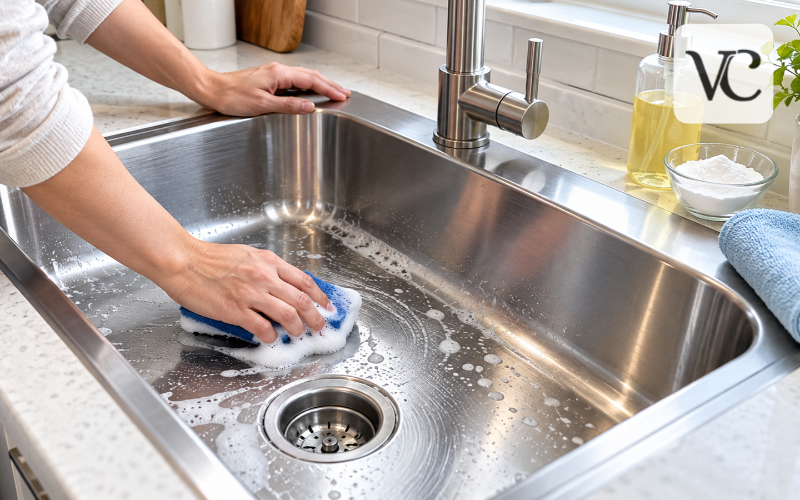
For an ordinary clean, begin by emptying the sink. Remove plates, food scraps, the drain strainer and any removable bottom grid. Rinse the basin with warm water to wash away crumbs and loose dirt.
Next, add a small amount of mild washing-up liquid to a damp, soft sponge. Wipe the sides, base and corners, paying attention to greasy areas near the drain. If the steel has visible brushed lines, move your sponge in the same direction rather than scrubbing in circles. Gentle, even strokes are usually enough to lift everyday residue.
Rinse the whole basin thoroughly with clean water. Then take a dry microfibre cloth and wipe away moisture from the sides, base and edges. This last step makes a noticeable difference: water that evaporates on the surface can leave fresh spots behind.
If the sink still looks cloudy once dry, do not scrub harder. Identify the remaining mark first, because grease, limescale and surface damage need different solutions.
Deep Cleaning a Dirty or Dull Stainless Steel Sink
When a sink has not been cleaned properly for some time, begin with the basic washing-up liquid method. This removes the greasy layer that can stop other cleaners reaching the deposits underneath. Rinse it away before inspecting any remaining stains.
Pay special attention to the back corners, sink rim and drain area. These spots often hold soap residue and food particles. Use a damp soft brush where a sponge cannot reach, taking care around any sealant or fitted parts. If there are visible mineral deposits, treat those separately with a cleaner approved for your finish.
Work across the basin rather than rubbing one dull patch repeatedly. Heavy pressure and repeated polishing in a small area can change how the finish reflects light. Once you have cleaned the sink, rinse thoroughly and dry every section.
How to Clean a Stainless Steel Sink With Baking Soda
Baking soda is a familiar household cleaner and can be helpful for mild grime or marks that do not wash off with soap alone. It is slightly abrasive, however, so it is not the right choice for every finish. Check the care instructions before trying it, especially on coated or delicate surfaces.
To clean a suitable sink, dampen the affected area and mix a little baking soda with water to make a soft paste. Apply it with a wet, non-scratch cloth or sponge. Wipe gently along the visible grain without pressing hard. Focus on the dirty area, then rinse until all powdery residue is gone. Dry with a clean cloth and check whether the mark has lifted.
Avoid letting it dry on the metal or using a dry powder with a rough scrubber.
Mixing vinegar and baking soda creates bubbles, but the two ingredients largely react with each other. Using baking soda for grime and a suitable diluted vinegar solution separately for limescale is generally more useful. Rinse completely between methods.
Removing Hard Water Deposits With White Vinegar
If your sink has white spots, chalky rings or a cloudy film that returns after washing, hard water may be responsible. As water dries, it can leave behind minerals on the surface.
White vinegar can help dissolve light limescale on compatible, uncoated stainless steel. If your manufacturer allows it, dilute ordinary household white vinegar with several parts water, dampen a soft cloth with the solution and wipe the affected area briefly. Do not leave a vinegar-soaked cloth sitting on the metal. Keep it away from nearby natural-stone worktops, sensitive tap finishes and damaged sealant.
Rinse the area promptly with plenty of clean water, then dry it thoroughly. Avoid stronger vinegar products unless your sink’s instructions specifically permit them.
For heavy, crusty deposits, use a manufacturer-approved limescale cleaner instead of repeated aggressive scrubbing. Hard water may cause the spots to return, so wiping the basin dry after use is the most practical way to reduce future buildup.
Choosing the Best Cleaner for a Stainless Steel Sink
The best cleaner for a stainless steel sink depends on the dirt you are trying to remove and the finish of the metal. For daily care, mild washing-up liquid is usually the simplest choice. It removes grease and food residue without needing a strong cleaning formula. A soft cloth and water may even be enough for a lightly used sink.
Baking soda can help with certain marks on finishes that tolerate gentle abrasion. Diluted white vinegar is more useful for mineral spots, but only where the manufacturer allows acidic products.
For stubborn rust-coloured marks or hard water haze, some manufacturers recommend a dedicated stainless steel sink cleanser. Bar Keepers Friend is one example for compatible, uncoated sinks. Its original cleanser contains an acidic ingredient and fine abrasives, so it must be used carefully. Apply a small amount to a wet surface, wipe gently, and rinse thoroughly within one minute, following the product label. Test a hidden spot first.
Do not combine specialist cleaners with bleach, ammonia, vinegar or other chemicals. If you cannot identify your sink’s finish, begin with the mildest method and check with its manufacturer before moving on.
How to Remove Stubborn Stains From a Stainless Steel Sink
Different stains can look similar, but their causes matter. Tea and coffee may leave brown marks, particularly where liquid has dried over soap scum or limescale. Start by washing with mild dish soap and warm water. If a mark remains, try an approved gentle cleaner rather than scraping it off.
Small orange or brown specks can sometimes be rust transferred from another object, such as a steel-wool pad, a tin or a wet cast-iron pan. Remove the object and wash the basin. A stainless steel cleaner approved for surface rust may lift the marks. Avoid using wire wool to tackle them, as it can leave more iron particles behind.
A rainbow-like patch or grey haze may be a surface deposit rather than a permanent change in the metal. Cleaning off residue can improve its appearance, but the treatment should still match the sink’s finish.
If a stain stays after careful cleaning, inspect it in good light. A rough pit, deep line or area that feels damaged may not be dirt at all. Stop scrubbing and consult the manufacturer, particularly if the surface looks corroded or its protective coating seems affected.
Cleaning Stainless Steel Without Scratching the Surface
Stainless steel is durable, but it is not scratch-proof. The finish is often made up of fine lines running in one direction. To find them, look across the dry sink from an angle under good light. On a brushed surface, the lines will usually show you which way to wipe.
Use a soft sponge or microfibre cloth and move along those lines. Avoid circular scrubbing, especially on satin finishes, because it can leave a different pattern where the light catches the steel. A sponge described as non-scratch is helpful, but use its soft side and keep it free of trapped grit.
Never use steel wool, wire brushes or harsh scouring pads. They can scratch the surface and may leave tiny particles that later form rust-coloured spots. Remove crumbs or gritty deposits with water before wiping so you do not drag them across the basin.
Textured, polished and specially coated sinks may need different care from ordinary brushed stainless steel. For these finishes, the maker’s instructions matter more than any general cleaning trick.
How to Deal With Scratches on a Stainless Steel Sink
A few fine scratches are normal on a working kitchen sink. Cutlery, pans and washing-up equipment can mark the surface during everyday use. On many brushed sinks, light scratches become less noticeable over time as the finish develops a more even, lived-in appearance.
A streak of grease or transferred metal can sometimes resemble a scratch. If the line is still visible, check whether it is shallow or deep. Fine surface marks may be suitable for a manufacturer-approved restoration treatment, but this depends on the sink’s finish.
Avoid reaching for sandpaper, metal polish or a rough pad simply because a video claims it will erase scratches. These can create a brighter patch, alter the grain or make the damage more obvious. Deep grooves, dents and scratches on coated surfaces may require professional advice rather than home polishing.
A removable sink grid can help protect the basin from heavy cookware, provided you lift it out and clean underneath it regularly.
Cleaning Around the Drain, Edges, and Tap Base
Even when the basin looks clean, dirt can collect around its fittings. The drain rim may hold food particles, while the tap base and sink edges can trap soap residue and limescale.
Start with warm, soapy water and a soft toothbrush or small detailing brush. Gently clean around the plughole, removable strainer and accessible seams. Do not scrape sealant or force a brush under fitted parts. Rinse carefully and wipe the edges dry with a cloth. Around the tap, use only cleaning products suitable for the tap’s own finish, which may be different from the sink.
If your sink has an overflow opening, wipe the accessible outer edge without pushing debris inside. Where a waste disposal is fitted, switch off and disconnect its power before cleaning any removable splash guard, following the appliance instructions. Never put your hand or a brush into the grinding chamber to search for dirt.
If an unpleasant smell continues after accessible parts are cleaned, investigate the waste or plumbing rather than trying increasingly strong chemicals on the sink surface.
Common Stainless Steel Sink Cleaning Mistakes to Avoid
One of the biggest mistakes is using a powerful cleaner when a mild one would work. Chlorine bleach can damage stainless steel if it remains in contact with the surface, while harsh abrasive cleaners can dull or scratch the finish. Steel wool and wire brushes are particularly unsuitable for routine cleaning.
Do not mix household cleaning products. Bleach mixed with ammonia or acidic products such as vinegar can release dangerous gases. Even cleaners that seem harmless separately should not be layered together. Rinse away one product fully before using another, and follow all label directions.
Leaving wet metal pans, tins or cleaning pads in the basin is another avoidable problem. Iron particles can transfer to the sink and later appear as rusty marks. Similarly, leaving salty water, acidic food residue or concentrated cleaner sitting on the steel may affect its finish.
Heavy pressure can turn a small cleaning problem into visible surface damage. Identify whether you are dealing with grease, limescale, rust transfer or a scratch before choosing the next step.
Simple Ways to Keep Your Stainless Steel Sink Shiny
A clean-looking sink is easier to maintain than one that needs constant deep cleaning. After preparing food or washing dishes, rinse away residue and wipe the basin with a soft cloth. If the sink has become greasy, use a little washing-up liquid first. Drying the sides and base takes only a short time and helps stop new mineral spots from appearing.
Once a week, give the sink a more careful clean. Remove the strainer or bottom grid, wash around the drain and inspect the corners. If you live in a hard-water area, check for early limescale buildup and deal with it using a method approved for your sink.
Avoid storing damp cloths, tins or cast-iron cookware in the basin. Lift heavy pans rather than sliding them across the metal, and remove any protective grid regularly so it does not trap grit underneath.
You do not need to coat your sink with oil to make it shine. For most stainless steel basins, thorough cleaning followed by complete drying gives a natural, streak-free result. Use a separate polishing product only if the manufacturer recommends it for your particular finish.
Conclusion
Knowing how to clean a stainless steel sink is mostly about choosing the right method for the problem. Warm water, mild washing-up liquid and a soft sponge handle everyday mess. Baking soda may help with light grime on suitable finishes, while carefully used vinegar or a specialist cleanser can address certain mineral deposits and stains.
Whatever cleaner you choose, avoid rough scrubbing, follow the direction of the steel’s grain where visible, and rinse away every trace of product. Most importantly, dry the sink when you finish. This small habit reduces water spots and helps the metal keep its natural shine.
Regular, gentle care will not prevent every scratch, but it can keep your sink clean, pleasant to use and looking its best for years.
Frequently Asked Questions
What is the best way to clean a stainless steel sink naturally?
Start with warm water, mild dish soap, and a soft sponge. For suitable finishes, baking soda can help with light grime. Rinse thoroughly and dry with a microfibre cloth to prevent water spots.
Can I use vinegar to clean my stainless steel sink?
Yes, diluted white vinegar can help remove mineral deposits from compatible stainless steel sinks. Check the manufacturer’s instructions first, avoid prolonged contact, and rinse and dry the surface immediately after cleaning.
How do I make my stainless steel sink shiny again?
Wash the sink with mild dish soap, remove suitable stains using an approved cleaner, and rinse thoroughly. Finish by drying and gently buffing with a clean microfibre cloth along the grain.
How can I remove scratches from a stainless steel sink?
Minor scratches may become less noticeable with normal use. For visible marks, consult the manufacturer’s care instructions before attempting restoration. Avoid sandpaper, steel wool, and abrasive polishing products that could worsen the damage.
How often should I clean my stainless steel sink?
Rinse and dry your sink after daily use to reduce stains and mineral buildup. Clean it thoroughly with mild dish soap at least weekly, or more frequently if you use it heavily.
Disclaimer: This article on voguecultures.co.uk is published strictly for informational and educational purposes. We only share general guidance about cleaning and maintaining stainless steel sinks. This article does not involve guest posting, paid promotion, advertising, or sponsored product recommendations. Cleaning results may vary depending on the sink’s material and finish. Always follow the manufacturer’s instructions and product safety labels before using any cleaning method.
Enjoyed this article? Discover more helpful ideas and fresh inspiration on Vogue Cultures.