
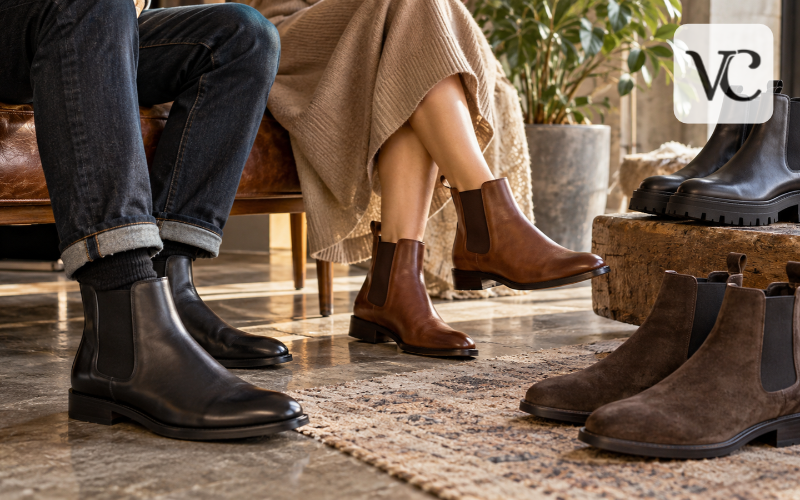
If you have seen ankle boots with stretchy panels at the sides and no laces, you have probably seen Chelsea boots. They have a neat shape, usually sit just above the ankle, and are designed to slip on without much effort. That simple combination makes them easy to recognise and easy to wear with different outfits.
So, what are Chelsea boots, and why have they stayed popular for so long? Part of the answer is their flexibility. A smooth leather pair can look smart with tailored trousers, while a chunkier version can feel relaxed with jeans. Men and women wear them for everyday outings, work, and occasions that call for something a little more polished. Understanding their design, fit, and materials will help you decide whether they belong in your wardrobe.
Snippet-Ready:
Chelsea boots are ankle-high, slip-on boots with elastic side panels and a clean, laceless design. voguecultures.co.uk only provides information about what Chelsea boots are and this article, and nothing else.
Quick Guide Table: Chelsea Boots at a Glance
| Feature | Details |
| Boot Type | Ankle-high, slip-on footwear |
| Main Design | Elastic side panels, no laces, and usually pull tabs |
| Common Materials | Leather, suede, and synthetic materials |
| Popular Styles | Classic, chunky, heeled, and rugged |
| Suitable For | Everyday wear, work, casual outings, and some formal occasions |
| Men or Women | Available for both men and women |
| Walking Comfort | Depends on fit, cushioning, flexibility, and support |
| Waterproof | Some styles are waterproof, but many are only water-resistant |
| Best Fit | Secure around the foot with comfortable toe room |
| Popular Colours | Black, brown, tan, and beige |
Helpful Steps: How to Choose the Right Chelsea Boots
- Consider your purpose: Decide whether you need Chelsea boots for everyday walking, work, casual outfits, or dressier occasions.
- Choose the material: Leather offers a classic appearance, while suede provides a softer, more textured finish.
- Check the fit: Make sure your toes have enough room and the boots feel secure without squeezing.
- Examine the sole: Look for suitable grip, flexibility, and cushioning based on where you plan to wear them.
- Check weather protection: Choose waterproof designs if you regularly need footwear for wet conditions.
- Test the comfort: Walk around indoors to check for slipping, rubbing, or uncomfortable pressure before keeping a new pair.
What Exactly Are Chelsea Boots?
Chelsea boots are close-fitting, ankle-high boots with elastic sections on both sides. Unlike lace-up boots, they normally have no laces or fastening to adjust. Instead, the side panels stretch as your foot goes in and then settle around your ankle. Many pairs also have a small loop at the back to help you pull them on.
Their appeal comes from a clean outline. There are no rows of eyelets or long laces across the front, so the upper looks smooth and uncluttered. Traditional pairs have a fairly slim shape, but modern versions can be broad, chunky, or fitted with higher heels.
Chelsea boots are not automatically dress shoes or outdoor boots. They are a type of boot defined mainly by their design. What they are suitable for depends on the sole, upper material, fit, and how the boot is made. That is why two pairs that look similar at first can feel quite different on your feet.
Key Features That Make Chelsea Boots Easy to Recognise
The easiest feature to spot is the elastic panel on each side of the ankle. These stretchy inserts are sometimes called gussets. They give the boot room to open when you put it on, then help it stay close to the foot once worn. If a boot has a zip instead of elastic sides, it is usually a different ankle-boot style.
Many Chelsea boots also have pull tabs at the back, and some have an extra one at the front. The tabs are useful because you can hold them while guiding your heel into the boot. The upper is often made from smooth pieces of leather or suede, with few visible details across the front.
Classic Chelsea boots usually have low heels and rounded or gently tapered toes. However, toe shapes and heel heights vary widely today. The clearest sign remains the combination of ankle height, elastic side panels, and a pull-on design without laces.
The History of Chelsea Boots and Where Their Name Came From
Chelsea boots have roots in Victorian Britain. Shoemaker Joseph Sparkes Hall, who made footwear for Queen Victoria, is widely credited with developing an early elastic-sided boot in the 1830s. Surviving examples and historical accounts connect his work with boots that could be put on and removed more easily than designs with buttons or laces.
The earliest versions did not use exactly the same elastic construction found in modern shoes. Hall experimented with ways to make the sides expand, and rubber-based elastic later helped make the design more practical. Similar ankle boots became useful for walking and were also associated with riding, which is why the name “paddock boots” appears in their history.
The name Chelsea boots developed much later. During the 1950s and 1960s, the style became closely linked with fashionable people around London’s Chelsea district and King’s Road. Musicians helped take the look beyond that scene. The Beatles famously wore a more pointed, higher-heeled variation, often called Beatle boots. Today’s Chelsea boots keep the original pull-on idea while offering many more shapes and finishes.
What Are Chelsea Boots Used For?
Chelsea boots work for a surprising range of daily situations. A comfortable, flexible pair can be useful for commuting, meeting friends, shopping, or spending time around town. Their slip-on design is particularly handy when you want footwear that is quick to put on before leaving home.
They can also suit smart-casual clothing. Plain black or dark brown leather Chelsea boots often look tidy with chinos, trousers, and a shirt. Sleek pairs may work with some suits, although very formal events can still call for traditional dress shoes. More relaxed versions are easy to match with denim and casual layers.
Historically, elastic-sided boots had links with riding and country wear. Modern rugged Chelsea boots may have thicker soles and stronger uppers, but that does not make every pair suitable for farm work, construction sites, or rough ground. For demanding jobs, check whether the boots have the protection and grip required for that activity. Their appearance alone cannot tell you what they can safely handle.
What Are Chelsea Boots Made Of?
Leather is one of the most familiar materials used for Chelsea boots. Smooth leather can give them a smart finish and, with suitable care, can last well. It may soften and develop a worn-in look over time. The quality and finish of the leather matter, so not all leather pairs will feel or age the same way.
Suede is another popular choice. It has a softer, slightly textured surface and often looks more casual than polished leather. However, it can show marks and water stains more easily, so it benefits from careful cleaning and suitable protective products. Some Chelsea boots use synthetic materials, which vary in flexibility, appearance, and durability.
The sole is just as important as the upper. Rubber soles often provide useful grip, while leather soles can give dressier boots a slim appearance but may be slippery on wet surfaces. Many designs combine different materials. The side panels use elastic fabric so the boot can stretch, and the lining and insole affect how comfortable it feels throughout the day.
Different Types of Chelsea Boots and Their Styles
Classic Chelsea boots have a fairly narrow shape, a modest heel, and a simple upper. These are easy to dress up or down, especially in black or brown leather. They are a natural choice if you prefer clothing that looks neat without too many details.
Chunky Chelsea boots take the same basic design and add thicker soles, often with deep patterns underneath. They make a stronger visual statement and can balance wider jeans or loose trousers. The thicker sole may also provide more separation from wet ground, although grip and waterproofing still depend on the actual design.
Heeled Chelsea boots offer extra height and range from subtle block heels to more dramatic versions. Dressier styles may have slim toes or polished finishes. Rugged versions, meanwhile, may use tougher leather, larger tread patterns, or reinforced construction. The important point is that Chelsea boots are not limited to one look. You can recognise the style even when the heel, sole, or toe has changed.
Chelsea Boots for Men: Popular Looks and Outfit Ideas
For men, Chelsea boots are often a simple way to make an everyday outfit look more put together. Black leather is a useful option for smarter clothes, while brown leather and suede tend to feel more relaxed. Dark tan and other neutral shades also work well, depending on the rest of your wardrobe.
With jeans, try a pair that sits neatly beneath the trouser hem. Straight or slim jeans usually work well, but the boots can also suit wider cuts when the proportions feel balanced. With chinos, a clean leather or suede pair creates a comfortable smart-casual look. For tailored trousers, choose a sleeker shape and avoid soles that seem too heavy for the outfit.
Trouser length makes a difference. Fabric that bunches heavily around the ankle can hide the shape of the boots, while trousers that are too short may show more sock than intended. A hem that falls close to the top of the boot usually looks natural. For formal occasions, consider the dress code rather than assuming every Chelsea boot is suitable with a suit.
Chelsea Boots for Women: Styles and Ways to Wear Them
Chelsea boots for women come in classic flat designs, chunky everyday styles, and versions with higher heels. The differences are mainly about shape and styling, not a separate set of features. Women can wear Chelsea boots sold in any section if the fit and size are right.
Flat leather boots look natural with straight-leg jeans, leggings, or relaxed trousers. Chunky Chelsea boots create a stronger contrast with dresses and skirts, especially when worn with tights in cooler weather. A heeled pair can add a more dressed-up feel to a simple outfit without needing decorative fastenings.
For work, smooth black or brown boots can look polished with tailored trousers or a midi skirt. For weekends, suede or thick-soled designs suit casual layers and denim. In autumn and winter, Chelsea boots pair easily with coats and knitwear. During milder weather, lighter colours and thinner soles may feel less heavy. The best style is one that suits both your clothes and how much walking you expect to do.
Are Chelsea Boots Comfortable for Walking?
Chelsea boots can be comfortable for walking, but the design alone does not guarantee comfort. A good pair needs enough room for your toes, a secure fit around the foot, and a sole that bends naturally as you move. Cushioning can help on hard pavements, while useful grip matters when the ground is wet.
Some slim fashion styles have relatively firm soles or limited padding. They may be comfortable for short trips but tiring during a full day on your feet. Other Chelsea boots are built with softer insoles and more supportive soles for regular walking. Even then, comfort depends on your foot shape and how the particular pair fits.
Try walking around indoors on a clean floor before deciding to keep new boots. Notice any rubbing at the heel, pressure over the top of your foot, or tightness across the toes. For long hikes, slippery trails, or activities that require strong ankle support, dedicated walking footwear may be a better option than ordinary Chelsea boots.
How Chelsea Boots Should Fit Your Feet
Because Chelsea boots do not have laces, finding the right size and shape is especially important. They should feel secure across the middle of your foot and around the ankle without squeezing. You should be able to move your toes freely, and they should not press against the front when you stand or walk.
A little movement at the heel can happen with new boots, but your foot should not slide around with every step. If the elastic pulls painfully against your ankle or the top of the boot digs into your foot, the shape may not suit you. Leather can soften with use, but it is unwise to rely on painful boots stretching enough to become comfortable.
Try the boots with the type of socks you normally wear. Walk, turn, and stand on your toes to see whether the fit stays secure. If one size feels cramped and the next slips badly, consider another shape or a wider fitting instead of forcing a poor match. Good fit matters more than the number printed inside the boot.
Are Chelsea Boots Waterproof and Suitable for Rain?
Not all Chelsea boots are waterproof. Some are described as water-resistant, which usually means they can cope with limited moisture rather than keeping your feet dry through prolonged rain. Waterproof versions may have protective materials and sealed construction, but you should check the manufacturer’s description rather than judging by the look of the leather.
Smooth leather can resist light rain when it is properly cared for, yet water may still enter through seams or around elastic side panels. Suede needs extra attention because moisture can leave visible marks. Even a boot with a water-resistant upper may let water in if puddles rise above the protected areas.
For wet UK weather, look for a sole with a suitable tread pattern and choose materials you can maintain easily. After wearing boots in the rain, wipe away dirt and allow them to dry naturally away from direct heat. Use cleaning and protective products recommended for the specific material. If you regularly walk through heavy rain or deep puddles, purpose-made waterproof footwear is the more dependable choice.
How to Choose the Right Chelsea Boots for Your Needs
Start by thinking about where you will wear them most. If you want one pair for everyday outfits and smarter occasions, a simple leather design in black or brown may be a practical starting point. For relaxed weekend clothes, suede or a chunkier shape could suit your style better.
Next, consider the sole and heel. A flexible sole with dependable grip is useful for frequent walking, while a slimmer sole can look more refined with tailored clothes. Check the lining, insole, and weight as well. Heavy boots are not necessarily more durable, and expensive boots are not automatically more comfortable.
Look closely at the stitching, the way the sole is attached, and whether the elastic panels return to shape after stretching. Pull tabs should feel secure rather than flimsy. Most importantly, try the boots on and walk in them. A well-made pair is not a good purchase if it rubs or slips.
Once you own them, remove dirt regularly, let damp boots dry slowly, and store them in a cool, dry place. Follow material-specific care instructions, particularly for suede. These small habits can help your Chelsea boots keep their shape and appearance for longer.
Conclusion
Chelsea boots are ankle-high, slip-on boots known for their elastic side panels and simple, clean shape. Their design began in Victorian Britain, became closely linked with London’s Chelsea fashion scene, and continues to work in both classic and modern wardrobes.
For men and women, their main attraction is versatility. Depending on the material and sole, they can complement jeans, work clothes, or dressier outfits. They can also be comfortable for everyday walking, provided they fit properly and suit the conditions in which you plan to wear them.
When choosing a pair, focus on fit first, then consider the material, sole, and style. Understanding those details makes it easier to choose Chelsea boots that look right, feel comfortable, and meet your everyday needs.
Frequently Asked Questions
What are Chelsea boots used for?
Chelsea boots are commonly worn for everyday outings, commuting, work, and smart-casual occasions. Slim leather pairs can look dressy, while thicker-soled versions suit more relaxed outfits and some outdoor activities.
Why are Chelsea boots called Chelsea boots?
The name became associated with London’s Chelsea district, where the style gained popularity among fashionable groups during the 1950s and 1960s. The boot design itself has much older Victorian roots.
Are Chelsea boots for men or women?
Chelsea boots are worn by both men and women. The basic design is the same, although brands may offer different sizes, fits, toe shapes, heel heights, and styles.
Are Chelsea boots comfortable for walking?
They can be comfortable for daily walking if they fit securely and have enough cushioning, flexibility, and grip. Fashion-focused pairs with stiff or thin soles may be less suitable for long walks.
Are Chelsea boots waterproof?
Not necessarily. Some Chelsea boots are waterproof, while others only resist light rain. Check the product description, seams, and materials, and do not assume leather or chunky soles guarantee waterproof protection.
Disclaimer: The information provided on voguecultures.co.uk about Chelsea boots is strictly for general educational and informational purposes. This article explains their features, history, materials, styles, and everyday uses. We do not provide guest posting, paid promotions, advertising, or sponsored product recommendations through this article. Product quality, comfort, fit, and weather protection may vary by manufacturer. Readers should always check product details before making purchasing decisions.
Enjoyed this article? Discover more helpful ideas and fresh inspiration on Vogue Cultures.