A favourite wool sweater can last for years, but washing it the wrong way may leave it smaller, rougher, or stretched out. Fortunately, learning how to wash a wool sweater at home is not difficult. The main things to remember are to follow the care label, use a suitable detergent, and handle the fabric gently.
Some wool sweaters are best washed by hand, while others are made to cope with a washing machine. The safest option depends on the garment, not simply on whether it is made from wool. With a little care, you can freshen your knitwear without putting its softness or shape at unnecessary risk.
Snippet-Ready:
Washing a wool sweater safely means using a suitable detergent, gentle handling, and proper drying methods. Voguecultures.co.uk provides this guide for informational purposes only, helping readers care for their wool clothing.
Quick Guide: Washing a Wool Sweater
| Method | Recommended approach |
| Hand Washing | Use cool or lukewarm water and a wool-safe detergent if the label allows washing. |
| Machine Washing | Use a wool cycle only when the care label permits it. |
| Water Temperature | Follow the care label; 30°C or cooler is common. |
| Removing Water | Gently press out water without twisting or wringing. |
| Drying | Dry flat away from direct heat, unless the label specifies otherwise. |
| Detergent | Choose a mild product labelled suitable for wool. |
Step-by-Step Guide to Washing a Wool Sweater
- Check the label: Confirm whether hand or machine washing is permitted.
- Prepare the sweater: Turn it inside out and check for stains.
- Wash gently: Use the recommended water temperature and wool-safe detergent.
- Rinse carefully: Remove detergent if required without rubbing or twisting.
- Remove excess water: Gently press the sweater inside a clean towel.
- Dry flat: Reshape the garment and leave it to air dry away from direct heat.
Check the Care Label Before Washing Your Wool Sweater
Before filling the sink or switching on the washer, look at the label sewn into your sweater. It tells you what the fabric and finish can safely handle. Two wool sweaters that look similar may have completely different washing instructions.
A wash-tub symbol with a number shows the maximum washing temperature in degrees Celsius. A hand inside the tub means hand washing is required. One or two lines beneath a wash-tub symbol call for gentler machine action. A crossed-out tub means the garment should not be washed in water. A circle gives professional cleaning instructions, while the words “dry clean only” mean you should not attempt an ordinary home wash.
Also check for directions such as “dry flat” or “do not tumble dry”. If the label is missing, especially on a valuable or loosely knitted sweater, choose professional advice rather than guessing. When in doubt, do not assume a delicate machine cycle makes every wool garment safe to wash.
Prepare Your Wool Sweater for Washing
A few minutes of preparation can prevent common problems. Empty the pockets, fasten any buttons or zips, and check the neckline, cuffs, and underarms for marks. Treat noticeable stains before washing the entire sweater, using a method suitable for wool.
Turn the sweater inside out to reduce rubbing on its visible surface. Wash pale and dark colours separately, particularly if a garment is new or you are unsure whether its dye might run. Keep wool away from rough items such as jeans, towels, or clothes with exposed hooks and zips.
For hand washing, set out a clean basin, a wool-safe detergent, and two dry, light-coloured towels. If you are worried about the fit, lay the dry sweater flat and note its body length, sleeve length, and width. Those measurements can help you reshape it after washing without pulling it too far.
Choosing the Right Detergent for Wool
Ordinary laundry detergent is not always a good choice for wool. Wool fibres are made mainly of protein, and some powerful cleaning ingredients are too harsh for them. A mild detergent labelled as suitable for wool is the simplest option. Follow the dose on its packaging; using extra detergent will not make a sweater cleaner and can make rinsing more difficult.
Avoid biological detergents containing protein-breaking enzymes, heavy-duty washing products, and chlorine or oxygen bleach unless a specialist product and garment instructions specifically say otherwise. Fabric conditioner is usually unnecessary. It can leave a coating and may encourage pilling on some knitwear.
Wondering how to wash a wool sweater without wool detergent? Look for another gentle, near-neutral detergent that clearly states it is safe for wool or delicate protein fibres. A product marked only “gentle” or “for babies” is not automatically suitable. Baby shampoo and regular hair shampoo are sometimes suggested online, but their ingredients vary, so they are not reliable substitutes for every sweater. If nothing suitable is available, it is better to air the garment or wait until you have the right cleaner than risk an expensive piece of knitwear.
How to Wash a Wool Sweater by Hand
Hand washing gives you more control over how much the fabric moves. It is the right choice when the label says “hand wash”.
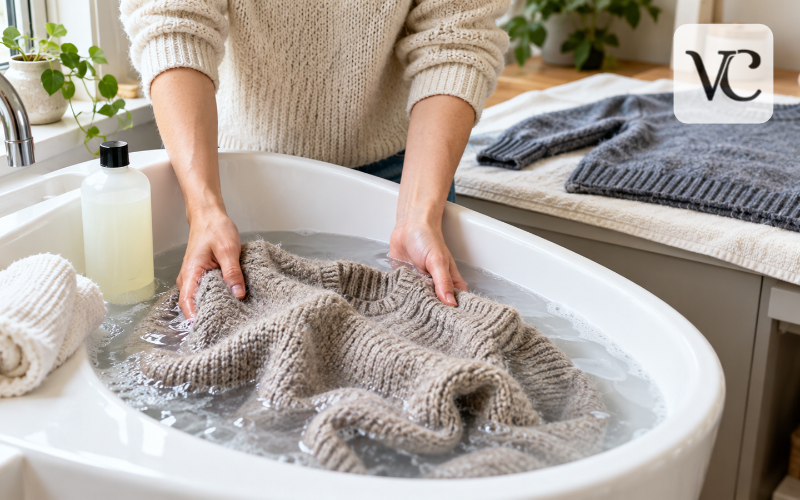
Start by filling a clean sink or basin with cool or lukewarm water at the temperature permitted by the label. Around 30°C is common for wool hand washing, but it is not a rule for every sweater. Add the recommended amount of wool-safe detergent and mix it into the water before putting the garment in.
Lower the inside-out sweater into the basin and gently press it below the surface. Let the water soak through the knit. A soak of about ten minutes is normally enough for a lightly soiled sweater. Do not leave it submerged for hours, particularly if the colour may bleed or the fabric has delicate details.
Move the garment gently through the water with your hands, without rubbing one section against another. Avoid scrubbing cuffs or twisting the body to remove dirt. Too much rubbing or agitation can cause wool fibres to lock together, leaving the fabric dense and smaller. If an area is still dirty, use careful spot treatment instead of scrubbing the entire jumper.
When the washing is finished, lift the sweater with both hands so its wet weight is supported. Drain the soapy water and rinse if your detergent requires it. The aim is clean knitwear, not a perfectly vigorous wash: gentle movements are usually all that is needed.
How to Wash a Wool Sweater in a Washing Machine
You can use a washer for a wool sweater when the care label specifically permits machine washing. A sweater labelled “hand wash only” should not be put in the machine simply because the setting sounds gentle.
Turn the garment inside out and place it in a mesh laundry bag. The bag helps limit friction with the drum and other clothing. For best results, wash the sweater alone or alongside a small number of similar, colour-safe wool items. A tightly packed drum prevents the load from moving as intended and can leave detergent behind.
Choose the machine’s wool programme if it has one. Otherwise, use a cold or delicate programme only when it is compatible with the garment’s instructions. Set the water temperature no higher than the label allows; many sweaters specify 30°C, although some washable wool items have different limits. Add the recommended small amount of wool-safe detergent.
Use the low or gentle spin recommended by your machine and garment instructions rather than selecting a high-speed cycle. There is no single spin speed that suits every machine or sweater. Avoid extra vigorous washing or repeated spin cycles, and remove the garment promptly after the programme ends.
Washing Lambswool, Merino, and Other Wool Knit Sweaters
Not every type of wool behaves in exactly the same way, and the yarn, knit, dyes, and finishes all affect how a sweater should be cleaned. The care label remains more important than the name of the fibre.
Lambswool is prized for its soft feel and is often found in classic jumpers. If you need to know how to wash a lambswool sweater, begin by checking whether it is labelled for hand washing or machine washing. For a hand-wash garment, use a mild wool cleaner, short soaking time, and very little movement. Do not pull the damp fabric by the shoulders.
Merino wool can feel fine and smooth, and many modern merino sweaters are designed for machine washing. Others are not. Follow the stated cycle and temperature rather than assuming all merino can go straight into a washer.
Cashmere knitwear also benefits from gentle handling, but some pieces require professional cleaning or have special washing instructions. Wool blends need checking too: a mixture containing wool, acrylic, cotton, or another fibre is not automatically safer to wash.
How to Rinse Wool and Remove Excess Water
If you use a normal wool detergent, rinse the sweater until the soap is removed. Empty the basin, refill it with clean water, and lower the garment back in. Gently press the fabric so the rinse water passes through it. Repeat if necessary, using the rinse temperatures recommended by the garment or detergent instructions.
A specially formulated no-rinse wool wash may not require this step. Read its directions rather than assuming every mild detergent can be left in the fibres.
Once rinsed, support the wet sweater from underneath and press out water without twisting. You can gently squeeze sections between your palms, but avoid wringing them like a towel. Wool knitwear becomes heavy when wet, and lifting it by one sleeve or shoulder can stretch the stitches. Removing water carefully now will also help the garment dry more evenly.
Drying a Wool Sweater Without Stretching or Shrinking
Drying deserves as much attention as washing. Wet wool is heavy, so hanging a freshly washed sweater from a coat hanger can pull the shoulders down and make the body longer. Flat drying is usually the best approach for knitwear.
Spread a clean, dry, pale towel on a flat surface and lay the sweater across it. Smooth the sleeves and body, then roll the towel loosely with the sweater inside. Press along the roll to transfer moisture into the towel. Avoid twisting or squeezing the roll forcefully.
Next, lay the jumper flat on a dry towel or a ventilated mesh drying rack. Gently ease the edges, cuffs, and seams back into shape. If you measured it before washing, compare the dimensions and make small adjustments while the knit is damp. Do not tug hard in an attempt to make it larger.
Choose a well-aired place away from direct sunlight, radiators, heaters, and other concentrated heat. Turn or replace the towel if it becomes damp, and allow the sweater to dry fully before folding it away. Most wool sweaters should not be tumble dried, but some garments are specifically labelled for a suitable low-heat or wool tumble-dry setting. Follow that permission only when it appears on the care label.
Common Mistakes That Can Damage Wool Sweaters
A frequent mistake is thinking hot water alone is the only cause of shrinking. Heat can increase risk, but strong movement and friction can also make wool fibres catch and felt together. Once that happens, a garment may become thicker, firmer, and noticeably smaller.
Using standard biological detergent, adding too much cleaner, or scrubbing a mark aggressively can also harm the fabric. Another problem is overloading the washing machine, where wool rubs against rough clothing or metal fastenings. Washing a hand-wash-only jumper on a regular cycle is an unnecessary gamble.
Drying mistakes matter as well. A wet sweater hanging from a thin hanger may develop stretched shoulders, while placing it directly on a radiator can cause uneven drying and damage. Check the label first, handle the garment lightly throughout, and avoid rushing the process with extra heat.
Removing Stains and Freshening Wool Sweaters
Small marks do not always mean the whole sweater needs washing. For a fresh spill, use a clean, absorbent cloth to blot away excess liquid. Work gently from the outside of the mark towards the centre so it does not spread. Avoid rubbing, as this can push the stain deeper and disturb the surface of the knit.
The right treatment depends on what caused the stain. Grease, coffee, mud, and other marks may need different methods. Check that any stain remover says it is suitable for wool and test it on a hidden area first. Apply only a little product, follow its instructions, and keep the fabric from becoming overly wet. If the mark is stubborn or the sweater is expensive or labelled dry clean only, a professional cleaner may be the safer option.
To freshen a sweater between washes, lay it flat or drape it briefly over a broad, clean surface in a well-ventilated, shaded space. This can help reduce unnecessary washing while keeping the knitwear comfortable to wear.
What to Do If Your Wool Sweater Shrinks After Washing
If a sweater looks smaller after washing, first check whether it has simply dried in a slightly different shape or has actually felted. A garment that is a little misshapen may respond to careful reshaping while damp. Felted wool, however, often feels thicker, tighter, and less flexible because its fibres have become tangled together.
For a small change in shape, check the label and gently dampen the sweater with cool water if water washing is permitted. Lay it on a towel, smooth out creases, and ease the body and sleeves towards their original measurements. Work gradually, with light pressure, then leave it flat to dry.
You may see online tricks involving hair conditioner or shampoo to “unshrink” wool. These are not guaranteed fixes, and residues can create other problems. Severely felted fibres generally cannot be returned to their original loose structure by soaking or pulling. If the sweater is valuable, ask a knitwear specialist or experienced cleaner whether anything can be done.
How Often Should You Wash a Wool Sweater?
A wool sweater does not usually need a full wash after every wear. Wool can resist everyday odours, and repeated washing creates more opportunities for friction, colour changes, and wear. How often you wash it should depend on its condition rather than a strict weekly schedule.
If the sweater has visible dirt, a persistent smell, or sweat marks that airing cannot remove, it is time to clean it according to the label. A light layer worn over a clean shirt may stay fresh longer than a jumper worn directly against the skin. Warm weather, activity level, and accidental spills will also make a difference.
Between washes, let the sweater air out and dry fully before storing it. Fold it neatly instead of leaving it on a hanger for long periods. A little regular care often does more to maintain a wool jumper than frequent washing.
Conclusion
Knowing how to wash a wool sweater is mostly about making the right choices before and after it goes into water. Start with the care label, pick a detergent made for wool, and choose hand or machine washing only when the garment allows it. Keep movement gentle, support the sweater while wet, and reshape it before letting it dry flat.
With thoughtful handling and the right drying routine, a favourite wool sweater can stay soft, comfortable, and close to its original fit for many wears to come.
Frequently Asked Questions
Can I wash a wool sweater in a washing machine?
Yes, but only if the care label permits machine washing. Choose the recommended wool or gentle cycle, use a suitable detergent, and avoid excessive agitation or overcrowding.
What can I use if I don’t have wool detergent?
Choose a mild cleaning product specifically labelled safe for wool. Avoid harsh detergents, bleach, and unverified household substitutes. If a suitable cleaner is unavailable, postpone washing to prevent unnecessary damage.
Does washing wool in cold water prevent shrinking?
Cold water can help reduce the risk, but it does not guarantee protection. Excessive rubbing, unsuitable machine cycles, and improper drying can still cause wool fibres to shrink or felt.
Can I put a wool sweater in the tumble dryer?
Most wool sweaters are best dried flat. Only use a tumble dryer when the garment’s care label specifically allows it, and carefully follow the recommended drying setting.
How often should I wash my wool sweater?
Wash your wool sweater when it becomes visibly dirty or develops persistent odours. Airing it between wears can help maintain freshness and reduce unnecessary washing.
Disclaimer: The information published on voguecultures.co.uk about how to wash a wool sweater is provided strictly for general educational and informational purposes. Washing results may vary depending on the wool type, fabric construction, and garment condition. Always follow the manufacturer’s care label before washing or drying. Voguecultures.co.uk is not responsible for garment damage resulting from improper use of the information provided. This article is purely informational. It is not a guest post, paid promotion, sponsored article, or advertisement. Its sole purpose is to help readers understand safe wool sweater washing and care methods.
Enjoyed this article? Discover more helpful ideas and fresh inspiration on Vogue Cultures.