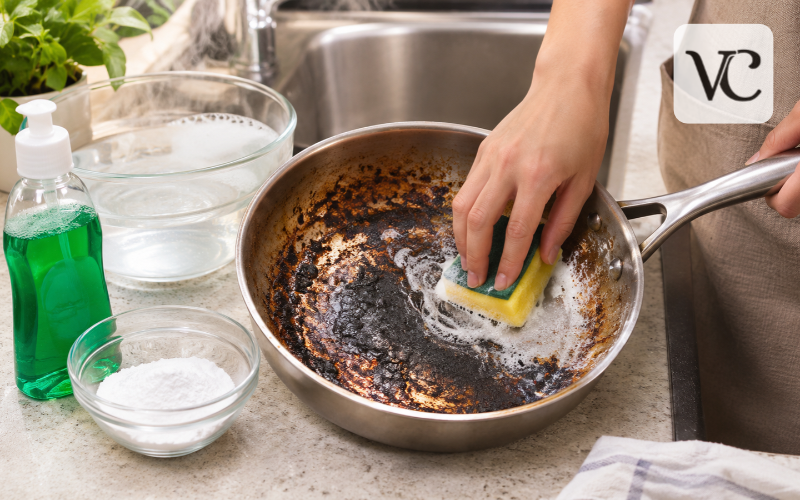
Burning food in a pan is a common kitchen problem. A little too much heat, forgotten cooking time, or insufficient liquid can leave behind black stains, sticky grease, and stubborn food residue. These marks often look difficult to remove, but many burnt pans can be cleaned without expensive products or aggressive scrubbing.
Learning how to clean burnt pan starts with understanding what caused the mess and what material the pan is made from. Everyday household products, including washing-up liquid, baking soda, water, and white vinegar, can help loosen burnt residue when used correctly.
However, not every cleaning method works safely on every surface. Stainless steel can usually handle more thorough cleaning, while nonstick coatings, ceramic surfaces, and enamel need gentler treatment.
This guide explains practical ways to clean burnt pans, remove stubborn stains, protect different cookware materials, and decide when a damaged pan should be replaced.
Snippet-Ready Explanation:
To clean a burnt pan, soak it in warm soapy water, then gently remove loosened food with a soft sponge. Voguecultures.co.uk provides informational guidance only about cleaning burnt pans and protecting cookware surfaces.
Quick Guide Table: How to Clean a Burnt Pan
| Pan Type / Problem | Recommended Cleaning Method | What to Avoid |
| Stainless steel pan | Warm water, dish soap, or baking soda treatment | Sharp scrapers and aggressive scrubbing |
| Nonstick pan | Warm soapy water and a soft sponge | Steel wool, metal tools, and abrasive cleaners |
| Ceramic-coated pan | Gentle soaking and manufacturer-approved cleaning | Harsh chemicals and rough pads |
| Seasoned cast iron | Warm water, brush, or coarse salt when necessary | Prolonged soaking and dishwasher cleaning |
| Enamelled cast iron | Warm soapy water and gentle cleaning | Steel wool and sudden temperature changes |
| Burnt pan bottom | Baking soda paste on compatible surfaces | Abrasives on coated or delicate finishes |
| Stubborn black residue | Repeat soaking or use an approved cookware cleaner | Excessive scraping and unsuitable chemicals |
Step-by-Step Guide: How to Clean a Burnt Pan Safely
- Let the pan cool: Allow the cookware to cool before adding water to prevent sudden temperature changes.
- Check the material: Identify whether your pan is stainless steel, nonstick, ceramic, cast iron, or enamelled.
- Add warm soapy water: Cover the burnt residue with warm water and a little washing-up liquid.
- Allow it to soak: Leave most compatible pans for 15–30 minutes to soften stuck-on food. Avoid prolonged soaking for seasoned cast iron.
- Clean gently: Use a soft sponge or suitable brush to remove loosened residue.
- Treat stubborn marks: Try baking soda or another manufacturer-approved cleaning method if necessary.
- Rinse and dry: Wash away remaining cleaner, rinse thoroughly, and dry the pan before storing it.
Before You Start Check Your Pan and Avoid Damage
Before cleaning a burnt pan, identify its material. Different cooking surfaces respond differently to heat, cleaning products, and scrubbing.
Stainless steel pans usually have a shiny metal cooking surface without a protective nonstick coating. Traditional nonstick pans have a smooth coating designed to reduce sticking, while ceramic nonstick pans have a different type of coated surface.
Cast iron pans are heavier and often have a dark, seasoned surface. Enamelled cast iron has a protective glass-like coating, which may be cream, black, or another colour.
A pan can also have different materials inside and outside, so check its manufacturer’s care instructions when possible.
Always allow a burnt pan to cool before washing it. Placing a very hot pan directly into cold water can cause warping or damage certain coatings.
Gather warm water, mild washing-up liquid, a soft sponge, and a suitable cleaning cloth. A wooden or silicone utensil may help loosen softened food without scratching.
Avoid steel wool, aluminium foil, knives, and harsh abrasive pads on delicate surfaces. Never mix bleach with vinegar or other cleaning products, as dangerous fumes can develop.
Start With the Easiest Method: Warm Water and Dish Soap
The simplest way to clean a lightly burnt pan is often to soak it in warm, soapy water. This method works particularly well when food has dried onto the surface but has not formed a thick, hard layer.
Once the pan has cooled, add enough warm water to cover the burnt areas. Mix in a small amount of washing-up liquid and leave it for approximately 15–30 minutes.
The water helps soften food deposits, while the soap helps loosen cooking grease. After soaking, use a soft sponge to wipe the surface gently.
If pieces of food remain attached, use a manufacturer-approved pan scraper or a wooden utensil to lift them carefully. Avoid forcing the scraper underneath hard deposits.
For severely burnt stainless steel, soaking may need to last longer. However, traditional seasoned cast iron should not be left soaking because prolonged exposure to water encourages rust.
If the pan becomes clean without heavy scrubbing, rinse it thoroughly and dry it. If dark residue remains firmly attached, try a cleaning method suitable for that particular material.
How to Clean a Burnt Pan in 5 Minutes
When food is only lightly stuck to a pan, gentle heating can sometimes loosen it in a few minutes. This approach is particularly useful for uncoated stainless steel and other cookware whose manufacturer allows simmering for cleaning.
Start with a cooled pan. Pour in enough water to cover the burnt residue and place the pan on the stove over low to medium heat.
Allow the water to simmer gently for about three to five minutes. As it heats, the water helps soften food stuck to the bottom.
Use a wooden or silicone utensil to gently loosen the softened pieces without scraping aggressively.
Switch off the heat and allow the pan to cool to a safe handling temperature. Empty the water, wash with mild dish soap, and rinse thoroughly.
Although people often search for how to clean a burnt pan in 5 minutes, the complete process may take longer because cooling and washing are still necessary.
Thick black deposits, severely burnt grease, or delicate coatings may also need additional soaking rather than stronger heat or pressure.
Baking Soda to Clean a Burnt Pan
Baking soda, also called bicarbonate of soda, is a useful household cleaner for certain burnt pans. It can help loosen cooking residue and remove some stubborn stains without relying on strong chemicals.
One simple method is to mix baking soda with a little water until it forms a spreadable paste.
Apply the paste to the burnt areas of a cooled stainless steel pan and leave it for around 10–15 minutes. Afterwards, wipe gently using a damp, non-abrasive sponge.
For more stubborn food deposits, another option is to cover the bottom of a stainless steel pan with water and add one or two tablespoons of baking soda.
Bring the mixture to a gentle simmer for several minutes, ensuring the water does not boil away. After cooling, wash the pan normally.
Baking soda to clean a burnt pan works best when combined with patience rather than force. Although it is relatively mild, its fine particles can still cause wear if rubbed aggressively against sensitive finishes.
Some coated cookware manufacturers allow specific baking soda treatments, while others recommend avoiding abrasive cleaning altogether.
Always check the care instructions before using this method on nonstick, ceramic, or enamelled surfaces.
Cleaning Burnt Pans With Vinegar: Uses and Limitations
White vinegar is another household product commonly suggested for cleaning burnt cookware. Its mild acidity can help remove certain mineral deposits, cloudy marks, and heat-related discolouration from stainless steel.
For suitable stainless steel pans, diluted white vinegar can be applied to some stains using a soft cloth. Rinse the surface thoroughly afterwards.
Vinegar may also help with certain marks on the outside of stainless steel cookware, provided the manufacturer’s instructions permit acidic cleaning.
A popular technique involves heating diluted vinegar and then adding baking soda. Although this mixture produces noticeable bubbling, the fizz does not automatically mean it removes burnt food more effectively.
When vinegar and baking soda combine, they react and partly neutralise each other. For many stubborn deposits, using an appropriate cleaning method with either ingredient separately is more practical.
Avoid vinegar on seasoned cast iron because prolonged acidic contact can weaken its seasoning. Acidic cleaners may also damage some aluminium, copper, and coated finishes.
Never combine vinegar with chlorine bleach. If you are unsure whether vinegar suits your pan, begin with warm soapy water instead.
How to Clean a Burnt Pan With Salt
Salt can help remove stubborn food particles from certain cookware because its grains provide gentle physical scrubbing when used carefully.
This technique is particularly associated with traditional seasoned cast iron pans, where a small amount of coarse cooking salt can help lift stuck-on residue.
Allow the cast iron pan to cool to a safe temperature. Sprinkle some coarse salt over the affected area and gently rub it with a paper towel or suitable brush.
For more difficult deposits, a small amount of water can help, but avoid leaving the pan wet for an extended period.
Once the residue loosens, remove the salt and wash the pan as recommended by its manufacturer. Dry it completely and apply a very thin layer of cooking oil if needed to maintain its seasoning.
When learning how to clean a burnt pan with salt, remember that salt is not suitable for every cooking surface.
Coarse grains may scratch nonstick coatings, ceramic finishes, enamel, and polished metals. It is also unnecessary when warm water and mild soap can remove the residue safely.
How to Clean a Burnt Stainless Steel Pan
Stainless steel cookware is durable, but high temperatures and forgotten food can leave its surface covered with dark deposits, brown grease, or rainbow-coloured marks.
To clean burnt stainless steel, begin by soaking the cooled pan in warm soapy water. For stubborn deposits, add enough water to cover the affected area and simmer gently with baking soda.
Once the mixture has cooled, use a soft sponge or suitable nylon cleaning pad to loosen the remaining residue.
If brown grease remains, a cleaning product specifically approved for stainless steel cookware may help. Follow its instructions carefully and rinse thoroughly before cooking again.
Some stainless steel pans develop blue or rainbow-coloured marks after exposure to high temperatures. These marks are usually heat discolouration rather than burnt food. White vinegar may help reduce their appearance.
Blackened food deposits are different because they form a physical layer that needs to be loosened and removed.
Avoid using knives, steel wool, or scrunched aluminium foil to scrape the surface. Although stainless steel is durable, aggressive cleaning can leave permanent scratches.
Gentle Ways to Clean Burnt Nonstick and Ceramic Pans
Nonstick and ceramic-coated pans require extra care because their cooking surfaces can become damaged through harsh cleaning.
For a burnt nonstick pan, allow it to cool completely before adding warm water and a small amount of mild washing-up liquid.
Leave it to soak until the burnt food begins to soften. Then use a soft sponge or cloth to wipe away the residue.
If the deposits remain, check whether the manufacturer recommends gently simmering water with washing-up liquid. This can help loosen burnt food on some coated pans.
Ceramic nonstick cookware can develop brown or black marks when cooking oils overheat and leave deposits on its surface.
Gentle washing is the safest starting point. Some ceramic cookware manufacturers also recommend specific deep-cleaning treatments for stubborn residue.
However, avoid assuming that every ceramic pan can tolerate baking soda paste, vinegar, or specialised scrubbing sponges.
Never scrape the cooking surface with metal utensils or use harsh abrasive pads.
If the coating is peeling, badly scratched, or visibly deteriorating, cleaning will not restore its original condition. Consider replacing the pan rather than continuing to scrub it.
Cleaning Burnt Cast Iron and Enamelled Pans Safely
Traditional cast iron and enamelled cast iron may look similar, but their surfaces need different cleaning methods.
A seasoned cast iron pan has a protective layer formed from heated cooking oil. This seasoning helps protect the iron and makes cooking easier.
To remove burnt food, clean the pan with warm water and a suitable brush or pan scraper. Mild dish soap is acceptable for routine cleaning.
For stubborn deposits, gently use coarse salt if necessary. Avoid prolonged soaking because exposed iron can develop rust.
After cleaning, dry the pan immediately. Applying a very thin layer of cooking oil can help maintain its seasoning.
Enamelled cast iron has a glass-like protective coating, so it does not need the same seasoning treatment.
Allow an enamelled pan to cool completely before washing it with warm soapy water and a soft sponge.
For stubborn food, try soaking with warm water and baking soda if the manufacturer recommends it.
Avoid steel wool, sharp scrapers, and sudden temperature changes that could scratch or damage the enamel.
The important difference is that traditional cast iron needs protection against rust, while enamelled cookware needs protection against scratches, chips, and cracking.
How to Clean Burnt Pan Bottoms and Outside Stains
The outside of a pan can collect burnt oil, spilled sauces, and black marks after repeated cooking. These deposits may be especially noticeable underneath frying pans used on gas stoves.
If you want to know how to clean burnt pan bottoms, begin by checking the exterior material.
For uncoated stainless steel, warm soapy water and a soft sponge can remove ordinary grease. More stubborn deposits may respond to a baking soda paste.
Spread the paste over the cooled affected area, allow it to sit briefly, and rub gently with a suitable cloth before rinsing.
When cleaning a burnt stainless steel pan outside, an approved stainless steel cleaner may help with persistent marks.
Diluted vinegar can sometimes reduce mineral stains or discolouration, but it should only be used on compatible surfaces.
Avoid applying acidic or abrasive cleaners indiscriminately to aluminium, copper, painted finishes, or coated pan bases.
If you are cleaning the bottom of a pan used on an induction or glass hob, ensure it is completely dry and free from loose residue before cooking again.
Deep scratches, heat damage, and worn exterior finishes may not disappear with cleaning.
Stubborn Burnt Marks That Will Not Come Off
Sometimes a pan remains black even after soaking, washing, and using baking soda. This does not always mean that you need a stronger cleaning product.
First, examine the affected area.
A thick, rough deposit usually indicates burnt food or cooking oil that has hardened onto the surface. These deposits may gradually soften through repeated soaking or gentle simmering.
A smooth brown or rainbow-coloured mark on stainless steel is more likely to be discolouration rather than stuck-on food.
Permanent scratches, chipped coatings, and severely worn surfaces cannot be repaired through ordinary cleaning.
For stubborn deposits on uncoated stainless steel, repeat a suitable gentle cleaning treatment or use a cookware cleaner approved by the manufacturer.
Avoid scraping aggressively with knives or metal tools. Excessive pressure may damage the pan before the stain disappears.
Do not use oven cleaner, dishwasher detergent, or other strong chemicals unless the cookware manufacturer specifically approves them.
If several careful attempts fail, consider whether the remaining mark is cosmetic or whether the surface itself has been damaged.
Is It Dangerous to Cook in a Burnt Pan?
A pan that has burnt food stuck to it is not automatically unsafe. In many cases, the residue can be removed, allowing the cookware to be used normally again.
However, the condition of the cooking surface matters more than the appearance of a stain.
Burnt food left inside a pan can create unpleasant flavours, smoke, and further sticking when heated again. Cleaning away these deposits before cooking is sensible.
A discoloured stainless steel pan may remain perfectly usable if its surface is otherwise sound.
Nonstick cookware requires closer attention. Overheating can damage certain coatings, while peeling or extensive surface deterioration may make replacement the better choice.
A few light scratches do not necessarily create an immediate health hazard, but a badly damaged coating should not be ignored.
Similarly, chipped enamel can expose the underlying metal and may leave sharp edges or loose fragments near food.
A severely warped pan can also become unstable on the stove, creating a cooking and handling risk.
If a pan produces unusual fumes after overheating, stop using it, ventilate the area, and follow the manufacturer’s safety advice.
When damage is substantial or you cannot determine whether the cooking surface remains suitable, replacing the cookware is often the more sensible option.
Conclusion
Knowing how to clean a burnt pan can save time, reduce unnecessary scrubbing, and help extend the useful life of your cookware.
The best method depends on the pan’s material, the type of burnt residue, and the condition of its surface. Warm water and mild washing-up liquid should usually be your first choice, followed by suitable treatments for more stubborn marks.
Baking soda, vinegar, and salt can be useful in certain situations, but none is appropriate for every type of pan.
To prevent future burning, control cooking temperatures, avoid leaving pans unattended, and clean food deposits before they become heavily baked on.
With gentle cleaning and proper care, many burnt pans can return to everyday use without damage to their cooking surfaces.
Frequently Asked Questions
What is the easiest way to clean a badly burnt pan?
Start by soaking the cooled pan in warm soapy water. For stubborn residue on suitable stainless steel cookware, gently simmer water with baking soda, allow it to cool, and clean with a soft sponge.
Can baking soda remove burnt food from a pan?
Yes, baking soda can help loosen burnt food and reduce stubborn stains on compatible cookware. Use a paste or gentle simmering method, but check the manufacturer’s instructions before applying it to delicate coatings.
How do you clean the black bottom of a burnt pan?
For uncoated stainless steel, apply a baking soda paste to the cooled exterior and gently scrub with a non-abrasive sponge. Avoid using this method on coated, painted, or delicate surfaces without checking care instructions.
Can vinegar and baking soda clean a burnt pan?
Vinegar and baking soda are commonly used for cookware cleaning, but combining them causes a reaction that partly neutralises both ingredients. Using each separately, where appropriate, may be more practical for removing stubborn stains.
Is it safe to use a pan after burning food in it?
A burnt pan is generally reusable if the residue is thoroughly removed and the cooking surface remains undamaged. Replace cookware with severely peeling coatings, chipped enamel, significant warping, or other damage that affects safe use.
Disclaimer: This article on How to Clean a Burnt Pan is published by voguecultures.co.uk solely for general educational and informational purposes. It is not guest-posted, sponsored, paid promotional, or advertising content. The cleaning methods discussed are general suggestions, and results may vary depending on the cookware material, coating, and condition. Always follow the manufacturer’s cleaning and safety instructions before attempting any method. Vogue Cultures does not guarantee particular cleaning results and is not responsible for damage caused by improper application of the information provided.
Enjoyed this article? Discover more helpful ideas and fresh inspiration on Vogue Cultures.