
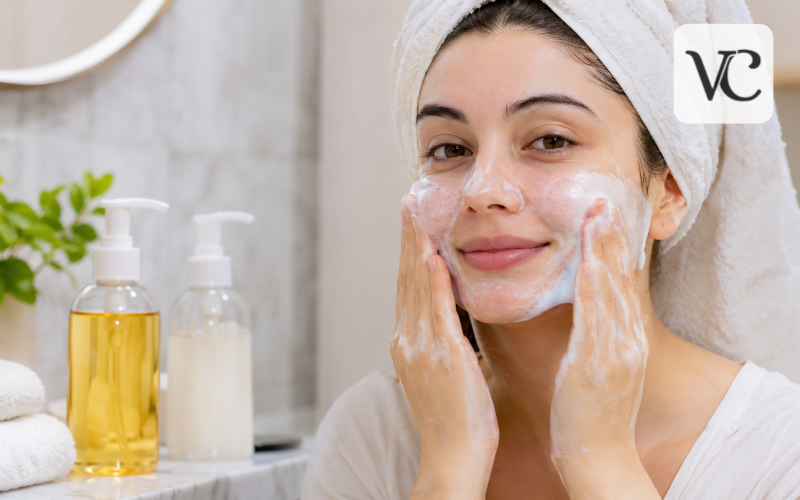
Washing your face seems simple, but removing makeup, sunscreen, and daily buildup is not always as easy as using a regular face wash. Some products can leave behind residue, especially when they are designed to resist water. This is one reason the double cleansing face method has become popular in modern skincare routines.
Double cleansing involves washing your face in two stages. First, you use an oil-based cleanser to loosen makeup, sunscreen, and oily residue. Then, you follow with a water-based cleanser to remove remaining dirt, sweat, and cleanser residue.
This method is especially popular in Korean skincare, although similar cleansing practices have existed in other Asian beauty traditions for many years.
However, double cleansing is not something everyone needs. Some people benefit from the additional step, while others find that one gentle cleanser works perfectly well. Understanding your skin type and daily routine can help you decide whether double cleansing is worth trying.
Snippet-Ready:
Double cleansing face is a two-step skincare method using an oil-based cleanser followed by a water-based cleanser to remove makeup, sunscreen, and dirt. Voguecultures.co.uk provides informational guidance about this cleansing technique only.
Double Cleansing Face – Quick Guide Table
| Skin Type | First Cleanser | Second Cleanser | Helpful Advice |
| Oily Skin | Lightweight cleansing oil | Gentle gel or foaming cleanser | Avoid harsh, drying formulas. |
| Dry Skin | Fragrance-free cleansing balm | Hydrating cream cleanser | Moisturize after cleansing. |
| Sensitive Skin | Mild, fragrance-free cleansing oil | Gentle lotion cleanser | Stop if irritation develops. |
| Combination Skin | Lightweight cleansing balm | Mild gel cleanser | Avoid overwashing dry areas. |
| Acne-Prone Skin | Non-comedogenic cleansing oil | Gentle, non-comedogenic face wash | Avoid scrubbing or irritating ingredients. |
How to Double Cleanse Your Face: Easy Steps
- Start with dry hands and face: Apply an oil-based cleanser or cleansing balm according to the product instructions.
- Massage gently: Use your fingertips to loosen makeup, sunscreen, and excess oil without rubbing aggressively.
- Emulsify and rinse: Add lukewarm water if required by the product, then rinse thoroughly.
- Use a water-based cleanser: Apply a gentle gel, cream, or foaming cleanser to remove remaining residue.
- Rinse and moisturize: Wash with lukewarm water, pat dry with a soft towel, and apply moisturizer.
Helpful Tip: Double cleansing is usually most useful in the evening. If your skin feels tight, dry, or irritated afterward, consider using a single gentle cleanser instead.
What Is Double Cleansing and How Does It Work?
Double cleansing is a facial washing technique that uses two different cleansers, one after the other. Each product serves a particular purpose, helping remove different types of residue from the skin.
The first cleanser is usually oil-based. It helps loosen makeup, sunscreen, excess sebum, and other oily substances that may be difficult to remove with water alone. Many cleansing oils and balms are specially formulated to rinse away when mixed with water.
The second cleanser is typically water-based. It removes remaining sweat, dirt, and traces of the first product, leaving the face feeling clean.
Unlike washing twice with the same face wash, traditional double cleansing combines two different formulas. However, this does not automatically make it better than using one effective cleanser.
A well-formulated face wash may remove daily residue adequately without additional products. The real purpose of double cleansing is to make removing stubborn buildup easier, not to wash the skin as aggressively as possible.
Oil-Based vs Water-Based Cleansers: Understanding the Difference
Oil-based and water-based cleansers have different ingredients and textures, but both are designed to clean the skin.
An oil-based cleanser commonly contains oils, cleansing agents, and ingredients that help the product rinse away. It works particularly well for loosening long-lasting foundation, lipstick, water-resistant sunscreen, and oily residue.
Cleansing balms perform a similar job. They usually have a solid or buttery texture that softens when applied to the skin.
Water-based cleansers contain water as a main ingredient and are available in several forms, including gels, creams, lotions, and foaming washes. They help remove sweat, dirt, and remaining surface residue.
However, the difference is not absolute. Many water-based cleansers can also remove oils, makeup, and sunscreen because they contain ingredients designed to lift away oily substances.
The most important factor is the overall formula. A gentle, effective cleanser that suits your skin is more useful than choosing a product simply because it contains oil or produces foam.
Double Cleansing Face Benefits: What You Can Really Expect
One of the main double cleansing face benefits is the ability to remove stubborn products without excessive rubbing.
Water-resistant makeup and sunscreen are designed to stay on the skin, so an appropriate first cleanser can make them easier to remove. The second cleanser then washes away remaining residue.
People with oily skin may also appreciate how double cleansing removes excess surface oil. This can leave the face feeling refreshed, particularly after wearing makeup or sunscreen throughout the day.
Another possible benefit is reducing leftover product buildup around areas such as the nose and hairline. However, double cleansing does not guarantee fewer blackheads, clear pores, or freedom from acne.
You may also hear that double cleansing dramatically improves serum absorption. Although removing surface residue prepares the skin for the rest of your routine, strong evidence for a major improvement in product absorption is limited.
Similarly, double cleansing does not automatically protect the skin barrier. Gentle products may help avoid harsh scrubbing, but washing too often can still cause dryness and irritation.
The Double Cleansing Face Method: A Simple Step-by-Step Routine
The double cleansing face method is straightforward and generally works best as part of an evening skincare routine.
Begin with clean hands and an oil-based cleanser or cleansing balm. Many products are intended for dry skin, so check the instructions before applying yours.
Gently spread the cleanser across your face using your fingertips. Pay attention to areas where makeup and sunscreen tend to collect, such as around the nose, chin, and hairline.
Massage gently rather than scrubbing. There is no universal rule requiring exactly 60 seconds of massage. Follow the product instructions and avoid unnecessarily prolonged rubbing.
Next, add a little lukewarm water if your cleanser requires emulsification. Some cleansing oils turn milky as they mix with water, allowing them to rinse away more easily.
Rinse thoroughly until the product and loosened residue have been removed.
While your face is still damp, apply a small amount of gentle water-based cleanser. Massage it lightly across the skin using your fingertips, including around the jawline.
Rinse again with lukewarm water, then pat your face dry with a clean, soft towel.
Finish by applying a suitable moisturizer. If you use other skincare treatments, follow their instructions and avoid combining products that irritate your skin.
Your face should feel comfortably clean afterward, not tight, itchy, or unusually dry.
Choosing the Right Double Cleansing Products for Your Face
Finding suitable double cleansing products does not require purchasing expensive skincare brands. What matters is selecting formulas that cleanse effectively without irritating your skin.
For the first stage, cleansing oils and balms are common choices. Cleansing oils are usually liquid, while balms have a thicker texture that melts during application.
Look for a product specifically formulated for facial cleansing that rinses away easily. A product labelled non-comedogenic may be a reasonable option for people concerned about clogged pores, although the label cannot guarantee that breakouts will never occur.
For the second stage, consider how different cleanser textures feel on your skin.
Gel cleansers often feel lightweight, while foaming washes may appeal to people who prefer a fresh finish. Cream and lotion cleansers can be comfortable choices for skin that becomes dry easily.
If your skin is sensitive, fragrance-free products are often preferable. Avoid harsh scrubs and be cautious with cleansers containing strong exfoliating ingredients, particularly when you already use acne treatments.
It is also worth remembering that plain cooking oils are not the same as formulated cleansing oils. They may be difficult to rinse away and might not suit every skin type.
The best double cleansing face routine is one that cleans effectively while keeping your skin comfortable.
Double Cleansing for Oily and Acne-Prone Skin
People with oily skin sometimes worry that applying an oil-based cleanser will make their faces even oilier. However, a properly formulated cleansing oil is designed to lift away excess sebum and other residue before being rinsed off.
Double cleansing for oily skin can be useful when you regularly wear sunscreen, foundation, or other long-lasting products.
A lightweight cleansing oil followed by a gentle gel or foaming cleanser may provide comfortable cleansing without leaving a heavy feeling.
For acne-prone skin, choosing non-comedogenic products is sensible, but individual reactions still vary. Some cleansing oils may contribute to breakouts or irritation in certain people.
It is important to understand that removing excess oil is not the same as treating acne. Acne can involve several factors, including clogged follicles, inflammation, and hormonal changes.
Double cleansing should support your skincare routine rather than replace appropriate acne treatment. If you notice new spots or irritation after introducing a cleanser, stop using the suspected product and reassess your routine.
Double Cleansing for Dry, Sensitive, and Combination Skin
Dry and sensitive skin requires particular care because repeated washing can remove natural oils and increase discomfort.
If your skin becomes dry easily, choose gentle cleansers that do not leave it feeling tight. A fragrance-free cleansing balm followed by a mild cream or lotion cleanser may be more comfortable than using two strong foaming products.
However, double cleansing is not necessarily the best option for very dry skin. One gentle cleanser may be enough, particularly when you have not worn heavy makeup.
People with sensitive or eczema-prone skin should be especially cautious. During periods of redness, flaking, or irritation, simplifying the routine may be better than adding another cleansing step.
Combination skin usually has oilier areas, such as the forehead and nose, alongside drier cheeks.
Rather than scrubbing oily areas more aggressively, use mild products across the entire face. Adjust your cleansing routine according to how your skin responds.
If persistent irritation or eczema symptoms develop, consult a qualified healthcare professional for individual advice.
When Double Cleansing Is Worth Adding to Your Routine
Double cleansing may be worth trying when your usual face wash struggles to remove products that stay on the skin throughout the day.
For example, someone wearing long-lasting foundation, waterproof mascara, and water-resistant sunscreen might find that a dedicated makeup-removing cleanser makes washing easier.
It may also be useful when you regularly apply several layers of skincare or makeup products.
However, wearing sunscreen does not automatically mean you must double cleanse. Many regular facial cleansers can remove sunscreen effectively, depending on the product and cleansing method.
If you wear little or no makeup and your regular cleanser leaves your face clean and comfortable, you may not need another step.
Consider whether you frequently notice leftover makeup, whether your current cleanser removes products easily, and whether your skin tolerates repeated washing.
The decision should depend on your individual needs rather than the idea that longer skincare routines always produce better results.
How Often Should You Double Cleanse Your Face?
For most people who choose to double cleanse, the evening is the most practical time.
Throughout the day, sunscreen, makeup, oil, and dirt can accumulate on the skin. Removing these products before bedtime helps prepare your face for nighttime skincare.
Morning double cleansing is generally unnecessary. A gentle single cleanse, or another simple routine suitable for your skin, is often sufficient.
Whether you should double cleanse every evening depends on your daily activities and how your skin reacts.
Someone wearing heavy makeup regularly may find the technique useful most nights. Another person might only need it occasionally, such as after wearing waterproof products.
Watch for signs that you may be washing too much. Persistent tightness, flaking, redness, stinging, or unusual dryness can indicate that your routine is too harsh.
If these symptoms appear, reduce the number of cleansing steps, choose gentler products, and allow your skin to recover. Seek professional advice if the irritation persists.
Korean Double Cleansing and the Two-Step Skincare Approach
Double cleansing became widely recognized internationally through Korean skincare, often called K-beauty.
Korean beauty routines frequently emphasize careful cleansing, moisturizing, and protecting the skin from sun exposure. The two-step cleansing approach is particularly associated with removing makeup and sunscreen before applying other products.
However, similar oil-based cleansing practices have also been used in Japanese beauty traditions. It would be inaccurate to suggest that every version of double cleansing originated from one modern skincare trend.
The Korean double cleansing method usually begins with a cleansing oil or balm, followed by a gentle water-based face wash.
Some people associate Korean skincare with lengthy routines containing numerous products, but double cleansing does not require a complicated process.
You can follow a simple two-step cleansing routine without purchasing additional toners, essences, masks, or treatments.
The important part is choosing suitable products and avoiding unnecessary steps that could irritate your skin.
Common Double Cleansing Mistakes That Can Irritate Your Skin
One common mistake is assuming that washing longer or harder will make the skin healthier.
Rubbing aggressively, using rough washcloths, or massaging cleansing oil for several minutes can cause irritation rather than improve cleansing.
Using excessively hot water is another problem. Lukewarm water is generally a gentler option for washing your face.
Some people also choose two strong cleansers because they want a completely oil-free feeling. Unfortunately, this can leave the skin dry and uncomfortable.
Another mistake is failing to rinse products properly. Depending on the formulation, leftover cleansing balm, oil, or makeup may cause discomfort or leave unwanted residue.
Applying several new skincare products at once can also make it difficult to identify which one is causing irritation.
Introduce new products gradually and pay attention to how your skin responds.
If your face develops persistent redness, burning, itching, or excessive dryness, stop the irritating products and return to a simpler routine.
Clean skin should feel comfortable. A tight, squeaky feeling is not proof that your face has been cleaned more effectively.
Common Double Cleansing Questions and Practical Alternatives
One common question is whether micellar water can replace an oil-based cleanser.
Micellar water contains cleansing ingredients that help lift makeup, oil, and dirt from the skin. It can be an alternative first step before using a gentle facial cleanser.
However, its effectiveness depends on the product and the makeup being removed. Some waterproof cosmetics may require a dedicated makeup remover. Follow the micellar water manufacturer’s rinsing instructions.
Another question is whether washing twice with a water-based cleanser produces the same result.
Although doing so may remove additional residue, it is not quite the traditional oil-first method. It may also cause unnecessary dryness, especially if the cleanser is strong.
People also wonder whether double cleansing causes skin purging. Purging is generally associated with certain active ingredients that increase skin-cell turnover, rather than ordinary cleansing oils.
New breakouts after starting an oil cleanser should not automatically be dismissed as purging. They may reflect irritation, product incompatibility, or other factors.
On Reddit, discussions about double cleansing face routines show mixed experiences. Some users report easier makeup removal and cleaner-feeling skin, while others describe dryness, breakouts, or no noticeable difference.
These personal experiences can help readers understand different reactions, but they are not scientific proof that a particular cleanser will work for everyone.
If you do not wear makeup, a single gentle face wash may be perfectly adequate. Persistent acne, painful breakouts, or unexplained irritation deserve professional assessment rather than repeated changes to cleansing products.
Conclusion
Double cleansing can be a practical way to remove stubborn makeup, sunscreen, and daily buildup, especially when one cleanser does not seem sufficient.
The method works by combining an appropriate first cleanser with a gentle second wash. Choosing suitable products, using lukewarm water, and avoiding excessive rubbing can help make the process more comfortable.
However, the double cleansing face method is not essential for everyone. People with dry, sensitive, or easily irritated skin may benefit more from keeping their routine simple.
The most useful approach is to pay attention to your skin rather than follow every skincare trend.
Whether you choose one cleanser or two, the goal is the same: remove unwanted residue while keeping your skin clean, comfortable, and cared for.
Frequently Asked Questions
Is double cleansing good for your face every day?
Double cleansing can be suitable for daily use if your skin tolerates it well, especially when removing makeup or water-resistant sunscreen. However, people with dry or sensitive skin may prefer cleansing only once.
Can double cleansing help remove blackheads?
Double cleansing can remove excess surface oil and product buildup, but it does not directly treat blackheads or guarantee clearer pores. Persistent blackheads may require suitable skincare treatments or advice from a dermatologist.
Should I double cleanse in the morning or at night?
Double cleansing is generally more useful at night because it helps remove makeup, sunscreen, and daily buildup. In the morning, one gentle cleanse is usually sufficient, depending on your skin’s needs.
Can I use micellar water instead of an oil-based cleanser?
Yes, micellar water can serve as the first cleansing step, particularly for removing light makeup and surface residue. However, some waterproof products may require a dedicated makeup remover for more effective cleansing.
Can double cleansing cause acne or skin irritation?
Double cleansing may cause irritation or contribute to breakouts if products do not suit your skin or you cleanse too aggressively. Choose gentle formulas and stop using products that cause persistent discomfort.
Disclaimer: The information published on voguecultures.co.uk about double cleansing face is provided strictly for general educational and informational purposes. This article does not offer professional dermatological advice, medical diagnosis, or treatment recommendations. Skincare products and cleansing methods may affect individuals differently depending on their skin type and sensitivity. Readers experiencing persistent acne, irritation, or other skin concerns should consult a qualified dermatologist or healthcare professional. This article is independent informational content and does not involve guest posting, paid promotion, sponsored recommendations, or advertising. Voguecultures.co.uk does not endorse any specific skincare product or guarantee particular results.
Enjoyed this article? Discover more helpful ideas and fresh inspiration on Vogue Cultures.