
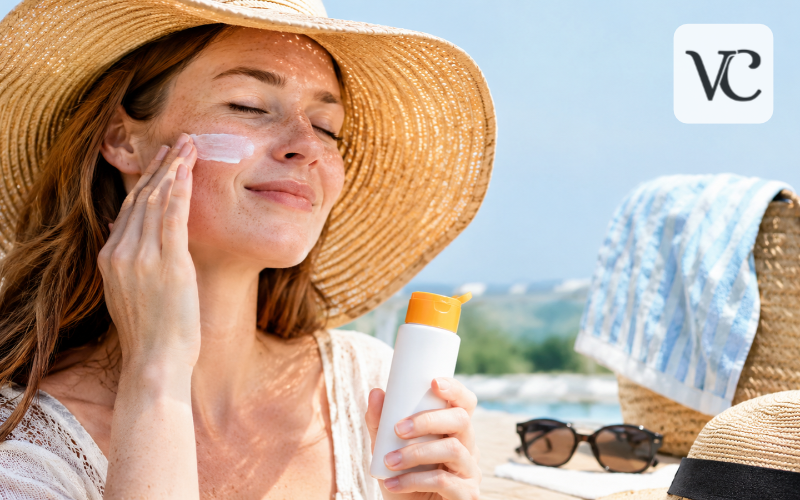
Fair skin sun protection is about more than putting on sunscreen before a beach trip. It means protecting your skin from ultraviolet (UV) rays during ordinary activities, whether you are walking to work, gardening, or spending an afternoon outside. People with fair or pale skin often burn more quickly because their skin contains less of the pigment that offers some natural protection from sunlight.
The good news is that a useful routine does not need to be complicated or expensive. A broad-spectrum sunscreen, the right SPF, protective clothing, and sensible time in the shade can make a real difference. The key is choosing products you can apply generously and using them consistently, rather than relying on one high SPF number to do everything.
Snippet-Ready:
Fair skin sun protection involves using broad-spectrum sunscreen, suitable SPF levels, and protective habits to prevent sunburn and reduce UV damage. voguecultures.co.uk provides only educational information about fair skin sun protection.
Fair Skin Sun Protection: Quick Comparison Guide
| Sunscreen Type | Best For | Recommended SPF | Key Benefits |
| Mineral Sunscreen | Fair, sensitive skin | SPF 30–50+ | May suit easily irritated skin |
| Chemical Sunscreen | Everyday facial use | SPF 30–50+ | Often lightweight and easy to blend |
| Hybrid Sunscreen | Combination skin | SPF 30–50+ | Combines mineral and chemical UV filters |
| Moisturising Sunscreen | Fair, dry skin | SPF 30–50+ | Helps support skin hydration |
| Oil-Free Sunscreen | Oily or acne-prone skin | SPF 30–50+ | Can feel lighter and less greasy |
| Water-Resistant Sunscreen | Swimming and outdoor sports | SPF 50+ preferred | Designed to maintain protection for a labelled period during water exposure |
Step-by-Step Guide to Protecting Fair Skin From the Sun
- Choose the right SPF: Use broad-spectrum SPF 30 or higher. Consider SPF 50+ if your skin burns easily or you expect prolonged sun exposure.
- Apply sunscreen generously: Cover exposed skin, including the face, neck, ears, hands, and feet.
- Apply before going outdoors: Follow the product instructions, allowing approximately 15 minutes before sun exposure when recommended.
- Reapply regularly: Reapply around every two hours outdoors and sooner after swimming, sweating, or towel-drying.
- Wear protective clothing: Use a wide-brimmed hat, UV-protective sunglasses, and suitable clothing.
- Check the UV Index: Seek shade and limit direct exposure when UV levels are high.
- Maintain daily protection: Adjust your routine according to the weather, activity, and amount of sunlight reaching your skin.
Why Fair Skin Needs Extra Protection From the Sun
Melanin is the natural pigment that helps give skin its colour. It also provides some protection against UV radiation. Fair skin generally has less protective melanin, so sunlight may cause redness, tenderness, and sunburn sooner. Some people with very pale skin burn easily and rarely develop a tan, while others can tan slightly after sun exposure.
A burn is not just a temporary change in skin colour. UV rays can damage the DNA inside skin cells. Over time, repeated exposure contributes to wrinkles, uneven pigmentation, and a higher risk of skin cancer. Damage can also build up on days when the skin does not visibly burn.
If you have freckles, have experienced frequent sunburn, or take medication that increases sun sensitivity, take extra care. Anyone with a personal or family history of skin cancer should discuss suitable protection and skin checks with a healthcare professional. Fair skin deserves extra attention, but every skin tone benefits from sun safety.
Understanding SPF, UVA and UVB Protection
Sunscreen labels can seem confusing, but three details matter most. UVB rays are the main cause of sunburn. UVA rays contribute to skin ageing and can also damage skin cells. Both types of radiation are linked to skin cancer, which is why protection against only one is not enough.
SPF, or sun protection factor, mainly describes protection against UVB. When applied at the tested amount, SPF 30 filters about 97% of UVB rays, while SPF 50 filters about 98%. Higher numbers offer some additional protection, but no sunscreen blocks every ray or allows unlimited time in the sun.
Look for the words “broad spectrum” on the label. In the UK, a four- or five-star UVA rating is a helpful sign of strong UVA protection relative to UVB protection. A UVA symbol inside a circle shows that a product meets the relevant European minimum standard. Water-resistant labels are useful for activity, but they never mean waterproof.
How to Choose the Best Sunscreen for Pale Skin That Burns Easily
For most adults, dermatologists recommend broad-spectrum sunscreen with at least SPF 30. If your pale skin burns easily, SPF 50 or 50+ can provide an additional margin of protection, especially during holidays, sports, or long days outdoors. Still, the label is only part of the decision.
Think about where and how you will use the product. A comfortable daily facial sunscreen may suit a short commute, whereas a water-resistant body lotion is more practical for swimming or exercise. People with easily irritated skin may prefer fragrance-free formulas. Those who dislike heavy creams might find a fluid or gel easier to wear regularly.
Price alone does not determine quality. An affordable product that meets the protection standards and feels pleasant enough to use generously may be more helpful than a costly sunscreen you apply too sparingly. Check that the product is sold for your market and follow its instructions rather than relying on online claims of a single “best” sunscreen.
Mineral vs Chemical Sunscreen for Fair and Sensitive Skin
Mineral sunscreens use zinc oxide, titanium dioxide, or both as their active UV filters. These ingredients protect skin mainly by absorbing UV radiation, while also reflecting and scattering some light. Mineral options are often worth trying if your skin stings with certain products, although they are not guaranteed to suit everyone.
Chemical sunscreens use other approved UV filters to absorb ultraviolet energy. Many have light textures and blend in without an obvious white film. Hybrid formulas combine mineral and non-mineral filters, aiming to balance protection with how a product feels on the skin.
The main difference for a buyer is often comfort, not which category sounds more natural. Some mineral creams leave a noticeable white cast, while certain chemical formulas may sting sensitive eyes or irritate individual users. If you have reactive skin, choose a fragrance-free option, test a small area first, and stop using a product that causes a persistent rash. Both types can be effective when properly formulated and applied.
Fair Skin Sun Protection for the Face
Facial sunscreen needs to work with your skin type and daily routine. Dry skin may feel better with a moisturising cream containing ingredients such as glycerin or hyaluronic acid. Oily skin may prefer a light fluid or gel. If you are prone to breakouts, look for a product labelled non-comedogenic, while remembering that individual reactions can vary.
Apply sunscreen as the final step of morning skincare, after moisturiser if you use one and before makeup. An SPF moisturiser can count as sunscreen if it provides suitable broad-spectrum protection and you apply enough. In practice, many people use too little moisturiser or foundation to reach the stated SPF, making a separate sunscreen easier to measure.
Give attention to the hairline, ears, sides of the nose, jaw, neck, and exposed scalp. Use an SPF 30 or higher lip balm, and avoid getting ordinary sunscreen directly into the eyes. People with redness or very sensitive skin can experiment with gentle, fragrance-free facial formulas rather than assuming the most expensive product is best.
Best Body Sunscreen for Fair Skin: Features That Matter
The best body sunscreen for fair skin is one you can spread evenly over large areas without hesitation. Lotions and creams make it easier to see where you have applied the product. Sticks can help with smaller exposed spots, while sprays may be convenient but are easy to apply unevenly. If using a spray, avoid inhaling it, apply generously, and rub it in as directed.
For beach visits, gardening, or outdoor exercise, consider broad-spectrum SPF 50+ with a clear water-resistance claim. Check the label for how long water resistance lasts and remember that swimming, sweating, and towel-drying can remove sunscreen sooner.
Body sunscreen is often used in larger quantities than facial sunscreen, so pack size and cost per application matter. A generous amount of a reasonably priced, suitable formula gives you more dependable coverage than stretching a tiny bottle over several outings. Do not forget the shoulders, backs of hands, feet, and legs.
Sunscreen Options Worth Considering for Fair Skin
Sunscreens often described as popular or dermatologist-recommended are not automatically suitable for every person with pale skin. Before choosing one, compare its actual SPF, UVA protection, finish, ingredients, and water-resistance instructions. Product names and formulas can also differ between countries.
Beauty of Joseon Relief Sun, previously labelled Rice + Probiotics and now labelled Rice + Niacinamide, is a lightweight SPF 50+ PA++++ facial sunscreen. The brand says the name changed without a formula change. Its hydrating finish may appeal to people seeking a comfortable everyday product, but check whether your version is suitable for swimming or heavy sweating.
EltaMD UV Clear Broad-Spectrum SPF 46 is another facial option often considered for sensitive or blemish-prone skin. It contains zinc oxide and octinoxate, making it a hybrid rather than a mineral-only sunscreen. Its formula also includes niacinamide. For outdoor sports, confirm water resistance rather than assuming its SPF number covers that need.
Isntree Hyaluronic Acid Watery Sun Gel SPF 50+ PA++++ focuses on a moisturising, gel-like feel. La Roche-Posay Anthelios Ultra Light Fluid SPF 60 offers a lightweight alternative; the US version advertises up to 80 minutes of water resistance, but regional versions may differ.
For the body, Blue Lizard Australian Sunscreen Sensitive Mineral SPF 50 is an example to examine. Its listed filters include zinc oxide and titanium dioxide, and the brand describes up to 80 minutes of water resistance. As with other mineral lotions, check whether its finish and possible white cast suit you. These are comparison examples, not tested rankings or guarantees of compatibility.
How to Apply Sunscreen Correctly for Reliable Protection
Even a very high SPF performs poorly when spread too thinly. Most adults need roughly 30 millilitres, or about a shot-glass amount, to cover an entire exposed body, although the exact quantity depends on body size and how much skin is uncovered. The familiar two-finger method can serve as a quick facial reminder, but finger sizes, sunscreen textures, and the area covered vary, so it is not a precise measure.
Apply sunscreen generously and evenly to dry skin before going outdoors, allowing about 15 minutes or following the product label. For extended outdoor exposure, reapply approximately every two hours. Reapply sooner after swimming, sweating heavily, or drying yourself with a towel, following the product’s water-resistance directions.
Check easy-to-miss areas before leaving home, including ears, neck, hands, and the tops of feet. A phone reminder can help during a long day outside. Do not try to make a bottle last longer by applying a very thin layer: you may receive considerably less protection than the SPF printed on it.
Everyday Sun Protection Habits Beyond Sunscreen
A good fair skin sun protection routine does not depend on lotion alone. A wide-brimmed hat shields the forehead, ears, and neck better than a cap with a narrow peak. Sunglasses marked for UVA and UVB protection help protect the eyes and surrounding skin. Long sleeves and tightly woven fabrics provide useful coverage, while clothing labelled UPF 50+ is designed to block a high proportion of UV rays.
Shade is particularly important when sunlight is strong. In the UK, planning time away from direct sun between roughly 11 a.m. and 3 p.m. can reduce exposure, although conditions vary by season and location. Checking the UV Index is more useful than judging risk by temperature alone.
None of these measures needs to be perfect individually. Combining them reduces the amount of exposed skin and the risk of relying on sunscreen that has worn off. Remember that reflected sunlight can still reach you in the shade.
Protecting Fair Skin in Different Weather and Activities
Clouds and cool temperatures do not automatically mean UV levels are low. Fair skin can burn on breezy summer days, during mountain walks, and even on bright winter trips. Snow, sand, and water can reflect ultraviolet light, increasing exposure in places where people often relax their precautions.
Windows create another common question. Ordinary glass blocks most UVB radiation, but some UVA can pass through it. If you spend long periods beside a sunny window, consider protection or moving away from direct sunlight. If you are indoors far from windows, routine sunscreen may be less necessary than it is outdoors.
Match your preparations to the activity. For swimming, choose a water-resistant product and reapply after leaving the water or towelling off. For hiking, take a hat, clothing, and spare sunscreen. On holidays, check the local UV Index instead of assuming it matches conditions at home. People who burn quickly should plan regular shade breaks before redness begins.
Common Sun Protection Mistakes That Leave Fair Skin Vulnerable
One of the biggest mistakes is thinking that SPF 50 makes sunburn impossible. No sunscreen gives complete protection, and even a high rating cannot make up for missed areas or forgotten reapplication. Another common problem is applying sunscreen only when arriving at the beach, after exposure has already started.
Makeup with SPF can be helpful, but a thin layer of foundation rarely provides the amount used in sunscreen testing. Likewise, a water-resistant label does not mean a product stays effective after endless swimming. Read the timing instructions and reapply after towelling off.
Check expiry dates and storage instructions, especially for bottles left in hot cars. Discard sunscreen that has expired or changed noticeably in colour, smell, or texture. Finally, do not treat a tan as proof that skin has become safely protected. Tanning is a response to UV injury, and deliberate tanning or sunbed use adds avoidable damage.
Fair Skin Sun Protection Questions, Myths and Practical Advice
Online discussions about fair skin sun protection, including Reddit threads, can help you discover which textures people find comfortable or which products tend to leave a white cast. However, personal reviews cannot establish a product’s actual protection, medical safety, or suitability for your skin. Use them as shopping experiences, not as substitutes for sunscreen testing or professional advice.
Does fair skin always need SPF 50+? Not necessarily. Broad-spectrum SPF 30 is a widely recommended minimum, while SPF 50 or higher is a sensible choice if you burn easily or expect strong or prolonged exposure. Is mineral sunscreen always better? No. Mineral and chemical options can both work well; the better choice is one your skin tolerates and you use correctly. Is sunscreen needed indoors? It depends mainly on how much sunlight reaches you, especially through nearby windows.
If sunburn happens, move out of the sun, cool the skin with a damp cloth or cool shower, drink water, and use a gentle moisturiser. Avoid further sun exposure while the skin heals, and do not deliberately burst blisters. Seek prompt medical advice for extensive blistering, severe pain, fever, dizziness, or feeling seriously unwell. Have a healthcare professional check any changing mole, unusual sore, or new suspicious skin mark.
Conclusion
Reliable fair skin sun protection begins with a broad-spectrum sunscreen you will actually wear, ideally SPF 50 or higher if you burn easily or spend long periods outdoors. Apply enough, reapply when needed, and remember that sunscreen is only one part of protecting your skin.
A comfortable formula, shade, suitable clothing, a wide-brimmed hat, and UV-protective sunglasses work better together than any single product. You do not need an expensive routine or a cabinet full of sunscreens. Paying attention to your skin, the day’s UV conditions, and your activities can help you enjoy time outside while reducing avoidable sun damage.
Frequently Asked Questions
What SPF is best for fair skin that burns easily?
Broad-spectrum SPF 30 is a recommended minimum, but SPF 50 or higher is often preferable for fair skin that burns easily. Apply generously and reapply regularly, especially during prolonged outdoor activities.
Is mineral sunscreen better for fair and sensitive skin?
Mineral sunscreen containing zinc oxide or titanium dioxide may be suitable for sensitive skin. However, both mineral and chemical sunscreens can provide effective protection. Choose a formula your skin tolerates comfortably.
Does fair skin need sunscreen on cloudy days?
Yes, fair skin may still need protection on cloudy days because ultraviolet radiation can pass through clouds. Check the UV Index and use suitable sunscreen and protective clothing when exposure is significant.
How often should people with fair skin reapply sunscreen?
Reapply sunscreen approximately every two hours while outdoors. Reapplication is also necessary after swimming, heavy sweating, or towel-drying, according to the product instructions, even when using a high-SPF sunscreen.
Can sunscreen completely prevent sunburn on pale skin?
No sunscreen blocks all ultraviolet radiation or guarantees that sunburn will never occur. Fair-skinned individuals should combine broad-spectrum sunscreen with shade, protective clothing, sunglasses, and sensible outdoor habits.
Disclaimer: This article on Fair Skin Sun Protection is published by voguecultures.co.uk strictly for general informational and educational purposes. The information is intended to help readers understand sunscreen choices, SPF levels, UV exposure, and everyday sun protection practices. It is not a substitute for professional dermatological or medical advice. Individual skin needs may vary, and readers should consult a qualified healthcare professional for specific skin concerns or medical conditions. This content is provided independently for educational purposes only. No guest posting, paid promotion, sponsored content, product endorsement, or advertising is involved in this article. Any products or brands mentioned are included solely as informational examples and do not represent commercial recommendations or guaranteed results.
Enjoyed this article? Discover more helpful ideas and fresh inspiration on Vogue Cultures.