
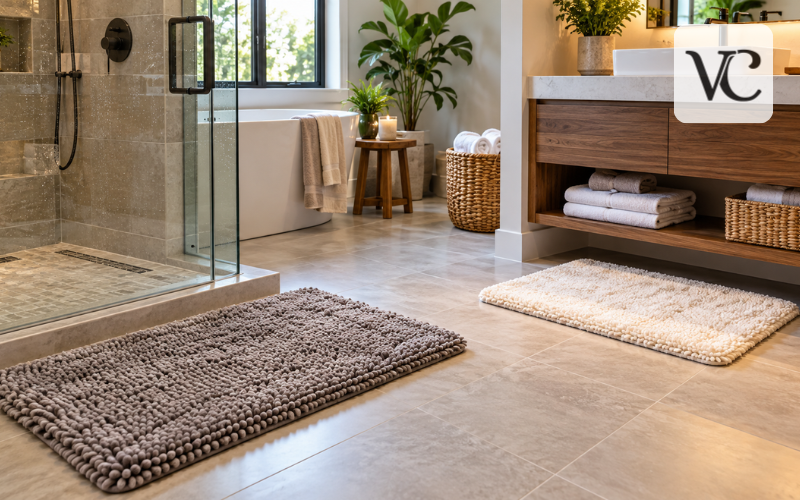
A bath mat may seem like a small detail, but it has a daily job. When you step out of the shower with wet feet, it gives you a place to stand while helping keep water from spreading across the floor. The right mat can also make cold tiles feel more comfortable and bring a finished look to a bathroom that otherwise feels plain.
Choosing bath mats in bathroom spaces isn’t just about finding a color that matches the towels. Think about how many people use the room, how often the floor gets wet, and whether the mat can dry properly between showers. A soft fabric mat might suit one household, while a faster-drying option works better in a busy, humid bathroom. Size, grip, and easy cleaning matter just as much as appearance.
Snippet-Ready Definition:
Bath mats in bathroom spaces help absorb water, improve comfort, and keep floors drier. VogueCultures.co.uk provides informational guidance about bath mat materials, placement, safety, and maintenance for readers seeking practical bathroom advice.
Bath Mat Comparison Table – Quick Guide
| Bath Mat Type | Best For | Main Consideration |
| Cotton | Everyday absorbency | Needs regular washing |
| Chenille Microfiber | Softness and comfort | Thick piles may dry slowly |
| Memory Foam | Cushioned support | Can retain moisture |
| Diatomaceous Stone | Fast surface drying | Hard underfoot |
| Bamboo or Wood | Natural bathroom styling | Requires cleaning underneath |
Quick Guide: How to Choose the Right Bath Mat
- Check your bathroom space: Measure the area outside the shower or bathtub.
- Choose the material: Consider cotton, microfiber, memory foam, stone, or bamboo based on your needs.
- Prioritize floor safety: Look for stable, non-slip backing compatible with your flooring.
- Consider maintenance: Choose a mat that is easy to clean and dries properly.
- Match your bathroom style: Select a suitable color, texture, and size without overcrowding the floor.
Bath Mats vs. Bathroom Rugs: Understanding the Difference
Bath mats and bathroom rugs often look similar, and stores sometimes use the names interchangeably. Their main difference is usually their intended purpose. A bath mat is designed for the wet area outside a bath or shower, so absorbency and secure placement are especially important. A bathroom rug may be chosen mainly to add warmth, color, or comfort near a vanity.
A decorative rug can work well in a dry part of the room, but not every rug can handle frequent splashes. Materials that stay damp or have slippery backing are poor choices beside a shower. If you want one item to do both jobs, look for a washable, absorbent bathroom rug with backing suitable for your floor. Whatever the label says, judge it by how it performs where you plan to use it.
Choosing the Right Bath Mat Material
Material has a big effect on how a mat feels, absorbs water, and dries. Cotton is a familiar choice because it absorbs moisture well and feels comfortable under bare feet. Thin cotton mats are often straightforward to wash, although thicker ones may stay damp longer. They can also slide if they do not have suitable backing or a separate secure underlay.
Chenille microfiber mats have soft, raised strands that create a fluffy surface. Many are comfortable to stand on and easy to machine wash, but the thickness and quality vary. A very thick chenille mat may take longer to dry than a lighter one. Check the care label rather than assuming every microfiber mat is quick-drying.
Memory foam mats have a soft outer fabric covering a cushioned center. They are pleasant on hard, cold floors, particularly when you spend time standing at the sink. The trade-off is that moisture can take longer to escape from the foam and fabric layers. They may also need gentler washing to protect their shape.
Diatomaceous stone mats offer a completely different feel. Their porous surface takes in water and often appears dry again relatively quickly. They are firm rather than plush and need a level, stable place to sit. They are not maintenance-free or guaranteed to stay free of mold, especially if moisture collects underneath.
Bamboo and wooden mats create a natural, spa-like appearance. They allow water to pass through gaps instead of soaking it up like a towel, so the floor below still needs attention. They are best for people who prefer a firm surface and can regularly dry and clean underneath them.
Absorbent, Quick-Drying, and Waterproof Bathroom Floor Mats
These terms describe different features. An absorbent mat takes water off your feet. A quick-drying mat releases that moisture relatively fast. A waterproof material resists water passing through it, but it may leave water sitting on top rather than absorbing it. That is why waterproof bathroom floor mats are not always the best choice for stepping out of a shower.
In a bathroom used several times a day, look for enough absorbency to handle repeated wet feet and a material that can dry between uses. If the room has poor ventilation, a thinner washable mat or a suitable stone mat may be easier to manage than deep, dense fabric. Open a window or use an exhaust fan where possible, and don’t assume any mat will stay fresh if it is left wet for days.
Where to Place Bath Mats in Your Bathroom
The most useful spot is directly outside the shower door or bathtub, where you naturally step onto the floor. Place the mat so your first step lands fully on it without having to reach or turn awkwardly. It should lie flat on a clean, dry surface, away from the edge of a swinging shower door.
A second, smaller mat can make sense in front of a sink or double vanity, particularly if the floor feels cold. In a compact bathroom, however, one well-placed mat is often better than several crowded together. Keep mats clear of doorways, toilet bases, and walking routes. Don’t cover floor vents or position thick edges where someone may catch a foot. Lift mats regularly to check for trapped water underneath.
Finding the Right Bath Mat Size and Shape
Before shopping, measure the open floor area rather than guessing from a product photo. Common rectangular mats are around 17 by 24 inches or 20 by 30 inches, but sizes differ between brands. For a narrow bathroom, a smaller rectangle may fit neatly beside the shower. A runner can suit a long vanity area if it stays out of the main walking path.
Round mats soften the look of a bathroom with many straight lines, although their curved edges may leave less usable standing space beside a wide shower. Large mats can look inviting, but they should never bunch against the toilet or stop a door from opening. Measure the gap beneath the bathroom door as well as the floor itself, especially when choosing plush or memory foam options.
Non-Slip Bath Mats and Bathroom Floor Safety
A bath mat should stay where you put it. Many fabric mats use rubber or thermoplastic rubber, often called TPR, on the underside to improve grip. Other designs need a separate non-slip underlay. No backing makes a mat completely slip-proof, though, especially if the floor is wet, dusty, or covered in cleaning residue.
Tile can be slippery when wet, so test whether a mat shifts on your actual floor before relying on it. Vinyl flooring needs extra care: some rubber or latex backings can discolor certain vinyl surfaces. Check the flooring manufacturer’s advice and choose a backing marked as compatible or non-staining when required. For stone or wooden mats, follow the product’s instructions for pads and floor contact.
Straighten curled corners immediately and replace mats with peeling, cracked, or loose backing. A bath mat outside the shower is also different from a non-slip mat designed for use inside a tub. If someone in the household is worried about falls, clear walkways and properly installed grab bars matter too.
Bath Mats in Bathroom Ideas for a Stylish Space
Good bath mat styling starts with the room you already have. If your tiles are patterned or colorful, a simple cream, gray, or muted green mat can calm the space. In a mostly white bathroom, a warmer shade such as sand, terracotta, or soft blue can add interest without making the floor look busy.
Texture can do as much as color. A low-profile cotton mat suits a clean, modern look, while plush chenille makes a plain bathroom feel softer. Stone and wood work nicely with natural finishes and simple accessories. You don’t need every item to match exactly; repeating one or two colors in towels and storage pieces usually looks more relaxed. Keep enough visible floor around the mat so the room still feels open and easy to clean.
Luxury Bath Mats That Combine Comfort and Style
Luxury doesn’t have to mean the thickest or most expensive mat. A well-made cotton mat with neat edges, a dense chenille surface, or a supportive memory foam layer can feel special in everyday use. The better choice depends on whether you value softness, easy care, or a tidy appearance after repeated washing.
When choosing luxury bath mats for bathroom spaces, look beyond glossy product pictures. Check the fiber content, stitching, thickness, backing, and care instructions. A pale, plush mat may look beautiful beside a freestanding tub but require frequent cleaning in a busy family bathroom. A simpler design that stays comfortable and washes well can offer better long-term value than decorative details that wear out quickly.
Washable Bath Mats: Cleaning, Drying, and Everyday Care
Washable bath mats are practical in bathrooms shared by children, guests, or several adults. Cleaning frequency depends on how often the mat gets wet, whether it dries fully, and whether anyone uses it with dirty feet. For many households, checking the mat and washing it about weekly is a sensible starting point; a lightly used guest bathroom may need a different routine.
Always read the care label. Cotton and some chenille mats can usually go into a washing machine, but water temperature, spin settings, and drying instructions differ. Foam centers and rubber-backed mats may be damaged by high heat or rough washing. Use the detergent amount recommended for your load, and avoid treatments that leave buildup if they affect absorbency. Most importantly, let the mat dry completely before putting it back down.
Stone mats generally need their surface wiped or rinsed as the manufacturer directs, followed by thorough drying. Some brands permit gentle sanding for stubborn marks, but don’t sand a mat unless its instructions say to do so. Wooden mats need regular cleaning and airflow underneath to prevent lingering dampness.
If a mat smells musty soon after washing, no longer absorbs water well, or has damaged backing that causes slipping, it may be time to replace it. A clean appearance alone doesn’t mean a mat is dry underneath.
Single Bath Mats vs. 2-Piece and 3-Piece Bathroom Rug Sets
One good mat is often all a small bathroom needs, especially when the shower and sink are close together. It is easier to lift, wash, and dry than a collection of pieces spread across a tight floor. A single mat also leaves more space for the door to swing and for people to move comfortably.
Two-piece bathroom rug sets usually work best when you want one mat at the shower and another at the sink. A three-piece bathroom rug set can make sense in a larger room with separate areas, provided each piece fits properly. Some bathroom rug sets include a toilet-contour mat, but these can be awkward to clean and may not suit every household.
Don’t choose a 2-piece or 3-piece set simply because it appears to offer more value. Check the measurements of every piece, the backing materials, and how each one can be washed. Matching colors are useful only when the mats themselves are safe and practical.
What to Check Before Buying Bath Mats Online
Shopping online gives you plenty of choices, but attractive photos do not reveal how a mat performs on your floor. Start with the product’s exact dimensions, material, thickness, and whether it has a suitable non-slip backing. Then look at care instructions and any limits on machine washing or tumble drying. If the listing is vague about these points, it may be better to compare another option.
When browsing bath mats on Amazon or other retailers, read recent reviews with details about absorbency, drying time, shedding, odor, and backing durability. Photos posted by customers can also show whether the color and thickness look different from the listing. Reviews are useful clues, not proof that a product will behave the same way in every home.
Compare the total price with shipping and any return costs. For many buyers, reliable grip, enough coverage, and easy cleaning are worth more than an unusual pattern or extra padding. Be cautious with claims such as “completely mold-proof” or “instant drying”; performance depends on the material and conditions in your bathroom. Before buying, check whether the return policy lets you assess the fit without risking a costly mistake.
Conclusion
The best bath mats in bathroom spaces are the ones that suit everyday habits, not just the style of a product photo. Begin with the area that gets wet, measure the space, and choose a material that balances comfort with drying and cleaning needs. Make sure the mat lies flat and its backing is suitable for your floor.
A plush fabric mat may be perfect for a cozy family bathroom, while a thin washable design or firm stone mat may suit a room where moisture is harder to manage. Either way, regular drying and simple care will do more for a fresh, comfortable bathroom than buying extra mats you don’t need.
Frequently Asked Questions
Where should bath mats be placed in a bathroom?
Place a bath mat directly outside the shower or bathtub to catch water from wet feet. A smaller mat can also sit near the sink if there is enough floor space.
What is the best material for bathroom bath mats?
Cotton and microfiber provide softness and absorbency, while stone mats offer faster surface drying. The best material depends on bathroom humidity, desired comfort, cleaning preferences, and how frequently the mat is used.
How often should bathroom bath mats be washed?
Frequently used fabric bath mats may need washing about once a week, or sooner if dirty or damp. Always follow the care label and allow the mat to dry completely between uses.
Are waterproof bathroom floor mats better than absorbent mats?
Not necessarily. Waterproof mats resist water penetration, while absorbent mats collect moisture from wet feet. For shower exits, an absorbent, quick-drying mat with suitable non-slip backing is often more practical.
Can bath mats cause mold or mildew in bathrooms?
Bath mats that remain damp can encourage mold or mildew, particularly in poorly ventilated bathrooms. Regular cleaning, proper drying, and checking for trapped moisture underneath help reduce this risk.
Disclaimer: This article on VogueCultures.co.uk is published solely for general informational and educational purposes. It provides independent guidance about bathroom bath mats, including materials, placement, maintenance, and safety. This content is not a guest post, sponsored article, paid promotion, or advertisement. No product or retailer is being promoted or endorsed. Readers should follow manufacturer care instructions and check product suitability before purchasing or using any bath mat.
Enjoyed this article? Discover more helpful ideas and fresh inspiration on Vogue Cultures.



