Black window frames are exactly what their name suggests: window frames finished in black or a very dark charcoal color. They may be black on both sides, or they may have a black exterior with a white, wood-toned, or neutral interior. Their strong outline makes each window look almost like a picture frame, directing attention toward the sky, garden, trees, or city view outside.
This visual effect has made black window frames popular in new homes and renovations. Outside, they sharpen a building and contrast with pale walls. Inside, they add definition without much extra decoration. Still, material, glass, climate, maintenance, installation, and budget all matter.
This guide explains where black frames work, which materials are available, what drawbacks to expect, and what to check before buying. It also separates visual preferences from practical performance, so the final choice is based on more than photographs or a passing trend.
Snippet-Ready Definition:
Black window frames are dark-colored borders around window glass that create strong contrast, highlight outdoor views, and add a modern architectural look to both the interior and exterior of a home.
Black Window Frames Quick Guide
| Feature | Best Option | Main Benefit | Point to Consider |
| Fiberglass frames | Changing climates | Strong, stable, and low maintenance | Usually costs more than vinyl |
| Aluminum frames | Modern homes | Slim profiles and clean lines | Needs good thermal insulation |
| Vinyl frames | Budget-friendly projects | Affordable and easy to maintain | Quality and dark-finish durability vary |
| Steel frames | Industrial-style homes | Very slim sightlines and authentic character | Expensive and may require more care |
| Black exterior, white interior | Flexible home designs | Bold curb appeal with a lighter indoor look | Not available in every product line |
| Black inside and outside | Contemporary interiors | Creates a strong, consistent design | Shows dust and marks more clearly |
Quick Checklist Before Buying Black Window Frames
- Match the frame style with your home’s architecture.
- Compare fiberglass, vinyl, aluminum, and steel options.
- Check energy ratings for your local climate.
- Ask whether the black finish is approved for strong sunlight.
- Review the warranty for fading, peeling, and frame movement.
- Confirm the total cost, including delivery and installation.
- View a physical color sample before placing the order.
Why Black Window Frames Have Become So Popular
Black windows were once closely linked with factories and warehouses, where dark metal frames surrounded large panes of glass. Residential designers later adapted the look for lofts, contemporary houses, and modern farmhouse projects. Today, many materials and window styles offer a similar effect.
Their appeal comes mainly from contrast. Dark frames look crisp against white, cream, light gray, or natural wood and can connect roof details, railings, hardware, and lighting.
Because black is neutral, the look may last longer than a highly decorative trend. Its long-term appeal also depends on proportion: narrow lines often feel quieter than oversized borders. Still, heavy grids, thick frames, or an extreme black-and-white scheme may age faster than a restrained design that respects the architecture.
Black Window Frames Interior Design Ideas
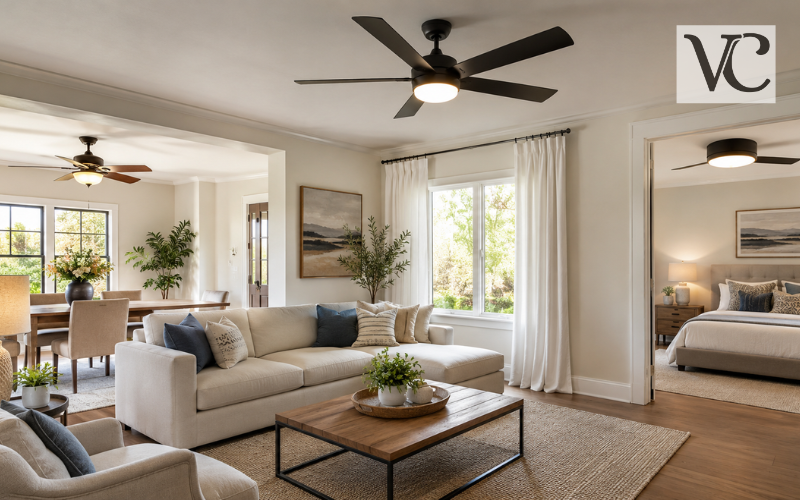
Inside a home, black window frames can give a room structure while keeping the view visually important. In a living room, a large black picture window can become the focal point. In an open-plan space, repeated dark frames can connect kitchen, dining, and seating areas.
In kitchens, black frames can relate to cabinet handles, pendant lights, taps, or appliances. A few repeated accents are enough. Bedrooms may suit black exteriors with white interiors or dark frames softened by warm fabrics.
Bathrooms require more practical thought. Privacy glass, a high window position, moisture-resistant frame materials, and good ventilation may matter more than the frame color. Fiberglass and vinyl are commonly offered for damp areas, while obscure or frosted glass can provide privacy without blocking all daylight.
The frames may reduce the need for decorative curtains, but treatments still matter. Sheers soften strong lines, roller shades control glare, and lined curtains improve privacy and darkness. In rooms facing close neighbors or strong afternoon sun, practical coverage should be planned before installation rather than added as an afterthought.
Black Window Frames Exterior Design and Curb Appeal
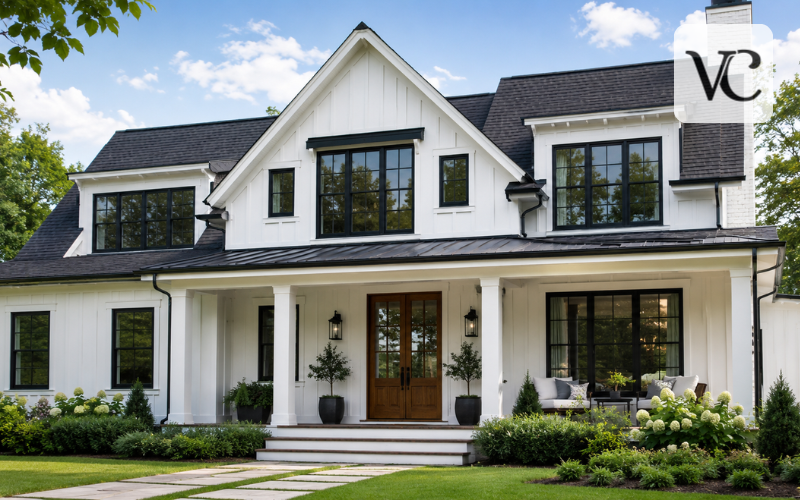
Outside, black frames outline each opening. They stand out against white brick, pale stucco, cream stone, or light board-and-batten siding and can make a simple façade look sharper.
Against timber, stone, or brick, dark frames can act as a quiet connector. Repeating black on a door, roof trim, porch lights, or railing creates balance, although too many dark details can feel busy.
Warm exterior lights and planting can soften a high-contrast scheme. The color of the roof, masonry mortar, and front door also affects whether the windows feel connected or isolated. View a full finish sample in sun and shade because a small chip may look different across several large windows.
Modern Black Windows Exterior Styles
Modern farmhouse homes often pair black grids with white siding and wood details. The look can work well, but grids on every pane may clutter a small façade.
Contemporary homes usually favor large panes, few grids, and narrow frames. Industrial designs may use divided-light patterns, while transitional homes often pair black exteriors with lighter interiors.
Traditional homes need care. Black frames can suit Georgian, Tudor, Craftsman, or cottage properties when proportions and grids remain appropriate.
Minimalist homes can suit black windows, but dark cladding, roofing, and heavy trim may make them disappear. The frames should support the architecture, not chase a trend.
Choosing the Best Black Window Frame Material
Frame material affects strength, insulation, maintenance, profile width, and price. Fiberglass is valued for stability and relatively low expansion during temperature changes. It can support clean profiles and performs well with dark finishes when the manufacturer has designed and tested the complete system. Some current fiberglass products use finishes specifically promoted for resistance to fading and scratching in dark colors.
Aluminum is strong, light, and suited to slim modern frames. Its main weakness is that metal conducts heat readily. A well-designed aluminum window should therefore include a thermal break, which separates interior and exterior metal sections to reduce heat transfer and condensation risk.
Vinyl is widely chosen for affordability, moisture resistance, and low maintenance. Modern dark-finish vinyl windows are more available than they once were, but quality varies. Vinyl expands and contracts more than fiberglass or aluminum, so buyers should check whether the specific product, finish, size, and climate are covered by the manufacturer’s warranty.
Steel offers authentic industrial style and slim sightlines but is usually expensive and needs corrosion protection. Aluminum or fiberglass may provide a similar look with easier care. Whatever the material, compare the complete window rather than assuming one frame type is always best; glass, seals, hardware, and installation can change the result.
Black Frames, Window Grids, and Trim Combinations
A fully black window creates the strongest statement and works best when the interior already has dark accents. It also draws attention to uneven trim or crowded décor.
A black exterior with a white interior is more flexible. It gives contrast outside while blending with light walls and trim indoors. Current retail listings show that both black-on-black and black-exterior/white-interior configurations are available, although exact options depend on size, brand, region, and window type.
Grid patterns should follow the house. Farmhouse and traditional homes may suit divided panes, while contemporary homes usually need fewer grids. Between-glass grids are easier to clean; applied grids look deeper and more traditional.
Black trim creates a continuous border, white trim adds breathing room, and natural wood softens the frame.
Main Advantages of Black Window Frames
The clearest advantage is visual definition. Black frames outline the view and can make ordinary windows feel more intentional. They also add exterior contrast, helping windows remain visible from a distance instead of blending into pale siding.
Black is a neutral color, so it can work with white, gray, beige, wood, brick, stone, and many muted colors. It can support modern, industrial, farmhouse, transitional, and selected traditional designs. This flexibility allows homeowners to change furniture or wall colors without automatically needing to replace the windows.
A strong view may look complete with no curtains, simple roller shades, or light sheers, keeping more glass visible.
Repeating black in doors, rails, lighting, and hardware can create continuity, especially when used selectively.
Disadvantages and Common Concerns
Black surfaces show pale dust, pollen, dried water drops, and fingerprints more clearly than many mid-tone finishes. Frames near roads, trees, sprinklers, or coastal air may need more frequent cleaning.
Black is standard in some product lines but premium in others. Large sizes, special grids, upgraded glass, and split colors can increase cost.
Black frames can compete with dark or crowded rooms. Small windows may look smaller with heavy trim, while many divided panes interrupt the view.
Changing the color later is difficult. Painting factory-finished frames may affect appearance, movement, heat behavior, or warranty coverage, so follow the manufacturer’s instructions.
Heat, Sun Exposure, Fading, and Energy Efficiency
Black surfaces absorb more solar energy than light ones, but color alone does not determine efficiency. Frame construction, thermal breaks, glass, coatings, seals, installation, and orientation all matter.
The two ratings buyers often see are U-factor and Solar Heat Gain Coefficient, or SHGC. U-factor describes how readily heat moves through the window; a lower number generally means better resistance to heat flow. SHGC describes how much solar heat enters through the window. ENERGY STAR requirements vary by climate because a window that performs well in a cold northern region may not be the best choice for a hot southern one.
Low-e coatings can reduce unwanted heat gain while preserving daylight, and climate-appropriate windows can improve comfort. Still, buyers should not assume that every black window has the same performance. Ask for certified ratings for the exact size and glass package you are considering.
In hot locations, confirm the dark finish is approved for strong sun. Exterior shading from roof overhangs, awnings, trees, or screens may also reduce direct solar exposure. Cold climates need attention to U-factor and condensation resistance. Coastal or humid sites may need corrosion resistance, wind ratings, flashing, and drainage.
Cleaning and Maintaining Black Window Frames
Remove loose dust, then wash the frame with mild soap and water using a soft cloth, sponge, or soft-bristled brush. Rinse and dry to reduce water spots. Major manufacturers commonly warn against abrasive cleaners, harsh chemicals, scraping tools, and aggressive power washing because these can damage factory finishes.
Clean exterior frames out of direct sun, keep tracks and drainage openings clear, and use only recommended hardware lubricants.
While cleaning, check for fading, corrosion, damaged seals, blocked drainage, loose hardware, difficult movement, or moisture between panes.
Steel needs closer attention to scratches and rust. Other materials still require checks of seals, hardware, caulk, and drainage.
Black Window Frames Cost and Pricing Factors
There is no single reliable price because a standard vinyl window and a large custom steel opening are very different purchases. Size, operating style, frame material, glass package, grids, finish, hardware, safety glass, energy ratings, and local labor all influence the final cost.
New-construction windows are installed with the wall system. Replacement units may fit an existing frame or require removal to the rough opening, depending on the wall, flashing, trim, and siding.
A complete estimate should separate product, delivery, removal, installation, trim, permits, and repairs, and state who is responsible for measurement and water management.
The cheapest quotation may not provide the best value if it uses weak hardware, unsuitable glass, a finish not approved for the climate, or poor installation. A slightly higher price may be reasonable when it includes better glass, careful flashing, trim repair, and dependable service. Compare certified performance, warranty terms, installer experience, and the exact scope of work rather than choosing by frame color and purchase price alone.
Where to Find Black Window Frames for Sale
Local specialists or authorized dealers are useful for unusual sizes, structural changes, or demanding performance needs. They can measure, explain code requirements, and show samples.
Searching “black window frames near me” can build a shortlist, but ranking is not proof of quality. Check licensing, insurance, local work, installation methods, and written warranties.
Home Depot and Lowe’s currently list black windows in multiple styles and materials, including black-exterior/white-interior vinyl products and some black interior-exterior options. Availability and prices vary by store, delivery area, size, and brand, so online listings should be treated as a starting point rather than a final specification.
Before ordering, confirm size, window type, colors, material, glass, grids, screen, hardware, energy label, warranty, lead time, delivery, and installation. Request a physical finish sample.
Conclusion
Black window frames can define views, strengthen exterior lines, and connect design details. Success depends on proportion, grids, material, glass, and finish.
Consider architecture, daylight, climate, sun, cleaning, and installed cost. Compare black-on-black frames with black exterior and light interior options using real samples.
For a home that benefits from clear contrast and strong architectural lines, black windows can be an attractive long-term choice. For a darker interior, highly ornate façade, or project with a tight budget, a softer frame color may be easier to live with. Careful sampling and a detailed quotation can prevent expensive surprises. The best choice is the one that supports the house, performs well in its climate, and still feels appropriate after the current trend has moved on.
Frequently Asked Questions
Are black window frames still in style?
Black window frames remain popular because they create clean contrast and suit modern, farmhouse, industrial, and transitional homes. A simple design with balanced grids is more likely to age well than an overly dramatic style.
Do black window frames make a room look darker?
Black frames can make small windows appear more defined, but they do not usually reduce natural light. Thick borders, heavy grids, dark walls, and limited daylight may make a room feel visually darker.
Do black window frames fade in direct sunlight?
Some black finishes may fade or change over time under intense sun. High-quality factory finishes usually perform better, but homeowners should confirm climate suitability, warranty coverage, and recommended maintenance before purchasing.
Are black window frames more expensive than white frames?
Black window frames can cost more when the color is considered a premium finish. The final price also depends on material, window size, glass type, grids, custom options, and installation requirements.
Are black window frames difficult to clean?
They are not difficult to clean, but dust, pollen, fingerprints, and water marks may appear more clearly. Mild soap, clean water, and a soft cloth are usually suitable for regular maintenance.
Disclaimer: This article provides general information about black window frames, materials, design, costs, and maintenance. Product performance, availability, pricing, warranties, and installation requirements vary by manufacturer, property, climate, and location. Consult a qualified window professional or contractor before purchasing or making structural changes to your home.
Enjoyed this article? Discover more helpful ideas and fresh inspiration on Vogue Cultures.