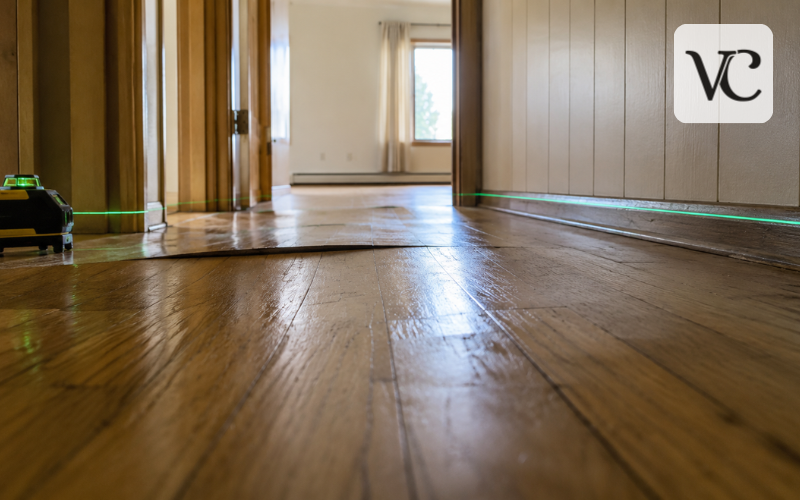
Bouncy floors move slightly under your feet when you walk across them. The surface may feel springy, shaky, soft, or like a small trampoline. You might also notice furniture trembling or feel another person’s footsteps from across the room. In some homes, especially those with long rooms or lightweight floor systems, a small amount of movement can be normal.
The movement is usually related to floor deflection, which means part of the floor system bends under weight and returns after the weight is removed. Building rules limit how much a floor may bend, but meeting a minimum code limit does not guarantee that every homeowner will consider it firm. Floor vibration also depends on joist design, subfloor thickness, room size, connections, and how the space is used.
Mild, unchanged bounce is not automatically dangerous. Strong movement, new soft spots, visible sagging, cracking, moisture damage, or worsening bounce may point to a problem below the flooring. This guide explains the main causes of bouncy floors, the inspection process, common repair choices, and the factors that affect cost.
Quick Guide to Bouncy Floors
| Floor Condition | Likely Cause | Recommended Action |
| Small local soft spot | Damaged subfloor or one weak joist | Inspect the area from below and repair damaged material |
| Whole room feels springy | Long or undersized joists | Consider blocking, sistering, or an added support beam |
| Raised or hollow floating floor | Missing expansion gap or uneven base | Check installation clearance and subfloor level |
| Floor sags toward one side | Settled post, beam, pier, or foundation | Arrange a structural inspection |
| Wood feels soft or flakes | Moisture rot or pest damage | Stop moisture, inspect for pests, and replace damaged wood |
| Bounce with squeaking | Loose subfloor or flooring fasteners | Refasten panels after checking framing condition |
Steps to Check a Bouncy Floor
- Walk slowly across the room and mark where the movement feels strongest.
- Ask someone to walk above while you inspect the floor from below.
- Check joists, beams, posts, and subfloor panels for cracks or gaps.
- Look for water stains, mold, soft wood, or termite activity.
- Note related signs such as sloping floors, cracked tiles, or sticking doors.
- Contact a professional if movement is worsening or structural damage is visible.
What Makes a Floor Feel Bouncy?
A floor is a layered system. Hardwood, laminate, carpet, or tile sits on a subfloor. The subfloor is attached to joists, which carry weight to beams, walls, posts, and the foundation. If one part of this system is loose, weak, damaged, or too flexible, movement can be felt above.
Joists naturally bend a little when someone walks over them. The amount depends on their depth, spacing, material, and unsupported length. A long joist usually moves more than a shorter joist of the same size. Wide spacing and a thin or poorly fastened subfloor can also make the floor feel less solid. Heavier items, such as a large aquarium, stone countertop, or exercise equipment, may make an already flexible area more noticeable.
The bounce pattern often provides useful clues. A small soft area may involve damaged subflooring or one weak joist. Movement across most of a room is more likely to involve long spans, several joists, or a support beam. A raised, springy section limited to a floating floor may be an installation problem rather than a structural one.
Are Bouncy Floors Dangerous?
Bouncy floors are not always dangerous. A floor with the same mild movement for many years, no visible damage, and sound framing may be mainly a comfort concern. Some engineered floor systems can produce noticeable vibration even when designed within building-code limits because people vary in how strongly they notice movement.
Concern increases when the floor feels soft rather than flexible, drops noticeably during normal walking, or has changed recently. Warning signs include cracked joists, gaps above support posts, water-damaged wood, insect tunnels, a sagging beam, or movement that affects doors, walls, and tile.
A weak floor may become unsafe when rot, termites, poor alterations, settlement, or missing support reduces its ability to carry normal loads. Termites can damage structural wood while remaining hidden, so suspected activity should be assessed by a qualified pest professional.
Do not ignore a bounce that is getting stronger. Early inspection may prevent a small moisture, pest, or framing issue from becoming a major structural repair.
Common Causes of Bouncy Floors
A common cause is a joist span that is too long for the joist’s depth, grade, spacing, or expected load. The joists may not be broken, but they can flex enough to make the floor uncomfortable. Incorrect cuts or holes made for plumbing and wiring can also weaken them. Engineered joists have specific rules about where holes can be placed, and cutting their flanges can cause serious damage.
Subflooring may be too thin, poorly fastened, unsupported at panel edges, or damaged by water. Loose fasteners often cause squeaks, while weakened panels can create a local soft spot. Poor connections between the subfloor, joists, underlayment, and finished flooring can produce both noise and movement.
Support problems usually affect a wider area. A beam may be undersized, a post may have settled, shims may be missing, or a pier may no longer provide full contact. Foundation movement can also change how loads pass through the structure.
Moisture is another major cause of bouncy floors. Ground vapor and humid air can reach crawl-space framing and condense on cooler wood. Repeated wetting can encourage decay and reduce the strength of joists and subfloor panels. Drainage and a continuous ground vapor barrier are important parts of crawl-space moisture control.
Termites and other wood-destroying insects can hollow out joists, beams, or subflooring. Because the outside of a piece of wood may hide internal damage, suspected activity requires professional inspection.
Bouncy Floors in an Old House
Bouncy floors in an old house often have more than one cause. Older framing may use smaller joists, wider spacing, or long spans that were common when the home was built. The wood may remain strong even though the floor feels less firm than a newer floor system.
Past renovations can add problems. Someone may have cut joists for pipes, removed a supporting wall, added a heavy bathroom, or changed the basement layout without proper reinforcement. Short repair boards, loose shims, and temporary posts can also fail over time.
Age alone does not make a floor unsafe. Slight slopes and mild movement may be long-standing features of the property. The key question is whether the condition is stable. A new dip, worsening bounce, cracked tile, sticking doors, or fresh wall cracks should be inspected.
Older crawl spaces may also have exposed soil, poor drainage, leaking plumbing, or limited humidity control. Dampness should be corrected before the framing is strengthened. Reinforcing wet or decaying wood without stopping the moisture only hides the underlying cause.
Bouncy Floors in a New House
A new house can have bouncy floors even when there is no rot or visible damage. Open-plan rooms, long spans, lightweight engineered joists, and minimum design targets can create vibration that some people notice more than others. APA guidance treats vibration and perceived floor performance as separate concerns from basic structural strength.
Installation details still matter. Incorrect joist spacing, loose subfloor panels, missing connections, unsuitable hangers, or poor adhesive coverage can reduce stiffness. Plumbing and heating openings can also damage engineered joists when they do not follow the manufacturer’s approved locations.
Sometimes the finished floor is responsible. A new laminate or engineered floor may move because the base is uneven, the underlay is unsuitable, or the perimeter gap is missing. Floating floors require room to expand and contract, with the exact clearance determined by the product instructions.
Report strong or worsening movement to the builder in writing and review the home warranty. Record the affected rooms and when the movement occurs. An inspection should identify whether the problem is in the finished flooring, subfloor, framing, or support system.
Bouncy Hardwood and Floating Floors
Bouncy hardwood floors may result from the boards, subfloor, or joists. Loose fasteners can allow nail-down hardwood to shift and squeak. A low area in the subfloor may leave some boards unsupported, while moisture changes can make wood expand, cup, or lift.
You can sometimes separate a surface issue from a framing problem by watching the area carefully. If only a few boards move while nearby furniture remains still, the problem may be close to the surface. If a broad area dips and furniture shakes as someone walks past, the framing is more likely to be involved.
Floating laminate and engineered floors are not fixed directly to the subfloor. They need a flat, dry, stable base and the expansion space required by the manufacturer. When the floor is trapped by baseboards, cabinets, door frames, or fixed objects, the planks may bind and rise. This raised pocket can feel hollow or springy even when the joists underneath are sound.
The repair must match the flooring type. Adding a support post will not correct a trapped floating floor, while trimming an expansion gap will not repair a cracked joist.
How to Diagnose Bouncy Floors
Start by mapping the movement. Walk slowly across the room and note where it begins, where it feels strongest, and whether it follows a straight line. Ask another person to walk through the area while you watch furniture, floor edges, and nearby door openings. Avoid jumping because it adds unnecessary load and does not provide a reliable diagnosis.
Inspect the floor from below when the basement or crawl space is safely accessible. Look for cracked joists, water marks, mold-like growth, insect tubes, loose hangers, missing blocking, gaps over posts, and subfloor panels that move when someone walks above.
Do not enter a wet, unstable, mold-heavy, or extremely tight crawl space without professional help. Electrical wiring, animals, contaminated water, damaged supports, and limited ventilation can make these spaces unsafe.
Notice whether the bounce crosses several joists or stays in one small area. Broad movement often points to joist or beam flexibility. A soft patch may indicate subfloor damage. Movement near plumbing can suggest a leak, while a raised floating-floor section may indicate binding.
Sloping floors, sticking doors, cracked tile, separated trim, and widening wall cracks do not prove foundation failure on their own. However, several new symptoms appearing together justify a professional assessment. A structural engineer can calculate loads and design a repair when the cause or required support is uncertain.
Warning Signs That Require Professional Inspection
Arrange professional help when the floor is visibly sagging, feels soft enough that your foot seems to sink, or changes quickly. The same applies when a joist or beam is split, crushed, badly notched, decayed, or damaged by insects.
Other serious signs include a leaning post, a gap between a post and beam, standing water in the crawl space, active termites, or cracks that continue to widen. Multiple symptoms such as floor slope, sticking doors, wall cracks, and foundation movement require a broad inspection rather than a quick surface repair.
A structural engineer is useful when a beam, bearing wall, pier, or group of joists may need alteration. A foundation specialist may be needed for settlement, while a licensed pest professional should handle active termite problems. Structural changes may also require permits and inspections under local building rules.
Six Ways to Stiffen a Bouncy Floor
No single repair works for every floor. Six common options include:
- Add solid blocking or bridging. Wood blocks or approved metal bridging are fitted between joists. They help nearby joists work together and reduce twisting or vibration. However, they may provide only a limited improvement when joists are undersized, badly damaged, or stretched across very long spans.
- Sister the joists. A new joist or designed repair member is installed beside an existing one. Sistering can help cracked, sagging, weakened, or overly flexible joists when there is sound support at the ends. The new member must be properly sized and connected rather than simply nailed to a small section of the old joist.
- Use plywood scabs for limited reinforcement. Structural plywood may reinforce a carefully selected local area. This approach is not a universal replacement for full-length sistering, especially near major cracks, large holes, or damaged bearing points. The panel thickness, length, adhesive, and fastener arrangement should suit the specific repair.
- Add a support beam. A beam below the joists shortens their unsupported span and may greatly reduce room-wide bounce. Its size, location, connections, and load path need proper design. Adding beams or additional joists is one of the more effective ways to improve a floor that was built with inadequate stiffness.
- Install permanent posts and footings. Posts transfer the beam load to suitable concrete footings or another approved foundation element. A post placed on thin concrete, soil, paving blocks, or loose masonry may settle and create another problem.
- Strengthen the subfloor and control moisture. Refastening, panel replacement, or an added structural layer may improve a weak subfloor. Leaks, drainage, ground vapor, and humidity must also be corrected. Department of Energy guidance supports a sealed, continuous crawl-space ground vapor retarder as part of moisture management.
Choosing the Right Repair Method
The best repair addresses the actual cause. Blocking may improve minor vibration when joists are sound, but it cannot restore rotten or termite-damaged wood. Sistering can strengthen weak joists, but it will not solve a sinking pier unless the support below is repaired.
A support beam and posts may help when most of a room moves because they shorten the joist span. However, the added weight needs a safe path to the ground. A basement slab may not be thick enough to act as a footing, and lifting a sagging floor too quickly can damage walls, tile, plumbing, doors, and finished surfaces.
Surface problems require different work. Loose hardwood may need refastening after the subfloor has been checked. A trapped floating floor may need its perimeter clearance corrected. Wet framing should be dried and the moisture source stopped before the final structural repair begins.
Securing an accessible loose panel may suit an experienced homeowner. Cutting, drilling, lifting, sistering, adding beams, or changing posts can affect the structure and should follow a professional plan. Never remove a wall, post, beam, or joist section because it appears unnecessary.
Bouncy Floors Cost and Repair Price Factors
The cost to fix bouncy floors varies because bounce is a symptom rather than one specific repair. A loose panel may require limited labor, while rotten joists, settled supports, or foundation movement can involve several contractors and repair stages.
As a rough U.S. guide, 2026 estimates place many floor-joist repair projects between $1,000 and $10,000. Broader sagging-floor repairs involving several joists or support beams are often reported at around $4,000 to $12,000, while extensive replacement or whole-floor structural work can exceed $20,000. These figures are general market estimates and should not be treated as a quote for a particular home.
The final price depends on the number of affected joists, repair type, local labor rates, engineering, permits, and accessibility. An open basement is usually easier to work in than a low crawl space. A finished basement may require ceiling removal followed by drywall, paint, or trim restoration. Pipes, wiring, ducts, masonry, and built-in fixtures can also increase labor costs.
Moisture treatment, pest control, drainage improvements, vapor barriers, mold cleanup, or foundation repair may add to the total. Get a written diagnosis that clearly names the cause and proposed repair before comparing estimates. A low quote offers little value when it treats only the visible symptom.
Preventing Bouncy Floors From Returning
Prevention begins with water control. Repair plumbing leaks, direct roof runoff away from the foundation, maintain exterior drainage, and investigate standing water. Exposed crawl-space soil can release water vapor toward floor framing, so a correctly sealed ground barrier may be needed as part of a complete moisture-control plan.
Maintain gutters, downspouts, crawl-space conditioning systems, and dehumidifiers according to the design of the home. Do not assume that opening crawl-space vents will always dry the area. During warm, humid weather, outdoor air can add moisture to cooler crawl-space surfaces.
Watch for mud tubes, discarded insect wings, hollow-sounding wood, and other termite signs. Avoid storing firewood, lumber, or cardboard against the foundation, and arrange an inspection when activity is suspected.
During remodeling, protect joists from careless notching and drilling. Follow the joist manufacturer’s rules for openings, and do not alter beams, posts, or bearing walls without checking how the weight is supported. Flooring installers should also follow product requirements for subfloor condition, moisture, fastening, underlay, and expansion space.
After repairs, continue monitoring the area. Returning squeaks, increasing movement, new cracks, or renewed dampness may show that the original cause was not fully corrected.
Conclusion
Bouncy floors can result from flexible joists, loose subflooring, flooring installation errors, weak supports, moisture damage, termites, or foundation movement. Some floors have a harmless amount of give, while others need prompt attention because the condition is changing or the wood has lost strength.
The safest approach is to find the root cause before choosing a repair. Map the bounce, inspect accessible framing, check for moisture and pests, and watch for related changes elsewhere in the home. Then match the solution to the problem, whether that means correcting a floating floor, securing the subfloor, sistering joists, adding a properly designed beam, controlling crawl-space moisture, or repairing settled supports.
Monitor mild, stable movement, but arrange a professional inspection when bouncy floors worsen, sag visibly, feel soft, or appear alongside cracked framing, active pests, standing water, sticking doors, or expanding wall cracks. A firm floor depends on sound framing, dry materials, and properly supported loads.
Frequently Asked Questions
Are bouncy floors always dangerous?
No. Slight, stable movement may only be a comfort issue. However, worsening bounce, sagging, soft wood, damaged joists, moisture, or termite activity can indicate a structural problem.
How can I tell whether the joists are causing the bounce?
Joist-related movement usually affects a broad section of the room. If furniture shakes and several floor areas move together, the framing or support system may be too flexible.
Can bouncy floors be fixed without replacing the floor?
Yes. Many problems can be corrected from below by adding blocking, sistering joists, strengthening the subfloor, or installing a properly designed beam and permanent support posts.
Why does my new laminate floor feel bouncy?
A new laminate floor may feel springy because the subfloor is uneven, the underlay is unsuitable, or the required expansion gap was not left around walls and fixed objects.
How much does it cost to fix bouncy floors?
The cost depends on the cause and accessibility. Minor fastening or blocking may be affordable, while joist replacement, moisture treatment, beam installation, or foundation work can cost several thousand dollars.
Disclaimer: This article provides general information about bouncy floors and common repair methods. It is not a substitute for an on-site structural inspection, engineering advice, or local building-code guidance. Floor systems vary by property, age, materials, and construction method. Do not cut joists, move supports, lift a sagging floor, or install structural posts without confirming the correct repair and load path. Contact a qualified structural engineer, licensed contractor, foundation specialist, or pest professional when the floor is worsening, visibly sagging, moisture-damaged, or affected by insects.
Enjoyed this article? Discover more helpful ideas and fresh inspiration on Vogue Cultures.