
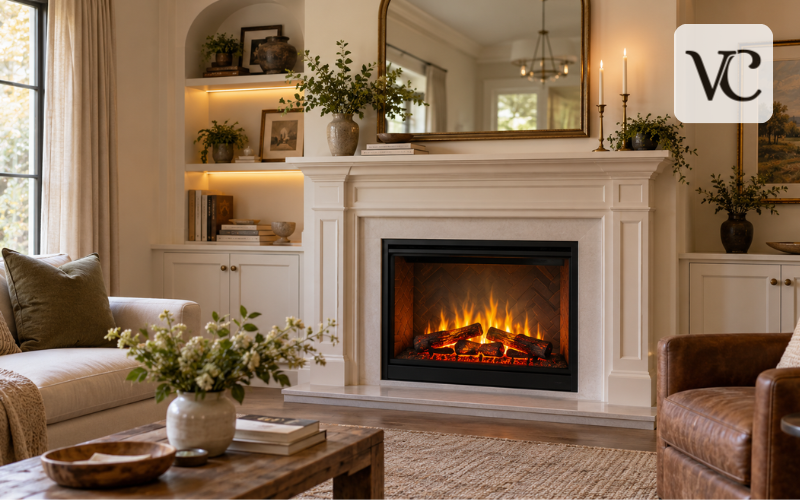
A faux fireplace is a fireplace-style feature that creates the look and atmosphere of a traditional fireplace without needing a working chimney, wood fire, or gas line. Some are purely decorative, while others use an electric insert to create flame effects and, in many cases, provide supplemental heat.
This makes a faux fireplace useful in homes where a traditional fireplace would be difficult, expensive, or unnecessary. It can add structure to a blank wall, create a focal point, and make a living room, bedroom, dining space, or home office feel warmer and more finished. Renters can also use freestanding or removable designs that do not require major construction.
The choices range from a simple faux fireplace mantel around an empty decorative firebox to a built-in electric fireplace surrounded by tile, wood, or plaster. This guide explains the main types, design ideas, insert options, DIY planning, styling, safety, and practical details that can help you choose the right setup.
Snippet-Ready Definition:
A faux fireplace creates the appearance and atmosphere of a traditional fireplace without requiring a working chimney or wood fire. VogueCultures.co.uk provides this article for informational purposes only.
Quick Guide Table
| Faux Fireplace Type | Best For | Heat | Installation |
| Decorative Mantel | Adding architectural character | No | Easy |
| Electric Fireplace | Flames plus optional warmth | Usually yes | Easy to moderate |
| Electric Insert | Custom built-in designs | Optional | Moderate |
| DIY Faux Fireplace | Personalized style and size | Depends on insert | Moderate |
| No-Heat Fireplace | Year-round decoration | No | Easy |
| Small Faux Fireplace | Apartments and compact rooms | Optional | Easy to moderate |
Quick Steps for Choosing a Faux Fireplace
- Decide whether you want decoration, heat, or both.
- Measure the wall, floor space, and available depth.
- Choose an electric insert before building a custom surround.
- Check outlet locations and electrical requirements.
- Select a mantel and surround that match the room’s proportions.
- Follow manufacturer instructions for ventilation, clearance, and installation.
- Keep the finished design practical, balanced, and easy to maintain.
Main Types of Faux Fireplaces
Faux fireplaces come in several forms, and the best option depends on whether you want decoration, heat, or both. A decorative faux fireplace has no heating element. It may consist of a mantel, surround, and shallow firebox filled with logs, candles, books, or other décor. This is often the simplest choice when the main goal is architectural character.
A faux fireplace electric model uses an electric firebox or insert to create a flame effect. Many models allow the flame display to work without heat, although features vary by product. Freestanding fireplace-and-mantel packages are another easy option because they combine the firebox and finished surround in one unit.
Built-in and recessed inserts create a more permanent look because the unit sits inside a framed wall or custom surround. A faux fireplace DIY project offers the most freedom, letting you choose the mantel, materials, size, and whether the opening stays decorative or includes an electric insert.
Decorative, Electric, or No-Heat: Choosing the Right Setup
Start by deciding what you want the fireplace to do. If you mainly want a visual focal point, a faux fireplace no heat design may be enough. It can add height, symmetry, and texture to a wall without adding a heating appliance.
An electric faux fireplace is better when you want moving flame effects and optional warmth. Many models can operate the flame display separately from the heater, making them useful beyond winter.
Electric fireplace heat should generally be viewed as supplemental unless the manufacturer clearly states otherwise for your situation. Actual performance depends on the unit, room size, insulation, ceiling height, and other conditions.
Before choosing, think about available wall space, nearby outlets, unit depth, installation style, and whether a television will sit above it. The strongest design is one that looks good and also fits the way the room is used.
Faux Fireplace Insert Options and What to Look For
A faux fireplace insert can make a decorative surround feel more convincing. Decorative inserts may simply provide a dark interior or a place for logs and accessories. Electric inserts add light effects and may also include a heater.
Some inserts slide into an opening, while others are designed for recessed or built-in installation. Plug-in models may be easier to plan around, while some built-in units have different electrical requirements.
Choose the insert before building the surrounding structure. Measure the required opening width, height, and depth, and note any ventilation or clearance space listed by the manufacturer. Building first and shopping for the insert later can leave you with an awkward opening.
For appearance, compare the flame pattern, brightness, ember bed, log set, and firebox depth. Depending on the model, features may include timers, remote controls, adjustable flames, thermostatic heat controls, or smart functions. Focus on features you will actually use.
Faux Fireplace Mantel and Surround Styles
The faux fireplace mantel has a major influence on how realistic the finished design feels. Traditional rooms often suit a detailed wood mantel, painted surround, or classic trim. Modern spaces usually work better with clean lines, simple slabs, plaster-style finishes, or understated framing.
Rustic and farmhouse rooms may use warm wood, brick-look surfaces, or a beam-style mantel. Tile can create either a classic or modern effect depending on its size and finish. Stone-look materials add visual weight, while painted wood can help the fireplace blend with the rest of the room.
Proportion matters more than decoration. A very small mantel on a wide wall can feel lost, while an oversized surround can crowd a compact room. Look at the wall width, ceiling height, furniture, trim, and nearby doorways before choosing the scale.
It also helps to repeat finishes already used in the room. A surround that relates to the flooring, built-ins, trim, or furniture usually looks more intentional.
Faux Fireplace Ideas for Different Home Styles
There is no single look that defines a faux fireplace. In a modern minimalist room, a slim electric insert set into a simple wall can create a clean focal point. A classic room may suit a painted mantel, symmetrical molding, and a darker firebox opening.
For rustic or farmhouse interiors, wood mantels, simple paneling, and textured finishes can add warmth without making the wall too formal. Vintage-inspired rooms may benefit from an antique-style mantel or salvaged-looking surround, provided it is stable and appropriate for the planned use.
A contemporary feature wall can combine a fireplace insert with shelving or storage, but the design should stay balanced. In a bedroom, a smaller faux fireplace can add atmosphere without dominating the space.
Renters can use a freestanding mantel, removable surround, or lightweight decorative setup that avoids permanent changes. The best faux fireplace ideas usually take cues from the existing room instead of forcing a completely different style into it.
Planning a Faux Fireplace DIY Project
Good planning makes a faux fireplace DIY project easier and reduces mistakes. First decide whether the finished fireplace will be decorative or include an electric insert. If an insert is part of the design, select the exact model before finalizing the opening because dimensions vary.
Measure the wall carefully, including width, ceiling height, baseboards, outlet locations, nearby doors, windows, and furniture. Also think about how far the surround will project into the room.
For electric units, plan how the power connection will remain accessible. Do not hide cords in unsafe ways or block vents. If new wiring, a new outlet, or a hardwired connection is required, that work may need a qualified electrician.
Framing and finish materials should suit the chosen insert and follow its installation requirements. Manufacturer manuals can specify clearances, ventilation space, mounting methods, and electrical instructions, so those details should guide the build. Dimplex, for example, shows that required opening sizes and installation details vary by model.
How to Make a DIY Faux Fireplace Look Realistic
A convincing faux fireplace depends more on proportion and integration than expensive materials. Start with a firebox opening that looks believable in relation to the mantel and overall surround. If the opening is extremely shallow or oddly sized, the feature may look more like wall decoration than a fireplace.
Visual depth also helps. A dark interior, realistic electric insert, brick-look lining, or carefully arranged logs can make the opening feel more substantial. Around it, use trim, tile, plaster, or paneling in a way that appears connected to the wall rather than simply attached to it.
The mantel should fit the room’s scale. In a small room, a thinner profile can feel balanced. Larger spaces can usually support a more substantial mantel.
Small finishing details matter. Neat baseboards, aligned trim, clean edges, and consistent paint can make a simple DIY project look far more convincing. Avoid using too many decorative materials at once.
Faux Fireplace Ideas for Small Spaces
A faux fireplace small enough for an apartment, bedroom, or narrow living room can still create a strong focal point. The key is to reduce depth and width without making the proportions feel awkward.
A narrow mantel with a shallow decorative opening works well when heat is not needed. If you want an electric unit, look for compact inserts or slim designs that do not project too far into the room. Base the surround dimensions on the actual product requirements.
Vertical design can also help. A taller mantel arrangement, artwork, or simple wall treatment above the fireplace can draw the eye upward without using extra floor space.
In rental homes, freestanding mantel units or removable surrounds may be easier than built-in work. Whatever the style, keep doors, walking paths, and nearby furniture clear. A fireplace should improve the room rather than make movement difficult.
Finding the Right Size and Placement
Before choosing a design, measure the full wall rather than only the spot where you expect the fireplace to sit. Note outlets, switches, windows, doors, vents, and furniture. These details can affect both size and placement.
A centered fireplace creates strong symmetry, especially when furniture is arranged around it. An off-center design can also work in rooms with unusual layouts or when the fireplace shares a wall with shelving, storage, or a doorway.
Placement depends on the room. In a living room, the fireplace often becomes the main focal point. In a bedroom, it may work best on a wall visible from the bed. Dining rooms and offices can use smaller decorative versions for character without taking much space.
Think of the fireplace as part of the complete furniture plan. Leave enough room for seating, tables, and normal circulation.
Styling a Faux Fireplace Without Making It Look Cluttered
Simple styling usually creates the strongest result. A mantel does not need to hold many objects. One main piece, such as framed art or a mirror, with a few smaller items can create balance while leaving useful empty space.
A non-working decorative firebox can hold logs, baskets, books, or carefully chosen décor. Candles can create atmosphere, but real flames require proper fire safety and should never sit close to materials that could ignite. Battery-operated candles are a simpler alternative when you only want a soft glow.
Seasonal decorations can be added without covering every surface. Keeping some permanent room colors and materials visible helps the fireplace stay connected to the wider design.
With a heat-producing electric fireplace, décor must never block vents, air inlets, outlets, or required clearances. Safety requirements should always come before styling.
TV Above a Faux Fireplace: Layout and Practical Considerations
A television above a faux fireplace can work well when wall space is limited or when you want both features on one focal wall. However, the arrangement should be planned around comfortable viewing and the requirements of both products.
Mounting the TV too high can make viewing less comfortable, so consider seating height and screen position before fixing the mantel. Fireplace height, mantel depth, and television size all affect the final layout.
Heat also matters when an electric fireplace includes a heater. There is no single clearance measurement that applies to every fireplace and TV combination. The fireplace manufacturer may specify minimum distances, while the television manufacturer may have separate limits.
Dimplex advises checking the television manufacturer’s restrictions and maintaining the fireplace clearances listed in the owner’s manual. Plan cable routes, outlets, and access before closing the wall so future maintenance remains possible.
Safety, Cost, Maintenance, and Mistakes to Avoid
Safety should be part of the design from the beginning. Electric fireplaces need correct installation, clear ventilation openings, and suitable electrical connections. Never assume that an extension lead, concealed cord, or tight opening is acceptable simply because it fits physically. Follow the instructions supplied with the specific unit.
For plug-in heating appliances, safe electrical use is important. The U.S. Consumer Product Safety Commission advises plugging portable electric heaters directly into a wall outlet rather than a power strip and warns against running heater cords under rugs. Model-specific fireplace instructions should still be the main guide for your installation.
Cost depends on the design. A simple decorative mantel may be relatively modest, while a custom built-in can include an insert, framing, finish materials, electrical work, tile, carpentry, and labor. Consider the whole project rather than only the price of the firebox.
Maintenance is usually simple. Dust the mantel and surround, keep air openings clean, and follow the manufacturer’s cleaning directions for the insert or display surface.
Common mistakes include building the surround before selecting the insert, making the fireplace too large for the room, hiding electrical access, blocking vents, and choosing decorative materials before checking whether they are suitable around heat. Practical planning should come before styling.
Conclusion
A faux fireplace can bring warmth, structure, and personality to a room even when a traditional fireplace is not practical. The best design depends on what you want from it. A decorative mantel may be enough for architectural character, while a faux fireplace electric setup can add flame effects and optional supplemental heat. A custom insert and surround can create a built-in look, and a DIY version gives you more control over style and size.
Start with your room, not with a trend. Measure the available space, decide whether heat matters, choose an insert before building around it, and keep the fireplace in proportion with the wall and furniture. Small rooms usually benefit from shallower designs, while larger spaces can support more substantial surrounds.
Most importantly, treat any electrical or heat-producing unit as an appliance, not only as decoration. Follow its installation, clearance, ventilation, and electrical instructions. With careful planning and a design that suits the rest of the home, a faux fireplace can look intentional, feel comfortable, and remain useful for years.
FAQs
What is a faux fireplace?
A faux fireplace is a decorative or electric feature designed to resemble a traditional fireplace. It can include a mantel, surround, decorative firebox, or electric insert without requiring a wood-burning chimney.
Can a faux fireplace provide heat?
Some faux fireplaces contain electric heaters that provide supplemental warmth, while others are completely decorative. Heating capacity varies by model, so always check the manufacturer’s specifications before choosing one.
Can you build a faux fireplace yourself?
Yes. A DIY faux fireplace can be made using framing, a mantel, and suitable finishing materials. If adding an electric insert, choose the unit first and follow its installation and clearance requirements.
Can a TV be mounted above a faux fireplace?
A TV can sometimes be installed above an electric faux fireplace, but placement depends on heat output, mantel design, and manufacturer requirements. Always follow the instructions for both the fireplace and television.
How do you make a faux fireplace look realistic?
Use balanced proportions, a convincing firebox depth, a properly sized mantel, and finishes that match the room. Realistic logs, ember effects, tile, brick-look materials, or plaster can improve the appearance.
Disclaimer: This article on faux fireplaces is published by VogueCultures.co.uk for general informational and educational purposes only. We are sharing home design, installation, styling, and safety information and are not offering guest posts, paid promotions, sponsored advertising, or product endorsements through this content. Product features, electrical requirements, heating performance, and installation instructions can vary, so readers should always check the manufacturer’s current guidance and consult a qualified professional when necessary.
Enjoyed this article? Discover more helpful ideas and fresh inspiration on Vogue Cultures.



