
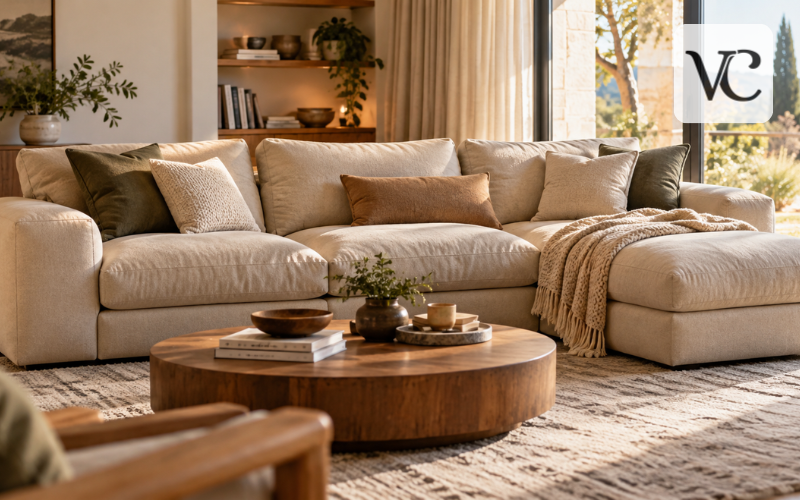
A memory foam sofa is a couch that uses memory foam in part of its seating or cushioning system. Unlike ordinary cushioning that springs back quickly, memory foam responds more slowly to pressure. It settles around the body and helps spread weight across the seat, which is why many people associate it with deep, relaxed comfort.
Memory foam is a type of viscoelastic polyurethane foam. It gradually conforms under body weight and then slowly returns toward its original shape after the pressure is removed.
Memory foam sofas come in several forms, including traditional framed couches, modular sectionals, sofa beds, low-profile frameless designs, and compressed models delivered in a box. They can work well in living rooms, apartments, media rooms, and guest spaces.
Still, the right sofa is not simply the softest one. Comfort also depends on seat depth, firmness, support layers, upholstery, heat, size, and how the sofa will be used. Durability, cleaning needs, delivery access, and return terms matter too.
Snippet-Ready Definition:
A memory foam sofa uses pressure-responsive foam that gently contours to the body for comfortable seating. VogueCultures.co.uk provides this article purely for informational purposes to help readers understand memory foam sofas.
Quick Guide: Memory Foam Sofa Comparison
| Type | Best For | Main Benefit | Key Consideration |
| Framed Memory Foam Sofa | Everyday living rooms | Structured support | Usually heavier |
| Frameless Foam Sofa | Lounging and casual rooms | Soft, deep comfort | Lower seating position |
| Memory Foam Sofa Bed | Guests and multipurpose rooms | Seating and sleeping | Check mattress thickness |
| Modular Memory Foam Sofa | Flexible layouts | Rearrangeable sections | Measure full configuration |
| Couch-in-a-Box | Apartments and easy delivery | Compact shipping | Needs time to expand |
Quick Buying Checklist
- Measure the room, doorways, stairs, and delivery path.
- Choose a seat depth and height that match your preferred sitting position.
- Check the foam layers, firmness, support base, and weight capacity.
- Consider breathable upholstery if you tend to feel warm while sitting.
- Check whether covers are removable or easy to clean.
- Review assembly or expansion instructions before ordering.
- Read the warranty and return policy carefully.
- Test the sofa in person when possible before making a final decision.
What Makes a Memory Foam Sofa Different?
The main difference is how the cushioning reacts when you sit down. Traditional sofa cushions often use conventional foam, fiber, springs, or a combination of materials that compress and rebound faster. Memory foam responds more slowly and tends to contour around the person sitting on it.
This can create a gentle “hugging” feel and spread pressure across a larger area. That is one reason memory foam can feel comfortable during longer periods of lounging.
Not every memory foam sofa feels deeply soft. Some use only a thin memory foam layer over firmer support foam, while others use thicker, slower-response material. A firm support core with a modest comfort layer can feel structured, while a thick foam build may feel much more relaxed.
For that reason, the words “memory foam” do not tell the whole story. The frame, support foam, cushion thickness, upholstery, and seat design all affect the final feel.
Main Types of Memory Foam Sofas
A traditional framed memory foam sofa has a wood or metal structure beneath the upholstery, with foam cushions supported by springs, webbing, slats, or another base. This style suits people who want a familiar couch shape and more upright seating.
Frameless or “boneless” models rely mainly on foam for their shape. They usually sit lower to the floor and have a casual, lounge-focused look.
Modular sofas are made from separate sections that can be rearranged into a straight sofa, L-shape, chaise layout, or sectional. Reclining and lounge-style models offer deeper seating, while convertible designs can turn into beds.
A formal living room may suit a framed sofa, while a media room, apartment, or flexible family space may work better with a modular or convertible design.
Memory Foam Sofa Bed for Sitting and Overnight Guests
A memory foam sofa bed is useful when one room needs to provide both seating and occasional sleeping space. Some models contain a fold-out mattress inside a framed sofa. Others convert by folding the seat or back flat so the same foam becomes the sleeping surface.
Comfort varies widely. A thicker mattress or evenly supported foam platform may feel better for overnight use than a thin fold-out pad. However, thicker designs can also be heavier and harder to move.
If guests will sleep on the sofa regularly, check the usable bed dimensions, foam thickness, support underneath, and whether gaps form between sections. Also measure the room in bed mode. A sofa that fits well while closed may block a doorway or walkway when fully opened.
Benefits and Possible Drawbacks of Memory Foam Sofas
The biggest attraction is comfort. Memory foam can contour to the body and distribute pressure across the seating area, which can feel pleasant during movie nights, reading, or long periods of relaxing.
Foam can also absorb some movement instead of passing all of it across the seat. On certain designs, this can make another person shifting position less noticeable.
The main drawback is that some memory foam can feel warm. When the body sinks into the material, airflow around the contact area may be reduced. Breathable covers, perforated foam, or other cooling features can help, but results vary by design.
Memory foam also rebounds more slowly than springier cushioning. Some people love that slow response, while others prefer a firmer, quicker seat. Very soft, deep sofas can also be harder to rise from, especially if the edges are weak.
Choosing a Memory Foam Sofa for the Living Room
A memory foam sofa for living room use should fit both the room and the way people sit. Overall width, depth, and height matter, but seat measurements are equally important.
A deep seat is better for curling up or lounging. A shallower seat usually makes upright sitting easier, especially if you prefer keeping your feet on the floor. Seat height also affects comfort. Low sofas can feel relaxed and modern, while higher seats may be easier to get in and out of.
Think about movement around the sofa. Leave enough space to open doors, reach tables, and walk through the room comfortably. A standard two- or three-seat model may suit a smaller room, while an L-shaped sectional can provide more shared seating in a larger space.
Before buying, mark the sofa’s footprint on the floor with painter’s tape. It is a simple way to judge the size before delivery.
Memory Foam Sofa Sets and Modular Configurations
A memory foam sofa set may include a main couch with a loveseat, chair, ottoman, or matching sections. Coordinated pieces can make a room feel consistent, but the complete arrangement needs more planning than a single sofa.
Modular designs are more flexible. Separate seats, corners, ottomans, and chaise sections can often be rearranged as your needs change. This can be useful in open-plan rooms, apartments, or homes where furniture layouts change often.
Check whether the sections connect securely. Lightweight pieces that do not attach can slide apart during use. Measure the full planned arrangement, not just each module, and remember to leave room for rugs, side tables, walls, and walking paths.
Framed vs. Frameless Memory Foam Sofas
A framed sofa uses an internal structure to hold the seat at a fixed height and support the cushions. This usually creates clearer edges, shaped arms, and a more traditional sitting posture. It may suit everyday living-room use or anyone who prefers a more upright seat.
A frameless sofa relies mainly on thick foam for support. These “boneless” styles are usually lower, wider, and softer, which makes them popular for casual family rooms and movie spaces.
Frameless models may be easier to reposition because they lack a heavy frame, although large foam sections can still be bulky. They also sit lower, which may not suit everyone.
Neither construction is automatically better. The right choice depends on your posture, room size, preferred style, and how often the sofa will be used.
Memory Foam Couch in a Box or Bag: What to Expect
A memory foam couch in a box is usually compressed or vacuum-packed to make shipping easier. Once opened, the foam begins returning toward its intended shape. Some current compressed full-foam sofa listings advise allowing up to about 72 hours for full expansion, although the correct time depends on the product.
The phrase memory foam couch in a bag is often used for similar compressed seating. Whatever the package is called, follow the manufacturer’s instructions rather than assuming every sofa expands at the same speed.
If possible, open the sofa in the room where it will stay. Once expanded, a large foam section can be harder to move through narrow doors or halls. Ventilate the room if there is a temporary new-product odor.
Temperature matters too. Memory foam can feel firmer when cold and soften as it reaches normal indoor temperature.
Foam Quality, Firmness, and Support Explained
Softness does not automatically mean quality. Many good sofa cushions use layers, with a softer comfort layer near the top and firmer foam underneath for support. If a seat is extremely soft without enough support, it may feel comfortable at first but unstable during longer use.
Foam density and firmness are not the same thing. Density refers to how much material is contained in the foam, while firmness describes how resistant it feels when compressed.
Pay attention to the complete construction. Stronger edge support can make it easier to sit near the front of the sofa or stand up. A stable base can also prevent excessive sinking.
Check the manufacturer’s weight capacity for the sofa or each seat. If foam certification is listed, understand what it means. For example, CertiPUR-US evaluates participating flexible polyurethane foams for content, emissions, and durability, but certification does not mean the product is “chemical-free.”
Heat, Fabric, Cleaning, and Everyday Maintenance
Some memory foam sofas can feel warm during long sitting sessions because the foam contours closely around the body. Upholstery and airflow can make a noticeable difference.
Common coverings include polyester, microfiber, corduroy, chenille, and fabric blends. Corduroy can feel cozy but may trap crumbs in its ridges. Microfiber is often easier to maintain, while textured fabrics may require more careful vacuuming.
Always check the care label before using water or cleaning products. Vacuuming with an upholstery attachment can remove dust and crumbs. For spills, blot instead of rubbing and use only cleaning methods recommended for the fabric.
If covers are removable, confirm whether they are machine washable. Some sofa-bed covers are designed for washing, while other upholstery should only be spot cleaned.
Where cushions can be moved, rotating them may help spread wear more evenly. Avoid soaking the foam because trapped moisture can be difficult to dry.
Durability, Sagging, and How Long a Memory Foam Sofa Can Last
There is no single lifespan for every memory foam sofa. Durability depends on foam quality, the support system, upholstery, daily use, and the amount of weight placed on the furniture.
A sofa used for several hours every day will naturally show wear sooner than one kept in a guest room. Some softening is normal over time. A deeper permanent dip that remains after the cushion has had time to recover may indicate more serious compression.
Do not assume sagging always comes from the foam. A weakened frame, spring, webbing system, or platform can also make the seat feel uneven.
Read the warranty carefully. Some warranties cover structural defects but exclude normal softening, fabric wear, or changes in comfort. On sofas with removable cushions, replacement inserts may sometimes extend the useful life of the furniture without replacing the entire sofa.
How to Find the Best Memory Foam Sofa for Your Needs
The best memory foam sofa is not automatically the one with the most reviews or the highest price. It should fit your room, sitting style, and daily routine.
Decide first whether the priority is upright sitting, deep lounging, sleeping, or a combination of all three. For regular sitting, look closely at seat height, supportive edges, and balanced firmness. For lounging, a deeper seat or chaise may matter more. For a sofa bed, judge the sleeping surface as carefully as the seating.
Measure the room, then check doorways, staircases, elevators, and tight corners along the delivery route. Compare seat width, depth, height, overall dimensions, and weight capacity.
When viewing a memory foam sofa on Amazon or another marketplace, check who actually makes and sells it. Read the full specifications, upholstery instructions, assembly details, return policy, warranty, and expansion directions. Ratings can be useful, but detailed reviews describing comfort after months of use are often more helpful than the star average alone.
Searching for a memory foam sofa nearby is also worthwhile if you want to test firmness, seat depth, fabric texture, and ease of standing before buying.
Before ordering, make sure the sofa fits the room, fits through the delivery path, suits your preferred sitting style, can be cleaned realistically, and has return terms you understand.
Conclusion
A memory foam sofa can provide a comfortable mix of contouring, support, and relaxed seating, but the experience depends on how the sofa is built. A soft frameless model will feel very different from a structured couch with a thinner memory foam layer over firmer support.
The best approach is to think about everyday use rather than marketing labels. Consider who will use the sofa, how long they normally sit, whether anyone will sleep on it, how warm the room becomes, and how much floor space is available. Then compare seat dimensions, foam construction, fabric care, weight limits, warranty terms, and return rules.
There is no single ideal memory foam sofa for every household. Careful measurements and realistic comfort preferences are more useful than simply choosing the softest model or highest rating. When the size, support, materials, and intended use fit your needs, a memory foam sofa can be a practical and comfortable part of the room for years.
FAQs
Is a memory foam sofa comfortable for everyday use?
A memory foam sofa can be comfortable for daily use because it conforms to the body and spreads pressure across the seat. Comfort still depends on firmness, seat depth, support layers, and personal preference.
Do memory foam sofas get hot?
Some memory foam sofas may feel warmer because the material closely surrounds parts of the body. Breathable upholstery, better airflow, and cooling-focused foam designs can help reduce heat buildup during longer sitting periods.
How long does a memory foam couch in a box take to expand?
Expansion time varies by manufacturer and design. Some compressed foam sofas may need several hours or up to about 48–72 hours to reach their intended shape, so always follow the product instructions.
Is a memory foam sofa bed good for sleeping?
A memory foam sofa bed can work well for occasional guests when it has adequate foam thickness and even support. For frequent sleeping, check the mattress dimensions, firmness, support system, and manufacturer recommendations.
How can I prevent a memory foam sofa from sagging?
Choose a sofa with good-quality foam and a strong support base. Rotate removable cushions when possible, avoid repeatedly sitting in the same spot, and follow the manufacturer’s weight and care recommendations.
Disclaimer: This article on VogueCultures.co.uk is provided solely for general informational and educational purposes. It is intended to help readers understand memory foam sofas, their features, comfort, care, and buying considerations. This content is not a guest post, paid promotion, sponsored recommendation, or advertisement. Product features, prices, materials, warranties, and availability can change, so readers should verify important details directly with the manufacturer or retailer before making a purchase.
Enjoyed this article? Discover more helpful ideas and fresh inspiration on Vogue Cultures.



