A floor lamp is a freestanding light that sits directly on the floor and usually reaches high enough to spread light across a wider area than a table lamp. It can brighten a dark corner, create a reading spot, soften the mood in the evening, or add style without permanent electrical work.
That flexibility makes floor lamps useful in living rooms, bedrooms, reading areas, studios, and small apartments. Depending on the design, one lamp can provide general ambient light, focused task light, or decorative accent light.
Choosing the right floor lamp is not only about appearance. Height, brightness, base size, shade design, and placement all affect how well it works. A slim lamp may suit a bedroom or tight corner, while an arc or multi-head model can work better beside a living-room sofa. The best choice fits both the room and the way you plan to use the light.
Snippet-Ready Definition:
A floor lamp is a freestanding light used for ambient, task, or accent lighting. voguecultures.co.uk provides informational content about floor lamps to help readers understand styles, placement, sizing, and lighting choices.
Quick Guide: Floor Lamp Comparison
| Floor Lamp Type | Best For | Light Style | Space Needed |
| Traditional Shaded | Bedrooms, living rooms | Soft, diffused light | Medium |
| Arc Lamp | Sofas, sectionals | Wide, directed light | Medium to large |
| Torchiere | General room lighting | Upward ambient light | Small to medium |
| Reading/Task Lamp | Reading, crafts, work | Focused light | Small |
| Tripod Lamp | Statement décor | Soft ambient light | Larger footprint |
| Tree/Multi-Head | Flexible lighting | Multiple directions | Medium |
| Shelf Lamp | Small apartments | Ambient + storage | Small |
| Slim LED Lamp | Modern, compact rooms | Adjustable light | Very small |
Simple Steps for Choosing a Floor Lamp
- Decide its purpose — choose ambient lighting for relaxation, task lighting for reading, or accent lighting for decoration.
- Measure the space — check the available height, base width, and clearance around furniture.
- Choose the right brightness — compare lumens rather than relying only on bulb wattage.
- Consider light color — warmer light usually suits bedrooms and living rooms, while neutral light may work better for tasks.
- Check practical features — look at switches, dimming, adjustable heads, cord placement, bulb compatibility, and base stability.
- Match the style — choose modern, vintage, wood, brass, minimalist, or another finish that fits the room naturally.
Floor Lamp Basics: Form, Function, and Everyday Uses
Most floor lamps have a base for stability, a tall stand or frame, a shade or light head, a switch, a power cord, and either a replaceable bulb or an integrated light source. The design may be simple or decorative, but these parts shape how the lamp looks and performs.
A floor lamp differs from a table lamp mainly in height and placement. Table lamps need a desk, side table, or other surface. Ceiling and wall lights are fixed in position, while a standing lamp can usually move when your furniture layout changes.
Floor lamps can also serve different lighting roles. Ambient lighting gives a room a soft overall glow. Task lighting focuses on an activity such as reading, sewing, or working. Accent lighting draws attention to a corner, plant, artwork, or architectural feature. In many rooms, a floor lamp works best as one part of layered lighting rather than as the only light source.
The Main Types of Floor Lamps and How They Differ
Traditional shaded floor lamps usually have a straight stand with a fabric or similar shade. They work well when you want soft, familiar-looking light. Arc lamps use a curved arm to carry the light outward, making them useful beside sofas or chairs where there is no table directly underneath.
Torchiere lamps point light upward so it reflects from the ceiling and helps brighten the room. Reading and task lamps direct light toward a book, desk, or chair. Tripod lamps stand on three legs and make a stronger decorative statement, but their wider footprint needs more space.
Tree and multi-head lamps provide light in several directions. Column and lantern-style lamps often create a softer decorative glow. Shelf floor lamps combine light with small storage or display surfaces, which can be practical in compact rooms.
Adjustable arms, dimmers, and integrated LEDs can add flexibility, but choose features that match a real need. A simple shaded lamp may be ideal for ambient light, while an adjustable task lamp is more useful for close work.
Choosing a Floor Lamp Based on How You Will Use It
Start with the job you want the lamp to do. If you want a warmer evening atmosphere, look for a design that spreads soft light rather than a narrow beam. A fabric shade, uplight, or dimmable model can work well for relaxing or entertaining.
For reading, crafts, or home-office tasks, direct light is more useful. An adjustable head or arm lets you aim the light where you need it instead of making the whole room brighter.
Accent lighting has a different purpose. It can bring attention to a dark corner, textured wall, plant, or other feature, so the lamp’s shape and direction of light matter as much as brightness.
One multipurpose lamp may be enough in a small room, especially if it dims or has several light heads. A larger room often feels more balanced when a floor lamp works alongside ceiling lights, table lamps, or other sources.
Floor Lamps for Living Room Spaces
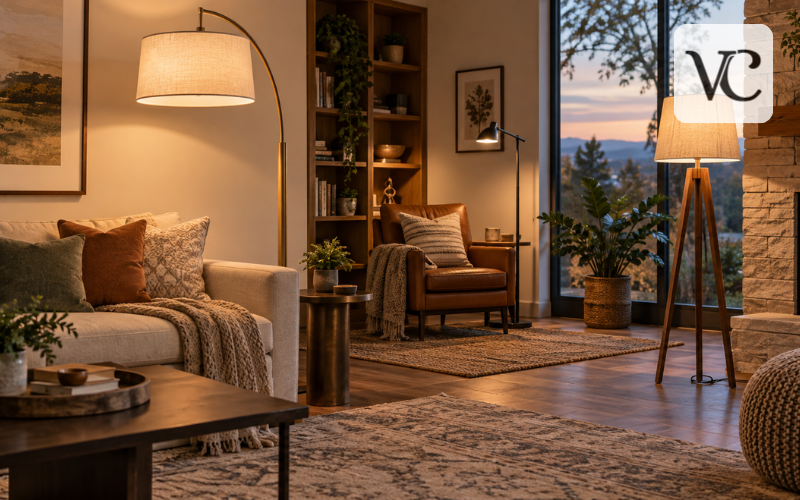
Floor lamps for living room use should support the seating layout rather than get in the way. Beside a sofa or armchair, the lamp should be close enough to provide useful light without blocking movement. In an empty corner, a taller lamp can reduce dark areas and make the room feel more complete.
For a reading chair, position the light so it reaches the page comfortably without shining directly into your eyes. An arc lamp can extend over part of a sofa or sectional, while a slim upright design is easier to place beside crowded furniture.
Unique floor lamps for living room spaces can add character, but unusual design should not come at the cost of stability or useful light. A sculptural frame, wood finish, colored shade, or interesting base can become part of the décor while still doing a clear job.
Also consider screens. A bright exposed bulb or reflective shade may create glare on a television or monitor, so test the lamp’s angle and position before settling on its final spot.
Floor Lamps for Bedroom Comfort and Practical Lighting
A bedroom usually benefits from softer, calmer lighting than a work area. A floor lamp beside a bed, dresser, reading chair, or unused corner can add useful light without taking up space on a nightstand.
For evening use, a warm-looking light often feels comfortable. If you read in bed or in a nearby chair, choose a lamp that directs light toward the page while keeping the bulb out of your direct line of sight. A dimmer can be useful when you want brighter light for reading and softer light later.
A slim floor lamp for bedroom use makes sense when bedside tables are small or missing. It is also practical in rental rooms where installing wall lights is not an option. Check the switch position too. A floor switch, pull chain, or control near the lamp head should be easy to reach from where the lamp will be used.
The aim is not maximum brightness. It is comfortable light that supports the room without making it feel harsh.
Making a Floor Lamp Work in Small Rooms and Apartments
In a compact room, the lamp’s footprint matters as much as its height. Before buying, measure the area where the base will sit and check whether the shade or arm extends beyond it. Product photos can make a lamp look smaller than it really is.
Slim upright lamps fit well in corners, beside narrow sofas, and between pieces of furniture. Arc lamps can also work when the base stays near a wall while the light reaches over a chair or sofa, although the curved arm needs open space.
A shelf floor lamp can combine lighting with a place for a few small objects, reducing the need for another piece of furniture. This can be helpful in studio flats and small bedrooms.
Cord placement is especially important in tight layouts. Keep the cord close to a wall or furniture edge rather than across a walking path. A lamp that fits physically but creates a trip hazard is not a good choice.
Floor Lamp Styles: Modern, Vintage, Wood, and Statement Designs
Style matters because a floor lamp remains visible even when it is switched off. A floor lamp modern in design usually has clean lines, simple shapes, and finishes such as black, brass, chrome, or matte metal. These options often suit contemporary, Scandinavian, and minimalist rooms.
People searching for floor lamps vintage in style may prefer aged brass tones, traditional shades, curved details, or shapes inspired by older lighting. Vintage-style does not have to mean old; many new lamps use classic forms with modern electrical parts.
A floor lamp wood design brings a softer, more natural feeling to a room. Wood can suit Scandinavian, rustic, mid-century, or relaxed interiors depending on the shape and finish. Bamboo and other natural materials can create a similar effect.
Statement lamps work well when they have enough space around them to look intentional. Whether the room is boho, traditional, modern, or eclectic, the lamp should support the furniture and décor rather than compete with everything else.
Getting Floor Lamp Height, Scale, and Proportion Right
A lamp that looks balanced online can feel very different beside real furniture. Check the overall height, shade size, base width, and any arm that extends outward before buying.
Beside a sofa or chair, the shade should sit where it provides useful light without exposing the bulb directly to your eyes. A very small lamp may look lost in a large room or provide too little coverage, while an oversized shade or wide tripod base can overwhelm a compact area.
Shade proportion matters too. Lowe’s current guidance explains that a shade that is too small or too large can affect both the visual balance of the lamp and how light fills the room.
The easiest way to avoid surprises is to compare the product dimensions with your own furniture using a tape measure. Marking the approximate height or footprint before ordering can make the choice much clearer.
Brightness, Bulbs, and Light Color Explained Simply
Brightness is best compared in lumens. Watts tell you how much power a bulb uses, while lumens describe light output. ENERGY STAR recommends using lumens when comparing how bright bulbs are.
Light color also changes how a floor lamp feels. Lower color-temperature numbers look warmer or more yellow, while higher numbers appear whiter or bluer. U.S. Department of Energy guidance describes 2700K as warm and 3000K as a warm, pleasing light, with cooler appearances at higher values. Warm light often suits living rooms and bedrooms, while more neutral light can be useful for focused tasks.
LED bulbs are a practical everyday option because they can provide plenty of light while using less power than older incandescent bulbs. For replaceable bulbs, check the socket type and the fixture’s maximum permitted wattage. With an integrated-LED lamp, consider the built-in brightness and color before buying because the light source may not be replaceable in the usual way.
Dimming can make a lamp more flexible, but both the lamp and bulb need to support it. The brightest choice is not always the most comfortable one.
Shades, Materials, and Finishes That Affect the Light
The shade changes both the look of a floor lamp and the way light travels through the room. Fabric shades generally soften and spread light, making them useful for ambient lighting. More opaque materials block more sideways light, while translucent shades allow a softer glow through the material. Lowe’s guidance also notes that shade material affects how much light passes through.
Glass shades may be clear, frosted, or tinted. Clear glass exposes more of the bulb, while frosted glass softens the effect. Metal shades direct light more strongly because light cannot pass through the material.
Open-weave bamboo and similar natural shades can create decorative patterns on nearby surfaces. Light-colored shades often feel brighter, while darker shades can create a moodier effect.
Think about care as well as style. Smooth glass and metal are easy to wipe, while fabric and woven shades may need gentle dusting. Choose a material that suits both the room and the amount of maintenance you prefer.
Smart Placement, Safety, and Everyday Care
A floor lamp should stand securely before it is switched on. Place the base fully on a flat surface rather than balancing it partly on the edge of a rug. Avoid narrow walkways where the lamp is likely to be bumped.
Keep cords away from common walking paths whenever possible. In homes with children or pets, pay extra attention to tall lamps, wide arc designs, light bases, and hanging cords. Keep curtains, bedding, and other materials away from hot bulbs or fixtures.
Always follow the manufacturer’s bulb and wattage limits. CPSC recall records show that using a higher-wattage bulb than a socket is designed to support can create overheating and burn risks.
For routine care, switch off and unplug the lamp before deeper cleaning. Dust the shade and base regularly, and occasionally check the cord, plug, switch, and bulb area for visible damage. If the wiring looks damaged or the switch behaves unusually, stop using the lamp until it can be safely assessed.
A Practical Floor Lamp Buying Checklist
Before paying for a lamp, make sure the practical details work as well as the style:
- Measure the available height, width, and floor footprint.
- Decide whether you need ambient, task, or accent lighting.
- Check bulb type, brightness, color, dimming, and controls.
- Look at the weight and stability of the base.
- Consider whether replacement bulbs or shades will be easy to find.
- Choose adjustable arms or heads only if they improve everyday use.
- Compare cheap floor lamps by stability, build quality, useful light, and value rather than price alone.
- When browsing floor lamps at Target or another large retailer, use listed dimensions and specifications instead of judging from photos alone. Target’s current floor-lamp category includes filters such as type, height, finish, rating, and price.
- Review the return policy and warranty when relevant.
- Make a final check of size, purpose, light quality, style, safety, and budget.
A lamp that passes these checks is more likely to work well after the initial excitement of choosing a design has passed.
Conclusion
A good floor lamp does more than fill an empty corner. It should provide the right kind of light, fit comfortably beside the furniture, suit the available floor space, and feel natural within the room’s design.
Start with function. Decide whether you need soft ambient light, focused task light, or a decorative accent. Then look at size, shade position, brightness, bulb type, stability, controls, and cord placement. Style matters too, whether you prefer a modern metal lamp, a vintage-inspired design, natural wood, or something more distinctive.
Taking a few measurements and thinking about daily use before buying can prevent many common problems. The most successful floor lamp is not necessarily the biggest, brightest, or most expensive. It is the one that gives comfortable, useful light and fits your room in a way that feels easy to live with.
FAQs
What is a floor lamp used for?
A floor lamp can provide general room lighting, focused light for reading or working, or decorative accent lighting. Its freestanding design makes it easy to reposition without installing permanent ceiling or wall fixtures.
How tall should a floor lamp be?
The ideal height depends on the room and purpose. The shade or light source should provide useful illumination without shining directly into your eyes when you are sitting nearby.
Are floor lamps good for small rooms?
Yes. Slim floor lamps can fit into narrow corners or beside furniture without using table space. Always measure the base and any extending arm before choosing one for a compact room.
What type of floor lamp is best for a living room?
It depends on your needs. Arc lamps work well over seating, shaded lamps create softer ambient light, and adjustable reading lamps are useful beside armchairs or dedicated reading areas.
Are LED floor lamps a good choice?
LED floor lamps can provide efficient, long-lasting lighting and are available in many brightness levels and styles. Check whether the LED is replaceable or permanently integrated before purchasing.
Disclaimer: The information provided by voguecultures.co.uk in this floor lamp article is for general informational and educational purposes only. It is intended to help readers understand floor lamp types, styles, sizing, placement, lighting, and basic buying considerations. voguecultures.co.uk does not offer guest posting, paid promotion, sponsored recommendations, or advertising through this article. Any brands, retailers, products, or examples mentioned are included only for informational context. Readers should always check current product specifications, safety instructions, warranties, and manufacturer guidance before purchasing or using a floor lamp.
Enjoyed this article? Discover more helpful ideas and fresh inspiration on Vogue Cultures.