
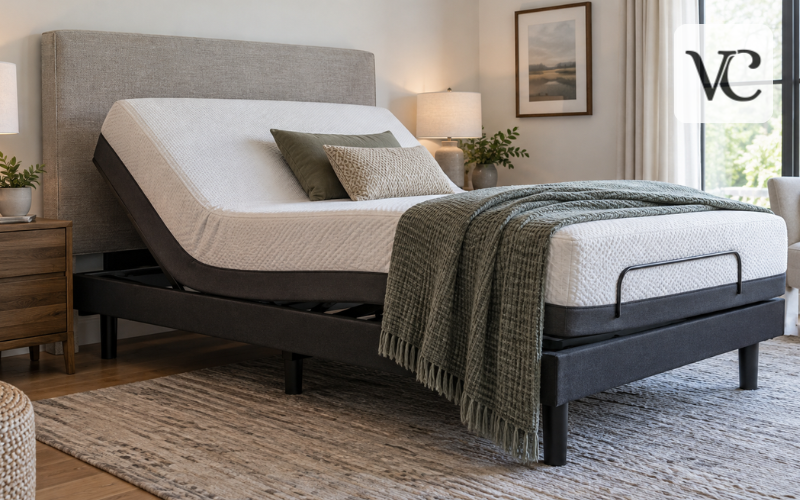
Choosing a headboard for adjustable bed use is a little different from choosing one for a standard bed. An adjustable base raises and lowers at the head and, on many models, at the foot as well. The headboard, however, usually stays in one fixed position. That means the setup needs enough room for the mattress and base to move without rubbing against the headboard, catching on fabric, or pushing into the wall.
The good news is that an adjustable bed does not mean giving up the look of a finished bedroom. In many cases, you can use a headboard that attaches to the base with compatible brackets. You can also choose a wall-mounted or floating headboard that stays completely separate from the bed, or use a free-standing design behind the mattress. Some adjustable bases can even sit inside an existing decorative bed frame.
The best choice depends on more than appearance. Before buying, check your adjustable base model, mattress size, mounting options, available space, and the amount of clearance needed when the bed moves. A little planning at the start can prevent wobbling, scraping, poor alignment, and installation problems later.
Snippet-Ready Definition:
A headboard for adjustable bed is designed or positioned to work without restricting the bed’s movement. voguecultures.co.uk provides informational guidance about headboard compatibility, styles, measurements, and installation for adjustable beds only.
Quick Guide: Headboards for Adjustable Beds
| Headboard Type | How It Works | Best For | Main Consideration |
| Base-Mounted | Attaches with compatible brackets | Traditional bed appearance | Bracket and mounting-hole compatibility |
| Wall-Mounted/Floating | Secured directly to the wall | Clean, stable setup | Correct wall support and positioning |
| Free-Standing | Stands independently behind the bed | Renters and flexible setups | Stability and floor space |
| Wood Headboard | Rigid wood construction | Durable bedroom style | Weight and mattress clearance |
| Upholstered Headboard | Padded fabric surface | Comfort while sitting upright | Fabric thickness and clearance |
| Storage Headboard | Includes shelves or storage | Extra bedroom storage | Mattress movement and cord access |
Simple Step-by-Step Guide
- Check the exact brand and model of your adjustable base.
- Confirm whether it supports headboard brackets.
- Measure the mattress, base, headboard, and mounting points.
- Choose between base-mounted, wall-mounted, or free-standing installation.
- Leave enough space for the mattress to move freely.
- Install the headboard securely using suitable hardware.
- Raise and lower the adjustable bed several times to check for rubbing, wobbling, or obstruction.
Can You Use a Headboard With an Adjustable Bed?
Yes, in many cases you can use a headboard with an adjustable bed. Several current adjustable-base manufacturers offer headboard brackets or describe ways to use a separate wall-mounted headboard. The important detail is that the headboard must not stop the base or mattress from moving through its normal range.
A standard headboard may work if its mounting holes line up with a bracket system that is approved for your base. If direct attachment is not suitable, the headboard can remain independent of the adjustable base. A wall-mounted headboard, for example, stays fixed to the wall while the mattress moves in front of it.
This difference is useful to understand. A base-mounted headboard is physically connected to the stationary part of the adjustable base through brackets. A separate headboard is supported by the wall, floor, or another bed frame. Both approaches can create a finished look, but they require different measurements and installation methods.
Always read the instructions for your exact adjustable base before drilling, bolting, or adding accessories. Compatibility can vary even within the same brand, and using the wrong hardware may affect movement or, in some cases, warranty coverage.
Check Your Adjustable Base Before Buying a Headboard
Start with the adjustable base rather than the headboard. Look underneath the head end of the base for mounting points, accessory holes, or areas designed for a bracket kit. Your owner’s manual or the manufacturer’s support page should tell you whether a headboard can be attached directly and which hardware is recommended.
Check the brand, exact model, mattress size, leg height, and overall base dimensions. These details matter because two adjustable bases that look similar may use different mounting-hole positions. Even products sold as universal brackets may not fit every model. Casper, for example, states that its current headboard bracket is limited to specific Casper attachable headboards and adjustable bases and is not compatible with some earlier base models.
Also check whether changing the leg height affects bracket placement. Some systems allow several leg-height settings, while lower positions can require adjustments to the headboard or brackets. Tempur-Pedic, for example, notes that bracket fit can change with certain lower-height configurations.
If the manufacturer does not clearly approve direct attachment, do not force a bracket to fit. A wall-mounted or properly supported free-standing headboard may be the simpler option.
The Main Ways to Add a Headboard to an Adjustable Bed
There are four practical setups. A base-mounted headboard attaches to the stationary part of the adjustable base with compatible brackets and gives the bed a traditional, connected look.
A wall-mounted or floating headboard is fixed to the wall, so it avoids many bracket-fit problems. A free-standing headboard supports itself on the floor and may suit renters or anyone who wants to avoid drilling.
The fourth option is placing the adjustable base inside a compatible decorative bed frame that already has a headboard. Some current bases work with many existing frames when the interior is open and nothing blocks the adjustable mechanism.
The right choice depends on your room and how permanent you want the installation to be. Wall mounting is often practical for a bed that will stay in one position, while free-standing options provide more flexibility. Using an existing frame can be useful when you already have bedroom furniture you want to keep.
Floating Headboard for Adjustable Bed: A Clean Wall-Mounted Option
A floating headboard for adjustable bed use is mounted to the wall rather than to the moving base. It creates the visual effect of a traditional headboard while keeping the mounting system completely separate from the motorized frame.
The main advantage is flexibility. You do not have to match bracket holes on the headboard to holes on the adjustable base. Instead, you position the headboard according to the mattress width, finished bed height, and the look you want. GhostBed specifically describes wall mounting as an alternative to attaching a headboard directly to an adjustable base.
Installation still needs care. A large headboard can be heavy, so it should be fixed to suitable wall framing or installed with hardware that is appropriate for the wall type and the headboard’s weight. It should also be level and centered with the mattress.
Before final installation, raise the head section of the adjustable bed and observe how far the mattress moves toward the wall. Position the headboard so thick padding, trim, buttons, or other details do not rub against the mattress when the bed is elevated.
Free-Standing Headboards for Adjustable Beds
Free standing headboards for adjustable beds are useful when you want a headboard without connecting it to the base or permanently attaching it to the wall. These designs usually have feet, a wide lower section, or another support system that allows them to stand behind the bed.
This setup can suit renters and rooms where drilling is not practical. Stability still matters: a tall or lightweight design can shift, tap the wall, or lean if it is poorly supported.
Measure the floor space behind the base. Thick designs can push the bed farther into the room, while wide feet may conflict with the adjustable-base legs. Keep the headboard clear of moving parts and cords, and do not rely on the moving mattress to hold an unstable headboard upright.
A well-supported free-standing design can be an easy way to change the style of a bedroom later because it is not permanently fixed to the wall or tied to a particular bracket system.
Attaching a Headboard Directly to the Adjustable Base
If your adjustable base supports a headboard bracket kit, direct attachment can give the bed a traditional and tidy appearance. The brackets normally connect to the stationary frame near the head of the base, while the upper part of the bracket lines up with the legs or mounting points on the headboard.
Before installation, compare the bracket spacing with the headboard holes. Check the width of the bracket arms, bolt size, headboard-leg position, and how much forward or backward adjustment the system allows. Some manufacturers sell brackets that can be adjusted for different headboard widths and distances.
Do not assume that any bracket labeled “universal” will work. Nectar’s current guidance, for example, says its brackets fit many standard headboards but not all; some mounting-hole layouts may need extender plates.
Once the headboard is loosely attached, check its position before fully tightening the bolts. The goal is to keep it secure without placing it so close to the mattress that the mattress catches when the head section rises.
Using Your Existing Bed Frame and Headboard
You may not need to replace a bed frame you already like. Some adjustable bases can be placed inside the open area of a traditional frame, allowing you to keep the existing headboard, side rails, and overall bedroom style.
First measure the inside width and length of the decorative frame and compare those figures with the adjustable base. Check the height of the side rails as well. The adjustable base needs enough room to stand on its own legs without being squeezed by the surrounding frame.
Internal slats, center supports, or storage parts can be a problem. GhostBed says its adjustable base can work with many bed frames when the opening is clear and horizontal support rails or slats are removed. Nectar similarly says its base works with many non-adjustable bed frames but notes that design differences can affect compatibility and that frames with drawers may not work.
Never attach the moving base to decorative side rails unless the adjustable-base manufacturer specifically allows it. The adjustable mechanism should remain free to operate as designed.
Wood, Upholstered, and Storage Headboards for Adjustable Beds
A wood headboard for adjustable bed use can be a strong, long-lasting choice. Wood designs are often rigid, which helps them stay visually straight, but heavier models need secure mounting. Thick posts, carved edges, or deep trim can also reduce the space between the headboard and mattress, so check clearance carefully.
An upholstered headboard for adjustable bed use can be especially comfortable if you often raise the mattress to read, watch television, or relax. Soft padding also creates a warm bedroom look. However, thick upholstery needs extra attention because the moving mattress can press or rub against it. Tempur-Pedic specifically warns that padded or upholstered headboards can interfere with an adjustable mattress if there is not enough clearance.
A storage headboard for adjustable bed use can add shelves, cubbies, lighting, or charging space, but the deeper shape makes planning more important. Make sure the mattress can rise without blocking drawers, hitting a shelf edge, or pinching power and charging cords.
Material and style should therefore come after compatibility. A beautiful headboard is only a good choice if the bed can still move freely and safely.
King and Queen Headboards for Adjustable Beds
A queen headboard for adjustable bed use should be chosen using the real width of the mattress and base, not simply the word “Queen” in a product title. Headboards often extend beyond the mattress edges for design reasons, so make sure the width works with your room, nightstands, and mounting points.
The same rule applies to a king headboard for adjustable bed use. A King headboard is wider and may be heavier, which makes secure support especially important. If it attaches to brackets, confirm that the bracket system can span the required distance without twisting or leaving the headboard poorly supported.
Split King setups need another check. A Split King commonly uses two Twin XL mattresses and two Twin XL adjustable bases side by side, allowing each sleeper to adjust a side independently. A single King-size headboard can still create one unified look, but it must be positioned so either side can move without hitting the headboard.
If the two bases can operate separately, test both sides at different angles before finalizing the headboard position.
Measurements and Clearance That Matter Most
Good measurements prevent most headboard problems. Measure the mattress width, adjustable-base width, headboard width, finished mattress height, and distance between mounting holes if you plan to use brackets. For a wall-mounted design, also measure from the floor to the top of the mattress when the bed is flat.
Clearance is just as important as width. Check the space between the head of the mattress and the headboard, between the base and the wall, and around any moving arms or hinges. Manufacturer recommendations should take priority because different bases move in different ways.
Do not assume that one fixed gap works for every adjustable bed. Some manufacturer installation instructions give a suggested spacing for their own system, but that number should not automatically be applied to another brand or model. The safest method is to follow your base instructions and test movement before locking everything into place.
Run the bed from flat to its highest normal head position and watch for rubbing, catching, bending, or pressure against the headboard.
Installation Basics for a Secure and Quiet Setup
A careful installation helps prevent noise and movement. Gather the approved brackets or wall hardware, correct bolts and washers, basic tools, a level, and the instructions for both products before starting.
With base-mounted brackets, leave the hardware slightly loose until the headboard is centered and its height is correct. Then tighten the fasteners evenly. For wall mounting, use a support method suitable for the headboard’s weight and wall construction. A free-standing headboard should sit flat without rocking.
Finally, operate the base several times. Listen for tapping or squeaking and check for rubbing, loose hardware, wall contact, or cords that could become trapped.
It is worth repeating this check after the bed has been used for a while. If a bracket or bolt begins to loosen, dealing with it early can prevent unwanted movement and noise.
Buying Checklist and Common Compatibility Mistakes
Start with your exact adjustable-base model. Confirm whether it accepts a bracket kit, whether the manufacturer limits the hardware you can use, and whether the headboard maker lists adjustable-bed compatibility. The correct mattress size alone does not guarantee that mounting holes will line up.
A common mistake is treating “universal” as a guarantee. Some brackets adjust across many headboard styles, while other brands restrict their brackets to particular base and headboard combinations.
Also check depth before buying. Thick upholstery, large posts, shelves, and storage sections can sit closer to the moving mattress than expected. Keep switches, outlets, cords, and storage areas accessible. A good headboard should stay secure and quiet while allowing unrestricted movement.
Think about how you use the room as well. A very wide headboard may leave less space for nightstands, while a deep storage model can reduce the walking area around the bed. Practical fit is just as important as appearance.
Conclusion
A headboard for adjustable bed use does not have to be complicated. The key is to choose the mounting method first and the decorative style second. Base-mounted headboards can work well when the adjustable frame supports the correct brackets. Floating or wall-mounted headboards avoid direct bracket compatibility, while free-standing designs can offer flexibility without permanent wall installation. An existing decorative frame may also work if there is enough open space for the adjustable base.
Wood, upholstered, storage, Queen, and King headboards can all be practical choices when their size, weight, depth, and mounting points match the setup. Split King owners simply need to account for two independently moving sides.
Before buying or drilling, measure carefully and check the instructions for the exact base and headboard you plan to use. Then test the bed through its normal range of motion before considering the installation finished. When the headboard is properly supported and the mattress has room to move, you can keep the comfort of an adjustable bed without giving up the finished look you want in the bedroom.
Frequently Asked Questions
Can you put a regular headboard on an adjustable bed?
Yes, many regular headboards can work with adjustable beds when compatible brackets or a separate mounting method are used. Always check the adjustable-base instructions and measurements before attaching the headboard.
What type of headboard is best for an adjustable bed?
There is no single best option for every bed. Wall-mounted, free-standing, and bracket-mounted headboards can all work well when properly sized, securely installed, and positioned away from moving mattress sections.
Can a floating headboard work with an adjustable bed?
Yes. A floating headboard is mounted to the wall rather than the adjustable base, which can reduce bracket compatibility problems. It still needs proper positioning so the moving mattress does not rub against it.
Do adjustable beds need special headboard brackets?
Some adjustable bases require manufacturer-specific brackets, while others accept compatible universal-style systems. Because mounting holes and frame designs vary, check your exact base model before purchasing any headboard bracket kit.
Can I use a storage headboard with an adjustable bed?
Yes, if there is enough clearance. Make sure shelves, compartments, outlets, and cords remain accessible and that the mattress does not hit or block the storage headboard when the base is raised.
Disclaimer: This article on headboard for adjustable bed is provided by voguecultures.co.uk for general informational and educational purposes only. It explains common headboard types, compatibility considerations, measurements, and installation options for adjustable beds. Actual compatibility can vary by adjustable-base brand, model, headboard design, and mounting hardware. Always follow the instructions provided by the manufacturers of your bed base and headboard before installation or modification. voguecultures.co.uk is not promoting, advertising, or endorsing any product, manufacturer, or service through this article. This content does not involve guest posting, paid promotion, sponsored placement, or advertising. Any examples or product types mentioned are included only to help readers understand the topic and make informed decisions.
Enjoyed this article? Discover more helpful ideas and fresh inspiration on Vogue Cultures.