A well-organized garage should feel open, safe, and easy to use. You should be able to find what you need without moving several boxes, stepping over tools, or searching through piles. Whether your garage is used for parking, storage, hobbies, exercise, or home projects, a clear system can make the space much more useful.
Learning how to organize garage does not require expensive cabinets or a complete remodel. The most effective process is simple: clear the space, sort everything, create practical zones, choose suitable storage, and maintain the system over time. Each step matters. If you buy shelves before sorting, you may end up storing things you do not need. If you organize without planning zones, useful items may still be hard to reach.
Before starting, think about the size of the garage, the items you need to store, and the amount you can spend. A small garage may need more wall storage, while a large family garage may require stronger category labels and separate zones for each person. The goal is not to make the garage look like a showroom. It is to create a simple system that works for your daily life and stays manageable.
Quick Guide Table
| Step | What to Do | Main Benefit |
| Plan the space | Decide whether the garage is for parking, storage, tools, or hobbies | Prevents storage from taking over useful space |
| Empty the garage | Remove all items before organizing | Makes clutter and available space easier to assess |
| Sort belongings | Separate items into Keep, Donate, Toss, and Relocate groups | Reduces unnecessary clutter |
| Group similar items | Place tools, sports gear, garden supplies, and seasonal items together | Makes belongings easier to find |
| Create zones | Assign areas based on how often items are used | Improves access and daily convenience |
| Use vertical storage | Add hooks, pegboards, shelves, and wall racks | Keeps more items off the floor |
| Label storage | Mark cabinets, shelves, drawers, and bins clearly | Helps everyone return items correctly |
| Maintain the system | Complete monthly resets and seasonal decluttering | Prevents clutter from building again |
Step-by-Step Garage Organization Guide
- Decide how the garage needs to be used.
- Measure the walls, floor, ceiling, and parking area.
- Remove everything and clean the entire space.
- Sort belongings into Keep, Donate, Toss, and Relocate groups.
- Group the items you are keeping into clear categories.
- Create zones for tools, gardening, sports, seasonal items, and household supplies.
- Install shelves, hooks, pegboards, or cabinets where needed.
- Place heavy items low and lightweight seasonal items higher.
- Label every shelf, bin, cabinet, and drawer.
- Return items to their assigned places and review the garage monthly.
Decide How You Want to Use the Garage
Start by deciding what the garage must do for your household. Some people need space for one or two cars. Others want a workshop, a home gym, a gardening area, or storage for sports equipment. Many garages must serve several purposes at once. Write down the main uses in order of importance so that storage does not take over space needed for parking or movement.
Measure the floor, walls, ceiling height, door openings, windows, and fixed equipment. Include the water heater, electrical panel, outlets, steps, and garage-door tracks. These measurements will help you choose shelves, cabinets, wall rails, and overhead racks that fit without blocking doors or creating hazards.
Mark the area needed for vehicles and leave comfortable walking paths. Car doors should open without hitting bins, bikes, or shelving. Frequently used items should also be easy to reach. A clear plan prevents you from filling every empty surface and then discovering that the garage no longer works for its main purpose.
Empty and Deep-Clean the Entire Garage
For the best result, remove as much as possible from the garage. Place items on the driveway, lawn, or another covered area. Emptying the space allows you to see how much room is available and helps you notice storage opportunities that were hidden behind clutter.
Once the garage is clear, sweep or vacuum the floor, remove cobwebs, wipe down shelves, and clean dirty corners. Treat oil spots or other floor stains with a suitable cleaner. Dust can collect around doors, windows, vents, and stored boxes, so clean these areas before putting anything back.
This is also a good time to inspect the space. Look for signs of water leaks, damp walls, insects, rodents, damaged flooring, loose shelves, or exposed electrical parts. Fix serious moisture or electrical problems before installing new storage. If you find pest damage, remove nesting material and seal likely entry points. A clean, dry garage protects your belongings and makes the final organization easier to maintain.
Sort Everything Before Putting It Back
Sorting is often the hardest part of learning how to organize a garage because many items have been kept for years without a clear reason. Use four groups: Keep, Donate, Toss, and Relocate. Touch each item and decide where it belongs instead of moving the same pile from one side of the garage to the other.
Keep items that are useful, safe, and likely to be used. Donate working tools, sports gear, household items, or equipment that no longer suits your needs. Toss or recycle broken, expired, leaking, or unsafe products according to local disposal rules. Relocate belongings that should be stored inside the home, in a shed, or somewhere else.
Be careful with duplicate items and “just in case” clutter. You may not need six partly used paint trays, several broken plant pots, or hardware for furniture you no longer own. Sentimental items can be harder to sort, so give them a clear storage limit. For example, allow one labeled bin rather than keeping several unmarked boxes. Clear limits make decisions easier and prevent clutter from returning.
Group Belongings into Practical Categories
After sorting, group the items you are keeping by purpose. Common categories include lawn and garden supplies, hand tools, power tools, automotive products, sports equipment, cleaning supplies, camping gear, holiday decorations, and household backstock. Keeping similar items together makes them easier to find and return after use.
Create smaller groups when needed. Instead of placing all tools in one large box, separate painting supplies, electrical tools, woodworking items, and small hardware. Sports gear may be divided into balls, bicycles, protective equipment, and seasonal items. The categories should match the way your household uses the garage.
Give special attention to hazardous products. Fuel, paint, pesticides, solvents, batteries, and sharp tools should be stored according to their labels and away from children, pets, heat, flames, and ignition sources. Do not place dangerous items in open bins where they can spill or be reached easily. Safe storage is more important than creating a perfect-looking garage.
Build Functional Garage Storage Zones
Zones give every category a logical home. Begin with a transition zone near the door that leads into the house. This area may hold shoes, jackets, reusable shopping bags, recycling, pet supplies, or items that need to be carried inside. Hooks, a narrow shelf, and small labeled baskets can keep this busy area under control.
Place outdoor and gardening equipment near the main garage door. Rakes, shovels, hoses, watering cans, and lawn tools are easier to use when they can be taken outside without crossing the entire garage. Keep automotive supplies near the vehicle, but do not allow bottles or tools to block the parking area.
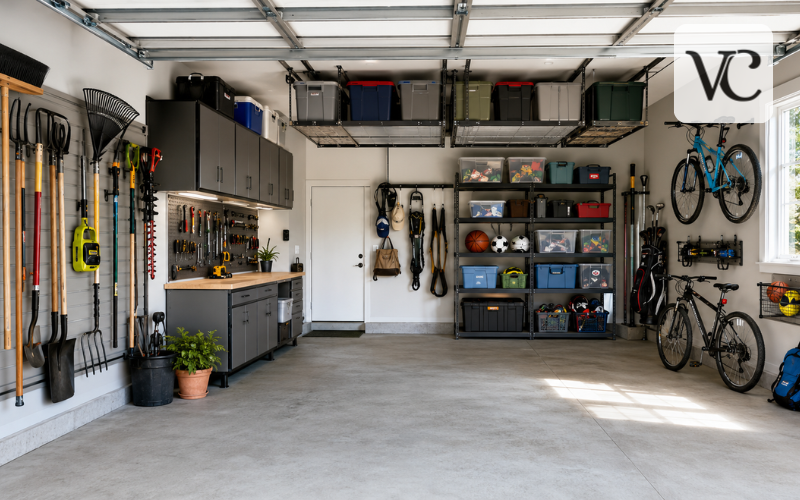
Use high shelves, back corners, and less accessible spaces for holiday decorations, camping equipment, and other items used only a few times each year. Keep frequently used tools and household supplies between waist and eye level. A good zoning plan reduces searching and keeps unrelated items from spreading across the garage.
How to Organize a Garage in a Small Space
When floor space is limited, every wall and corner matters. Narrow shelving can provide useful storage without making the garage feel cramped. Corner shelves, wall hooks, fold-down worktables, and stackable bins can hold a surprising amount while leaving room for a vehicle and safe walking paths.
Choose storage that goes upward instead of outward. Tall shelving, wall-mounted bike racks, pegboards, and ceiling storage can free the floor. However, avoid filling every high space. Items that are too difficult to reach may be forgotten, and overloaded shelves can become unsafe.
Oversized cabinets may look tidy but can reduce useful space in a small garage. Measure carefully and consider shallow cabinets or open shelves instead. Keep daily items within easy reach, and place seasonal belongings higher up. The best approach to organizing a small garage is to store fewer items and make each storage area serve a clear purpose.
How to Organize a Garage Wall and Ceiling
Walls are some of the most valuable storage areas in a garage. Pegboards work well above a workbench because tools remain visible and easy to move. Slatwalls and track systems can hold adjustable hooks, baskets, and racks for ladders, bicycles, hoses, folding chairs, and long-handled tools.
Before hanging anything heavy, make sure the system is installed correctly and is suitable for the wall and item weight. Heavy wall racks should be secured into solid framing or another approved support. Spread the load instead of placing too much weight on one hook.
Ceiling-mounted racks can be helpful for sealed bins containing lightweight seasonal items. Keep them away from garage-door tracks, lights, and moving parts. Do not store very heavy objects overhead, especially above vehicles or walking areas. Place heavier items on low shelves where they are easier and safer to lift. Wall and ceiling storage should free the floor without creating a falling risk.
Organize Garage Tools and the Workbench
A tool area works best when every tool has a clear place. Arrange tools by type and frequency of use. Keep common hand tools, such as screwdrivers, pliers, tape measures, and hammers, close to the workbench. Less frequently used power tools can go in labeled cabinets or sturdy bins.
Pegboards, magnetic strips, drawer dividers, and small-parts organizers help prevent clutter. Store screws, nails, washers, and wall plugs in separate labeled containers. Clear jars can work for light hardware, but they should be placed where they will not fall or break. A portable toolbox is useful for tools that are often taken outside the garage.
Try to keep the main work surface clear. A crowded bench makes small repairs harder and may encourage unfinished projects to pile up. Store sharp tools securely, protect power-tool blades, and keep batteries away from moisture and extreme heat. After each project, return tools to their assigned places and remove leftover materials before starting something new.
How to Organize Garage Cabinets and Storage Bins
Cabinets can hide visual clutter, but they only work when the inside is organized. Assign each cabinet a category, such as automotive care, painting supplies, gardening products, or power tools. Use shelf inserts, small bins, and drawer organizers so that loose items do not collect in the back.
Clear, stackable bins are helpful for seasonal decorations, camping supplies, sports gear, and household backstock. Choose containers that fit the shelves and stack securely. Avoid filling large bins with very heavy objects because they may be difficult to move. Smaller bins are often better for tools, books, and hardware.
Label every bin, drawer, shelf, and cabinet clearly. Simple labels such as “Car Care,” “Camping,” or “Holiday Lights” are more useful than broad labels like “Miscellaneous.” For closed bins, add a short list of the main contents. Good labels save time and help other household members follow the system instead of placing items wherever there is space.
How to Organize a Garage on a Budget
You do not need a costly custom system to make a garage functional. Start with what you already have. Reuse strong shelves, suitable containers, jars, baskets, and hooks. Clean them, check that they are safe, and give each one a clear purpose. Matching bins may look attractive, but consistent labels are often more important.
Focus on the area causing the most trouble. If bikes block the car, solve bike storage first. If loose tools cover the workbench, add a pegboard or drawer organizer before buying storage for another category. Improving one problem area at a time can prevent unnecessary spending.
Five quick and cheap garage organizing ideas are:
- Install basic wall hooks for hoses, folding chairs, and lightweight tools.
- Label the containers and shelves you already own.
- Use clear jars or divided boxes for small hardware.
- Add stackable plastic bins for seasonal and household items.
- Create a simple sports station with a basket for balls and hooks for bags or helmets.
Look for secondhand shelving and unused household storage, but avoid weak furniture that may not handle garage conditions. Spend more only where strength and safety matter, such as heavy-duty shelving or secure wall mounts.
DIY and IKEA Garage Organization Ideas
DIY storage can be a good choice when your garage has unusual dimensions or you want to save money. Simple wooden shelves, wall-mounted tool holders, sports racks, and fold-down work surfaces can be built to fit a specific area. Use suitable materials, secure shelves properly, and check the expected weight before loading them.
IKEA garage organization ideas often use modular cabinets, metal shelves, pegboards, rails, hooks, boxes, and labeled bins. These products can create a clean, coordinated system, especially for light tools, cleaning supplies, hobby items, and household backstock. However, not every indoor storage product is suitable for a damp, dusty, or very hot garage.
Ready-made systems are usually faster to install and easier to adjust. Custom DIY storage may fit the space better and cost less, but it requires tools, time, and careful construction. Whichever option you choose, check dimensions and weight limits. Select moisture-resistant products when the garage is humid, and avoid storing heavy equipment on light shelves designed for indoor use.
Put Everything Back and Keep It Organized
Once the storage zones are ready, return items by category. Place frequently used belongings where they are visible and easy to reach. Put seasonal items on higher shelves or in less accessible areas. Leave doors, windows, electrical panels, steps, and garage-door parts clear.
Check the floor before finishing. Walking paths and vehicle spaces should remain open, and nothing should sit where it can be crushed by a tire or block a car door. If an item has no assigned home, decide whether it needs a new storage place or whether it should leave the garage.
Maintenance is much easier than repeating a complete cleanout. Spend a few minutes each month returning misplaced items and removing rubbish. Review seasonal categories when holiday decorations, garden tools, or winter equipment are brought out. Make it a household rule that an item is not truly put away until it is returned to its labeled location. This small habit is what keeps the garage tidy.
Conclusion
The best way to organize a garage is to follow a clear order: empty and clean the space, sort every item, group similar belongings, create useful zones, add safe storage, and maintain the system. Skipping the sorting stage usually leads to more containers without less clutter.
Walls, ceilings, cabinets, shelves, and labels can make the garage easier to use, but storage products alone will not solve the problem. The system must fit the size of the space, the household budget, and the way the garage is used each day.
A simple plan is usually more successful than an overly complicated design. Keep everyday items easy to reach, store seasonal belongings safely, and leave the floor as open as possible. When every item has a clear home, the garage becomes easier to clean, safer to move through, and far more likely to stay organized.
Frequently Asked Questions
What Is The Best Way To Start Organizing A Garage?
Begin by deciding how you want to use the garage. Then remove everything, clean the space, and sort each item into Keep, Donate, Toss, or Relocate categories.
How Can I Organize A Garage With Limited Space?
Use tall shelves, wall hooks, pegboards, narrow cabinets, and overhead storage. Keep frequently used items within reach and avoid large cabinets that reduce parking or walking space.
How Can I Organize A Garage On A Small Budget?
Reuse existing containers, add clear labels, install affordable wall hooks, and buy storage gradually. Focus first on the area creating the most clutter instead of reorganizing everything at once.
What Items Should Not Be Stored High In A Garage?
Avoid placing heavy tools, full liquid containers, fuel, large machines, or breakable items overhead. Heavy belongings should remain on lower shelves to reduce lifting and falling risks.
How Often Should A Garage Be Reorganized?
Complete a brief reset every month and a deeper review each season. Remove rubbish, return misplaced belongings, and check whether unused items should be donated, recycled, or discarded.
Disclaimer: This article provides general garage organization and storage guidance. Always follow product instructions, weight limits, building requirements, and local disposal rules. Wall racks, ceiling systems, electrical areas, chemicals, fuel, batteries, and heavy equipment may require special safety measures or professional installation. Choose storage solutions that suit your garage’s condition, available space, and household needs.
Enjoyed this article? Discover more helpful ideas and fresh inspiration on Vogue Cultures.