Learning how to clean a sink drain is useful when water begins to move slowly, an unpleasant smell rises from the opening, or dark residue appears around the stopper. In most cases, drain cleaning means removing visible debris, loosening light buildup, washing the drain opening, and checking the parts just below the sink. It does not always mean using a strong chemical cleaner.
Kitchen and bathroom drains usually become dirty for different reasons. A kitchen sink collects food particles, oils, grease, flour, and soap. A bathroom sink is more likely to collect hair, toothpaste, shaving cream, skin oils, and beauty products. Because the causes are different, the best cleaning method also changes.
This guide explains how to clean a sink drain naturally, how to wash a stopper and overflow passage, how to care for a garbage disposal, and when to clean the P-trap. It also explains when a simple home routine is enough and when a deeper blockage may require a plumber.
Quick Guide: Choosing the Right Drain-Cleaning Method
| Drain problem | Likely cause | Best cleaning method |
| Unpleasant drain smell | Food, soap film, or trapped residue | Clean the stopper or strainer, then use baking soda, vinegar, and hot tap water |
| Slow bathroom sink | Hair, toothpaste, and soap buildup | Remove the stopper and pull out debris with a plastic drain tool |
| Greasy kitchen drain | Oil, fat, and food residue | Apply grease-cutting dish soap and rinse with hot tap water |
| Dirty garbage disposal | Food beneath the rubber splash guard | Disconnect power and scrub the splash guard with warm, soapy water |
| Recurring odor or slow flow | Sludge inside the P-trap | Remove and clean the P-trap or contact a plumber |
| Completely blocked drain | Solid or deep obstruction | Use a suitable drain snake or seek professional help |
Step-by-Step Guide to Clean a Sink Drain
- Remove standing water, food, hair, and other visible debris.
- Take out the stopper or strainer and wash it with warm, soapy water.
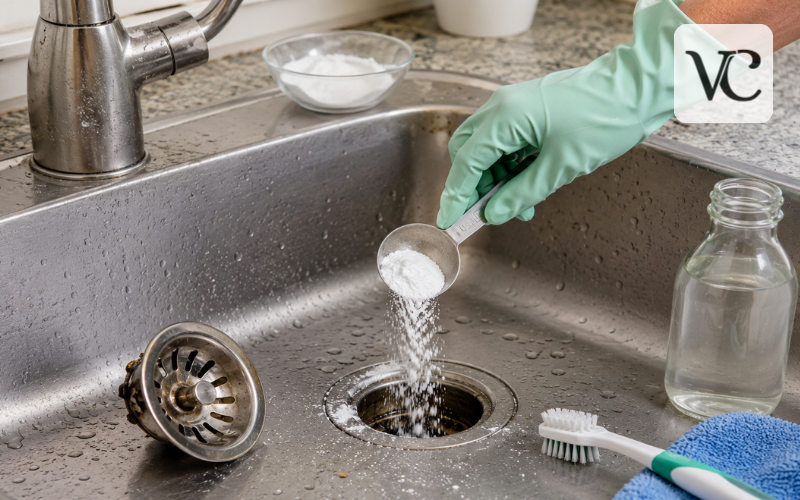
- Pour ½ cup of baking soda into the drain.
- Slowly add 1 cup of white vinegar.
- Cover the opening and allow it to fizz for 10–15 minutes.
- Flush the drain with plenty of hot tap water.
- Test the water flow and use a drain tool if the sink remains slow.
Identify What Is Wrong Before You Start
Begin by watching how the sink behaves. A drain that smells bad but still empties quickly usually has residue near the opening, stopper, overflow channel, garbage disposal baffle, or P-trap. A slow drain often means hair, soap, food, or grease has narrowed the pipe. A completely blocked sink, especially one holding several inches of water, usually needs physical removal of the obstruction rather than a deodorizing mixture.
Kitchen odors often come from food trapped under the strainer or inside a garbage disposal. Grease may cool and stick to the pipe, where it catches more debris. The EPA advises against putting fats, cooking oils, grease, and coffee grounds down household drains because these materials can contribute to plumbing and wastewater problems.
In a bathroom, lift the stopper and look for hair or sticky soap buildup. Choose the simplest method that matches the problem. Remove solid material first, clean the accessible parts next, and only then try a mild drain-cleaning rinse.
Supplies Needed to Clean a Sink Drain
Most routine cleaning jobs need only a few household items. Keep baking soda and white vinegar available for light residue and odor control. Use grease-cutting liquid dish soap for a kitchen drain that feels oily. You may also need hot water, rubber gloves, cleaning cloths, an old toothbrush, and a narrow drain brush.
For material that is deeper inside the opening, use a small plastic drain snake or hair-removal tool. A mesh sink strainer is useful after cleaning because it catches debris before it enters the pipe. Avoid pushing a metal coat hanger into the drain, as its sharp end can scratch finishes, become stuck, or push the blockage farther down.
If the P-trap must be removed, prepare a bucket, towels, and adjustable pliers. The P-trap is the curved section of pipe below the sink. It normally holds a small amount of water, so the bucket is necessary even when the sink appears empty.
Important Safety Checks Before Cleaning
Remove dishes, standing water, loose food, and visible hair before adding any cleaner. Wear gloves and open a window when working with products that have a strong smell. Most importantly, never mix cleaning products unless the labels clearly say the combination is safe.
Do not mix bleach with vinegar or another acid. That combination can release chlorine gas, which may irritate the eyes, nose, throat, and lungs. Bleach and ammonia can produce dangerous chloramine fumes. Poison Control recommends keeping bleach separate from acids, ammonia, and other household cleaners.
If a commercial drain opener was recently poured into the sink, do not follow it with baking soda, vinegar, bleach, or another product. Read the label and allow the system to be handled according to the manufacturer’s directions.
Use hot tap water rather than automatically pouring freshly boiling water into every sink. Pipe materials and fittings have different heat limits; for example, Charlotte Pipe lists a maximum service temperature of 180°F for one CPVC water system. If the sink has a garbage disposal, disconnect its power before touching the baffle or any internal surface.
The Baking Soda and Vinegar Drain-Cleaning Method
Baking soda and vinegar can be useful for freshening a lightly dirty drain after visible material has been removed. When combined, they react and produce carbon dioxide bubbles. The fizz may help disturb loose grime near the drain opening, but the mixture is not a dependable cure for a solid object, a thick grease plug, or a packed mass of hair.
Use the method in this order:
- Remove the stopper or strainer and take out any visible debris.
- Pour about ½ cup of baking soda into the drain.
- Add about 1 cup of white vinegar slowly.
- Cover the opening and leave the mixture for 10 to 15 minutes.
- Rinse with plenty of hot tap water.
After rinsing, run the faucet and observe the flow. If the sink drains normally and the smell is gone, no further work is needed. If it remains slow, use a drain snake, clean the stopper assembly, or inspect the P-trap. Repeating the fizzing method several times will not remove a physical blockage that must be pulled out.
How to Clean a Bathroom Sink Drain Naturally
To clean a bathroom sink drain naturally, start with the material you can see. Remove the stopper if possible, then pull out hair with a gloved hand, plastic hair tool, or small drain snake. Wipe away the gray or black film around the drain opening. This step often improves both smell and water flow more than pouring a cleaner into a drain that is still packed with hair.
Wash the opening with warm water and a small amount of dish soap. Use a narrow brush to scrub the inside wall as far as you can reach without forcing the tool. For mild odor or leftover film, follow with the baking soda and vinegar routine, then rinse well with hot tap water.
If the buildup returns quickly, look at daily habits. Toothpaste, shaving foam, liquid soap, skin-care products, and loose hair can combine into a sticky layer. Let the faucet run briefly after brushing your teeth or shaving, and wipe product residue from the basin instead of washing large amounts into the drain. A small hair catcher can make regular cleaning much easier.
How to Clean a Bathroom Sink Drain Stopper
Bathroom sink stoppers vary, so inspect the design before pulling. A lift-and-turn stopper usually opens when it is lifted and twisted. A push-and-pull or spring-loaded stopper moves when pressed. A traditional pop-up stopper is connected to a lift rod behind the faucet and a pivot rod below the sink. Moen describes the pop-up stopper as a mechanical plug commonly used in bathroom sinks.
Simple removable stoppers may lift out or unscrew from the top. A linked pop-up stopper may require loosening the pivot-rod nut under the sink. Place a towel below the connection, take a quick photo before disassembly, and avoid bending the rod.
Once removed, pull away hair and wipe off slime. Soak the stopper in warm soapy water, then scrub the stem, seal, and underside with an old toothbrush. Clean the drain rim and the first few inches of the opening before reinstalling it.
Test both the stopper movement and the drainage. If the stopper sticks, check that the rod has been returned to the correct position rather than forcing the handle.
How to Clean Bathroom Sink Drain Holes and the Overflow
Many bathroom sinks have an overflow opening near the upper edge of the basin. This passage gives rising water another path toward the drain, although it may not prevent flooding if the faucet is running quickly or the channel is blocked. Some sinks and drain assemblies are made with an overflow, while others are designed without one, so first confirm what your sink has.
The hidden overflow channel can collect soap film and damp residue, which may explain why a sink still smells after the main drain has been cleaned. Use a flexible overflow brush, pipe-cleaning brush, or narrow bottle brush that fits without becoming stuck. Gently loosen the film, then flush the opening with small amounts of warm soapy water.
Do not force a large volume of water into the hole. Watch inside the vanity for leaks while flushing, especially in an older sink. If the channel will not accept water, smells strongly of sewage, or appears damaged, stop and have the assembly checked rather than pushing a rigid object through it.
How to Clean a Kitchen Sink Drain Naturally
Start by removing the drain strainer and throwing food particles into the trash or compost where appropriate. Wash the strainer with warm water and dish soap, paying attention to its underside and small openings. Then scrub the drain rim and the area directly below it with an old toothbrush or drain brush.
For a lightly greasy drain, pour a small amount of grease-cutting dish soap into the opening and let it sit for 10 to 15 minutes. Follow with a steady rinse of hot tap water. Use dish soap by itself rather than combining it with bleach or unknown cleaners because cleaning-product ingredients vary and mixtures can be unsafe.
For odor after the grease has been removed, use baking soda and vinegar as a separate freshening step. Keep food scraps, flour, coffee grounds, oils, and cooking grease out of the drain. The EPA specifically advises that grease, oils, coffee grounds, and similar materials should not be poured into household plumbing.
A fine mesh strainer is one of the simplest ways to reduce future buildup. Empty it after washing dishes so food does not remain wet around the drain opening.
Removing Kitchen Sink Drain Smell and Grease
A lasting kitchen sink smell usually has a source that fragrance cannot hide. Smell the drain area carefully and inspect the strainer, the underside of the drain flange, and any rubber splash guard. Food residue trapped in these hidden areas can remain damp and begin to smell even when the visible basin looks clean.
If the sink has no disposal, clean the strainer and use dish soap with hot tap water for light grease. If the odor returns within a day or two, the P-trap may contain sludge or food. Gurgling, slow flow, or water rising in the other bowl of a double sink can also suggest a partial blockage farther along the shared pipe.
With a garbage disposal, the underside of the rubber baffle is a common odor area. InSinkErator states that disposal odors are often linked to food buildup and insufficient water flow during and after use.
Clean the actual residue rather than relying only on citrus peels, scented tablets, or air fresheners. A pleasant scent may cover the problem briefly, but it cannot remove trapped grease or food.
How to Clean a Garbage Disposal Drain Safely
Switch the disposal off, unplug it, or turn off its circuit breaker before manual cleaning. Never place a hand inside the grinding chamber. GE and InSinkErator both direct users to disconnect power before cleaning or removing objects and to use long-handled tools when necessary.
With the power disconnected, lift or remove the rubber splash guard if the model allows it. Scrub both sides with warm soapy water and a brush. Wipe the upper inner lip, where food film often collects. Refit the baffle correctly before restoring power.
For routine operation, run a steady stream of cold or cool water, start the disposal, add suitable food waste gradually, and let the water continue for a few seconds after grinding. InSinkErator recommends cold water and warns against putting fats, oils, or grease into the unit.
Cleaning advice varies by model. GE supports methods using ice with baking soda or salt, while InSinkErator describes periodic ice and citrus cleaning for certain units. Check the owner’s manual before using ice, salt, citrus, vinegar, or any disposal-cleaning product.
Cleaning the P-Trap and Deeper Drain Buildup
Surface cleaning is no longer enough when the drain stays slow after hair and visible debris have been removed, or when odor keeps returning from below the sink. The next place to inspect is the P-trap, the curved pipe that holds water and helps block sewer gases from entering the room.
Clear the cabinet and place a bucket directly under the trap. Take a photo of the pipe arrangement before opening anything. If the fittings are hand-tightened slip nuts, loosen them carefully. Use adjustable pliers only when needed and avoid crushing plastic parts. Water and dirty residue will fall into the bucket as the pipe opens.
Remove hair, sludge, grease, or small objects, then wash the trap with warm soapy water and a flexible brush. Inspect the washers and seals for cracks, flattening, or damage. Reassemble the connections in the same order and tighten them firmly without using excessive force.
Run water slowly while watching every joint. Then fill and drain the sink to test a larger flow. If a fitting leaks, turn off the water and reseat the washer. Stop if the pipe is corroded, glued in place, difficult to reach, or connected in a way you do not understand.
Common Sink Drain Cleaning Mistakes to Avoid
The most serious mistake is pouring several cleaners into the drain one after another. A person may add a commercial opener, see no result, and then add vinegar, bleach, ammonia, or another product. This can create irritating or toxic fumes and may also expose anyone opening the P-trap to trapped chemicals. Keep products separate and follow their labels.
Another mistake is treating baking soda and vinegar as a solution for every clog. The bubbling reaction is useful for light cleaning, but it cannot pull out hair, remove a solid object, or reliably open a serious blockage. Physical debris usually needs a drain tool or trap cleaning.
Do not pour fats, oils, or grease into the sink, even with hot water. The EPA notes that these materials can clog pipes and pumps. Avoid forcing knives, wire, or unsuitable tools into a drain.
Also, do not ignore repeated gurgling, leaks, sewage-like smells, or water backing up in another fixture. These signs may point to a larger plumbing problem that cannot be solved by cleaning the sink opening.
Keeping a Sink Drain Clean and Knowing When to Get Help
Regular prevention makes learning how to clean a sink drain much simpler. Use a mesh strainer in the kitchen and a hair catcher in the bathroom. Empty them often, clean the bathroom stopper regularly, and scrub the underside of the kitchen strainer or disposal baffle before a thick film forms.
Wipe fats and cooking oil from pans with a paper towel before washing them. Do not rinse coffee grounds, flour, or large amounts of food into the sink. After using a bathroom sink, allow enough water to carry away normal traces of toothpaste or soap, but remove hair by hand instead of washing it down.
Call a plumber when the drain remains blocked after safe surface cleaning and trap inspection, when several fixtures drain slowly at the same time, or when water backs up elsewhere. Professional help is also sensible for recurring sewage odors, damaged pipes, persistent leaks, or a clog located beyond the accessible trap.
The best way to clean a sink drain is to match the method to the cause. Remove solid debris first, wash reachable parts, use mild cleaners for light residue, and reserve deeper work for problems that truly need it. This approach keeps the process safer, clearer, and more effective.
Conclusion
Knowing how to clean a sink drain helps prevent bad smells, slow water flow, and stubborn buildup. The right method depends on the cause of the problem. Hair and soap are common in bathroom sinks, while grease and food are more likely to affect kitchen drains. Start by removing visible debris, cleaning the stopper or strainer, and using mild methods such as dish soap, baking soda, vinegar, and hot tap water where suitable.
For deeper buildup, a drain tool or P-trap cleaning may be more effective than repeating homemade treatments. Always avoid mixing cleaning chemicals, and check the instructions for your pipes or garbage disposal before using heat or other cleaning methods. Regular care, including using strainers and keeping grease out of the sink, can reduce future problems. Contact a plumber if the drain remains blocked, leaks, smells like sewage, or causes water to back up into other fixtures.
Frequently Asked Questions
What is the easiest way to clean a sink drain?
Remove visible debris and clean the stopper first. Add ½ cup of baking soda followed by 1 cup of vinegar, wait 10–15 minutes, and rinse thoroughly with hot tap water.
How do I remove a bad smell from a sink drain?
Clean the stopper, strainer, drain rim, overflow passage, or garbage disposal splash guard. Odors usually come from trapped food, hair, soap film, grease, or residue rather than the pipe itself.
Can baking soda and vinegar unclog a sink?
Baking soda and vinegar may loosen light residue and reduce odors, but they usually cannot remove packed hair, solid objects, or serious grease blockages. A drain tool may be necessary.
How often should a sink drain be cleaned?
Clean strainers and stoppers whenever visible buildup appears. A light drain-cleaning routine every few weeks can help prevent odors, but the best schedule depends on how frequently the sink is used.
When should I call a plumber for a sink drain?
Call a plumber when the sink remains blocked, several drains are slow, sewage odors continue, water backs up into another fixture, pipes leak, or the same clog repeatedly returns.
Disclaimer: This article provides general household cleaning information and is not a replacement for professional plumbing advice. Drain materials, fittings, garbage disposals, and cleaning-product instructions vary. Always follow appliance and product labels, avoid mixing chemicals, and contact a qualified plumber if you notice recurring blockages, leaks, sewage odors, damaged pipes, or water backing up into other fixtures.
Enjoyed this article? Discover more helpful ideas and fresh inspiration on Vogue Cultures.