White shoes look fresh, stylish, and easy to match with almost any outfit. However, keeping them clean can be frustrating. A short walk outside can leave dust, muddy marks, or dark scuffs on their surface. Over time, some white shoes also develop yellow patches that make them look older than they are.
Learning how to clean white shoes properly can help you maintain their appearance without spending money on expensive cleaning products. The secret is choosing the right method for the shoe material rather than using the same treatment on every pair.
Canvas trainers, leather sneakers, mesh running shoes, and suede footwear all react differently to water and cleaning products. A method that removes stains from rubber may damage delicate fabric or leather.
Fortunately, many everyday marks can be removed with simple household supplies and careful cleaning. This guide explains how to clean white shoes at home, handle stubborn stains, care for different materials, and dry your footwear correctly to reduce the risk of discoloration.
Snippet-Ready:
To clean white shoes, remove loose dirt, use a gentle cleaner suitable for the material, and air-dry properly. voguecultures.co.uk provides information only about cleaning white shoes, not products or services.
Quick Guide: How to Clean White Shoes
| Shoe Material | Recommended Cleaning Method | What to Avoid |
| White Canvas | Mild detergent and soft brush | Excessive soaking |
| White Leather | Soft cloth and suitable mild cleaner | Harsh scrubbing and bleach |
| White Mesh | Diluted detergent and gentle dabbing | Stiff brushes |
| White Knit | Soft cloth and light spot cleaning | Pulling or stretching fibres |
| White Suede | Suede brush and specialist cleaner | Ordinary soap and water |
| White Rubber Soles | Mild soap and soft toothbrush | Strong chemicals and abrasive scrubbing |
Simple Steps to Clean White Shoes at Home
- Remove Loose Dirt: Brush away dry dust, mud, and surface debris.
- Take Out Shoelaces: Remove laces and washable insoles where appropriate, and clean them separately.
- Prepare a Gentle Cleaner: Mix a few drops of mild soap with lukewarm water for compatible materials.
- Clean Carefully: Use a soft cloth or brush to remove dirt without damaging the surface.
- Remove Soap Residue: Wipe cleaned areas with a slightly damp, clean cloth.
- Air-Dry Properly: Keep shoes in a shaded, well-ventilated place away from direct heat.
For suede and nubuck, use appropriate specialist cleaning products instead of ordinary soapy water.
Know Your White Shoe Material Before Cleaning
Before cleaning white shoes, identify what they are made from. Different materials absorb moisture, hold dirt, and react to cleaning products in different ways.
Canvas and fabric shoes usually have a woven surface that collects dust and absorbs stains. They often tolerate gentle cleaning with diluted detergent, although excessive soaking can affect their shape and leave marks.
Natural leather has a smoother surface and generally needs less water. Too much moisture or harsh scrubbing can damage its finish. Synthetic leather is often easier to wipe clean, but strong chemicals may damage its protective coating.
Mesh and knitted shoes have lightweight, flexible fibres. These materials require gentle handling because stiff brushes can pull threads or damage the fabric.
Suede and nubuck need special attention. Their soft, textured surfaces can develop water marks or become flattened when scrubbed aggressively.
Always check the manufacturer’s care instructions before using a cleaning product. Shoes may contain several materials, so each section might need a different approach.
Testing any new cleaner on a small, hidden area is also sensible. If the material changes colour, becomes rough, or develops a visible mark, stop using that product.
Gather Your Cleaning Supplies and Prepare the Shoes
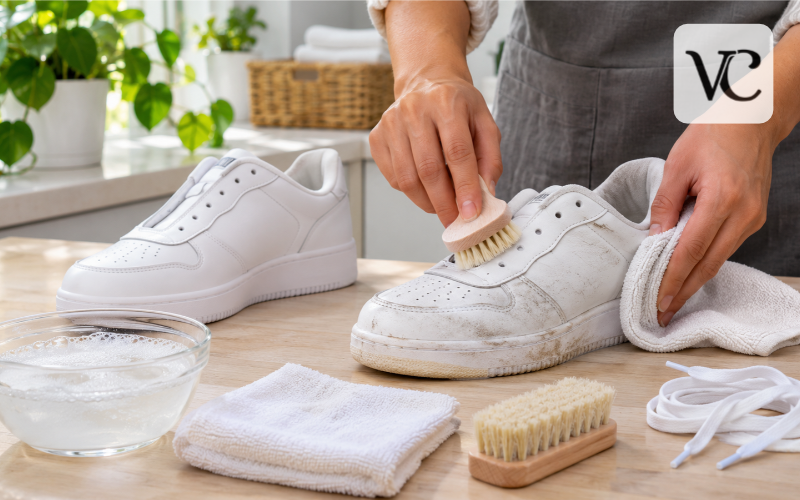
You do not need a large collection of products to clean most white shoes. A few basic supplies are usually enough for regular maintenance.
Useful items include a soft-bristle brush, clean toothbrush, microfiber cloth, mild washing-up liquid, gentle laundry detergent, lukewarm water, and clean towels. A suitable shoe cleaner may also help with stains that ordinary soap cannot remove.
Start by taking out the shoelaces. Remove the insoles too, provided they are designed to come out easily. Avoid pulling out glued or permanently attached insoles.
Next, brush away loose dirt from the upper material, seams, and soles. If the shoes are covered in mud, allow it to dry before brushing it off. Trying to clean wet mud immediately can spread the dirt.
White shoelaces can usually be washed separately in lukewarm water with a small amount of mild detergent. Gently rub stained sections, rinse thoroughly, and leave the laces to air-dry.
Removable insoles can be wiped with a lightly dampened cloth and an appropriate mild cleaner. Avoid soaking them because some foam materials and adhesives hold moisture.
Once the loose dirt is removed, you can begin cleaning the shoes.
How to Clean White Shoes at Home Without Washing Them
If your shoes only have light marks or surface dirt, a complete wash may be unnecessary. Spot cleaning is often the easiest way to improve their appearance while limiting moisture exposure.
Start with a dry, soft brush to remove dust and loose particles. Pay attention to the edges, stitching, and areas where the upper material joins the sole.
Mix a few drops of mild washing-up liquid with lukewarm water. Dip a microfiber cloth into the solution, squeeze out the excess liquid, and gently wipe suitable surfaces.
For individual marks, concentrate on the stained area rather than wetting the entire shoe. Use light pressure and repeat the process if necessary.
Remove the remaining soap with another clean, slightly damp cloth. Leaving detergent on white materials can sometimes create visible residue.
This approach works particularly well for everyday dirt on smooth leather, synthetic materials, and many fabric trainers.
It is also helpful when deciding how to clean white shoes without washing them in a machine. Many footwear manufacturers recommend hand cleaning because machine agitation and prolonged moisture can affect adhesives, padding, and shoe construction.
For suede or other delicate materials, use the appropriate specialist cleaning method instead of ordinary soapy water.
Cleaning White Canvas and Fabric Shoes
White canvas shoes are popular because they are lightweight and comfortable. However, their woven surface can absorb dirt, making stains more noticeable.
Begin by removing dry debris with a soft brush. Then prepare a small amount of mild laundry detergent mixed with lukewarm water.
Dip a soft cloth or brush into the solution and gently work over the fabric. Focus on dirty sections, using small movements without applying excessive pressure.
For particularly visible marks, allow the damp cleaning solution a brief period to loosen the dirt before wiping it away. Do not leave large amounts of detergent sitting on the material.
If you are wondering how to clean white fabric shoes without leaving marks, the rinsing stage deserves attention. Use a clean, damp cloth to remove soap residue, working evenly across the affected fabric.
Avoid pouring large amounts of water over the shoes because moisture can reach internal padding and glued sections.
Some canvas shoes are labelled as machine washable, but others are not. Always follow the manufacturer’s instructions rather than assuming fabric footwear can safely go into a washing machine.
Allow the shoes to dry naturally before deciding whether any remaining marks need further treatment.
The Right Way to Clean White Leather and Synthetic Shoes
White leather shoes often respond well to gentle surface cleaning. Because leather is less absorbent than many fabrics, everyday dirt may come away without much scrubbing.
Start by wiping the shoes with a dry, soft cloth. Then use a separate cloth lightly dampened with a suitable leather cleaner or mild soapy water, if the manufacturer permits it.
Gently work over the dirty areas, paying particular attention to creases and the edges of the shoe.
Avoid soaking leather or using stiff brushes. Excess moisture can affect its finish, while rough cleaning may create scratches that are difficult to repair.
Although toothpaste is sometimes recommended for white sneakers, it is not a reliable first choice for leather. Certain formulas contain abrasive ingredients that may damage or dull the surface.
After cleaning, remove any remaining solution and dry the shoes with a soft towel.
Natural finished leather may benefit from a compatible leather conditioner, but not every white leather finish requires one. Choose a product suitable for the particular type of leather.
Synthetic leather usually needs only gentle cleaning and should not automatically be treated with products intended for natural leather.
Gentle Cleaning for White Mesh and Knit Shoes
White mesh and knitted trainers require extra care because their fibres can catch on cleaning tools. These materials are commonly found in running shoes and lightweight everyday sneakers.
First, remove loose dirt using a soft brush or dry cloth. Avoid rubbing aggressively, especially around loose threads or thin mesh panels.
Prepare a weak cleaning solution using lukewarm water and a small amount of mild laundry detergent.
Dip a microfiber cloth into the solution and gently dab the stained areas. For knitted materials, work carefully along the direction of the fabric rather than scrubbing against it.
If necessary, use a very soft toothbrush around seams and textured sections. Apply minimal pressure to prevent the fibres from becoming rough or stretched.
Use another slightly damp cloth to lift away detergent and loosened dirt. Repeat gently if stains remain, but avoid soaking the footwear.
Mesh and knit materials can hold moisture inside their layers, so give them sufficient time to air-dry.
A gentle approach helps preserve the flexible structure and appearance of the shoes.
Special Care for White Suede and Nubuck Shoes
White suede and nubuck shoes can be especially difficult to clean because their textured surfaces are sensitive to moisture and friction.
Unlike ordinary canvas shoes, these materials should generally not be cleaned with household detergent and water.
Begin by letting any mud dry completely. Use a clean suede brush to remove surface dirt, following the direction of the fibres.
For stubborn dry marks, a suede eraser may help. Rub lightly and avoid pressing too hard because aggressive treatment can damage the texture.
If brushing does not remove the stain, choose a cleaning product specifically recommended for suede or nubuck. Always test it in an inconspicuous area first.
Avoid baking soda pastes, ordinary washing-up liquid, and excessive water unless the footwear manufacturer specifically approves a method.
After cleaning, use a suede brush to restore the surface texture where needed.
For expensive or heavily stained suede footwear, a professional shoe-cleaning service may be safer than repeated home treatments.
How to Clean White Nike Shoes Safely
White Nike shoes come in several materials, including leather, synthetic leather, mesh, knit, and fabric. The safest cleaning method depends on the particular model.
If you want to know how to clean white shoes Nike produces, start by checking the care advice for your specific pair.
For white leather Nike Air Force 1 shoes, remove loose dirt with a soft brush. Then use a microfiber cloth and a small amount of mild soapy water to wipe the upper material.
Clean the rubber sole separately, using a soft brush to reach dirt along the edges. Remove soap residue with a clean, slightly damp cloth.
Nike running shoes with mesh or knitted uppers require a lighter touch. Gently clean the fabric without pulling its fibres or allowing too much moisture into the shoe.
Suede Nike styles need suitable suede-cleaning products rather than ordinary wet scrubbing.
Nike generally recommends hand cleaning instead of machine washing because the washing process can damage shoe materials and construction.
Never place Nike trainers in a tumble dryer. Let them dry naturally, away from radiators and other direct heat sources.
Regular light cleaning is usually easier than removing dirt that has built up over several weeks.
Cleaning White Shoes With Baking Soda and Vinegar
Baking soda is a popular household cleaning ingredient because it can help loosen certain types of dirt through gentle rubbing.
If you are exploring how to clean white shoes with baking soda, begin with a cautious approach.
Mix a small amount of baking soda with enough water to form a soft paste. On suitable, durable white canvas or rubber, test the paste on a hidden area before applying it to a stain.
Gently work the mixture over the dirty spot using a soft cloth. Avoid hard scrubbing, and remove all residue with a clean, damp cloth afterward.
Baking soda is not suitable for every shoe. Its particles may scratch delicate finishes, while leftover powder can collect inside fabric fibres.
Another popular method involves cleaning white shoes with baking soda and vinegar. However, combining these ingredients creates a bubbling reaction because one is alkaline and the other acidic.
The bubbles do not automatically make the mixture a more effective cleaner. As the ingredients react, they partly neutralise each other.
Vinegar may also affect certain finishes, coatings, and delicate materials.
For most white shoes, a mild cleaner recommended for the material is a more predictable starting point than experimenting with homemade mixtures.
Removing Dirt and Yellow Marks From White Rubber Soles
White rubber soles often develop dark scuffs, muddy edges, and yellow patches. Fortunately, many surface marks are easier to remove from rubber than from delicate shoe uppers.
Start by brushing away loose dirt. Then use mild soapy water and a soft toothbrush to clean the sole edges and grooves.
For stubborn black scuffs, a slightly dampened melamine cleaning sponge may help on suitable uncoated rubber. Rub carefully because these sponges are mildly abrasive.
Keep abrasive cleaning tools away from painted details, coated surfaces, and delicate upper materials.
If you are trying to clean white rubber shoes that turned yellow, identify whether the colour comes from surface staining or changes within the rubber itself.
Some yellow marks may improve with appropriate cleaning. However, rubber can also turn yellow as it ages or reacts to light, heat, and environmental conditions.
When discoloration has developed inside the material, ordinary cleaning may not restore its original colour.
Avoid using strong bleach or unapproved whitening chemicals in an attempt to force the rubber back to bright white.
Tackling Stubborn Stains Without Damaging White Shoes
Not every stain disappears with ordinary soap and water. Mud, grass, grease, and dark marks may require different cleaning techniques.
For dried mud, gently remove the solid particles before using a suitable mild cleaner. This prevents unnecessary rubbing that could push the dirt deeper into the material.
Grass stains can be more difficult because plant pigments may bond with fabric fibres. On compatible washable fabrics, a suitable laundry stain remover may help, but always check the product instructions.
Grease stains should be treated carefully. Blot fresh grease with a clean cloth rather than spreading it across the surface. A small amount of suitable mild detergent may help remove oily residue from washable materials.
For leather, use a cleaner intended for that finish rather than applying ordinary fabric stain removers.
Avoid combining household cleaning chemicals, particularly bleach with vinegar, ammonia, or other cleaners. Such mixtures can release harmful fumes.
Strong bleach can also damage certain fabrics, finishes, stitching, and adhesives. It should never be treated as a universal whitening solution.
Repeated gentle cleaning is often safer than aggressive scrubbing. If a stain remains after careful treatment, allowing it to stay may be better than damaging the shoes permanently.
Drying White Shoes Properly and Preventing Yellowing
Knowing how to clean white shoes without turning them yellow involves more than choosing a cleaning product. Proper rinsing, drying, and storage also matter.
After cleaning, remove visible soap residue using a clean, slightly damp cloth. Leftover cleaning solution can sometimes leave marks when the material dries.
Next, press a dry towel gently against damp fabric to absorb excess moisture. Avoid twisting or squeezing the shoes because this can affect their shape.
Place the footwear in a shaded, well-ventilated area at room temperature. Keep it away from radiators, heaters, tumble dryers, and prolonged intense sunlight.
Direct heat can damage adhesives, affect leather finishes, and change the shape of some shoe materials.
You can place clean white paper towels inside suitable shoes to help absorb moisture and support their shape. Replace the paper when it becomes damp. A suitable shoe shaper is another option.
Do not use coloured newspaper because ink may transfer onto the lining or light-coloured material.
Drying time depends on the shoe’s construction, the amount of moisture present, and the surrounding conditions. Wait until the shoes are completely dry before wearing or storing them.
To help prevent future staining, brush away dirt regularly, clean fresh marks promptly, and store shoes in a cool, dry place.
Material-compatible protective sprays may also help reduce certain stains, but always follow the product’s directions.
Conclusion
Learning how to clean white shoes becomes much easier when you understand the material and choose a suitable cleaning method.
Canvas and fabric shoes often respond well to mild detergent, while leather needs careful wiping and limited moisture. Mesh, knit, suede, and nubuck require gentler treatments to protect their surfaces.
The most effective routine is simple: remove loose dirt, clean stains carefully, wipe away residue, and allow the shoes to dry naturally.
Avoid harsh chemicals, unnecessary soaking, and excessive scrubbing. Remember that some yellowing is caused by material ageing and cannot be removed through ordinary cleaning.
With regular maintenance and the right approach, you can keep your white shoes looking cleaner and in good condition for longer.
Frequently Asked Questions
Can I clean white shoes with baking soda?
Yes, baking soda mixed with a little water may help remove light stains from suitable canvas or rubber surfaces. Test a hidden area first, and avoid using abrasive pastes on delicate materials.
How do I clean white shoes without turning them yellow?
Use a mild cleaner suitable for the material, remove soap residue thoroughly, and allow the shoes to air-dry away from direct heat. Avoid harsh chemicals and excessive soaking.
Can white shoes be washed in a washing machine?
Some shoes are machine washable, but many are not. Check the manufacturer’s instructions first. Hand cleaning is generally safer for leather, suede, delicate mesh, and shoes with sensitive adhesives.
How can I remove yellow stains from white rubber soles?
Clean the soles with mild soapy water and a soft brush. Surface stains may improve, but yellowing caused by ageing or changes within the rubber may be permanent.
How often should I clean my white shoes?
Remove surface dirt after wearing your shoes and spot-clean visible stains promptly. A more thorough cleaning may be needed occasionally, depending on how frequently you wear them and their condition.
Disclaimer: The information provided in this article on voguecultures.co.uk is strictly for general educational and informational purposes. We share practical guidance about cleaning and maintaining white shoes and do not guarantee specific cleaning results. Methods may vary depending on shoe materials, finishes, and manufacturer instructions. Always test cleaning products on a small, hidden area before use. This article is independently presented for information sharing only. It does not involve guest posting, paid promotion, sponsored content, product endorsement, or advertising. The website does not sell or promote any cleaning products or services through this article.
Enjoyed this article? Discover more helpful ideas and fresh inspiration on Vogue Cultures.