A window can look spotless, yet the view still seems dull when its screen is covered with dust. Window screens catch more than insects. Wind carries pollen, fine dirt, and bits of leaves into the mesh, while rain and cooking fumes can leave a film behind. The buildup gradually becomes harder to remove.
Learning how to clean window screens is simpler than it might seem. For most standard removable screens, mild soapy water and a soft brush are enough. A thorough wash helps restore a clearer view and removes debris that may restrict airflow. You do not need expensive products.
The method depends on the screen material and whether removal is safe. This guide covers both a full wash and a lighter clean while the screen stays in place.
Snippet-Ready:
Cleaning window screens involves gently removing dust, pollen, and grime using suitable tools and mild cleaners. voguecultures.co.uk only provides information about the keyword and article “how to clean window screens” and nothing else.
Quick Guide Table: How to Clean Window Screens
| Possible Problem | What to Check | Recommended Action |
| Dust and pollen buildup | Loose dirt trapped in mesh | Use a soft vacuum brush before washing. |
| Screens cannot be removed | Screen access and frame condition | Gently clean the accessible side with a damp microfiber cloth. |
| No garden hose available | Available indoor cleaning space | Use a bucket, soft sponge, and clean rinse water. |
| Greasy or sticky screens | Cooking residue or stubborn grime | Apply diluted mild dish soap and wipe gently. |
| Soap marks or residue | Remaining detergent on mesh | Rinse thoroughly and allow the screen to air-dry. |
| Dirty or delicate screen material | Mesh type and manufacturer instructions | Use the recommended cleaning method and avoid harsh chemicals. |
Easy Step-by-Step Guide to Cleaning Window Screens
- Inspect the screen: Check for loose mesh, damaged frames, and cleaning instructions.
- Remove the screen: Carefully take it out if the design allows safe removal.
- Remove loose dust: Gently vacuum or brush both sides of the mesh.
- Prepare soapy water: Mix a small amount of mild dish soap with lukewarm water.
- Clean the mesh: Use a soft sponge or microfiber cloth without pressing too hard.
- Rinse carefully: Remove soap with clean water or a gentle, low-pressure hose.
- Dry and reinstall: Allow the screen to air-dry completely before putting it back.
What You Need to Clean Window Screens at Home
Start with a bucket of lukewarm water, a little mild dish soap, a soft-bristled brush, and two clean microfiber cloths. A sponge can work well on the frame, while a soft cloth is useful for the mesh and for wiping away leftover moisture. Keep clean rinse water nearby if needed.
A vacuum cleaner with an upholstery or soft brush attachment makes the job easier, especially when the screens are dusty. A gentle garden hose helps outdoors. For screens that must stay in place, a small spray bottle can dampen a cloth without soaking the window area.
Avoid wire brushes, scouring pads, strong degreasers, and harsh cleaning sprays. Screen mesh is much more delicate than window glass. Before wet cleaning, check any care label or manufacturer instructions. Some specialty screens, including certain fine-metal designs, require dry dusting rather than washing. Let the screen material guide your choice.
Preparing Your Window Screens Before Cleaning
Take a close look at the screen before you touch it. Check for torn mesh, loose corners, bent frames, or clips that no longer hold securely. Standard fiberglass and aluminum screens often tolerate gentle washing, but retractable screens and specialty meshes may have different care rules. Check the window model instructions if unsure.
If the screen is designed to come out, open the window and find its release tabs, springs, or latches. Follow the correct removal method rather than pulling against resistance. Some screens lift into a track; others have clips that must be released first. Put a small piece of painter’s tape on each frame to mark the room or window it belongs to.
Choose a clean, flat surface, such as a towel spread across a patio or bathroom floor. This supports the frame while you work. Never lean outside an upper-floor window or rely on the screen for support. Window screens do not prevent falls. If removal is difficult or unsafe, clean the accessible side in place or seek professional help.
How to Deep Clean Window Screens Step by Step
For a standard removable screen, a gentle wash gives you the best chance of clearing dirt from both sides of the mesh. Begin with the screen resting flat on a clean towel or other soft surface. This prevents twisting.
First, remove dry debris. Use a vacuum on low suction with a soft brush attachment, or sweep lightly with a soft-bristled brush. Move from top to bottom on each side. This stops loose dirt from turning muddy.
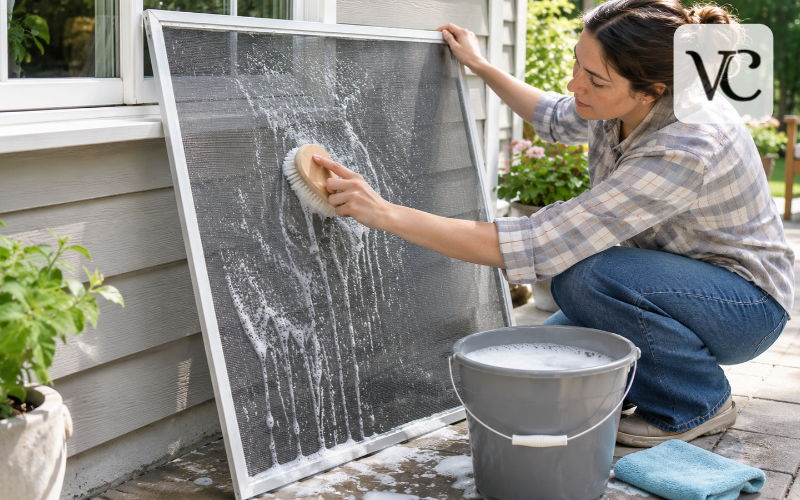
Next, mix the cleaner. Add a small amount of mild dish soap to lukewarm water. Avoid making thick suds. Dip a sponge or soft brush into the mixture and clean the mesh gently. Support the screen underneath if it flexes. Do not push hard or scrub one spot repeatedly. Wipe the edges and frame, where dirt often collects.
Then, rinse carefully. Use clean water to remove soap from both sides. A light flow from a hose or shower works for screens approved for wet cleaning. Otherwise, wipe repeatedly with a clean, damp cloth.
Finally, lift the screen carefully, let excess water drain, and wipe the frame with a clean towel. Leave it somewhere ventilated until dry. Refit it only when the mesh, frame, and window area are dry, and check that its fasteners are secure.
Cleaning Window Screens with a Garden Hose
A garden hose makes rinsing easier when you have several removable screens to wash. Choose a level outdoor area with enough room to lay each screen on a clean tarp or towel. Keep it away from gravel and rough concrete, which can scratch the frame.
After brushing away loose debris, wet the mesh with a light, low-pressure stream of water. Apply mild soapy water with a soft sponge or brush, working gently across both sides. Then rinse until the runoff is clear and no suds remain. Hold the nozzle far enough away that the water does not bend the mesh or push it out of its frame.
Do not use a pressure washer or a strong jet setting. More force does not mean a better clean, and it can damage both the screen and its fittings. Let the screen drain before moving it to a sheltered drying spot. Check for fresh dirt before bringing it inside.
How to Clean Window Screens Without a Hose
You can still wash removable window screens thoroughly if you have no outdoor tap. A bucket of soapy water and a second bucket of clean water are often enough. Lay the screen on a protected surface, loosen dry dirt first, then pass a damp sponge gently over the mesh and frame.
For rinsing, use a clean sponge or microfiber cloth dipped in fresh water. Repeat until you no longer see or feel soap residue. Replace the rinse water when it becomes cloudy. A handheld shower can also help with standard water-safe screens, provided the spray stays gentle and the screen fits comfortably without being bent.
In a bathroom, protect the frame with a towel. Avoid soaking nearby flooring or leaving puddles where someone could slip. Stand the washed screen in a stable, well-ventilated position and give it time to dry completely. Blot the edges without rubbing the mesh.
How to Clean Window Screens Without Removing Them
Sometimes a screen is fixed in place, difficult to release, or unsafe to reach from outside. In that case, a careful surface clean is a sensible option. It may not remove dirt on the outer side.
Position the window so you can safely reach the inside of the screen, and place towels on the sill and floor. Remove dust with a soft vacuum attachment on low suction, moving slowly from top to bottom. Avoid bowing the mesh.
Next, dampen a microfiber cloth with plain water or a little mild soapy water. Wipe the reachable side in gentle strokes. Use another cloth, lightly dampened with clean water, to take away any soap. Dampening the cloth instead of spraying limits water on the glass, tracks, and floor.
Allow the screen and surrounding area to dry before shutting everything up. Do not stretch out of a high window to clean the opposite side. If that side is heavily soiled and inaccessible, arrange safe access rather than taking a risk.
Using Vinegar to Clean Window Screens Safely
You may see advice about how to clean window screens with vinegar. Diluted white vinegar is sometimes suggested for light grime, but it is not a universal screen cleaner. Mesh, protective finishes, and metal frames can respond differently to acidic liquids. A method that seems harmless on one screen may be unsuitable for another.
If the manufacturer specifically allows a diluted vinegar solution, try it on a small, hidden area first. Apply it sparingly with a cloth rather than soaking the mesh, and wipe away the solution with clean water afterward. Never mix vinegar with bleach or other household cleaners.
For ordinary dirt and pollen, mild dish soap and water are usually a simpler starting point. They are widely recommended for standard washable screens and do not require experimenting with stronger mixtures. If you have coated, retractable, or fine-metal screens, follow their particular care instructions instead of using a homemade recipe. Glass cleaners are not necessarily mesh cleaners.
Removing Stubborn Dirt, Pollen, and Greasy Buildup
Screens beside busy roads, gardens, or kitchens may need more attention than a quick wipe. If pollen and dust have packed into the mesh, begin with dry brushing or gentle vacuuming on both sides. Then soften the remaining dirt with mild soapy water for a short time before working over it again with a soft cloth. Avoid letting the cleaner dry on the surface.
Kitchen screens can collect a slightly sticky film from cooking. A small amount of mild dish soap often helps lift this residue. Clean a little at a time and rinse the cloth frequently so you do not spread the grease across the screen. Wipe dirty frame corners separately.
Not every dark mark is removable dirt. Discoloration, corrosion, and damage to a protective finish may remain after washing. If you notice extensive suspicious growth, serious staining, broken strands, or a musty smell that persists, check the source of moisture and consider professional assessment or replacement. Do not try to solve the problem with bleach or aggressive scrubbing unless the manufacturer specifically approves the treatment.
How to Clean Window Screens Without Streaks or Residue
Although window screens are made of mesh rather than glass, dried soap and dirty water can leave them looking cloudy or patchy. Use less cleaner to prevent this. A few soap drops are enough for light dirt.
Work in manageable sections and rinse or wipe away the soap before it dries. If the rinse water turns dirty, replace it instead of moving the same grime back across the screen. Pay attention to the lower edge of the frame, where water and residue can gather.
Drain excess water and blot the frame dry. Leave the screen to air-dry fully without leaning it against a dusty surface. If the view still looks streaky after reinstalling, check the window glass too. Marks on the glass can show through a perfectly clean screen, so the two surfaces sometimes need separate attention.
Window Screen Cleaning Hacks: What Actually Works?
The most useful window screen cleaning hack is often the least dramatic: remove dust before it sticks. A soft vacuum brush can take care of loose pollen and cobwebs in minutes, while a microfiber cloth helps tidy the frame between full washes. For a quick touch-up, lightly wipe an accessible screen instead of getting out buckets and hoses every time.
Some online tips recommend using WD-40 to clean window screens. It is not a good general-purpose cleaner for screen mesh. Standard WD-40 products can leave an oily film that attracts dust and may interfere with the screen’s finish or operation. If a latch or other moving part needs lubrication, follow the window maker’s specific instructions and use the product recommended for that part, not the mesh.
Be equally careful with other shortcuts. Stiff brushes may tear fiberglass, sticky rollers can pull at loose strands, and harsh household chemicals can harm some finishes. Shortcuts should not cause damage. Gentle, regular care beats a dramatic one-time cleaning method.
Common Cleaning Mistakes That Can Damage Window Screens
The most common mistake is treating a screen like a solid surface. Pressing hard against flexible mesh can stretch it, loosen the edges, or bend a lightweight frame. Support the screen and avoid force.
Another mistake is reaching for powerful equipment. Pressure washers, abrasive pads, and strong chemical sprays may remove dirt quickly, but they can also damage the mesh or its protective coating. Avoid very hot water or prolonged soaking.
Material differences matter too. Fiberglass mesh may stretch or tear under pressure, while aluminum can dent or develop damage to its finish. Specialty products are an even stronger reason to check instructions: some fine stainless-steel screens are designed for dry dusting only, even though ordinary metal screens can be washed. Retractable screens should generally be cleaned according to their system’s directions rather than pulled or removed like a standard framed screen.
Finally, do not force a stubborn screen out or push it back into the wrong opening. Check the clips, orientation, and fit before finishing the job.
Keeping Window Screens Clean for Longer
You do not need to wait until the mesh looks gray before giving it attention. For many homes, a thorough cleaning once or twice a year is a practical starting point. Screens exposed to heavy pollen, traffic dust, salt air, or frequent storms may need more frequent care. Check the manufacturer’s schedule if one is provided.
Between washes, lightly vacuum the accessible side or remove cobwebs with a soft brush. This helps after windy days or high pollen. Keeping nearby sills free from loose leaves and dirt also reduces the mess that can build up around the screen edges.
Use cleaning time to inspect the screen. Look for holes that let insects in, mesh pulling away from the frame, bent corners, and loose clips. Small damage sometimes calls for a repair; badly stretched mesh or a damaged frame may need replacing. Once the screen is dry, reinstall it in the correct opening and make sure it sits firmly without gaps.
Conclusion
Knowing how to clean window screens makes an often-forgotten household job much easier. For most standard removable screens, the reliable approach is simple: remove loose dust, wash gently with mild soapy water, rinse well, and allow everything to dry before reinstalling.
If you cannot remove a screen or do not have a hose, a soft vacuum attachment and damp microfiber cloth can still make a noticeable difference. Just keep the material, manufacturer guidance, and window location in mind before choosing a method.
Regular, gentle cleaning helps maintain a clearer view and keeps everyday dirt from becoming a difficult job. There is no need for harsh chemicals or complicated tricks—careful handling and the right basic supplies are usually enough.
Frequently Asked Questions
What is the easiest way to clean window screens?
The easiest method is to remove loose dust with a soft vacuum brush, gently wash the mesh with mild soapy water, rinse thoroughly, and allow it to dry before reinstalling.
Can you clean window screens without removing them?
Yes. Use a vacuum with a soft brush attachment to remove dust, then gently wipe the accessible mesh with a damp microfiber cloth. Avoid excessive water and allow everything to dry.
Is vinegar safe for cleaning window screens?
Diluted white vinegar may be suitable for some screens, but it can affect certain materials or finishes. Always check the manufacturer’s guidance. Mild dish soap and water are generally a better starting point.
How often should window screens be cleaned?
Cleaning window screens once or twice a year is a practical starting point for many homes. Screens exposed to heavy pollen, road dust, coastal conditions, or frequent storms may need more attention.
Can I use WD-40 to clean window screens?
WD-40 is not recommended for general screen-mesh cleaning because it can leave an oily residue that attracts dust. Use mild soap and water for standard washable screens, following the manufacturer’s instructions.
Disclaimer: This article, “How to Clean Window Screens,” published on voguecultures.co.uk, is provided strictly for general educational and informational purposes. It is not associated with guest posting, paid promotion, sponsorship, or advertising. Cleaning methods may vary depending on screen materials, window designs, and manufacturer recommendations. Readers should follow their product’s care instructions and take appropriate safety precautions. voguecultures.co.uk does not guarantee specific cleaning results or accept responsibility for damage caused by improper cleaning methods.
Enjoyed this article? Discover more helpful ideas and fresh inspiration on Vogue Cultures.