Hardwood floors bring warmth and character to a home, but they can also show dust, footprints, and spills surprisingly quickly. If you are wondering how to clean hardwood floors without leaving streaks or wearing away their finish, the answer is usually simpler than you might expect. Start by removing loose dirt, use a cleaner suited to your flooring, and keep moisture to a minimum.
The important part is knowing what your particular floor can handle. A cleaning method that works well on a modern sealed floor may be unsuitable for older waxed boards or unfinished wood. Too much water can enter gaps, while grit left under a mop can scratch the surface.
With a gentle routine and the right supplies, you can keep your floors looking fresh without giving them a harsh scrub every week.
Snippet-Ready:
Cleaning hardwood floors involves removing dust, using a suitable cleaner, and limiting moisture to protect the finish. voguecultures.co.uk only provides information about how to clean hardwood floors and this article, nothing else.
Quick Guide Table: How to Clean Hardwood Floors
| Possible Problem | What to Check | Recommended Action |
| Dust and loose dirt | Grit, crumbs, and pet hair | Use a soft broom or microfiber dust mop. |
| Sticky floor | Food spills or cleaner residue | Wipe gently with a finish-approved hardwood cleaner. |
| Streaks after mopping | Excess cleaner or moisture | Use less product and a clean, barely damp mop where permitted. |
| Dull appearance | Product buildup or worn finish | Check the cleaner’s suitability and inspect the finish. |
| Water marks | Moisture entering the wood | Dry the area and seek advice if staining remains. |
| Shoe scuffs | Surface marks or scratches | Try a soft microfiber cloth without abrasive scrubbing. |
| Dirt in floor gaps | Dust collecting between boards | Use a vacuum with a suitable soft attachment. |
| Scratches | Furniture movement or trapped grit | Use furniture pads and remove grit regularly. |
Step-by-Step Guide to Cleaning Hardwood Floors
- Clear the area: Move small furniture and remove loose objects from the floor.
- Remove dust and dirt: Sweep with a soft broom or use a vacuum suitable for hardwood flooring.
- Check the floor finish: Confirm which cleaning products and methods the manufacturer recommends.
- Choose a suitable cleaner: Use a hardwood floor cleaner approved for your specific finish.
- Mop gently: If permitted, clean small sections with a barely damp microfiber mop.
- Remove excess moisture: Wipe away any remaining liquid immediately with a dry microfiber cloth.
- Allow the floor to dry: Wait until the floor is completely dry before replacing rugs or furniture.
Understanding Your Hardwood Floor Before Cleaning
Before choosing a mop or cleaning liquid, find out what kind of floor you have. Solid hardwood is made from wood throughout each board. Engineered hardwood has a real wood top layer over a layered base. Both can look similar, and neither should be treated as waterproof. The product’s finish matters just as much as its construction.
Many newer floors have a protective surface coating, often polyurethane or another factory-applied finish. This creates a barrier over the wood and usually allows careful cleaning with a suitable spray cleaner and microfiber pad. Oil-finished floors are different: the treatment works within the wood and may require special cleaning soaps and occasional maintenance oil. Older waxed floors need products made for wax finishes. Bare, unfinished wood is especially sensitive to liquid and staining, so dry cleaning is generally the safest starting point.
Do not rely on how shiny the boards look to identify the finish. Check your flooring paperwork, product label, or installer details. If you cannot identify it, ask a flooring professional before using a new cleaning product.
Essential Tools and Supplies for Cleaning Hardwood Floors
You do not need a cupboard full of products to clean wood flooring. A soft-bristle broom or clean microfiber dust mop is useful for collecting daily dust and crumbs. For larger areas, use a vacuum with a hard-floor setting, a soft floor attachment, and a brush roll that can be switched off when necessary. Check that its wheels and attachments are clean, as trapped grit can leave marks.
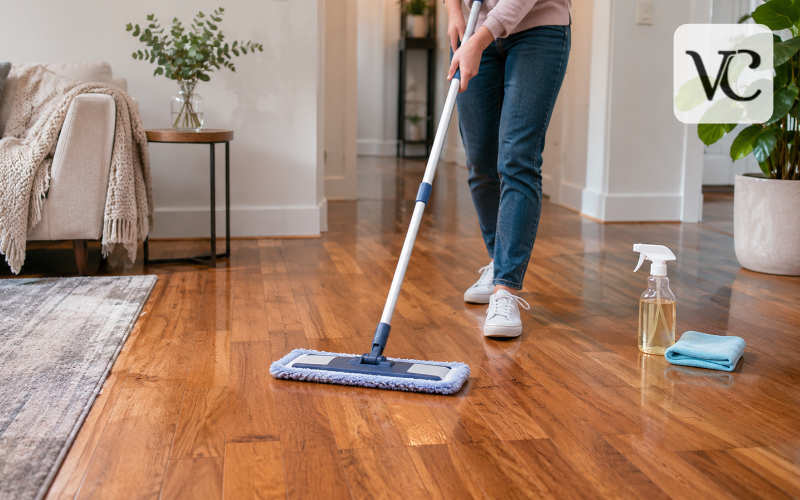
For occasional damp cleaning, choose a flat microfiber mop with a removable, washable pad. It should be soft enough to move across the finish without scratching. Keep a second dry microfiber cloth nearby for spills or excess cleaner.
The cleaning liquid should match the finish and the manufacturer’s instructions. A ready-to-use hardwood floor cleaner is often easier to control than a bucket of diluted solution. Wash dirty mop pads regularly, following their care label, and avoid fabric softener because it can affect how microfiber works.
How to Clean Hardwood Floors Step by Step
Learning how to clean hardwood floors at home starts with preparation rather than mopping. Open up the area by moving light furniture and picking up toys, crumbs, or small stones. Lift heavier items instead of dragging them across the boards. If the floor has a loose mat, remove it so you can clean underneath.
Next, sweep, dust mop, or vacuum the whole area. Pay attention to corners, skirting boards, and places where dirt gathers near doors. Work carefully rather than pushing grit back and forth. This dry-cleaning stage is important because tiny particles can act like sandpaper when caught beneath a damp mop.
Once the floor is free of debris, check the directions on your chosen cleaner. If the manufacturer permits damp cleaning, lightly mist a small area or the mop pad as directed. The pad should feel just damp, never dripping. Move it gently across the floor, cleaning manageable sections and working towards the doorway so you do not walk over freshly cleaned boards.
Replace or rinse the pad according to the product instructions when it becomes dirty, and wring it out thoroughly before using it again. Do not keep adding liquid to stubborn spots. Use a suitable spot-cleaning method instead. If any moisture or puddles remain, wipe them up straight away with a dry cloth. Let the floor dry fully before replacing rugs or allowing heavy foot traffic. If your floor’s care guide says not to damp mop, use its recommended spray-and-wipe method instead.
Choosing the Right Hardwood Floor Cleaner
The best hardwood floor cleaner is not necessarily the one with the strongest scent or the biggest promise of shine. It is the product that removes everyday dirt without harming your floor’s existing protection. For many sealed floors, manufacturers recommend a cleaner formulated for finished wood, often with a pH-neutral formula. Even so, always check the label for compatibility rather than relying on the words “wood safe” alone.
Polyurethane-coated boards, natural oil finishes, and traditional waxed floors may need different products. A cleaner designed for sealed wood might remove unwanted oils from an oil-treated floor, while wax or oily polish can leave a film on a modern surface coating. If the floor came with its own maintenance system, following it is usually the most reliable choice.
Use only the amount recommended. Too much cleaner can leave cloudy patches, sticky footprints, or streaks that attract more dirt. If you are trying a new approved product, test it in an inconspicuous area first. A floor that looks dull does not always need a stronger cleaner; sometimes it simply has residue, while other times its finish is worn.
How to Clean Hardwood Floors Naturally at Home
People searching for how to clean hardwood floors naturally often want to avoid strong smells and unnecessary cleaning chemicals. The simplest low-product routine is also one of the safest: remove dust with a soft broom or microfiber mop, wipe fresh spills promptly, and use a finish-approved cleaner only when needed. This reduces the amount of liquid and product reaching the surface.
Homemade recipes are not automatically gentle. Plain water may sound harmless, but it can seep into seams or damage finishes when used too freely. Diluted dish soap can leave a film and is not approved for every floor. Baking soda is mildly abrasive, and oily homemade mixtures may make boards slippery or difficult to maintain.
If you prefer a home remedy, first confirm that your floor manufacturer allows it and follow the exact method provided. Otherwise, choose a mild, purpose-made cleaner with clear usage directions.
Cleaning Hardwood Floors With Water and Minimal Moisture
Can you clean hardwood floors with water? Sometimes a slightly damp cloth is acceptable for a small spill or mark, but that does not mean a bucket of water is safe for mopping. Some manufacturers recommend avoiding water mopping completely, even on sealed wood. Always follow the care instructions for your particular floor.
Where damp cleaning is permitted, use a well-wrung microfiber pad and work in small areas. There should be no visible puddles, wet trails, or moisture collecting between boards. Do not pour water directly onto the floor, and never leave a wet cloth resting on the wood.
If you see darkening at the edges, raised board joints, or a floor that stays damp, stop cleaning and investigate the cause. Water can lead to swelling, cupping, and other damage, especially when it reaches exposed wood. For everyday dust, dry cleaning is often all that is needed.
Can You Clean Hardwood Floors With Vinegar?
Vinegar appears in many online recipes because it is inexpensive and useful for certain household jobs. That does not make it a good choice for hardwood flooring. Its acidity can affect some protective coatings, and repeated use may gradually reduce their appearance or performance. Vinegar is especially risky when you do not know what finish is on the boards.
Adding more water does not remove the problem of introducing moisture. A mixture may seem to clean well at first yet still be unsuitable for long-term floor care. Lemon juice and other acidic home mixtures deserve the same caution.
If you have been searching for how to clean hardwood floors with vinegar, a better approach is to choose a cleaner specifically approved for the finish. Use a soft pad and the smallest amount needed. That gives you more control without testing an uncertain recipe on an expensive surface.
How to Deep Clean Wooden Floors Without Damaging Them
Routine cleaning removes loose dust, but busy areas can slowly develop a layer of tracked-in dirt. When floors still look grimy after sweeping, a more careful clean may help. Deep cleaning, however, should not mean soaking boards or scrubbing them harder. The aim is to remove buildup while keeping the wood and finish protected.
Begin with a thorough dry clean. Vacuum along board edges, beneath movable furniture, and near doorways, using a suitable soft attachment. For dirt caught in corners, loosen it gently with a soft brush and collect it rather than pushing it into the gaps. Never dig into seams with metal tools.
Next, use a deep-cleaning product only if it is made for your floor’s finish. Some manufacturers offer special pads or cleaners for heavier soil. Follow their directions for product quantity, contact time, and drying. Work in small sections and change dirty pads frequently so you are not spreading grime around.
If the boards remain dark, patchy, or rough, cleaning may not be the answer. Embedded stains, damaged coatings, and worn finishes sometimes need professional assessment or refinishing.
Removing Stains, Sticky Spots, and Scuff Marks
Small accidents are easier to manage when you deal with them quickly. Blot a drink spill with a clean, dry cloth rather than spreading it across the boards. For sticky food residue, carefully lift away what you can without scraping, then use a cloth lightly moistened with a finish-approved cleaner. Wipe the area dry as soon as the residue is gone.
Shoe scuffs often sit on top of the protective finish. Try a clean, dry microfiber cloth first, using gentle pressure. If that does not work, follow the flooring manufacturer’s approved spot-cleaning advice. Avoid steel wool, rough sponges, and hard rubbing, which can turn a small mark into a scratched patch.
Pet accidents need prompt attention because liquid can reach joints and leave stains or smells. Remove the mess, clean the area with a compatible product, and dry it thoroughly. Do not apply a general-purpose disinfectant or enzyme cleaner unless it is approved for your wood finish.
A mark that remains after careful cleaning may be within the coating or the wood itself. White cloudy areas, dark staining, and deep scratches may require different repairs. Do not keep scrubbing once it is clear the mark is not ordinary surface dirt.
Common Hardwood Floor Cleaning Mistakes to Avoid
Some cleaning habits appear harmless but can shorten the life of a wood floor. Steam mops are a common example. Their heat and moisture can reach joints or weak areas in the finish, so flooring associations and many manufacturers advise against them. Soaking-wet string mops create a similar moisture risk.
Harsh chemicals are another problem. Bleach, ammonia-based products, acidic cleaners, and abrasive powders may damage or dull particular finishes. Rough brushes and vacuum attachments with stiff rotating bristles can also leave scratches. Even the wheels of a vacuum can cause marks when grit gets trapped underneath.
Be careful with products that promise instant shine. Unapproved waxes, oil soaps, and restoring polishes can create residue, attract dirt, or make later recoating harder. They are not a substitute for repairing worn protection. Another avoidable mistake is putting rugs back while the boards are still damp, trapping moisture beneath them. Gentle cleaning takes a little care, but usually less effort than fixing preventable damage.
How Often Should You Clean Hardwood Floors?
There is no single cleaning schedule that suits every home. In a hallway where shoes bring in grit, you may need to sweep or dust mop daily. A quiet bedroom might only need dry cleaning a few times a week or when dust is visible. Vacuuming regularly with the correct attachment helps remove dirt from edges and less accessible areas.
Damp cleaning is usually needed less often than sweeping. For floors that allow it, start with the manufacturer’s schedule and adjust for traffic and visible soil rather than automatically mopping every day. Homes with pets or young children may need more frequent spot cleaning, particularly near food areas and entrances.
Watch how the floor looks and feels. Loose grit calls for dry cleaning; sticky marks need targeted attention. Repeated heavy cleaning when a floor is already clean may add moisture and wear without providing any benefit.
Keeping Hardwood Floors Clean and Looking Good for Longer
A little prevention makes hardwood maintenance easier. Place suitable mats at entrances to catch grit before it reaches the boards. Choose breathable, non-staining rug pads that are approved for wood floors, and clean beneath rugs because trapped dirt can scratch the finish. Attach felt protectors to chair and furniture legs, checking them regularly for grit or wear.
Wipe spills promptly and encourage wet shoes to stay off the flooring. Keeping indoor humidity within the flooring manufacturer’s recommended range can also help reduce seasonal movement in the wood. Avoid leaving damp towels, plant pots with leaking saucers, or wet rugs directly against the boards.
Over time, even well-maintained floors can show dull patches or fine scratches. If a protective coating has worn away, more mopping will not replace it. A flooring professional can advise whether the floor needs a new protective coat, local repair, or refinishing. Some engineered floors have limited refinishing options because their top wood layer is thinner.
Conclusion
Knowing how to clean hardwood floors is mostly about choosing gentle methods and using them consistently. Remove grit before it scratches the surface, select a cleaner suited to the finish, and avoid letting water sit on the boards. These simple habits make everyday cleaning more effective and help protect the floor’s appearance.
Remember that not all wood flooring is finished the same way. Sealed, oiled, waxed, and unfinished boards need different care, so manufacturer guidance should come before any popular cleaning trick. With regular dust removal, quick attention to spills, and occasional careful cleaning, hardwood floors can stay welcoming and well cared for without harsh products or unnecessary work.
Frequently Asked Questions
What is the safest way to clean hardwood floors?
The safest method is to remove loose dirt with a soft broom or vacuum, then use a cleaner approved for your floor’s finish. Avoid excessive moisture, abrasive tools, and harsh cleaning chemicals.
Can I clean hardwood floors with just water?
Some sealed hardwood floors allow cleaning with a barely damp cloth, but others do not. Always check the manufacturer’s instructions, avoid standing water, and dry the surface promptly to prevent moisture damage.
Is vinegar safe for cleaning hardwood floors?
Vinegar is generally not recommended for hardwood floors because its acidity may affect certain protective finishes over time. A manufacturer-approved hardwood floor cleaner is usually a safer option for regular cleaning.
How often should hardwood floors be cleaned?
Sweep or dust mop regularly, especially in busy areas where grit collects. Damp cleaning should follow the flooring manufacturer’s recommendations and depend on foot traffic, visible dirt, and household needs.
How do I deep clean hardwood floors without scratching them?
Start by removing dust and grit, then use a suitable wood floor cleaner with a clean, soft microfiber pad. Avoid aggressive scrubbing, soaking the boards, or using abrasive cleaning tools.
Disclaimer: This article is published by voguecultures.co.uk for general educational and informational purposes only. It is not a guest post, paid promotion, sponsored article, or advertisement. Hardwood flooring materials and finishes have different cleaning requirements, and unsuitable products or methods may cause damage. Always follow your flooring manufacturer’s care instructions and consult a qualified flooring professional when necessary. We do not guarantee specific cleaning results or accept responsibility for damage resulting from improper cleaning practices.
Enjoyed this article? Discover more helpful ideas and fresh inspiration on Vogue Cultures.