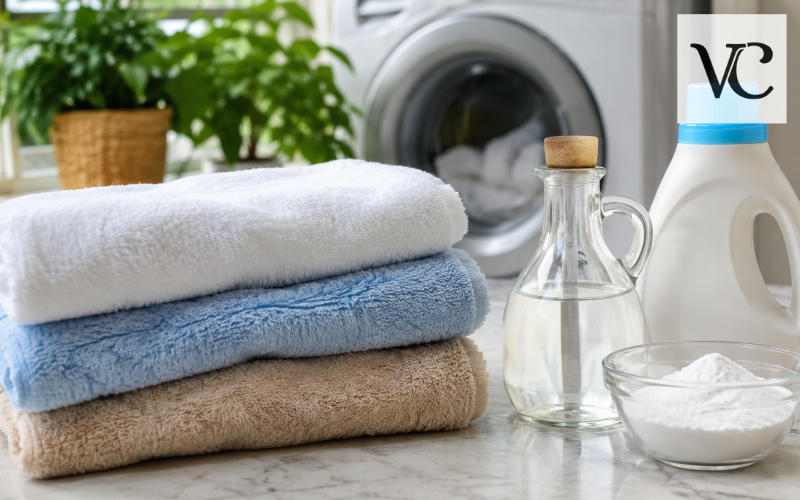
There is nothing pleasant about reaching for a freshly washed towel only to notice a damp, musty smell. Even after using your usual laundry detergent, that unpleasant odor can remain trapped in the fabric. If you are wondering how to remove mildew smell from towels, the good news is that most towels can be refreshed with a few simple changes to your washing routine.
Towels absorb water, body oils, and everyday dirt. When they stay damp for too long, microorganisms can grow and produce unpleasant smells. Detergent residue and poor drying habits can make the problem worse.
You can often remove mildew smell from towels at home using proper washing techniques, baking soda, or carefully used white vinegar. The key is to clean the fabric thoroughly, remove trapped residue, and dry everything completely.
This guide explains practical cleaning methods, common mistakes to avoid, and simple ways to keep towels smelling fresh after every wash.
Snippet-Ready:
To remove mildew smell from towels, wash them with a suitable laundry detergent, use the warmest water allowed by the care label, and dry them completely. For stubborn odors, try a fabric-safe oxygen-based laundry cleaner.
Quick Guide / Comparison Table
| Cleaning Method | Best For | How to Use |
| Regular laundry detergent | Mild musty smells | Wash at the warmest fabric-safe temperature using the recommended detergent amount. |
| White vinegar | Some mineral deposits and residue | If permitted by your washer manufacturer, try 1 cup in a separate wash cycle. |
| Baking soda | Mild lingering odors | Add approximately ½ cup during a separate wash, if your washer allows it. |
| Oxygen-based laundry cleaner | Stubborn odors and buildup | Follow the product instructions for soaking or machine washing. |
| Laundry sanitizer | Additional germ reduction | Choose a fabric-safe product and follow its dosage and contact-time instructions. |
| Thorough drying | Preventing recurring odors | Tumble-dry according to the care label or air-dry with good ventilation until completely dry. |
Step-by-Step Guide: How to Remove Mildew Smell from Towels
- Check the care label. Identify the highest safe washing temperature and any restrictions on laundry products.
- Separate musty towels. Wash affected towels together without overcrowding the machine, allowing enough space for effective cleaning.
- Choose a suitable detergent. Use the recommended amount for your load size, washer type, and water hardness.
- Treat persistent odors. If a normal wash has not worked, use a fabric-safe oxygen-based laundry cleaner according to its instructions.
- Select the correct wash cycle. Choose a normal or heavy-duty cycle when suitable for the towel fabric, using the warmest permitted water temperature.
- Rinse thoroughly. Use an extra rinse if detergent or cleaning-product residue remains in the towels.
- Dry immediately. Transfer towels to the dryer or a well-ventilated drying area as soon as washing finishes. Make sure they are completely dry before folding.
- Check the results. If the musty smell returns, inspect your washing machine, drying conditions, and towel storage area before repeating the treatment.
Why Towels Smell Like Mildew Even After Washing
Towels sometimes develop a musty smell even when they look perfectly clean. This usually happens because moisture and odor-producing residue remain trapped inside their thick fibers.
Trapped moisture is one of the biggest causes. Towels that remain wet in a laundry basket, washing machine, or poorly ventilated bathroom create favorable conditions for bacteria and mold to grow.
Another common problem is detergent buildup. Using more detergent than necessary does not always make towels cleaner. Excess detergent may remain in the fabric, especially when the washer is overloaded or does not rinse effectively.
Fabric softeners can also leave coatings on towel fibers, reducing absorbency and making it harder to wash away certain residues. Body oils and skin products can add to the problem.
Sometimes, the washing machine itself is responsible. Moisture, dirt, and detergent residue inside the drum, rubber seals, or detergent drawer can cause unpleasant smells that transfer to clean laundry.
Understanding the cause helps you choose a cleaning method that addresses the problem rather than temporarily covering the odor.
What You Need to Remove Mildew Smell from Towels
You do not need expensive cleaning products to freshen most musty towels. Basic laundry supplies are often enough.
For cleaning at home, gather the following items:
- A washing machine and suitable laundry detergent.
- Distilled white vinegar, if your washer manufacturer permits its use.
- Baking soda for additional odor control.
- A clothes dryer or a clean, well-ventilated drying area.
- An optional oxygen-based laundry product for stubborn smells.
Before washing, check the care label attached to each towel. Cotton towels may tolerate warmer washing temperatures, while microfiber, bamboo blends, and decorative towels often require gentler treatment.
Also, check your washing machine instructions before using vinegar or other additives. Some manufacturers advise against acidic products because repeated exposure may affect certain machine components.
The most important supplies are an effective detergent, enough water for proper rinsing, and a reliable way to dry the towels completely.
How to Remove Mildew Smell from Towels with Vinegar
White vinegar is a popular household option for dealing with musty laundry. Its acidity may help loosen some mineral deposits and residues that contribute to unpleasant smells. However, vinegar is not a reliable laundry disinfectant, and it may not remove every source of odor.
Start by separating musty towels from other laundry. Place them loosely inside the washing machine so water can circulate properly.
If your washer manufacturer allows vinegar, you can try approximately one cup of distilled white vinegar in a suitable wash cycle. Follow the appliance instructions for where additives should be placed, rather than assuming every dispenser is safe for vinegar.
Choose the warmest water temperature permitted by the towel’s care label. Avoid adding fabric softener during this treatment.
After the vinegar wash, run a separate wash with laundry detergent to remove remaining dirt and loosened residue. An extra rinse may help if the towels still feel coated.
Never combine vinegar with chlorine bleach. This mixture can release dangerous chlorine gas.
If your washing machine instructions discourage vinegar, skip this method and use detergent or a compatible laundry cleaning product instead.
Using Baking Soda to Freshen Musty Towels
Baking soda is another inexpensive option for reducing unpleasant laundry odors. It can help neutralize certain odor-causing substances, although it does not replace detergent or guarantee that mold and bacteria have been removed.
For a typical load of washable cotton towels, you can try adding about half a cup of baking soda to the washer drum, provided your appliance instructions allow it.
Use baking soda during a separate wash cycle rather than combining it directly with vinegar. When mixed, the two substances react and largely neutralize each other, reducing their individual cleaning benefits.
If the towels are visibly dirty or contain body oils, use an appropriate laundry detergent as well. Follow the washer instructions for adding powders and detergents.
Once washing is complete, check whether the towels feel slippery or contain visible powder residue. If necessary, run an additional rinse cycle.
Baking soda can be useful for mild odors, but persistent mildew smells may require a more thorough cleaning approach.
The Two-Cycle Method for Deep-Cleaning Smelly Towels
A two-cycle cleaning routine can help when ordinary washing does not remove a musty odor. It separates the treatment of trapped residue from the main cleaning process.
First cycle: Loosen the buildup
Load the towels without overcrowding the drum. If your washing machine permits vinegar, use approximately one cup of distilled white vinegar and run a complete wash cycle at a fabric-safe temperature.
Do not add bleach or other incompatible cleaning chemicals.
Second cycle: Wash and refresh
After the first cycle finishes, wash the towels again using a measured amount of regular laundry detergent. If appropriate for your washer, you may also use half a cup of baking soda as an odor-control aid.
Follow the detergent label and machine instructions. Baking soda should not replace detergent when thorough cleaning is needed.
Keeping vinegar and baking soda in separate cycles avoids the reaction that occurs when they are mixed directly.
Final step: Dry completely
Remove the towels immediately after washing. Tumble-dry according to their care labels or hang them in a well-ventilated area until fully dry.
This method may improve stubborn odors, but results depend on the fabric, amount of buildup, and underlying cause. It is not a guaranteed disinfecting treatment.
How to Get Mildew Smell Out of Towels Without Vinegar
If you prefer not to use vinegar, several effective alternatives can help restore freshness.
The simplest approach is to wash the towels with a good-quality laundry detergent at the warmest temperature their care labels allow. Choose the correct amount based on the detergent instructions, load size, and water hardness.
For persistent smells, consider an oxygen-based laundry cleaner suitable for the towel’s fabric and color. These products can help remove certain stains and odor-causing residues. Follow the product label carefully, particularly when soaking towels.
A laundry sanitizer may be useful when additional germ reduction is needed. Choose one designed for the fabric and follow its directions for dosage, washing stage, and contact time. Not every sanitizer works in the same way.
Avoid mixing different laundry chemicals unless the product instructions explicitly allow it. In particular, never mix chlorine bleach with vinegar or ammonia.
For many households, a proper detergent wash, thorough rinsing, and complete drying are enough to remove mildew smell from towels without vinegar.
How to Get Rid of Smelly Towels in a Washing Machine
Your washing machine plays an important role in keeping towels fresh. Even effective detergent may struggle when the washer is overloaded or dirty.
Start by leaving enough room for towels to move freely inside the drum. Thick towels absorb considerable water, so washing smaller loads often improves cleaning and rinsing.
Select a normal or heavy-duty cycle when appropriate for the fabric. Use the warmest temperature allowed by the towel label and follow the detergent manufacturer’s instructions.
If freshly washed towels repeatedly smell unpleasant, inspect the machine. Front-loading washers can collect moisture and residue around the rubber door gasket. Detergent drawers and filters may also need attention.
Clean these areas according to the appliance manual. Run the manufacturer’s recommended washer-cleaning cycle using an approved washing machine cleaner.
After laundry, remove wet items promptly and allow the machine to dry as recommended.
Keeping the washer clean helps prevent unpleasant odors from transferring onto towels during future loads.
Removing Stubborn Mildew Odors That Keep Coming Back
Sometimes, towels continue smelling musty despite repeated washing. This usually means the cleaning process has not fully removed the odor-producing residue, or the towels are becoming damp again before they can dry properly.
For stubborn smells, try soaking washable towels in an oxygen-based laundry solution. Follow the product instructions for the correct amount of cleaner, water temperature, and soaking time. Afterward, wash with regular detergent and rinse thoroughly.
Hard water can also make towel cleaning more difficult. Minerals in the water may build up in fabric and interfere with detergent performance. If you live in a hard-water area, consider using a suitable laundry water softener according to its instructions.
Online discussions, including Reddit threads about removing mildew smell from towels, often suggest vinegar, baking soda, borax, and laundry stripping. While some people report good results, these methods are not equally suitable for every fabric or washing machine.
Laundry stripping, in particular, can be harsh on certain materials and is not always necessary.
If a towel still smells strongly after several appropriate washes, develops persistent visible mold patches, or has damaged fibers, replacing it may be the most practical choice.
Is Mildew on Towels Dangerous?
A common concern is whether mildew on towels is dangerous. The answer depends on the amount of microbial growth, individual sensitivity, and how the towel is used.
A musty smell alone does not prove that dangerous mold is present. Odors can also come from bacteria, body oils, or trapped laundry residue.
However, visible mold or mildew should not be ignored. Mold exposure can cause allergic reactions, coughing, sneezing, or irritation in sensitive individuals. People with asthma, mold allergies, or weakened immune systems may need to take additional precautions.
Avoid using towels that have visible mold growth until they have been properly cleaned. If the growth is extensive or remains after washing, discard the affected towel.
When handling heavily contaminated laundry, avoid shaking it unnecessarily, as this may spread particles into the air. Wash according to the fabric instructions and dry thoroughly.
Remember that removing an unpleasant smell does not necessarily mean the towel has been disinfected. When sanitizing is necessary, use an appropriate laundry product and follow its label instructions.
Common Mistakes That Make Towels Smell Worse
Even small laundry mistakes can cause mildew odors to return. One of the most common is using too much detergent.
Extra detergent may leave residue behind instead of improving cleanliness. Always measure the amount according to the product instructions, washing machine type, and load size.
Another mistake is using fabric softener too frequently. Some softeners coat towel fibers and reduce their ability to absorb water effectively. Skipping softener is often a better choice for maintaining towel performance.
Overloading the washing machine can also prevent proper cleaning. Towels need enough space to move through the water and rinse thoroughly.
Leaving wet towels inside the washer for several hours is another common problem. Warm, damp conditions encourage microbial growth and may quickly bring back unpleasant odors.
Mixing household cleaning chemicals is particularly dangerous. Never combine chlorine bleach with vinegar, ammonia, or other incompatible products.
Finally, avoid folding or storing towels while they are still slightly damp. Even a small amount of trapped moisture can create conditions for musty smells to develop again.
How to Prevent Mildew Smell from Returning
Once your towels smell fresh again, a few simple habits can help prevent the problem from returning.
Hang towels properly after every use. Spread them across a towel bar or drying rack instead of leaving them folded, piled together, or hanging in thick bunches. Better airflow allows moisture to escape more quickly.
Wash frequently used bath towels regularly. For many households, washing after approximately three uses is a reasonable starting point, but towels may need more frequent cleaning when bathrooms are humid, towels remain damp, or someone is unwell.
Bathroom ventilation also matters. Use an exhaust fan or open a window when conditions allow, especially after showering. Reducing indoor humidity helps towels dry faster.
Keep your washing machine clean by following its recommended maintenance schedule. Pay particular attention to detergent drawers, rubber seals, and other areas where moisture collects.
After washing, dry towels completely before placing them in cupboards or storage baskets. Avoid packing clean towels tightly into damp or poorly ventilated spaces.
You can also reduce odor buildup by using the correct detergent amount and avoiding unnecessary fabric softener.
These habits are often more effective over time than repeatedly using stronger cleaning products.
Conclusion
Learning how to remove mildew smell from towels starts with understanding why the odor develops. Trapped moisture, detergent buildup, poor drying habits, and an unclean washing machine are among the most common causes.
Regular detergent washing, baking soda, and carefully used vinegar treatments may help refresh musty towels. For stubborn odors, a fabric-safe oxygen-based laundry cleaner or suitable sanitizer may be useful.
The most important step is preventing moisture from remaining trapped in the fabric. Wash towels properly, rinse them thoroughly, dry them completely, and store them in a clean, dry space.
With consistent laundry habits and the right cleaning methods, you can keep your towels fresh, absorbent, and comfortable to use without relying on harsh or unnecessary treatments.
Frequently Asked Questions
Can I use vinegar and baking soda together to remove mildew smell from towels?
It is better to use them in separate wash cycles. Mixing vinegar and baking soda causes a chemical reaction that largely neutralizes both substances, reducing their individual cleaning benefits.
How long should I soak musty towels before washing?
Soaking time depends on the cleaning product and towel material. For oxygen-based laundry cleaners, follow the label’s soaking instructions. Avoid leaving towels soaking overnight unless the product and fabric instructions permit it.
Why do my towels still smell musty after washing with detergent?
The smell may come from trapped body oils, detergent residue, incomplete drying, or buildup inside the washing machine. Try improving rinsing, cleaning the washer, and drying towels immediately after washing.
Can sunlight help remove mildew smell from towels?
Sunlight and outdoor airflow can help towels dry thoroughly, reducing conditions that encourage musty odors. However, sunlight alone does not reliably disinfect towels, and prolonged exposure may fade some fabrics.
When should I replace towels that smell like mildew?
Consider replacing towels when strong odors persist after several appropriate washes, visible mold remains, or the fabric becomes badly damaged. Replacing heavily contaminated towels may be safer than repeatedly attempting to clean them.
Disclaimer: This article is provided for general informational and educational purposes only. Cleaning results may vary depending on towel materials, odor severity, and washing machine conditions. Always follow fabric care labels, appliance instructions, and cleaning-product safety directions. The methods described do not guarantee complete odor removal or disinfection.
Enjoyed this article? Discover more helpful ideas and fresh inspiration on Vogue Cultures.