Reseeding a lawn means adding new grass seed to areas where the turf has become thin, weak, bare, or uneven. It is one of the most practical ways to improve an existing lawn without removing every piece of old grass and starting again.
The process may sound simple, but good results depend on more than spreading grass seed over the surface. The seed must touch the soil, receive enough moisture, and stay protected while it germinates. If clippings, thick thatch, leaves, or dense grass block the seed from reaching the ground, much of it may dry out, wash away, or fail to grow. Good seed-to-soil contact is a basic requirement for successful lawn establishment.
Learning how to reseed a lawn also means choosing the right seed and working at the right time of year. You will need to check the lawn, prepare the surface, spread the seed evenly, water it carefully, and wait until the young grass is ready before mowing. Each step supports the next one, so preparation is just as important as the seed itself.
Quick Guide: How to Reseed a Lawn
| Step | What to Do | Why It Matters |
| Check the lawn | Identify bare spots, compacted soil, shade, or drainage problems | Prevents the same damage from returning |
| Choose grass seed | Match the seed to your climate, sunlight, and existing grass | Improves growth and appearance |
| Mow and clear | Cut the grass shorter and remove clippings, leaves, and thatch | Helps seed reach the soil |
| Aerate if needed | Core aerate hard or compacted ground | Improves air, water, and root growth |
| Spread the seed | Apply half in one direction and half across it | Creates more even coverage |
| Press seed lightly | Rake gently or use a light lawn roller | Improves seed-to-soil contact |
| Water carefully | Keep the topsoil damp without creating puddles | Supports steady germination |
| Delay mowing | Wait until the new grass is well established | Prevents damage to young seedlings |
Simple Step-by-Step Guide
- Choose the correct grass seed for your lawn and local climate.
- Mow the existing grass shorter than usual and collect the clippings.
- Rake away leaves, moss, dead grass, and thick thatch.
- Aerate areas where the soil feels hard or compacted.
- Add a thin layer of compost or topsoil to bare or uneven spots.
- Spread the seed evenly in two crossing directions.
- Lightly rake or press the seed against the soil.
- Water gently and keep the surface consistently damp.
- Reduce watering gradually after the seedlings begin to grow.
- Wait until the new grass is established before mowing or applying weed control.
Reseeding, Overseeding, and Top Seeding Explained
The words reseeding, overseeding, and top seeding are often used in similar ways, but they can describe slightly different jobs.
Reseeding usually means repairing damaged parts of a lawn. You may reseed several bare spots, replace grass that died during drought, or restore an area damaged by pets, insects, disease, or heavy foot traffic. In badly damaged sections, you may need to loosen more soil and treat the area almost like a small new lawn.
Overseeding means spreading grass seed into an existing lawn to make it denser. The old grass stays in place while new seedlings grow between it. This method works well when the lawn is generally healthy but looks thin, tired, or uneven.
“Top seeding lawn” is a less exact phrase. Most people use it to mean spreading seed over the top of existing turf, often with a light layer of compost or soil afterward. Whatever term you use, the important point is that seed should not be left sitting on leaves or thick debris.
Choose spot reseeding when only a few areas are damaged. Choose whole-lawn overseeding when thinning is spread across most of the yard. If more than half the lawn is dead or the soil has major drainage, grading, or weed problems, a fuller lawn renovation may be more effective than simply adding seed.
The Best Time to Reseed Different Lawn Types
Timing depends mainly on whether your lawn contains cool-season or warm-season grass.
Cool-season grasses include tall fescue, fine fescue, Kentucky bluegrass, and perennial ryegrass. They grow most strongly during cooler parts of the year. For these lawns, late summer to early fall is usually the best reseeding period. The soil remains warm enough for germination, while cooler air reduces heat stress. Fall seedlings also have time to develop before the following summer. University extension guidance commonly recommends allowing several weeks of growth before the first expected frost.
If you are learning how to reseed grass in spring, begin as early as local conditions allow while avoiding frozen or waterlogged soil. Spring can work, but new grass faces stronger weed competition and has less time to form deep roots before summer heat. It may also conflict with crabgrass-prevention products because many pre-emergent herbicides stop grass seed from developing.
Warm-season grasses grow most actively in hot weather. Seeded types, such as common bermudagrass, are normally established in late spring or early summer after the soil has warmed. However, not every warm-season lawn can be repaired with seed. Only common bermudagrass types are commonly established from seed, while St. Augustine grass is established with sod, plugs, or sprigs. Identify the grass before buying any product.
Do not rely only on the calendar. Watch the weather forecast, soil condition, expected rainfall, and frost dates. Avoid seeding just before extreme heat, heavy storms, or a hard freeze.
Choosing the Right Grass Seed for Your Lawn
The best grass seed is one that suits your climate, site conditions, and existing turf. A bag may look attractive in the store, but it will not perform well if the grass type is wrong for your lawn.
Start by identifying the grass already growing in the yard. Matching the existing species or using a compatible blend usually creates a more even appearance. If you are unsure, take clear photographs and a small grass sample to a local garden center or county extension office.
Next, think about the lawn’s daily conditions. Some grasses need full sun, while fine fescues often handle shade better than Kentucky bluegrass. A lawn used by children or pets needs varieties that tolerate wear. In dry areas, drought tolerance may matter more than a deep green color. Also consider how often you are willing to mow, water, and fertilize.
Read the seed label instead of buying by package design alone. Check the named grass varieties, germination percentage, test date, purity, and amount of weed seed or other crop seed. Fresh seed generally gives better germination than old seed, and extension guidance recommends checking the test date because seed viability falls with age.
Buy enough seed for the measured area, but follow the overseeding rate printed on the bag. Applying far more than recommended does not guarantee a thicker lawn. It can create crowded seedlings that compete for light, water, and nutrients.
Tools and Materials Needed for Reseeding
Most home lawns can be reseeded with basic equipment. Gather the following items before starting so the prepared soil does not sit unused:
- Grass seed suited to the lawn and climate
- A lawn mower with a bag or collection box
- A sturdy garden rake, dethatching rake, or power dethatcher
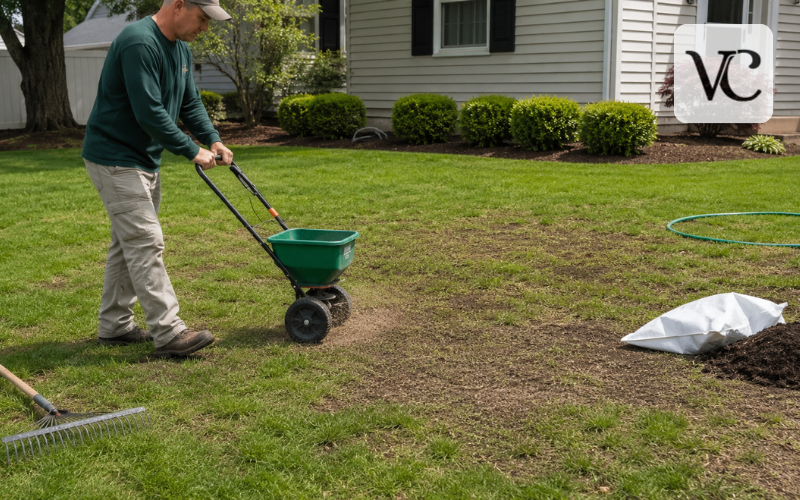
- A broadcast, drop, or handheld spreader
- Screened compost or fine topsoil for bare areas
- A hose with a gentle spray nozzle or a sprinkler
- A core aerator if the soil is compacted
- A light lawn roller, if available
- Fertilizer only when it is suitable for the soil and allowed locally
A spreader is helpful because it produces more even coverage than throwing seed from a bucket. A handheld model is usually enough for small lawns and patches, while a broadcast spreader is faster for a large yard.
Check the Lawn Before You Begin
Before you reseed, work out why the lawn became thin. New seed will not solve a problem that is still active.
Press a screwdriver into several areas of moist soil. If it is difficult to push in, compaction may be limiting root growth. Look for water that remains in low spots after rain, as this may point to poor drainage. Check whether tree growth or new structures have increased shade. Also inspect the lawn for insects, disease symptoms, pet damage, heavy thatch, mower scalping, and worn walking routes.
If weeds cover most of the ground, identify them before beginning. Some aggressive perennial weeds can grow through the new grass and may need to be controlled first. Always read herbicide labels for the required waiting period between treatment and seeding.
A soil test is useful when the lawn has struggled for several seasons or when you are thinking about adding lime or fertilizer. It can show soil acidity, nutrient levels, and organic matter. Testing helps prevent unnecessary fertilizer use and gives you a clearer plan for improving the root zone.
Mow Low, Dethatch, and Remove Debris
Mow the existing grass shorter than its normal height shortly before reseeding. The aim is to open the lawn canopy so seed can reach the soil and receive light. Do not scalp the ground so severely that you tear out healthy crowns or expose large areas of bare soil.
Bag the clippings rather than leaving them on the lawn. Then rake firmly in more than one direction. Remove loose dead grass, leaves, moss, twigs, and thick surface material. If the lawn has a heavy thatch layer, a dethatching rake or power dethatcher can make the job easier.
This stage may look untidy, but it is important. Seeds trapped on top of grass blades or debris are less likely to remain moist and develop roots. The finished surface should have many visible openings where seed can settle against loosened soil.
Rake bare patches more deeply than healthy areas. Break up the crusted surface, remove stones, and create shallow grooves. Do not dig so deeply that the ground becomes soft and uneven.
Aerate Compacted Soil and Level Bare Areas
Core aeration is useful when soil has been pressed hard by foot traffic, vehicles, play, or naturally heavy clay. A core aerator removes small plugs from the ground, creating openings for air and water and reducing compaction.
Run the machine across the lawn in straight lines. On badly compacted sections, make a second pass in another direction. Leave the soil plugs on the surface because they will break down naturally. Aeration is not required for every reseeding project, but it can make a major difference where roots cannot move easily through the soil.
After aerating, correct small low spots with screened topsoil or compost. Apply only a thin layer and rake it level. On an existing lawn, a heavy covering can smother healthy grass. Bare patches can receive slightly more soil if needed, but the final surface should meet the surrounding lawn smoothly.
Large depressions, standing water, or serious drainage problems may need proper grading rather than a light topdressing. Fix these issues before seeding so water does not collect around the new seedlings.
How to Reseed a Lawn Step by Step
Once the lawn is prepared, complete the seeding process in a calm, careful order:
- Measure the lawn by multiplying its length by its width. Measure separate sections and add them together.
- Read the seed package and calculate the amount needed at the stated overseeding or repair rate.
- Divide the seed into two equal portions.
- Spread the first half while walking in one direction across the lawn.
- Spread the second half while walking at a right angle to the first pass.
- Check edges, corners, and thin areas, but avoid dumping extra seed into piles.
- Rake very lightly so the seed settles into the surface without being deeply buried.
- Roll the area gently if you have a light roller, or press small patches with the back of a rake.
- Water with a fine spray that moistens the surface without moving the seed.
Seeds should remain close to the surface. Lawn seed placed too deeply may not receive enough light or oxygen to emerge. A light press is usually more helpful than covering it with a thick layer of soil. University guidance supports light rolling and frequent, gentle watering to maintain seed-to-soil contact and surface moisture.
How to Reseed a Lawn by Hand
You can reseed a small lawn or several bare spots without a large spreader. A handheld seeder gives better control, but careful hand spreading can also work.
Divide the area into small sections of equal size. Measure the correct amount of seed for one section before moving to the next. This stops you from using most of the seed at the beginning and leaving too little for the final area.
For very small amounts, mix the seed with dry, screened compost to make it easier to see where you have spread it. The compost is only a carrier, so keep the layer light. Scatter the mixture in two directions, then gently rake it into the loosened surface.
Pay close attention to the edges of bare patches. Spread a little seed into the surrounding healthy grass so the repaired area blends in as it grows. Avoid thick clumps. A crowded patch may germinate quickly but can later become weak because too many seedlings are competing in the same space.
Fertilizer, Compost, and Seed Covering Basics
Starter fertilizer can support young grass where the soil lacks needed nutrients, but it should not be treated as an automatic requirement for every lawn.
A soil test is the safest guide. Phosphorus is often included in starter fertilizer because it supports plant growth, yet excess phosphorus can contribute to water pollution. Some states and local areas restrict phosphorus use except during lawn establishment or when a soil test shows a need. Follow local rules and use the product at the label rate.
Compost or fine topsoil can help smooth bare spots and hold surface moisture. Use a light dusting rather than a deep blanket. You should still be able to see some seed after covering. Seed-starting mulch can be useful on exposed patches or gentle slopes, but avoid thick straw that blocks light or contains weed seeds.
Do not use ordinary landscape mulch, bark, or heavy garden soil over grass seed. These materials can bury the seed, hold too much water, or make it difficult for fine shoots to reach the surface.
Watering and Early Lawn Maintenance
Watering is the stage where many reseeding projects succeed or fail. The upper layer of soil must stay evenly damp while the seed is germinating. It should feel moist, not muddy.
During dry weather, this may require light watering more than once a day. The exact frequency depends on heat, wind, soil type, shade, and rainfall. Sandy soil dries faster than clay, while shaded ground may remain wet longer. University of Minnesota guidance recommends light, frequent irrigation during establishment and then reducing the frequency as roots grow deeper.
Use a gentle sprinkler pattern. Stop if water begins to puddle, run downhill, or carry seed away. Excess water can cause erosion, ponding, and seedling problems, especially on compacted or clay soil.
As soon as most seedlings have emerged, begin watering less often but for slightly longer periods. This encourages roots to move downward. Do not suddenly stop watering while the grass is still young.
Keep people, pets, and equipment away from the area as much as possible. Mow only when the new grass is tall enough for its recommended cutting height. Use a sharp blade and remove no more than about one-third of the leaf. Under good conditions, the first mowing may occur around four to six weeks after seeding, although grass type and weather can change the timing.
Common Reseeding Mistakes and Professional Options
The most common mistake is spreading seed without preparing the ground. Seed sitting on long grass, leaves, or thick thatch has poor contact with the soil and dries quickly. Other common problems include choosing unsuitable grass, seeding at the wrong time, using the wrong application rate, burying seed too deeply, and allowing the surface to dry during germination.
Too much water can be just as damaging as too little. Strong sprinkler pressure may move seed into piles, while constant puddling can reduce oxygen around new roots. Heavy foot traffic can also pull seedlings from the ground.
Be careful with weed killers. Many products can damage young turf or prevent seed from germinating. Current extension guidance advises waiting until new turf has reached mowable height several times before applying common lawn herbicides, while always following the specific product label.
Professional help may be worthwhile for a large lawn, serious compaction, drainage problems, steep slopes, or repeated reseeding failure. When comparing services, including results found through searches such as “Premier Lawns overseeding,” look beyond the company name.
Ask what seed will be used, how the lawn will be prepared, whether the application rate matches the grass type, what watering support is included, and how possible problems will be handled. A clear written plan is more useful than a promise of instant results.
Conclusion
Knowing how to reseed a lawn is mainly about creating the right conditions for grass seed to grow. Choose suitable seed, work during the proper season, remove anything blocking the soil, correct compaction where necessary, and spread the seed evenly. Then keep the surface gently moist until the new grass develops.
Do not expect a finished lawn in a few days. Some grasses germinate faster than others, and young plants need time to fill the spaces between them. Continue careful watering, mow with a sharp blade at the correct height, and delay weed-control products until the grass is mature enough.
Most importantly, deal with the reason the lawn became thin in the first place. Better drainage, less soil compaction, suitable mowing, improved light, or changes in foot traffic may be needed. Reseeding can restore the grass, but long-term improvement comes from giving the new lawn conditions in which it can remain healthy.
Frequently Asked Questions
What is the best time to reseed a lawn?
Early fall is usually best for cool-season grasses because the soil is warm and the air is cooler. Warm-season lawns are generally reseeded during late spring or early summer.
Can I spread grass seed over an existing lawn?
Yes, but the seed must reach the soil. Mow low, remove clippings and thatch, and rake the surface before spreading seed to improve germination and prevent patchy results.
How often should I water a newly reseeded lawn?
Water lightly once or twice daily when needed to keep the upper soil layer damp. Adjust the schedule for rain, temperature, wind, shade, and the type of soil.
How long does grass seed take to grow?
Germination time depends on the grass variety and weather. Some grasses emerge within a week, while others may need two to four weeks under suitable moisture and temperature conditions.
When can I mow after reseeding?
Wait until the new grass reaches a safe mowing height, usually around three inches for many lawn types. Use a sharp blade and remove no more than one-third of its height.
Disclaimer: This article provides general lawn-care information and is not a substitute for advice based on your exact grass type, soil condition, climate, or local regulations. Grass-seeding times, fertilizer needs, watering schedules, and product restrictions may vary by location. Always read seed, fertilizer, and lawn-treatment labels carefully, follow local water-use and phosphorus rules, and consider a soil test or local lawn-care professional when dealing with serious drainage, disease, pest, or soil problems.
Enjoyed this article? Discover more helpful ideas and fresh inspiration on Vogue Cultures.