Shoes with taps are a special type of footwear designed for tap dancing. Unlike ordinary shoes, they have small metal plates attached underneath the toes and heels. These plates create tapping sounds whenever the dancer moves their feet across a suitable surface. By combining different movements, dancers can produce exciting rhythms that become part of the music.
Tap shoes are popular among children, beginners, dance students, and professional performers. They come in different shapes, materials, colours, and heel heights. Some look like traditional lace-up shoes, while others have straps or more flexible soles.
Choosing the right pair is about more than appearance. Comfortable shoes help dancers move naturally, maintain balance, and practise their steps with confidence. Poorly fitted shoes can make dancing uncomfortable and affect foot control.
Whether you are buying your first pair or replacing an older one, understanding how tap shoes work will help you find footwear that suits your experience, dancing style, and budget.
Snippet-Ready:
Shoes with taps are specially designed dance shoes with metal plates beneath the toes and heels that create rhythmic sounds. Voguecultures.co.uk provides educational information about their styles, sizing, features, and care.
Quick Comparison Guide: Types of Tap Shoes
| Tap Shoe Type | Best For | Main Feature |
| Oxford Tap Shoes | Beginners and regular dancers | Secure lace-up design |
| Mary Jane Tap Shoes | Children and beginners | Easy strap fastening |
| Full-Sole Tap Shoes | Beginners and traditional tap dancers | Firm, structured sole |
| Split-Sole Tap Shoes | Dancers seeking flexibility | Greater freedom of foot movement |
| Professional Tap Shoes | Experienced dancers | Specialist construction and sound options |
Quick Tips for Choosing Shoes With Taps
- Check the fit: Choose shoes that feel comfortable and hold your heels securely.
- Consider your experience: Beginners often benefit from supportive full-sole designs.
- Inspect the metal taps: Make sure the plates are securely attached.
- Compare materials: Leather and synthetic shoes differ in feel, care, and durability.
- Follow class requirements: Ask your dance teacher about suitable styles and heel heights.
What Are Shoes With Taps and How Do They Work?
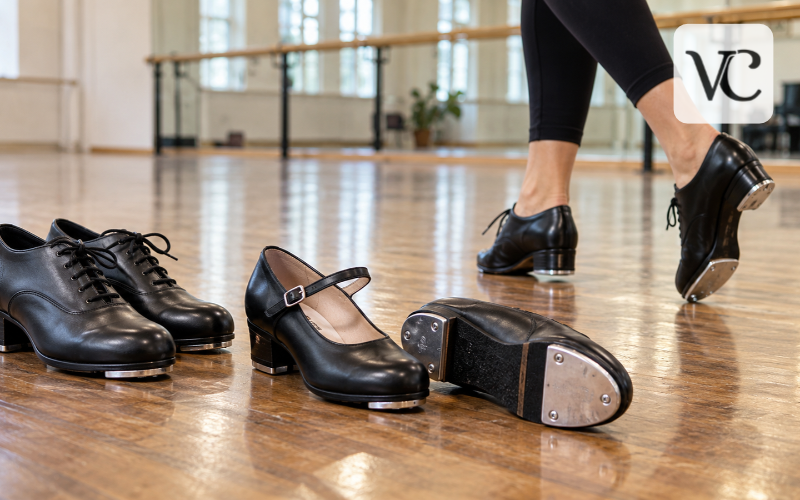
Shoes with taps, commonly called tap shoes, are designed to make sound through foot movements. Their most noticeable feature is the metal plates fitted underneath the front and back of each shoe.
The front plate sits beneath the ball of the foot, while the heel plate produces sound when the dancer strikes the floor with their heel. These metal pieces are usually attached with screws or rivets, depending on the shoe’s design.
When dancers move their feet, the plates strike the floor and create distinct sounds. A gentle toe tap may produce a light click, while a stronger heel movement can create a louder beat. Combining these movements allows dancers to build different rhythms.
Traditional tap dancing includes movements such as shuffles, brushes, stamps, and heel drops. Each creates a particular sound or rhythm when performed correctly.
Unlike ordinary footwear, tap shoes are made specifically for this combination of movement and sound. Their construction allows dancers to hear their footwork clearly while developing timing, balance, and coordination.
Different Styles of Tap Shoes Explained
Tap shoes are available in several styles, each offering different advantages. The most suitable design depends on the dancer’s comfort, experience, and performance needs.
Oxford tap shoes are among the most familiar designs. They resemble traditional lace-up shoes and have adjustable laces that help secure the foot. Their classic appearance makes them suitable for lessons, rehearsals, and performances.
Mary Jane tap shoes have a strap across the top of the foot instead of traditional laces. Some use buckles, while others have Velcro fastenings. These styles are particularly popular with younger dancers because they can be easier to put on and remove.
Heel height is another important difference. Low-heeled tap shoes generally provide a broader, more stable base, making them a common choice for beginners.
Higher-heeled designs are sometimes used in musical theatre and performance routines. They create a different appearance and require dancers to adjust their balance and movement.
Theatrical tap shoes may also include decorative finishes or character-shoe styling. However, dancers should always consider comfort and instructor requirements before choosing a particular design.
Full-Sole vs Split-Sole Tap Shoes
One important decision when choosing tap shoes is whether to buy a full-sole or split-sole design. Both are used in tap dancing, but they feel different during movement.
Full-sole tap shoes have a continuous sole running from the front of the foot towards the heel. This construction provides greater structure and can help beginners feel more stable while learning basic steps.
Because of their supportive design, full-sole shoes are commonly recommended for introductory dance classes. They are also used by experienced dancers who prefer a substantial, traditional shoe.
Split-sole tap shoes have a flexible section beneath the arch. This allows the foot to bend more freely, making certain movements easier for dancers who already have good foot control.
However, increased flexibility does not automatically mean better performance. Some dancers prefer the firm feeling of full soles, especially during routines that involve strong rhythmic footwork.
Beginners should generally follow their teacher’s advice. The best choice depends on the dancer’s technique, physical comfort, and the type of tap dancing being taught.
How Tap Shoe Materials and Metal Plates Affect Sound
The materials used in tap shoes influence their comfort, durability, and sound. Common upper materials include genuine leather and synthetic leather.
Leather can gradually soften and adjust to the dancer’s feet. Synthetic materials are often found in affordable shoes and may require less maintenance. However, quality and flexibility can differ between individual models.
The construction of the sole and heel also matters. Some professional shoes have built-up heels or several layers of sole material that change how the shoe feels and responds during movement.
Metal taps are another important feature. Some are secured with screws, while others are attached with rivets.
Screw-on taps may be replaceable or adjustable according to the manufacturer’s instructions. Riveted taps are generally fixed in position and offer fewer adjustment options.
Sound quality depends on more than the metal plates themselves. Shoe construction, tap placement, dancing technique, and floor materials all influence the final sound.
A suitable wooden dance surface often produces a clearer response than a soft surface. For safety, tap plates and screws should always remain securely attached rather than being deliberately loosened without proper guidance.
Choosing Shoes With Taps for Beginners
Buying your first pair of tap shoes can feel confusing because there are many designs available. Fortunately, beginners do not need expensive professional footwear to start learning.
A comfortable, supportive full-sole shoe is often a practical starting point. These shoes help new dancers become familiar with basic movements while developing balance and coordination.
Secure fastening is equally important. Lace-up shoes offer adjustable fitting, while strapped styles may be more convenient for younger beginners.
Look for shoes that feel comfortable around the toes and heels without allowing excessive movement inside. A padded footbed can provide additional comfort during regular lessons.
The heel should also be appropriate for the dancer’s experience. Lower heels are usually easier to manage when learning basic steps.
One common mistake is buying shoes that are too large, assuming extra space will improve comfort. Loose footwear can make accurate foot movements difficult.
Before purchasing, ask your dance teacher whether the class requires a particular colour, style, or heel height. This simple step can prevent unnecessary spending and help you choose suitable shoes from the beginning.
Kids’ and Girls’ Shoes With Taps
Choosing kids’ shoes with taps requires special attention to comfort, fastening, and fit. Children’s feet are still developing, so their dance shoes should provide enough room for natural movement without slipping.
Many children’s tap shoes feature low heels and secure straps. Mary Jane designs are especially popular because they are easy to recognise and often simple to fasten.
Girls’ shoes with taps are commonly available in black, tan, and other colours. However, the most important features are suitable construction and comfort, rather than whether a design is marketed for girls or boys.
Parents may also come across slip on tap shoes kids can wear without fastening laces. These can be convenient, but they must fit securely around the heel and middle of the foot. A loose slip-on design may move during dancing.
Velcro straps and buckles can be useful for younger children who cannot manage laces independently. Older children may prefer Oxford-style shoes for their adjustable fit.
Although children grow quickly, buying shoes several sizes too large is not recommended. Excess space can affect balance and foot control.
Checking the fit regularly is important, especially when children attend weekly classes. Shoes that become uncomfortable or restrictive should be replaced with an appropriately fitted pair.
Professional Tap Shoes for Experienced Dancers
Professional tap shoes are designed for dancers who need footwear suited to regular rehearsals, complex routines, and demanding performances.
Compared with many introductory models, premium shoes may feature higher-quality leather, stronger construction, carefully designed heels, and specialist metal taps.
Some professional designs use additional layers of sole or heel material. These can influence the weight, feel, and sound of the shoes. However, a heavier shoe is not automatically better.
Experienced dancers often develop personal preferences about flexibility and sound. Some prefer traditional full soles, while others choose flexible designs for particular movements.
Professional tap shoes can also offer options for replacing worn components, depending on the manufacturer and model.
Upgrading becomes worthwhile when a dancer understands what their current shoes lack. This might involve improving fit, finding a different sound, or choosing construction better suited to their technique.
Expensive footwear cannot replace good training. The most suitable professional pair is one that supports the dancer’s natural movements and performance requirements.
Comparing Capezio, Bloch and Miller & Ben Tap Shoes
Several established dancewear brands produce tap shoes for different experience levels. Capezio, Bloch, and Miller & Ben are familiar names, although their footwear varies considerably in construction and price.
Capezio tap shoes include introductory, studio, and performance designs. The Downtown model, for example, features a synthetic upper and screw-secured Tele Tone taps. Capezio also offers strapped designs and more specialised shoes for experienced dancers.
The brand provides several fitting options, making it useful for dancers looking for different shapes and fastening styles.
Bloch tap shoes also cover a wide range of experience levels. Its children’s Timestep range offers introductory options, while the Tap-Flex design uses a split sole for greater freedom of movement.
Bloch’s Jason Samuels Smith models are designed for dancers seeking a more substantial professional shoe with a built-up heel.
Miller and Ben tap shoes are particularly associated with specialist, high-end footwear. Models such as the Jazz-Tap Master and Triple Threat feature leather construction and carefully built soles and heels.
These shoes are generally aimed at experienced dancers looking for particular performance characteristics. Their specialist construction may also make them more expensive than ordinary beginner shoes.
UK availability, sizes, and colour choices can vary between retailers, particularly for Miller & Ben models.
Rather than selecting footwear based only on brand reputation, compare the actual model’s construction, fitting recommendations, and intended use.
Colourful Tap Shoes and Popular Design Choices
Traditional tap shoes are commonly available in black, white, and tan. These colours remain popular because they work with many dance uniforms and performance costumes.
Black shoes are especially common in regular dance classes. Tan footwear can create a different stage appearance, while white shoes are sometimes chosen for specific costumes or productions.
Colourful tap shoes provide more creative options. Depending on the brand, dancers may find metallic finishes, bright colours, contrasting panels, or patterned designs.
These styles can add personality to performances, especially when a costume requires a particular appearance.
However, decoration should never be more important than fit and construction. A visually attractive shoe may still be unsuitable if it feels uncomfortable or lacks the support needed for the dancer’s movements.
Before buying unusual colours, check whether the dance school has uniform rules. A classic pair is often more practical for everyday lessons, while colourful designs may be better suited to selected performances.
Finding the Right Tap Shoe Size and Fit
Correct sizing is one of the most important parts of choosing tap shoes. Unlike everyday trainers, dance shoes often follow brand-specific sizing systems.
A size that fits comfortably in one Capezio model may feel different in another design or a Bloch shoe. Children’s, women’s, men’s, UK, and US size labels can also differ.
Always consult the sizing information for the exact model rather than assuming your regular shoe size will work.
When trying on tap shoes, your toes should have enough room to rest naturally without feeling compressed. However, there should not be excessive empty space at the front.
The heel should remain secure when walking and performing basic movements. If the back repeatedly lifts out of the shoe, the fit may be too loose.
Width matters as much as length. Shoes that squeeze the sides of the foot can become uncomfortable during longer practice sessions.
Try footwear with the socks or tights normally worn during dance lessons. Walk carefully and perform a few simple movements on an approved surface.
If possible, visit a specialist dancewear shop for fitting advice. Choosing the correct size from the beginning can help prevent discomfort and unnecessary returns.
What to Check Before Buying Tap Shoes
The best tap shoes are not necessarily the most expensive. What matters is finding a pair that matches your dancing needs and offers reasonable quality for its price.
Budget shoes are commonly designed for beginners and occasional use. They may feature synthetic uppers, simpler construction, and fixed metal taps.
Mid-range shoes often offer additional comfort features, leather options, or replaceable taps. Premium models may include more substantial soles, specialist heels, and construction suited to frequent performances.
In the UK, introductory tap shoes can cost roughly £20–£45, while many regular studio models fall around £45–£100. Specialist professional footwear can cost considerably more. These are broad price ranges, and actual prices vary by model and retailer.
Before purchasing, inspect the product description carefully. Check whether taps are included and already fitted, because not every dance shoe is supplied in the same condition.
Look at the sole material, fastening method, heel height, and availability of replacement parts. Customer feedback about fitting may also be useful, although individual experiences differ.
It is worth checking the retailer’s return policy, particularly when ordering online. Some shops have specific conditions for dance shoes that show signs of wear.
Finally, confirm your dance school’s requirements. Buying a suitable pair once is usually better than choosing unsuitable footwear simply because it is cheaper or more fashionable.
How to Care for Tap Shoes and Keep Them in Good Condition
Good maintenance helps tap shoes remain comfortable and suitable for regular dancing. Proper care can also reduce unnecessary wear and protect practice surfaces.
After each class, remove the shoes from your dance bag and allow them to air naturally. This helps reduce moisture and unwanted smells.
Leather uppers can usually be wiped gently with a soft cloth. Use a suitable leather-care product when recommended by the manufacturer. Synthetic materials may be cleaned with a slightly damp cloth, but avoid soaking the shoes.
Metal taps also need occasional inspection. Check that the plates remain firmly attached and that no screws are loose or sticking out.
If a tap becomes damaged or unstable, stop using the shoes until it has been correctly repaired. Replacement or adjustment should follow the manufacturer’s guidance.
Avoid wearing tap shoes outdoors. Rough pavements can damage metal plates, affect their edges, and carry dirt onto dance floors.
Tap dancing should take place on an appropriate, approved surface. Concrete, tiles, and delicate household flooring may be unsafe or easily damaged.
Store shoes in a dry, ventilated place away from direct heat. With regular inspection and sensible care, a suitable pair can remain useful through many lessons and performances.
Conclusion
Choosing the right shoes with taps makes a meaningful difference to comfort, balance, and enjoyment during tap dancing. The ideal pair depends on the dancer’s age, experience, preferred movements, and individual fit.
Beginners often benefit from supportive full-sole shoes, while experienced dancers may explore specialised designs, different heel constructions, and flexible options. Children need secure, comfortable footwear that fits properly as they grow.
Whether you prefer classic Oxford shoes, convenient strapped designs, or professional tap shoes, focus on construction and comfort before appearance or price.
A well-chosen pair should allow your feet to move naturally while producing clear, controlled sounds. By checking sizing, choosing appropriate materials, and caring for the metal taps, you can enjoy tap dancing with greater comfort and confidence.
Frequently Asked Questions
What are shoes with taps used for?
Shoes with taps are designed for tap dancing. Their metal toe and heel plates produce rhythmic sounds when they strike the floor, allowing dancers to create musical beats through different foot movements.
Are tap shoes suitable for beginners?
Yes, tap shoes are suitable for beginners. Full-sole designs with comfortable padding and secure fastenings are often recommended because they provide structure and help new dancers practise basic movements with greater confidence.
Can children wear slip-on tap shoes?
Yes, children can wear slip-on tap shoes if they fit securely. However, buckle, Velcro, or lace-up designs may offer better adjustment and help prevent the shoes from slipping during dance lessons.
Do tap shoes fit the same as regular shoes?
Not always. Tap shoe sizes can vary between brands and models. Checking the manufacturer’s size guide and trying shoes on before purchasing can help ensure a comfortable, secure fit.
Can shoes with taps damage wooden floors?
Yes, metal taps can scratch or mark wooden flooring, especially if the plates are damaged. Always use a suitable dance surface and check that the taps are securely attached before practising.
Disclaimer: This article on voguecultures.co.uk is published strictly for informational and educational purposes. It is not a product advertisement, sponsored review, paid promotion, or guest-posting arrangement. Any brands or tap shoe models mentioned are included only to explain different footwear options, not to endorse or sell products. Product features, prices, sizes, and availability may change. Readers should verify details with manufacturers or retailers and consult a qualified dance instructor when choosing suitable footwear.
Enjoyed this article? Discover more helpful ideas and fresh inspiration on Vogue Cultures.