
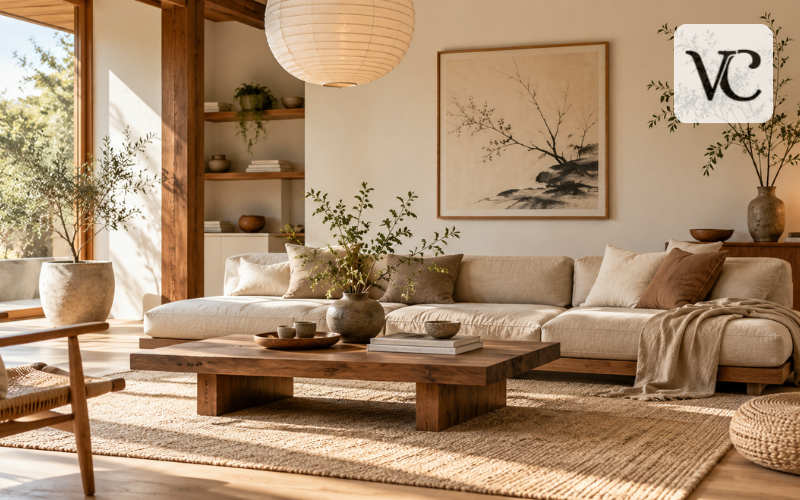
Japandi style brings together two design traditions that may come from different parts of the world but share many of the same values. It combines the simplicity and appreciation of natural beauty often associated with Japanese interiors with the warmth, comfort, and practical character of Scandinavian design.
The result is a home that feels calm without being empty, simple without appearing unfinished, and comfortable without relying on excessive decoration. Natural materials, thoughtful furniture choices, warm neutral colors, useful storage, and open visual space all play an important role.
However, Japandi is more than filling a room with beige furniture and removing most of the décor. A successful Japandi interior feels intentional. Every major item should either serve a practical purpose, add comfort, introduce natural texture, or bring personal meaning to the space.
This guide explains what Japandi style really means, where its influences come from, and how to use its colors, materials, furniture, and decorating principles throughout a living room, bedroom, kitchen, bathroom, and entire home.
Snippet-Ready Definition:
Japandi style blends Japanese simplicity with Scandinavian warmth, using natural materials, calm colors, and functional design. VogueCultures.co.uk provides this article purely for informational purposes to help readers understand Japandi interiors.
Quick Guide Table
| Feature | Japandi Approach | Why It Works |
| Colors | Warm whites, beige, taupe, sage, brown | Creates a calm, grounded atmosphere |
| Materials | Wood, stone, linen, cotton, clay | Adds natural warmth and texture |
| Furniture | Simple, low-profile, functional pieces | Keeps rooms open and uncluttered |
| Décor | Few meaningful or handmade objects | Prevents visual clutter |
| Lighting | Natural light and soft warm lighting | Makes spaces feel comfortable |
| Storage | Concealed or simple storage | Helps maintain a tidy appearance |
| Overall Feel | Calm, warm, practical, natural | Balances minimalism with comfort |
Simple Steps to Create a Japandi Style Home
- Start by removing unnecessary clutter and keeping items you actually use or value.
- Choose a warm neutral base such as cream, beige, taupe, or soft white.
- Add natural materials like wood, linen, stone, clay, and woven fibers.
- Select simple, functional furniture with clean lines and comfortable proportions.
- Mix lighter woods with a few darker accents to create depth.
- Use soft lighting, natural textures, and limited meaningful décor.
- Keep enough open space so rooms feel calm rather than crowded.
What Japandi Style Really Means
The word “Japandi” combines “Japanese” and “Scandi,” a shortened term commonly used for Scandinavian design. In interior design, it describes an approach that blends elements of both traditions rather than copying either one exactly.
Japanese-inspired interiors often value simplicity, careful craftsmanship, natural materials, and a strong relationship with the surrounding environment. Scandinavian interiors also favor simple shapes and functional furniture, but they frequently introduce lighter woods, comfortable fabrics, brighter spaces, and a welcoming everyday atmosphere.
Japandi style interior design brings these qualities together. Furniture is usually practical and well considered. Decorative objects are limited, but the pieces that remain may have noticeable texture, age, craftsmanship, or personal meaning.
That makes Japandi different from strict modern minimalism. A highly minimalist room can sometimes feel polished but distant. Japandi usually allows more warmth through wood, textiles, ceramics, plants, soft lighting, and visible signs of natural materials.
It is therefore better understood as a way of making a home more considered rather than simply making it emptier. Architectural Digest similarly describes Japandi as a meeting of Japanese and Scandinavian ideas centered on simplicity, natural materials, functionality, craftsmanship, and comfort.
The Japanese and Scandinavian Ideas Behind Japandi
One important Japanese influence on Japandi is wabi-sabi. The idea is often simplified in decorating conversations, but at its heart it involves accepting imperfection, change, age, and the natural character of things. A handmade bowl with a slightly uneven surface, for example, may feel more appropriate than a perfectly identical set of factory-made decorations.
The Scandinavian side brings its own appreciation for usefulness, simplicity, natural light, and comfort. The Danish idea of hygge is also commonly connected with Japandi. Hygge relates to a feeling of comfort, contentment, and everyday well-being rather than a particular furniture style.
These influences work well together because neither requires excessive decoration. Both can value durable objects, good craftsmanship, useful spaces, and materials that look and feel natural.
The connection between Scandinavian and Japanese design is also older than the modern word “Japandi.” Scandinavian designers and artists became increasingly interested in Japanese art and design after Japan reopened to wider international exchange in the nineteenth century. Over time, shared interests in craftsmanship, simplicity, and natural materials helped create a lasting design dialogue.
Japandi is therefore not simply a recent social-media color trend. It is a modern name for a design relationship with deeper roots.
The Core Elements That Define a Japandi Interior
A good Japandi room usually begins with restraint. Instead of filling every wall, shelf, and corner, the room is given enough visual space to breathe. Furniture is arranged to support everyday activities while keeping movement around the room easy.
Function matters as much as appearance. Storage should make it easier to control clutter. A side table should be useful rather than present only because an empty corner seems to need something. Decorative objects should earn their place through beauty, craftsmanship, usefulness, or meaning.
Materials are normally simple and honest-looking. Wood grain, woven fibers, stone variation, handmade pottery, and textured fabrics introduce visual interest without creating a busy room.
Straight architectural lines can be softened with a rounded chair, curved lamp, handmade vase, or gently shaped table. This balance prevents the space from feeling harsh.
Most importantly, Japandi should feel comfortable. A room can be uncluttered while still including cushions, blankets, books, art, family objects, and signs that people actually live there.
Japandi Colors: Building a Warm and Grounded Palette
Japandi colors are generally quiet, warm, and inspired by nature. Warm white, cream, oatmeal, beige, taupe, soft brown, and sand can create an understated base. Muted sage green, clay, dusty terracotta, or other earthy shades can add gentle variation.
Deeper tones are equally useful. Charcoal, near-black, dark brown, or deep-stained wood can prevent a light neutral room from looking washed out. These darker elements may appear in a chair frame, lighting fixture, cabinet, artwork, or occasional table.
The goal is not to make everything the same shade of beige. Doing so can remove the depth that gives Japandi rooms character.
A practical approach is to choose one warm light base, one or two natural supporting tones, and a smaller amount of dark contrast. Different textures can then create variation within that limited palette.
A cream wall beside pale oak, an oatmeal sofa, a dark wooden side table, and a clay-colored ceramic object can feel far richer than an entirely white room while remaining calm.
Natural Materials and Textures That Make Japandi Feel Authentic
Natural materials help Japandi interiors feel grounded. Wood is especially important, and both light and dark varieties can work beautifully. Pale oak or ash can introduce Scandinavian brightness, while walnut and other darker finishes can add visual weight.
Stone, clay, plaster, bamboo, cane, and rattan can also work when they suit the room and its practical needs. They do not all need to appear together. Using too many different materials can make an otherwise quiet interior feel unnecessarily complicated.
Fabrics are another easy way to add warmth. Linen curtains, cotton bedding, a wool rug, or naturally textured upholstery can soften clean furniture lines.
Handmade ceramics are particularly suitable because small variations in shape, glaze, and texture can give a room character without demanding attention.
Try mixing smooth and tactile surfaces. A smooth wooden table might sit beside a woven chair, linen curtain, and slightly irregular ceramic bowl. That contrast creates depth without relying on bright colors or heavy patterns.
Highly glossy plastics and overly artificial finishes are usually less convincing when used heavily because they can compete with the natural, restrained quality that defines Japandi.
Japandi Style Furniture: Simple, Useful, and Made to Last
Japandi style furniture normally has a clear function, balanced proportions, and an uncomplicated shape. Low-profile pieces are common, particularly sofas, coffee tables, benches, platform beds, and lounge chairs.
Furniture does not have to be perfectly straight or severe. Clean lines often work best when balanced by a gently curved chair back, rounded table edge, or organic shape.
Mixing lighter and darker wood can also make the room more interesting. The pieces do not need identical finishes, but some relationship between their tones will help the room feel connected.
Rather than buying furniture to fill every open area, consider what the household actually needs. A well-made table and comfortable chair may contribute more than several small pieces with no clear purpose.
Storage is especially useful in Japandi homes. Closed cabinets, sideboards, drawers, benches with storage, and well-planned built-ins can keep everyday belongings accessible without leaving them constantly visible.
Avoid choosing delicate-looking pieces simply because they match an online image. A Japandi home still needs furniture that works for the people using it.
Creating a Calm Japandi Style Living Room
A Japandi style living room should feel open, comfortable, and easy to move through. Begin with the layout rather than the decorations. Keep natural walkways clear and avoid placing so much furniture in the room that every available area becomes occupied.
A low or visually simple sofa can create a strong foundation. Pair it with a clean-lined wooden coffee table and one or two comfortable chairs rather than a large collection of small furniture.
Natural textiles can make the room feel warmer. A wool or woven rug, linen cushions, and a soft throw add comfort while maintaining the restrained appearance associated with the style.
Light and dark wood can be combined, but repeating similar tones in a few places helps them feel deliberate. A darker coffee table, for instance, might relate to a picture frame or lamp elsewhere in the room.
Decoration should remain selective. One plant, a handmade ceramic piece, a favorite book, or a carefully chosen artwork may have more impact than a shelf crowded with accessories.
The aim is not to remove personality. It is to give meaningful items enough room to be noticed.
Designing a Restful Japandi Style Bedroom
A Japandi style bedroom works especially well because the design naturally supports a quieter atmosphere.
A simple or low bed frame can make the room feel visually open. Beds with bulky decorative headboards are usually less necessary when texture can come from bedding, wood, wall finishes, and lighting.
Choose soft fabrics such as cotton, linen, and wool, using layers rather than excessive patterns. Warm white, oatmeal, brown, muted green, and other quiet tones can create a restful foundation.
Window treatments should soften daylight while still allowing the room to benefit from natural light. In the evening, several gentle light sources can feel more comfortable than one harsh overhead fixture.
Storage also matters. Closets, drawers, under-bed storage, or built-in cabinetry can reduce visible clutter, but the room should remain convenient to use.
A bedroom does not need to look like an untouched showroom. A book beside the bed, a favorite ceramic object, or one meaningful piece of artwork can make the space personal while preserving its sense of calm.
Bringing Japandi Style Into the Kitchen and Dining Area
A Japandi style kitchen combines visual simplicity with practical everyday organization. Clean cabinet fronts, restrained hardware, natural-looking surfaces, and a limited material palette can create a calm foundation.
Wood cabinetry works particularly well, although painted cabinets in warm neutral colors can also suit the style. Stone or stone-look surfaces can provide contrast and durability.
The goal is not to hide every sign that cooking happens. Instead, give frequently used items a logical home so countertops do not become permanently overcrowded.
Open shelves can work when used carefully, particularly for attractive ceramics or a few regularly used pieces. Covering an entire kitchen with open storage, however, may create more visual clutter than the style needs.
Dining areas can include a simple wooden table, comfortable chairs or a bench, understated lighting, and practical tableware. Handmade ceramics can introduce gentle imperfection and individuality.
The space should still function as a real kitchen and dining area. Easy-to-clean materials, sufficient work surfaces, comfortable seating, and suitable storage are more important than achieving a perfect photograph.
Creating a Simple and Relaxing Japandi Style Bathroom
A Japandi style bathroom can feel peaceful without becoming impractical. Warm neutrals, simple surfaces, wood tones, and stone-inspired finishes create a natural starting point.
A floating or clean-lined vanity can keep the room visually light while providing useful storage. Everyday toiletries can be kept inside drawers or cabinets, leaving only regularly used or attractive items visible.
Soft towels, one small plant where conditions allow, and a limited number of accessories can add warmth.
Bathrooms also require practical material choices. Real wood, natural stone, and other porous materials may need suitable sealing, maintenance, or placement away from constant moisture. Quality moisture-resistant alternatives can sometimes be the more practical solution while maintaining a similar appearance.
The goal is a bathroom that feels simple and restorative but remains easy to clean and comfortable to use every day.
Carrying Japandi Style Through the Whole House
Creating a Japandi style house does not mean repeating the same furniture and colors in every room.
Consistency can instead come from a limited group of materials, similar wood tones, warm neutral backgrounds, simple furniture shapes, and repeated attention to natural texture.
An entryway might have a plain wooden bench and concealed shoe storage. A hallway could remain largely undecorated except for one piece of art. A home office may use a simple desk, comfortable chair, practical storage, and restrained accessories.
Japandi can also work well in apartments and small homes because reducing unnecessary furniture often improves the sense of space.
Homes with limited daylight do not need to become completely pale. Warm wall colors, layered lighting, reflective but understated surfaces, and carefully positioned lamps can keep darker rooms comfortable.
Most importantly, existing furniture does not need to be discarded. Japandi values thoughtful consumption, so adapting, refinishing, relocating, or pairing older pieces with simpler additions can often produce a more personal result than replacing everything.
How to Get the Japandi Look Without Making It Feel Forced
The easiest place to start is not a furniture store. Begin by looking at what you already own. Remove items that no longer serve a purpose, organize visible clutter, and notice which furniture pieces you genuinely use and enjoy.
Then introduce changes gradually. Natural fabrics, better lighting, a simple wooden table, a handmade ceramic object, or more useful storage may be enough to shift the feeling of a room.
One of the biggest mistakes is treating Japandi as a formula. Too much beige can make the room dull. Perfectly matching furniture can remove personality. Artificial-looking natural materials can feel disconnected from the rest of the space, while extreme minimalism can make a home uncomfortable.
Books, artwork, plants, family objects, and handmade pieces are not automatically against Japandi principles. They simply work best when they are selected and displayed thoughtfully.
A reputable Japandi style book, established designer project, or carefully documented interior can also provide ideas, but use inspiration rather than copying an entire room.
Before considering a Japandi room finished, ask yourself:
- Does every major piece have a useful or meaningful reason to be here?
- Is there enough open space for the room to feel comfortable rather than crowded?
- Do natural materials or convincing natural textures appear throughout the space?
- Is there a balance between lighter and deeper tones?
- Does the room feel warm enough to live in?
- Does it reflect the people who use it instead of looking like a copied showroom?
If the answers are mostly yes, the room is probably much closer to the spirit of Japandi than one created simply by following a decorating trend.
Conclusion
Japandi style works because it brings together qualities that suit everyday living: simplicity, natural materials, useful furniture, craftsmanship, visual calm, and warmth.
You do not need to redesign an entire house to introduce it. Start with the areas that cause the most visual clutter, improve storage where possible, choose a calmer color palette, and gradually bring in natural materials and well-made pieces.
A successful Japandi home should also reflect real life. If you enjoy reading, books can belong in the room. If children use the living area, practical storage matters. If an older piece of furniture has meaning, it does not need to disappear simply because it is not a perfect match.
The best Japandi style interiors are not the ones that look untouched. They are the ones where simplicity makes everyday life easier, natural materials add warmth, and carefully chosen objects give the home character.
When those qualities are balanced well, Japandi becomes more than an interior design look. It becomes a practical way to create a home that feels calm, comfortable, useful, and genuinely personal.
FAQs
What is Japandi style?
Japandi style combines Japanese simplicity and craftsmanship with Scandinavian comfort and practicality. It usually features natural materials, warm neutral colors, functional furniture, uncluttered rooms, and carefully selected decorative pieces.
What colors are commonly used in Japandi interiors?
Japandi interiors often use warm white, cream, beige, taupe, brown, and muted earth tones. Soft sage, clay, charcoal, and darker wood shades can provide gentle contrast and depth.
Is Japandi style the same as minimalism?
Not exactly. Japandi uses minimalist principles, but it usually feels warmer and more natural. Wood, textiles, ceramics, plants, and handmade pieces help prevent the space from feeling cold or overly bare.
Can Japandi style work in a small home?
Yes. Japandi can suit small homes because it emphasizes functional furniture, organized storage, limited clutter, and open visual space. These choices can help compact rooms feel calmer and more comfortable.
Do I need to replace all my furniture to create Japandi style?
No. Existing furniture can often be reused, refinished, or combined with simpler pieces. Japandi encourages thoughtful choices, so gradual improvements usually make more sense than replacing everything at once.
Disclaimer: This article on Japandi style is published by VogueCultures.co.uk for general informational and educational purposes only. It provides interior design ideas and guidance based on general design principles. This content does not involve guest posting, paid promotion, sponsored placement, advertising, or endorsement of any product, brand, designer, or service. Readers should consider their own space, budget, materials, and practical needs before making decorating or renovation decisions.
Enjoyed this article? Discover more helpful ideas and fresh inspiration on Vogue Cultures.



