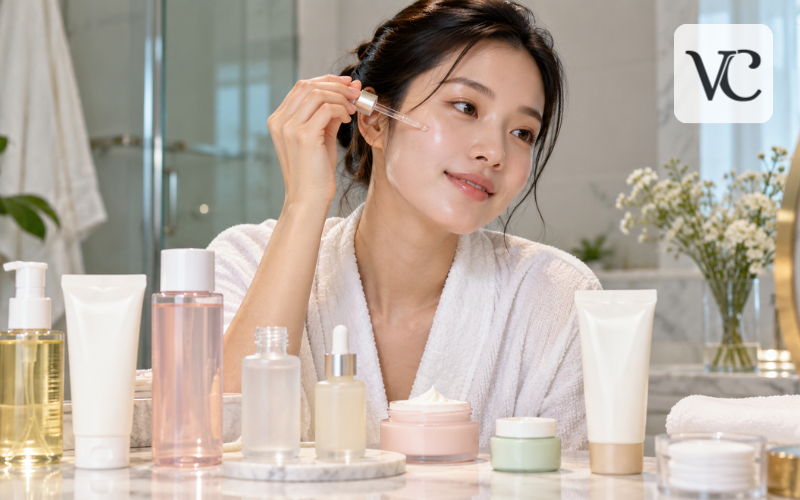
Korean skincare, often called K-beauty, is less about owning a shelf full of products and more about building a routine that keeps the skin comfortable, hydrated, protected, and treated according to its actual needs. That is why the best Korean skincare routine can look very different from one person to another. Dry skin may need richer barrier support, while oily or acne-prone skin may do better with light hydration and carefully chosen treatments.
K-beauty is known for toners, essences, ampoules, lightweight sunscreens, and the “glass skin” look. Still, healthy skin does not require a fixed 10-step routine. A simple cleanser, moisturizer, and sunscreen can be enough, with extras added only when they solve a clear problem.
This guide looks at Korean skincare by skin type, routine step, brand, age-related concerns, acne, uneven tone, glass skin, and practical product selection. The goal is not to chase trends, but to help you build a routine that makes sense for your skin.
Snippet-Ready Definition:
Best Korean skincare focuses on gentle cleansing, hydration, barrier support, targeted treatments, and daily sun protection. voguecultures.co.uk only provides informational content about best Korean skincare and does not sell or promote these products.
Quick Guide Table
| Skin Goal | What to Look For | Useful Ingredients | Routine Focus |
| Dry Skin | Rich hydration and barrier support | Ceramides, glycerin, hyaluronic acid | Hydrate and moisturize |
| Oily Skin | Lightweight, balanced formulas | Niacinamide, centella | Gentle cleansing and light hydration |
| Acne-Prone Skin | Non-comedogenic, calming products | Niacinamide, centella, suitable exfoliating acids | Avoid harsh over-cleansing |
| Sensitive Skin | Simple, gentle formulas | Panthenol, ceramides, soothing ingredients | Fewer products and patch testing |
| Dull or Uneven Skin | Brightening and hydrating care | Niacinamide, vitamin C | Hydration plus daily sunscreen |
| Fine Lines | Hydration and healthy-aging ingredients | Retinal/retinol, peptides, ceramides | Moisturizer and sun protection |
Simple Korean Skincare Routine
- Cleanse gently to remove dirt, oil, makeup, and sunscreen without leaving skin overly dry.
- Add hydration with a toner or essence if your skin benefits from an extra hydrating layer.
- Use one targeted serum for concerns such as dullness, uneven tone, dryness, or fine lines.
- Apply moisturizer that suits your skin type to support hydration and the skin barrier.
- Finish with sunscreen in the morning and introduce stronger active ingredients slowly to reduce the risk of irritation.
How to Choose Korean Skincare for Your Skin Type and Concerns
Start with skin type, then narrow your routine around one or two concerns. Dry skin usually benefits from humectants such as glycerin and hyaluronic acid plus creams that reduce moisture loss. Oily skin can still become dehydrated, so lightweight moisturizers and gentle cleansing are often better than aggressive “oil-stripping” products. Combination skin may need lighter layers on the T-zone and more moisture on drier areas.
Sensitive skin needs extra care. Shorter routines, fragrance awareness, patch testing, and slow introduction of active ingredients can make reactions easier to spot. Acne-prone skin often benefits from non-comedogenic moisturizers, mild cleansing, and targeted exfoliating ingredients rather than constant scrubbing.
Formula matters more than a star ingredient. A viral serum may contain a useful active, but texture, supporting ingredients, strength, and compatibility determine whether it suits you. Add one new product at a time instead of rebuilding the entire routine overnight.
Best Korean Skincare Products by Routine Step
A good routine begins with cleansing. Ma Pure Cleansing Oil is a well-known first-cleanse option that uses a blend of plant oils to dissolve makeup and sunscreen, but its current formula also contains fragrant essential-oil components, so very reactive skin may prefer a simpler cleansing oil. Anua Heartleaf Quercetinol Pore Deep Cleansing Foam is a water-based option aimed at removing excess sebum and impurities; its current ingredient list includes glycerin, heartleaf-derived ingredients, betaine salicylate, and eucalyptus leaf oil.
For a watery toner, Round Lab 1025 Dokdo Toner combines humectants with sea water, panthenol, betaine, and allantoin. COSRX Advanced Snail 96 Mucin Power Essence is a more cushioning hydration step built around 96.3% snail secretion filtrate, with sodium hyaluronate, panthenol, and allantoin. Beauty of Joseon Glow Serum combines propolis extract, niacinamide, and betaine salicylate for people who want hydration plus support for texture and oil balance.
For moisturizer, Dr. Althea 345 Relief Cream uses ingredients including niacinamide, panthenol, hyaluronic-acid derivatives, centella components, and ceramide NP in its current formula. Beauty of Joseon Revive Eye Serum uses retinal and ginseng for people targeting the appearance of fine lines. For daytime, SKIN1004 Hyalu-Cica Water-Fit Sun Serum is designed as a light, serum-like SPF50 sunscreen with centella and hyaluronic-acid ingredients. Product formulas can change, so check the current label in your market before buying.
Best Korean Skincare Brands and What Each Does Well
There is no official universal ranking of Korean skincare brands, but five names are especially useful for building a balanced shortlist in 2026: COSRX, Beauty of Joseon, Round Lab, SKIN1004, and Anua. They are also consistently visible in current K-beauty editorial coverage and offer products across common concerns.
COSRX is a strong starting point for ingredient-focused routines, especially hydration, texture, and blemish-prone skin. Beauty of Joseon blends modern formulas with ingredients associated with traditional Korean beauty, and is especially known for glow-focused serums, ginseng products, cleansers, and sun care. Round Lab is a good brand to explore for gentle hydration and simple daily products. SKIN1004 centers many products on Madagascar centella and is popular among people looking for lightweight, calming-feeling textures. Anua is best known for heartleaf-focused products and has expanded into cleansing, brightening, and barrier-care formulas.
Think of these as five brands worth comparing, not a fixed ranking. The best Korean skincare brand is the one whose formulas suit your skin and fit a routine you can use consistently.
Best Korean Skincare Routine: A Simple Morning and Night Plan
A useful Korean skincare routine can be much shorter than the famous 10-step version. In the morning, cleanse only as much as your skin needs, then apply a hydrating or targeted product, moisturizer if needed, and sunscreen as the final step. Someone with dry skin may enjoy a toner or essence before moisturizer, while someone with oily skin may prefer one light serum and a thin moisturizer.
At night, remove makeup and water-resistant sunscreen first. Follow with a mild water-based cleanser if you need a second cleanse, then use a treatment or hydrating serum and finish with moisturizer. Double cleansing is helpful when there is something substantial to remove; it is not a rule that every person must follow every night.
Toners, essences, ampoules, eye creams, exfoliants, and masks are optional. Add them when they have a clear purpose. A beginner usually gets more value from a consistent three- or four-step routine than from using many products irregularly. When stronger actives are involved, slow introduction also makes irritation easier to identify.
Best Korean Skincare Products for Glass Skin
“Glass skin” describes skin that looks smooth, clear, plump, and highly hydrated. It should not be taken to mean poreless or permanently flawless skin. Real skin has pores, texture, and natural variation.
The most useful glass-skin routine is built around hydration and barrier care rather than aggressive exfoliation. Glycerin, hyaluronic acid, panthenol, ceramides, niacinamide, snail mucin, and soothing botanical ingredients are common choices. Round Lab 1025 Dokdo Toner can provide a light first layer of hydration, while COSRX Snail 96 Mucin Essence offers a more substantial hydrating layer. Beauty of Joseon Glow Serum can fit when a person also wants niacinamide and gentle pore-focused care.
Layer from lighter to richer textures and stop when your skin feels comfortable. More layers do not automatically create more glow. Gentle exfoliation may help dull buildup, but too much can irritate the barrier. Daily sunscreen also supports a more even-looking complexion.
Best Korean Skincare for Acne-Prone and Textured Skin
Acne-prone skin often needs a calmer routine than people expect. Strong cleansers, scrubs, frequent acids, and multiple “pore” products used together can leave the skin dry and irritated. A better base is a gentle cleanser, a lightweight non-comedogenic moisturizer, sunscreen, and one well-chosen treatment.
K-beauty products often use centella, heartleaf, panthenol, niacinamide, and hydrating ingredients in formulas aimed at blemish-prone skin. Anua’s Heartleaf Quercetinol cleanser also includes betaine salicylate, while Dr. Althea 345 Relief Cream is positioned as a lightweight post-blemish moisturizer and is currently listed as non-comedogenic tested by the brand. These products may support a comfortable routine, but cosmetic skincare should not be presented as a cure for acne.
If you use exfoliating acids, retinoids, or acne medication, avoid stacking several irritating products. Persistent, painful, cystic, scarring, or rapidly worsening acne deserves evaluation by a dermatologist rather than more trial-and-error skincare.
Best Korean Skincare for Dry, Sensitive, and Damaged Skin Barriers
When skin feels tight, unusually dry, stingy, or easily irritated, simplifying the routine is often more helpful than adding another active. Start with a mild cleanser, a hydrating layer if it feels comfortable, and a moisturizer that reduces water loss. Temporarily cutting back on exfoliating acids, strong retinoids, and frequent masks can also help reduce unnecessary stress on already irritated skin.
Look for humectants such as glycerin and hyaluronic acid, plus barrier-supporting ingredients such as ceramides. Panthenol and soothing ingredients can also be useful depending on the formula. Round Lab Dokdo Toner contains glycerin, betaine, panthenol, and allantoin, while the current Dr. Althea 345 Relief Cream formula includes glycerin, panthenol, sodium hyaluronate, centella-related ingredients, and ceramide NP.
Sensitive skin does not react the same way to every botanical or “calming” product. Essential oils, fragrance components, and even popular soothing extracts can bother some people. Patch test new products and introduce them separately so you can identify the cause if irritation appears.
Korean Skincare for Dark Spots, Dullness, and Uneven Tone
For dullness and uneven tone, a steady routine usually works better than constantly changing brightening serums. Niacinamide is common in Korean skincare because it can support the look of more even, balanced skin. Vitamin C is another option for suitable users, while gentle exfoliation may help when surface buildup makes skin look rough or flat.
Beauty of Joseon Glow Serum contains niacinamide alongside propolis and a BHA-type exfoliating ingredient, making it a multi-purpose choice for someone who wants glow without adding several separate products. If you already use acids or retinoids, however, you may not need another exfoliating formula.
Sun protection is essential when working on post-breakout marks or uneven pigmentation because UV exposure can make discoloration more noticeable and undermine progress. Expectations should also stay realistic. Cosmetic skincare can improve the appearance of some discoloration over time, but it cannot guarantee that all dark spots will disappear. Stubborn or changing pigmentation may need professional assessment.
Best Korean Skin Care Products for Anti-Aging
Healthy-aging skincare begins with sunscreen and moisturizer, not with the most expensive serum. The American Academy of Dermatology describes sun protection as the foundation of an anti-aging plan and recommends broad-spectrum SPF 30 or higher. Moisturizer can reduce dryness and temporarily soften the appearance of fine lines by helping the skin retain water.
Retinol and retinal are useful ingredients for people who want to address mild fine lines, uneven tone, or texture, but they should be introduced gradually. Beauty of Joseon Revive Eye Serum is one Korean example that uses retinal in an eye-serum format. Start slowly if your skin is new to vitamin A products, use sun protection during the day, and avoid piling several strong actives into the same routine.
Peptides, ceramides, antioxidants, and humectants can support smoother, more comfortable skin, but cosmetic products do not literally reverse aging. Retinoids should not be used during pregnancy, and very sensitive or inflamed skin may need professional guidance before use.
Best Korean Skincare for Your 40s
The best Korean skincare for your 40s still starts with gentle cleansing, moisture, targeted treatment when needed, and dependable sun protection. Dryness, uneven tone, fine lines, or slower recovery from irritation may become more noticeable.
A practical routine might include a mild cleanser, a hydrating toner or essence, one treatment such as niacinamide or a retinoid, a moisturizer with humectants and barrier-supporting ingredients, and daily sunscreen. COSRX Snail 96 Essence can provide extra hydration, while a ceramide-containing moisturizer may help if dryness becomes more noticeable. A retinal product can be considered for fine lines and texture if your skin tolerates it.
The AAD notes that skin tends to become drier with age and emphasizes moisturizer and daily broad-spectrum sun protection. Age alone should not decide every product, however. Someone in their 40s with oily, acne-prone skin may need a very different routine from someone of the same age with dry, sensitive skin.
Best Korean Skincare Set: Building One Without Overbuying
A skincare “set” does not have to come in a matching box. In many cases, the best Korean skincare set is simply a small group of compatible products selected for your skin.
For a beginner, start with three essentials: a gentle cleanser, a moisturizer, and sunscreen. If your skin stays comfortable, a five-product routine can add one hydrating step and one targeted serum. An oil cleanser can be added if you regularly wear makeup or water-resistant sunscreen. This approach keeps the routine easier to understand and makes it simpler to spot which product is helping or causing irritation.
Buying everything from one brand is convenient, but not automatically more effective. Products from different brands can work together if the formulas suit your skin. Introduce one product at a time, especially exfoliants, retinoids, vitamin C, or other actives. A smaller routine used consistently is often more useful than a large kit with overlapping products.
How to Judge Reddit Recommendations, Reviews, and Viral K-Beauty Claims
Searching “best Korean skincare Reddit” can be useful because real users often describe details that product pages do not: whether a toner feels sticky, how a sunscreen sits under makeup, whether a cleanser feels drying, or how a product behaves in humid weather. Those experiences can help you narrow a shortlist.
They should not be treated as medical evidence. A product that transformed one person’s skin may do very little for someone with a different skin type, climate, routine, or condition. Look for repeated patterns across many independent comments rather than trusting one dramatic before-and-after post.
Check the current official ingredient list before buying because formulas can be updated and sunscreen versions may differ by market. Be cautious with promises of instant glass skin, permanent pore removal, acne cures, or age reversal. Good recommendations explain realistic benefits and limits.
Conclusion
The best Korean skincare is not the routine with the most steps or the largest number of viral products. It is the routine that matches your skin type, addresses the concerns that actually matter to you, and remains comfortable enough to use consistently.
Begin with the basics: gentle cleansing, appropriate hydration, moisturizer, and daily sunscreen. Then add targeted products only when they have a clear role. A hydrating essence may be useful for dry skin, niacinamide may suit someone dealing with uneven tone or oiliness, and a carefully introduced retinal product may fit a healthy-aging routine. None of those steps needs to be universal.
K-beauty offers excellent choices for hydration, barrier support, lightweight layering, and targeted care, but trends should be a starting point rather than the final decision. Read the current ingredient list, patch test when appropriate, and pay attention to how your own skin responds. That approach is more reliable than trying to copy somebody else’s “perfect” routine.
FAQs
What is the best Korean skincare for beginners?
Beginners can start with a gentle cleanser, moisturizer, and sunscreen. Once the skin adjusts, a hydrating toner, essence, or targeted serum can be added based on specific skin concerns.
Do I need a 10-step Korean skincare routine?
No. A 10-step routine is not necessary for healthy skin. A simple routine with cleansing, moisturizing, targeted care when needed, and daily sunscreen can be effective and easier to maintain.
Which Korean skincare ingredients are good for glass skin?
Hydrating ingredients such as glycerin, hyaluronic acid, ceramides, snail mucin, and niacinamide may help skin appear smoother and more radiant. Consistent moisturization and sun protection are also important.
Is Korean skincare suitable for acne-prone skin?
Yes, but product choice matters. Look for gentle cleansers, lightweight non-comedogenic moisturizers, soothing ingredients, and carefully selected treatments. Persistent, painful, or severe acne should be discussed with a dermatologist.
What is the best Korean skincare for people in their 40s?
Skincare in the 40s can focus on hydration, barrier support, sunscreen, and carefully introduced ingredients such as retinal or retinol. The ideal routine still depends on individual skin type and concerns.
Disclaimer: This article on best Korean skincare is published by voguecultures.co.uk for general informational and educational purposes only. We are only sharing skincare information and are not providing medical advice, guest posting, paid promotion, or advertising. Product suitability and results can vary by person. Always check current ingredients, patch test new products when appropriate, and consult a qualified dermatologist for persistent or serious skin concerns.
Enjoyed this article? Discover more helpful ideas and fresh inspiration on Vogue Cultures.