Modern rustic is an interior design style that combines the clean, simple look of modern homes with the warmth and character of rustic spaces. Modern design brings open layouts, uncluttered surfaces, and neat furniture shapes. Rustic design adds natural wood, stone, metal, handmade details, and a comfortable lived-in feeling. Together, they create rooms that feel calm, welcoming, and current.
Natural materials, neutral colours, clean lines, and soft textures form the foundation of the look. This guide explains how to use them across modern rustic interiors, including living rooms, kitchens, bedrooms, furniture, decor, and exterior design. It also highlights common mistakes so you can create a home that looks attractive while remaining practical for everyday life.
Snippet-Ready Definition:
Modern rustic is a design style that combines clean contemporary lines with natural wood, stone, warm neutral colours, and textured fabrics to create spaces that feel simple, comfortable, and welcoming.
Modern Rustic Quick Guide
| Design Element | Modern Rustic Approach | Best Use |
| Colour palette | Warm white, beige, greige, brown, charcoal, and muted earth tones | Walls, upholstery, rugs, and accents |
| Materials | Wood, stone, brick, leather, linen, wool, and metal | Floors, furniture, fireplaces, and decor |
| Furniture | Clean shapes with natural or lightly aged finishes | Sofas, tables, chairs, beds, and storage |
| Lighting | Simple black metal, glass, wood, or industrial-style fixtures | Kitchens, bedrooms, living rooms, and entrances |
| Decor | Handmade pottery, baskets, greenery, mirrors, and simple artwork | Shelves, tables, walls, and corners |
| Overall feeling | Warm, uncluttered, practical, and connected to nature | Complete interior and exterior design |
Simple Steps to Create a Modern Rustic Home
- Start with warm neutral colours
Choose cream, beige, taupe, greige, or soft brown for the main walls and large furniture. - Add one or two natural materials
Introduce visible wood grain, natural stone, brick, leather, or woven fibres without using every material at once. - Keep furniture shapes simple
Select comfortable pieces with clean lines and avoid furniture that looks overly carved, distressed, or decorative. - Layer soft textures
Use linen curtains, wool rugs, cotton bedding, knitted throws, and textured cushions to make the space feel inviting. - Use darker details for contrast
Add matte black, charcoal, or dark metal through lighting, window frames, handles, or small furniture pieces. - Leave some open space
Avoid filling every wall, shelf, and surface. A modern rustic room should feel warm but never overcrowded.
The Core Elements of Modern Rustic Interior Design
The main idea behind modern rustic interior design is contrast. A room may pair smooth plaster walls with a rough timber table, or sleek cabinets with an exposed brick surface. The polished and natural elements should support each other rather than compete.
Begin with a simple layout. Clear walking routes, open floor areas, and limited decoration create a modern base. Then add rustic warmth through visible wood grain, stone, aged metal, woven fabric, or one strong architectural feature.
Furniture should be comfortable, useful, and simple in shape. A deep sofa, solid dining table, or supportive armchair can make the space feel relaxed without becoming bulky. Recent design coverage still favours natural materials, neutral colours, layered texture, and clean silhouettes over heavily themed farmhouse decor.
The finished room should feel open but not empty. Space around furniture lets the materials stand out, while soft fabrics and warm lighting prevent the interior from feeling cold.
Choosing a Warm and Balanced Colour Palette
A modern rustic colour palette usually starts with warm neutrals such as cream, beige, taupe, greige, oatmeal, and soft brown. These colours create a quiet background and connect naturally with timber, stone, leather, and woven fabrics.
Darker shades provide a modern contrast. Charcoal, matte black, and deep grey work well on window frames, lights, handles, fireplaces, or one piece of furniture. Use them in controlled amounts so they sharpen the design without making the room look severe.
Muted earthy colours can add personality. Olive green, rust, clay, ochre, and terracotta suit cushions, rugs, artwork, pottery, or a small painted area. These grounded shades remain widely used with wood and stone in current interiors.
Always test colours in the room itself. Daylight can make the same shade look warmer, cooler, lighter, or darker. To keep a neutral space from appearing flat, mix several related tones and use texture. Cream walls, a beige sofa, an oatmeal rug, and a brown wooden table can feel layered without looking busy.
Natural Materials and Textures That Define the Style
Natural materials give modern rustic design its warmth and character. Reclaimed wood is popular because marks, knots, and colour changes make each piece feel individual. New oak, pine, ash, or walnut also works well when the finish allows the grain to remain visible.
Stone adds weight and permanence. It may be used for flooring, a fireplace, a kitchen counter, a feature wall, or a small table. Brick offers a similar sense of texture, while concrete provides a cleaner industrial edge. Raw, blackened, or brushed metal suits lighting, handles, shelving, and furniture frames.
Soft materials are just as important. Linen curtains, wool rugs, cotton bedding, leather seating, jute baskets, and carefully used cowhide soften hard surfaces. The key is to mix smooth and rough finishes. A polished stone counter can sit above wood cabinets, while a clean-lined sofa can be warmed with a handwoven throw.
Choose durable materials that can handle regular use and age naturally. Texture should create interest, but it should not become an excuse to fill the room with unnecessary objects.
Modern Rustic Living Room Ideas
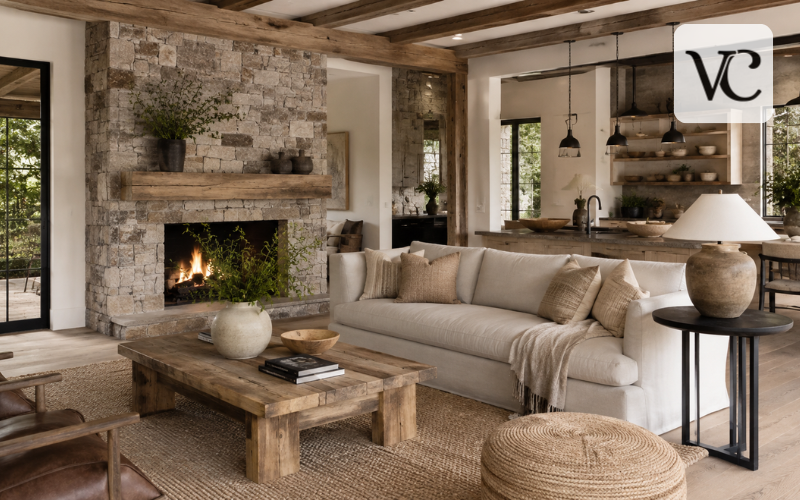
A modern rustic living room should feel comfortable before it feels decorative. Start with a contemporary sofa in cream, beige, grey, or soft brown. Choose a simple shape with supportive, generous cushions. Pair it with a weathered wood coffee table, a stone side table, or a slim black metal frame for contrast.
Architectural features can become the room’s focal point. Exposed beams, a stone hearth, brick fireplace, or timber panelling adds strong rustic character. When one of these features is already present, keep nearby furniture and decor simple so the space does not feel overloaded.
Use textiles to add softness. A wool or jute rug can define the seating area, while linen curtains, a knitted throw, and a few textured cushions make the room feel inviting. Limit strong patterns and focus instead on different weaves and surfaces in related colours.
Black metal, wood, or glass lighting fits the style well. Leave enough open floor space around the furniture and choose one clear focal point, such as a fireplace, view, artwork, or coffee table.
Designing a Functional Modern Rustic Kitchen
A modern rustic kitchen blends efficient storage with warm, natural finishes. Flat-panel cabinets provide a clean contemporary look, while Shaker-style doors offer a slightly more traditional feel. Both suit wood finishes and neutral colours such as warm white, taupe, charcoal, or muted green.
Stone or durable stone-look countertops create a smooth contrast to timber. A farmhouse sink adds rustic character, although a simple undermount sink may suit a more modern version of the style. Brick, handmade-look tile, or quiet stone can give the backsplash texture without making it too busy.
Open wooden shelves work best in small amounts. Use them for everyday plates, glasses, jars, or a few ceramics, while closed cabinets handle most storage. This keeps the kitchen relaxed but orderly.
Stainless steel appliances bring a modern note. Balance their cooler finish with wood, woven stools, warm lighting, and natural surfaces. Black iron or oversized pendant lights can define an island or dining area, provided their scale suits the room.
Good task lighting, practical storage, clear work areas, durable surfaces, and comfortable movement are essential in any modern rustic kitchen.
Creating a Calm Modern Rustic Bedroom
The bedroom suits modern rustic style because the look already values calm colours and tactile comfort. Begin with simple bedding in warm white, cream, beige, or muted grey. Add depth through linen, wool, cotton, knitted throws, and a small number of textured cushions.
A wooden headboard can become the main rustic feature. It may use smooth oak, reclaimed boards, or simple vertical panelling. Ceiling beams or a timber feature wall can also work, but one strong wood element is usually enough.
Industrial-style sconces, small pendants, or simple bedside lamps add a modern edge while keeping the lighting understated. Use warm, gentle light rather than relying only on a bright ceiling fixture.
Large windows and natural daylight help wood and fabric textures look richer. Keep window treatments simple with linen curtains, plain blinds, or layered versions of both. Where privacy or darkness is needed, add lined curtains or blackout blinds behind the softer outer layer.
Limit decoration to meaningful items and protect clear walking space. Hidden storage, an uncluttered bedside area, and a comfortable bed will create more calm than extra accessories.
Selecting Modern Rustic Furniture
Modern rustic furniture should combine clean shapes with natural character. Look for pieces made from visible-grain wood, leather, stone, metal, or woven fabric. A table can show knots and variation without having an overly distressed finish. A leather chair can feel warm while still having a neat, contemporary frame.
Avoid buying every piece from one matching collection. A more natural room develops through a controlled mix. A modern sofa might sit beside a handmade timber table, while simple dining chairs could be paired with an older cabinet. One or two aged or handcrafted items are usually enough to add history.
Scale matters as much as style. Large rustic furniture can overwhelm a small room, so measure the space, doorways, and walking routes before buying. In compact areas, raised legs, slimmer frames, and fewer pieces help the room feel open.
Choose comfort, quality, and practical construction over appearance alone.
Modern Rustic Decor Without Overcrowding the Space
Modern rustic decor should add personality in careful layers. Handmade ceramics, woven baskets, wooden bowls, and simple artwork are useful because they introduce texture without making the space feel overly decorated.
Nature-inspired accents also work well. A leafy plant, a branch in a tall vase, dried grasses, or a bowl made from stone can connect the room with the outdoors. Mirrors can reflect daylight and help natural materials stand out, especially in smaller rooms.
Use vintage objects selectively. One old trunk, framed map, pottery vessel, or aged mirror can add more character than a large group of themed signs and ornaments. The room should feel collected over time, not arranged to copy a country shop.
Leave empty space on shelves, walls, and tables. Group a few related objects rather than spreading many small pieces around the room. When using cushions, rugs, throws, and curtains, vary the textures but keep the colours connected.
Creating a Consistent Modern Rustic Home
A consistent modern rustic home does not require every room to look the same. Instead, repeat a limited set of materials and colours. The same oak tone, black metal finish, warm wall colour, or natural fabric can appear in different ways throughout the property.
Flooring is one of the strongest links between rooms. Continuous wood, stone, or a consistent neutral surface can make open areas feel connected. Repeating door styles, trim colours, handles, and lighting finishes creates further visual order.
In an open-plan living, kitchen, and dining area, use rugs, lighting, or furniture placement to define each zone. Keep the main palette consistent, then give each area its own focal point. The kitchen might highlight stone, while the living area uses timber and layered textiles.
Let the building guide the strength of the rustic details. A modern apartment may need light touches, while an older house can support beams, brick, or reclaimed wood more naturally.
Modern Rustic Exterior Design
A modern rustic exterior uses natural materials within a simple architectural form. Wood siding, natural stone, brick, standing-seam metal, and smooth render can work together, but the selection should remain controlled. Two or three main finishes usually create a clearer result than many competing surfaces.
Large windows bring a contemporary feeling and connect the interior with the landscape. Dark frames provide crisp contrast against timber, pale render, brick, or stone. Simple rooflines, modern roofing materials, and understated exterior lights keep the design clean.
The entrance should feel welcoming and easy to identify. A solid wooden door, stone path, covered porch, or simple wall light can create warmth without unnecessary decoration. Practical landscaping with grasses, native plants, gravel, timber edging, or stone can help the house sit naturally in its setting.
Wood needs the correct treatment, while stone, metal, brick, and render should be chosen for local rain, heat, frost, or coastal exposure. Good drainage and durable construction matter more than a fashionable finish.
The strongest modern rustic exterior balances natural character with simple shapes, practical materials, and a clear connection to the surroundings.
Finding Inspiration in Modern Rustic Magazines and Real Homes
A modern rustic magazine, design book, or trusted interiors website can help you see how colours, materials, furniture, and lighting work together. Use these sources to study proportion and layout rather than copying a complete room.
Look at how people handle storage, small spaces, everyday furniture, and the mix of old and new pieces. Notice which ideas suit your property and which depend on features you do not have.
Create a mood board before making major purchases. Include wall colours, wood samples, flooring, fabrics, furniture shapes, lighting, and exterior materials. Seeing everything together can reveal clashing undertones or too many similar textures before they become costly mistakes.
Your home’s age, location, daylight, ceiling height, and existing finishes should guide the plan. A scheme designed for a large mountain house may need to be lighter and simpler in a small apartment.
Set a practical budget and spend first on difficult-to-change elements such as flooring, cabinetry, windows, and large furniture. Smaller modern rustic decor can be added gradually as the rooms develop.
Common Modern Rustic Design Mistakes to Avoid
Too much distressed wood is one of the most common mistakes. When every table, shelf, door, and wall looks aged, the room can feel artificial. Balance characterful timber with smooth walls, clean furniture, stone, or simple metal details.
Mixing many unrelated wood tones can also create visual confusion. They do not need to match exactly, but their undertones should work together. Repeat one main wood finish in several places and use other tones more sparingly.
Artificial stone, fake beams, and strongly printed wood effects may weaken the natural feeling when they are unconvincing. When genuine materials are outside the budget, choose simple, well-made alternatives rather than finishes designed to look heavily aged.
A modern rustic room can also become too cold, dark, sparse, or rugged. Warm lighting, pale walls, soft fabric, and open floor space can restore balance. Most importantly, do not place style above daily needs. Storage, comfortable seating, useful lighting, durable surfaces, and easy movement should remain part of every decision.
Conclusion
Modern rustic design works best when modern simplicity and rustic warmth receive equal attention. Clean lines, open layouts, and restrained decoration create a calm base. Wood, stone, metal, natural fabric, and handmade details then make the home feel comfortable and connected to nature.
You do not need to redesign every room at once. Begin with the existing architecture, choose a warm neutral palette, and add a few durable natural materials. Select furniture for comfort and scale, then introduce decor slowly so the space remains uncluttered.
Avoid copying every trend or filling the home with distressed finishes. The strongest results come from thoughtful contrast: smooth beside rough, new beside old, and clean shapes beside rich texture.
When these elements are balanced carefully, modern rustic style feels practical, cohesive, and personal. The final space should not only look attractive in photographs; it should also support everyday life and make people feel genuinely at home.
Frequently Asked Questions
What is the difference between rustic and modern rustic design?
Traditional rustic design often uses heavier furniture and stronger country details. Modern rustic combines natural materials and warmth with cleaner lines, simpler layouts, neutral colours, and fewer decorative objects.
What colours work best in a modern rustic home?
Warm whites, cream, beige, greige, taupe, brown, charcoal, and soft grey work well. Muted olive, rust, clay, and ochre can provide gentle colour without overwhelming the natural palette.
Can modern rustic design work in a small home?
Yes. Use lighter colours, slim furniture, limited rustic details, and practical storage. Leaving clear floor space and choosing one main natural material can keep a small room warm without making it feel crowded.
Does modern rustic furniture need to look old?
No. Modern rustic furniture can be completely new. It should have simple shapes and natural character, such as visible wood grain, leather, stone, woven fabric, or understated metal details.
How can I make modern rustic decor look less farmhouse?
Reduce signs, overly distressed furniture, checked patterns, and themed accessories. Focus instead on clean furniture, natural materials, simple handmade objects, neutral colours, and carefully placed modern lighting.
Disclaimer: This article provides general interior and exterior design guidance. Material performance, installation needs, maintenance, building requirements, and costs can vary by property and location. Consult qualified designers, contractors, or local professionals before making structural changes, installing heavy features, or selecting materials for demanding climates.
Enjoyed this article? Discover more helpful ideas and fresh inspiration on Vogue Cultures.