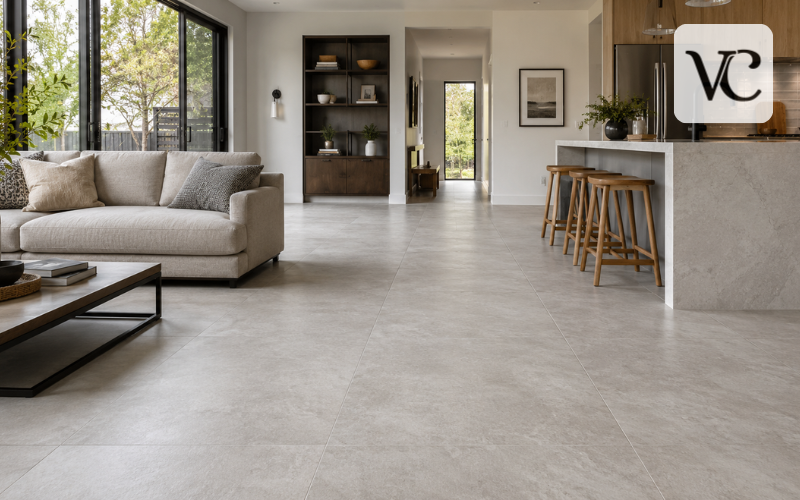
Porcelain tile flooring is a strong, water-resistant surface used in kitchens, bathrooms, living rooms, hallways, entryways, commercial spaces, and some outdoor areas. It comes in many colors, sizes, textures, and patterns, so it can suit modern, traditional, rustic, or luxurious interiors.
True porcelain is dense and absorbs very little water. Industry standards define it as tile with a water absorption rate of 0.5% or less under the recognized ASTM test. This helps it perform well around moisture, but buyers must still confirm that a particular product is approved for floors, wet areas, or exterior use.
Before choosing porcelain, consider the finish, traction, tile size, subfloor condition, installation cost, grout care, comfort, and room use. The best choice balances appearance with safety and practical performance.
Porcelain Tile Flooring Quick Guide
| Feature | Quick Information |
| Material | Refined clay and minerals fired at very high temperatures |
| Water absorption | Typically 0.5% or less |
| Best uses | Kitchens, bathrooms, living rooms, hallways, and commercial spaces |
| Outdoor suitability | Suitable only when the tile is specifically rated for exterior use |
| Popular finishes | Matte, polished, satin, textured, wood-look, and marble-look |
| Common sizes | Mosaics, planks, 24×24, 24×48, and large-format panels |
| Maintenance | Regular sweeping and cleaning with a mild tile-safe solution |
| Main advantages | Durable, water-resistant, stain-resistant, and design-versatile |
| Main drawbacks | Hard, cold, heavy, and more difficult to install |
| Installation | Professional installation is often recommended |
How to Choose Porcelain Tile Flooring
- Identify where the tile will be installed, such as a kitchen, bathroom, living room, or patio.
- Confirm that the product is approved for floors and the expected level of foot traffic.
- Choose a slip-resistant finish for bathrooms, kitchens, entrances, and outdoor areas.
- Select a tile size that suits the room, layout, and condition of the subfloor.
- Check the water absorption, wear, frost, shade variation, and exterior-use ratings.
- Include labor, preparation, grout, adhesive, delivery, and waste in the total budget.
- Buy extra tiles from the same production batch for cuts and future repairs.
What Is Porcelain Tile Flooring?
Porcelain is a type of ceramic tile made from selected clay and mineral materials that are pressed and fired at high temperatures. The process creates a compact body with low porosity. The surface may be glazed, unglazed, polished, matte, textured, or colored through the body.
The word “porcelain” should describe tested performance, not just appearance. Under North American standards, the tile must absorb no more than 0.5% water. Products that pass independent testing may carry the Porcelain Tile Certification Agency mark, which helps buyers identify true porcelain.
Glazed porcelain is often easy to clean, while some unglazed products offer stronger traction or make wear less visible. Because performance varies, the product specification sheet matters more than how the tile looks or feels in a showroom.
Why Porcelain Tile Flooring Is So Popular
Porcelain tile flooring combines long-lasting performance with wide design choice. A correctly selected and installed floor can handle regular foot traffic, pets, chair movement, spills, and frequent cleaning without swelling or warping. It resists moisture, stains, wear, and many everyday scratches, although heavy impacts may still chip a tile.
Modern manufacturing can reproduce wood grain, marble veining, concrete, terrazzo, slate, and other stone effects. Homeowners can therefore create a premium look without some of the moisture or sealing concerns connected with hardwood and porous natural stone.
Porcelain also fits many decorating styles. Wood-look planks can warm a farmhouse kitchen, large grey tiles can support a minimalist living room, and marble-look designs can create a formal appearance. The key is choosing a tile rated for the intended location.
Porcelain Tile Flooring Pros and Cons
The main advantages of porcelain tile flooring are low water absorption, strong wear resistance, easy routine cleaning, and a broad range of designs. It generally does not need the regular sealing required by many natural stones, although certain grout products may need sealing. Large tiles create fewer grout lines, while smaller formats offer more layout flexibility.
The disadvantages include weight, hardness, higher installation demands, and a cold feel underfoot. Dense porcelain is harder to cut than many ceramic tiles, and large formats need careful floor preparation. Uneven surfaces can cause raised tile edges or weak mortar coverage.
Porcelain suits households that value durability, moisture resistance, and low daily maintenance. It may be less suitable for people wanting a soft floor, a simple DIY project, or the lowest upfront price.
Disadvantages of Porcelain Tiles
Porcelain often costs more than basic ceramic, and labor may be higher because it is difficult to cut, drill, and handle. Decorative patterns, oversized tiles, stairs, old-floor removal, and surface leveling add further expense.
The hard surface can feel cold and uncomfortable during long periods of standing. Dropped glassware is likely to break, while rugs or underfloor heating may be needed for comfort. Heating works well with tile but must be planned before installation.
Replacing one damaged tile can also be difficult if the original shade or batch is no longer available. Keeping spare tiles is therefore sensible. Polished porcelain needs careful placement because it may become slippery when wet. DCOF testing helps assess traction, but slip safety also depends on water, grease, footwear, slope, cleaning, and the full installation.
Porcelain Tile Flooring vs Ceramic Tile
Porcelain and ceramic are related because porcelain is a type of ceramic. Porcelain meets a strict low-absorption definition and is usually denser. Non-porcelain ceramic covers a wider range of products and is often easier to cut and install.
| Feature | Porcelain Tile | Non-Porcelain Ceramic Tile |
| Water absorption | 0.5% or less | More than 0.5% |
| Density | Usually denser and harder | Often lighter and easier to cut |
| Wet areas | Many suitable choices | Depends on the specific product |
| High traffic | Many durable floor-rated options | Ratings vary widely |
| Outdoor use | Only when exterior and climate rated | Some products also qualify |
| Cost | Often higher | Often more affordable |
| Installation | Usually more demanding | Often simpler |
Porcelain commonly performs better in busy kitchens, entrances, and moisture-prone rooms. Ceramic may be practical for walls, backsplashes, light-use rooms, or limited budgets. Neither name alone proves suitability, so check the manufacturer’s floor, abrasion, frost, and traction information.
Porcelain Tile Flooring for Kitchens
Porcelain tile flooring for kitchens handles splashes, food stains, chair movement, and frequent cleaning well. Its low absorption protects the tile body, although grout joints and the complete floor system still need correct installation.
A matte or lightly textured finish is often practical because it can provide better grip and show fewer smudges than highly polished tile. Deep textures may improve traction but can trap grease and need more scrubbing. Mid-tone grout usually hides daily marks better than white, while matching grout creates a more continuous look.
Wood-look porcelain brings warmth to open-plan kitchens and can continue into dining or living areas. Choose a collection with several grain variations to avoid obvious repetition. Long rectangular tiles also need careful layout because too much overlap can increase uneven edges; some guidance limits running-bond overlap to one-third.
Bathroom Porcelain Tile Flooring
Bathroom porcelain tile flooring combines low water absorption with many colors and sizes. It may be used on the main floor and, when specifically approved, in showers. However, tile is only the visible surface; wet areas still need a correctly designed waterproof layer underneath.
Traction should guide the choice. A polished marble look may be attractive, but matte, textured, or mosaic tile is often more practical where bare feet and water are expected. Always check the manufacturer’s wet-area and slip-resistance information.
Large tiles reduce grout lines and can make a bathroom feel calm and open. Smaller tiles usually follow shower-floor slopes more easily and add grout joints that may improve grip. White, cream, or pale grey can brighten a compact room, while medium tones may hide hair, dust, and water spots more effectively.
Porcelain Tile Flooring in Living Rooms
Large-format porcelain can make a living room feel open because fewer grout lines break up the surface. Popular formats include 24×24 and 24×48 tiles in stone, marble, terrazzo, and concrete effects. Rectified edges support neat, even joints, but tiles should not be installed without grout. Industry guidance requires a minimum joint for large formats, with the final width based on tile variation and installation conditions.
Polished porcelain reflects light and creates a formal look, though it may show dust and footprints. Matte tile gives softer reflections and a more relaxed appearance, while satin or semi-polished finishes sit between them.
Pale tile and matching grout can make the room appear wider. Dark tile adds depth but may show dust. Rugs, fabric furniture, timber accents, and warm wall colors help soften the hard surface and improve comfort.
High-Traffic and Outdoor Applications
Porcelain works well in hallways, entrances, utility rooms, shops, and offices when rated for the expected traffic. Buyers should confirm floor use, abrasion performance, traction, and cleaning needs. Through-body or color-body tiles may make chips less noticeable, although durable glazed porcelain can also perform well.
Outdoor use requires extra care. Low absorption often supports frost resistance, but porcelain is not automatically suitable for freezing climates. TCNA recommends checking the manufacturer’s exterior approval, freeze-thaw data, and installation guidance. Some non-porcelain tiles can also be exterior-rated.
Patios, steps, and pool surrounds need outdoor traction, suitable drainage, correct mortar, movement joints, and a stable base. Never assume that an indoor polished tile can be used outside.
Colors, Finishes, and Realistic Design Effects
Porcelain tile flooring in white can make a room feel bright and spacious. Pure white creates a crisp modern look, while ivory and softly veined white are easier to combine with wood and warm colors. A lightly patterned surface may also hide small marks better than plain gloss.
Wood-look porcelain copies planks, knots, and grain while offering better moisture resistance than hardwood. Marble-look tile provides dramatic veining without the regular sealing often required by natural marble. Carrara-inspired grey veining remains common, but warmer stone patterns are also widely available.
Concrete effects suit minimalist interiors, terrazzo adds movement, and slate or stone textures create a natural look. Polished tile is reflective, matte has low shine, satin or semi-polished gives a soft glow, and textured finishes add grip and depth. Buyers should still check the actual traction and maintenance data rather than choosing by finish name alone.
Porcelain Tile Sizes, Including 24×24 Tiles
Porcelain comes as mosaics, small squares, 24×24 tiles, planks, large rectangles, and oversized panels. Porcelain tile 24×24 is a useful large format for living rooms, kitchens, hallways, and larger bathrooms. It creates fewer grout lines but is easier to handle than many slabs.
Small rooms do not always require small tiles. A large tile can make a compact floor look calmer when cuts near the walls are balanced. Straight layouts are clean and simple, while diagonal patterns add movement but require more cuts and material. Planks may be installed in staggered or herringbone patterns if the product and room allow.
Large-format tile needs a flat base, suitable mortar coverage, and correctly sized joints. The 2026 TCNA guidance includes requirements for substrate preparation, grout joints, wet areas, and installation materials.
Extra tile should be ordered for cuts, breakage, pattern matching, and future repairs. Complex layouts usually require more overage than simple straight installations.
Porcelain Tile Flooring Cost and Buying Considerations
Porcelain tile flooring cost includes the tile, delivery, old-floor removal, surface repair, leveling, waterproofing or membranes, mortar, grout, trim, labor, cleanup, and spare pieces. Stairs, patterns, oversized formats, difficult access, and damaged subfloors raise the final price.
In the United States, Angi’s 2026 guide estimates professionally installed porcelain at about $9 to $50 per square foot for materials and labor. Its broader tile-floor guide places a common installed range near $15 to $20 per square foot. These are planning figures rather than quotations, and prices vary by location and project.
Before buying, confirm floor suitability, size, thickness, actual dimensions, shade variation, edge type, abrasion rating, traction classification, and wet-area or exterior approval. In cold climates, check frost resistance. A PTCA mark can confirm that the product meets the porcelain water-absorption definition.
View several tiles together because printed patterns and production shades vary. Buy the required boxes from the same lot when possible, keep spare tiles, and hire an installer experienced with the chosen format. Good preparation and installation usually matter more to long-term performance than an expensive design alone.
Conclusion
Porcelain tile flooring offers durability, low water absorption, simple routine care, and a wide choice of colors and realistic effects. It can suit kitchens, bathrooms, living rooms, entrances, commercial interiors, and properly rated outdoor spaces.
Its success depends on selecting the correct finish and performance rating. Wet areas need suitable traction, exterior tile needs verified weather approval, and large formats require a flat base and skilled installation. The budget should include preparation and labor, not only the tile price.
For a busy or moisture-prone room, well-chosen porcelain can provide strong long-term value. Where softness, warmth, easy DIY installation, or the lowest cost matters more, another flooring material may be a better fit.
Frequently Asked Questions
Is porcelain tile flooring waterproof?
Porcelain tile absorbs very little water, but the complete floor is not automatically waterproof. Grout joints, edges, and the surface underneath must be installed and protected correctly, especially in bathrooms and showers.
Is porcelain tile flooring good for kitchens?
Yes. Porcelain tile flooring works well in kitchens because it resists moisture, stains, scratches, and frequent foot traffic. Matte or lightly textured finishes are usually safer and easier to maintain than polished surfaces.
What are the main disadvantages of porcelain tiles?
Porcelain tiles can be expensive, heavy, cold, and difficult to cut. Their hard surface may feel uncomfortable underfoot, and poor installation can lead to cracked tiles, uneven edges, or loose sections.
Is porcelain better than ceramic tile?
Porcelain is generally denser, less absorbent, and more durable than standard ceramic tile. Ceramic may still be a practical choice for walls, light-use rooms, simple installations, or homeowners working with a smaller budget.
Are 24×24 porcelain tiles suitable for small rooms?
Yes. A 24×24 porcelain tile can make a small room appear less busy because it creates fewer grout lines. However, careful planning is needed to avoid narrow or uneven tile cuts around walls.
Disclaimer: This article provides general information about porcelain tile flooring. Product ratings, installation requirements, slip resistance, costs, and outdoor suitability can vary by manufacturer, climate, and project. Always check the product specifications and consult a qualified tile installer before purchasing or installing flooring.
Enjoyed this article? Discover more helpful ideas and fresh inspiration on Vogue Cultures.