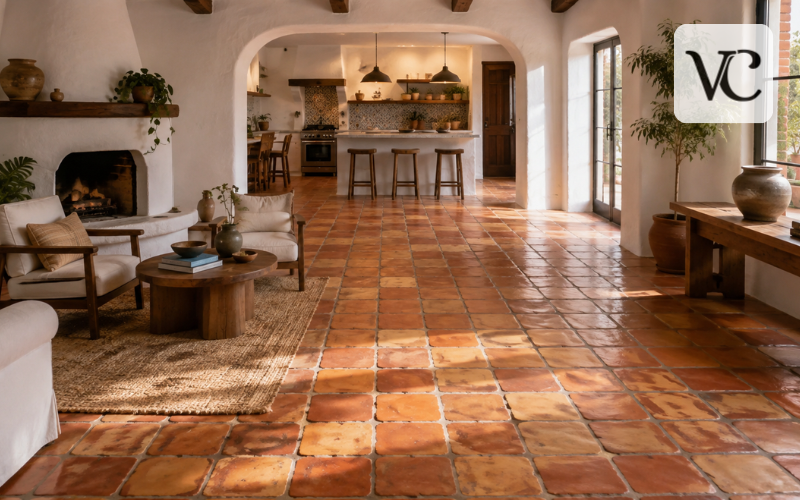
Saltillo tile is a traditional terracotta flooring material known for its warm color, handmade surface, and relaxed character. Authentic Saltillo tile comes from the Saltillo area of Coahuila, Mexico, where natural clay is shaped by hand, dried, and fired. The finished tiles commonly show shades of yellow, peach, orange, red, and brown rather than one perfectly even color.
That variation is the main reason a Saltillo tile floor feels different from factory-made ceramic or porcelain. Small changes in tone, texture, edge shape, and thickness create a floor that looks lived-in and individual from the start. Natural marks, shallow pits, and occasional animal footprints may also appear in handmade batches.
Saltillo works especially well in Southwestern, Spanish, Mediterranean, farmhouse, and rustic homes. It can also soften a modern room when paired with white walls, simple furniture, black metal, or neutral fabrics. Before choosing it, however, homeowners need to understand that it is porous, softer than porcelain, and more demanding to install and seal.
Snippet-Ready Definition:
Saltillo tile is a handmade terracotta tile traditionally produced in Saltillo, Mexico. It is valued for its warm earthy colors, natural variations, and rustic character but requires proper sealing because the clay is highly porous.
Saltillo Tile Quick Guide
| Feature | Quick Details |
| Material | Natural handmade terracotta clay |
| Origin | Saltillo, Coahuila, Mexico |
| Common colors | Yellow, peach, orange, red, and brown |
| Popular sizes | 8×8, 12×12, and larger square formats |
| Popular shapes | Square, rectangle, hexagon, octagon, and San Felipe |
| Best locations | Living rooms, kitchens, dining areas, hallways, and covered patios |
| Sealing requirement | Unsealed tiles must be protected before or during installation |
| Maintenance level | Moderate; gentle cleaning and occasional resealing are needed |
| Main advantage | Warm, distinctive, handmade appearance |
| Main drawback | Porous surface that can stain or absorb moisture |
How to Choose Saltillo Tile
- Confirm that the product is authentic Mexican clay rather than a ceramic or porcelain imitation.
- Decide whether you prefer unsealed, pre-sealed, matte, satin, or glossy tile.
- Select a size and shape that suits the scale and style of the room.
- Check whether the tile is approved for kitchens, bathrooms, patios, or other intended locations.
- Order samples to review the actual color, texture, thickness, and natural variation.
- Purchase extra tiles for cutting, sorting, accidental damage, and future repairs.
- Review the seller’s shipping, breakage, return, and sealing policies before ordering.
What Makes Authentic Saltillo Tile Different
Authentic Saltillo is a regional type of terracotta, but not every terracotta tile is Saltillo. True Saltillo tile is made in or around Saltillo, Coahuila, from locally available clay. The clay is pressed into molds by hand, allowed to dry, and then kiln-fired. Weather, minerals in the clay, and firing conditions all influence the final color.
Because the process is partly manual, the tiles are not expected to match like machine-made products. One piece may be slightly thicker, more rounded, or darker than the next. These differences are not usually manufacturing defects. They are part of the traditional appearance and must be considered during layout and installation.
Imitation Saltillo products are commonly made from ceramic or porcelain with a printed or glazed terracotta look. They may be easier to clean, more consistent in size, and less absorbent, but they do not have the same depth, texture, or natural variation. Buyers should read the material description carefully instead of relying only on the word “Saltillo” in a color or collection name. Home Depot, for example, currently carries a glazed ceramic product described as having a traditional Saltillo design rather than being handmade Saltillo clay.
Saltillo Tile Colors, Finishes, and Natural Variations
Traditional Saltillo tile is often associated with orange and reddish-brown floors, but its natural range is wider. A single installation may include honey yellow, pale peach, salmon, rust, brick red, and dark brown. Some producers also offer manganese Saltillo, which has deeper brown, charcoal, and smoky tones.
Raw or unsealed tile usually looks pale, dry, and chalky. A penetrating sealer can enrich the clay and make the colors appear deeper. A matte finish keeps the surface quiet and natural, while satin adds a soft glow. Glossy topcoats create a richer, more reflective appearance but can show scratches and wear more clearly in busy areas.
Samples are useful, but they cannot represent every tile in a shipment. It is better to expect broad variation and mix pieces from several boxes or pallets during installation. Ordering the full quantity at one time also reduces the risk of receiving a later batch with noticeably different tones. Producers warn that clay, firing, and weather conditions can cause one production batch to differ from another.
Popular Saltillo Tile Sizes and Shapes
Saltillo tile 12×12 remains one of the most familiar choices because it suits many room sizes and creates a simple, balanced grid. The stated measurement is often nominal, so the actual tile may be slightly smaller and may vary from piece to piece. Larger squares can make an open room feel calm, while smaller tiles add more grout lines and visual detail.
Square and rectangular tiles are the easiest shapes to plan, but handmade Saltillo is also available in hexagons, octagons, pickets, stars, crosses, and curved decorative forms. San Felipe and other interlocking shapes create a more historic or ornamental floor. Octagon-and-dot layouts may combine clay octagons with small terracotta, cement, or colorful Talavera accents.
Saltillo tile hexagon designs are especially effective when a homeowner wants a geometric pattern without using several materials. A large hexagon can feel bold and spacious, while a smaller hexagon creates a busier texture. Current collections include traditional 12-inch formats as well as smaller sealed hexagons and decorative shapes.
The best choice depends on the scale of the room, the amount of furniture, and how much attention the floor should attract. A sample layout can help homeowners judge whether a shape feels balanced before ordering a full shipment.
Saltillo Tile Floor Design Ideas
A straight grid gives Saltillo tile a clean, traditional appearance and is usually the easiest layout to understand. Turning square tiles on a diagonal creates more movement and can make a narrow space feel wider. Rectangular pieces may be arranged in running-bond, basketweave, or herringbone-inspired patterns when the product dimensions allow it.
In a Southwestern room, Saltillo pairs naturally with timber beams, plaster walls, woven textiles, and iron details. Spanish and Mediterranean spaces often combine it with white or cream walls, dark wood, arches, and patterned tile accents. Farmhouse interiors can use Saltillo beside simple cabinetry, aged wood, and warm white paint.
It also works in modern spaces. The floor’s imperfect surface can balance smooth cabinets, plain walls, and minimal furniture. This contrast allows the clay to add warmth without making the entire room look traditionally rustic.
Borders, changes in tile direction, or a decorative center panel can define a dining area or entry. Octagons may also be paired with smaller accent pieces to create a classic Spanish-style floor. Restraint is helpful, however, because too many patterns can compete with the natural color movement already present in the tile.
Best Rooms and Spaces for Saltillo Tile
Living rooms, dining rooms, kitchens, hallways, and entryways are common locations for a Saltillo tile floor. Its warm color makes large rooms feel more inviting, and its slight variation hides some everyday dust better than a perfectly uniform dark or glossy surface. Rugs can add comfort and protect the busiest walking paths.
Saltillo can be used in kitchens, but sealing and quick spill cleanup are essential because cooking oil, wine, sauces, and food pigments can enter unprotected clay. A compatible sealer is recommended for porous terracotta and Saltillo surfaces to reduce common staining.
In bathrooms, the floor and grout must be properly sealed, and the selected product must be approved for that use. Saltillo may work on a general bathroom floor, but a shower floor or constantly wet area may be better served by a less absorbent, slip-rated material. One currently available natural Saltillo product, for example, is listed for bathrooms but not for shower installations.
Covered patios can be suitable in mild, dry climates when the tile, setting materials, drainage, and sealer are intended for exterior use. Freeze-thaw climates require much more caution because absorbed water can expand and damage porous clay. Manufacturers recommend waterproofing measures and regular sealer inspection for exterior installations exposed to freezing conditions.
Bedrooms in cold regions may feel chilly unless rugs or underfloor heating are included. The room’s climate and how the surface will be used should therefore matter as much as its appearance.
Benefits of Choosing Saltillo Tile
The strongest benefit of Saltillo tile is its visual warmth. It can make a new room feel settled and can give an older home a surface that looks appropriate rather than overly polished. Since no two handmade pieces are exactly alike, the floor develops a natural rhythm that printed tile can only imitate.
Saltillo is made mainly from natural clay and follows a long-established craft process. Buyers who value natural materials and visible handwork may find this more appealing than a highly standardized surface. Small texture changes, color differences, and irregular edges become part of the design instead of details that must be hidden.
The material can also age attractively when maintained well, developing gentle wear instead of looking suddenly outdated. In warm climates, Saltillo often feels pleasantly cool underfoot indoors because tile absorbs and releases heat slowly. However, a surface exposed to strong direct sunlight can still become hot.
Its earthy colors work with many wall colors and furniture styles. A carefully installed and sealed floor can serve for many years, and individual damaged pieces may be replaced if spare tiles are kept.
Saltillo Tile Drawbacks to Consider
Porosity is the main practical drawback. Unsealed Saltillo can absorb water, grout pigment, oil, and colored liquids quickly. Poor sealing may lead to dark spots, stains, efflorescence, or uneven wear. The protective system therefore matters as much as the tile itself.
Handmade variation also makes installation slower. Pieces may differ in width, edge shape, and thickness, so an installer must adjust the mortar bed and grout spacing while keeping the surface reasonably level. Wider joints are common because they help absorb those size differences. Professional Saltillo grout products are designed for the large joints often found with absorbent terracotta.
Saltillo is softer and more likely to chip than dense porcelain. Heavy objects, sharp impacts, movement in the subfloor, poor mortar coverage, or shipping damage can lead to cracks and broken edges. Current customer feedback on retail listings also shows that buyers may encounter chipped or broken pieces, making shipment inspection important.
Gloss finishes may scuff, and pale grout can become difficult to maintain in busy rooms. Anyone expecting a flawless, highly uniform, low-maintenance surface may be happier with a porcelain or ceramic Saltillo-look tile.
Sealed, Pre-Sealed, and Unsealed Saltillo Tile
Unsealed Saltillo is raw clay with no factory-applied protection. It offers the most freedom to choose a stain or sealer system, but it also creates more work. The tile can absorb setting material, dirt, and grout during installation, so it normally needs protection before grouting and a compatible final treatment after the floor has dried.
Pre-sealed or factory-sealed Saltillo arrives with one or more protective coats already applied. This can reduce installation time and lower the chance of grout haze or staining. Some products are sold with several coats of factory-applied sealer, while others may have lighter protection.
“Pre-sealed” does not always mean the entire completed floor is finished. Some systems still require a final topcoat over both the tile and grout after installation. Buyers should follow the instructions supplied with their exact product rather than assuming all sealed tiles are treated in the same way.
Finish preference matters too. A penetrating sealer may preserve a more natural look, while a film-forming topcoat can provide satin or gloss. Products must be compatible with any existing sealer. Mixing water-based and solvent-based systems without checking compatibility can cause poor bonding, peeling, or a cloudy finish.
Saltillo Tile Floor Installation Essentials
A successful installation starts with a flat, clean, dry, and stable base. Concrete should be checked for cracks, moisture, and movement. Wood subfloors usually need a suitable tile underlayment and enough stiffness to limit bending. Exterior and wet-area projects may also require a waterproof or crack-isolation membrane.
Before setting the tile, the installer should dry-lay part of the floor, mix pieces from different boxes, and plan cuts around doors, walls, and focal points. Handmade tiles should not be forced into a rigid grid without allowing for size variation. The installer may need to adjust mortar thickness to keep neighboring pieces at a comfortable level.
A suitable thin-set mortar, grout designed for the expected joint width, and a compatible sealer are essential. MAPEI, for example, produces Saltillo grout for joints ranging from 3/8 inch to 3/4 inch, although the correct spacing depends on the actual product and layout.
Experienced installation is valuable because mistakes involving moisture, sealing, grout cleanup, or uneven tile thickness can be difficult and expensive to correct later. Homeowners should look for an installer who can show previous work with Saltillo or another handmade terracotta rather than someone experienced only with uniform porcelain.
Cleaning and Maintaining Saltillo Tile
Routine care is simple when the sealer is in good condition. Sweep with a soft broom or vacuum using a hard-floor setting to remove grit that may scratch the finish. Damp-mop with clean water or a pH-neutral cleaner made for sealed clay, stone, or tile. Avoid flooding the floor, and dry any standing water.
Harsh degreasers, abrasive powders, stiff metal brushes, bleach-heavy mixtures, and acidic cleaners can dull or weaken some sealers. Advice about vinegar is inconsistent, with some guidance allowing a diluted mixture and other care instructions advising against it. The safest general approach is to avoid vinegar unless the tile and sealer manufacturer specifically approves it. A neutral cleaner is less likely to damage the finish or leave the surface uneven.
Blot spills promptly instead of spreading them across the floor. Use mats at exterior doors and felt pads under furniture. Rugs should be breathable, especially on recently installed floors, so moisture is not trapped beneath them.
Always test a new cleaner in a hidden area before using it across the room. Following the care directions for the installed sealer is more reliable than using a general homemade cleaning recipe.
Sealing, Resealing, and Repairing Saltillo Tile
Saltillo does not follow one fixed resealing schedule. Wear depends on the sealer type, number of coats, foot traffic, cleaning products, sunlight, moisture, and whether the floor is indoors or outside. Some producers suggest checking indoor floors after several years and inspecting exterior surfaces more often, but actual conditions should guide the decision.
Warning signs include a dull or chalky appearance, areas that darken quickly when wet, stains that become harder to remove, or water that soaks in instead of remaining on the surface. A simple water-drop check can help show whether the surface is still resisting moisture.
Before adding more sealer, the floor must be cleaned and allowed to dry. Existing wax, polish, dirt, or incompatible coating may need to be removed. Applying fresh sealer over trapped residue can leave the floor cloudy or prevent the new coating from bonding correctly.
Small chips can sometimes be accepted as part of the rustic appearance or touched up with a compatible repair product. Loose or cracked tiles should be investigated because the cause may be movement, hollow mortar coverage, moisture, or impact.
Professional restoration is sensible when a large floor has deep stains, peeling sealer, cloudy layers, or widespread damage. A specialist may need to strip old coatings, clean the clay, repair affected areas, and apply a new compatible system.
Where to Buy Saltillo Tile
A search for “Saltillo tile near me” should include local Mexican tile importers, specialty terracotta dealers, flooring showrooms, and architectural salvage businesses. Local sellers allow buyers to inspect color, thickness, finish, and edge variation before ordering. They may also know installers who regularly work with handmade clay.
When researching where to buy Saltillo tile online, confirm whether the product is authentic Mexican clay or simply a Saltillo-look ceramic or porcelain tile. Ask where it was made, whether it is sealed, which finish was used, how much variation to expect, and whether samples are available.
Shipping policies are important because thick handmade tiles are heavy and some breakage can occur in transit. Buyers should find out how the seller handles damaged pieces and whether returns are accepted for color variation, chipped edges, or natural surface marks.
Current large-retailer selections vary by store and location. Saltillo tile Lowe’s results include 12×12 products described as Mexican handmade or natural clay, although specifications differ by brand and individual product. Buyers should check whether sealing is required and whether the product is approved for their intended room.
Saltillo tile Floor and Decor options currently include sealed square and hexagon products in several sizes and finishes. The retailer also states that it carries both sealed and unsealed Saltillo options. Availability and pricing can differ by selected store.
A search for Saltillo tile Home Depot currently brings up a prominent glazed ceramic product created to resemble the traditional Saltillo appearance. It may suit shoppers who want the look with a more uniform surface, but those seeking authentic handmade clay should check the material and manufacturing details carefully.
Order enough tile for cuts, sorting, accidental damage, and future repairs. Because later production batches may not match, buying all required material together is usually safer. Before paying, review pickup or freight terms, breakage allowances, returns, shade disclaimers, sealing instructions, and any limits on exterior or wet-area use.
Conclusion
Saltillo tile offers something factory-perfect flooring cannot fully reproduce: natural warmth, handmade variation, and a strong connection to traditional Mexican craft. Its colors can support rustic, Spanish, Mediterranean, farmhouse, and modern interiors, while its many shapes allow anything from a quiet grid to an expressive geometric floor.
That beauty comes with responsibilities. The tile needs a stable base, thoughtful layout, suitable grout, proper sealing, gentle cleaning, and occasional maintenance. It is also more vulnerable to stains, chips, moisture, and installation errors than dense porcelain.
Saltillo tile is a good choice for homeowners who appreciate variation and are comfortable caring for a natural clay surface. Those who prefer precise edges, minimal upkeep, or stronger moisture resistance may find a quality Saltillo-look porcelain or ceramic tile more practical.
The best decision depends on the room, climate, expected traffic, installation skill, and the amount of character you want the floor to bring into your home. Reviewing samples and understanding the required maintenance before buying will help you choose a floor that suits both your design preferences and daily routine.
Frequently Asked Questions
Is Saltillo tile suitable for kitchens?
Saltillo tile can work well in kitchens when it is properly sealed. The protective finish helps prevent cooking oil, sauces, water, and food pigments from soaking into the porous clay.
Does Saltillo tile need to be sealed?
Yes. Raw Saltillo tile is highly absorbent and normally requires sealing to resist moisture, dirt, grout stains, and everyday spills. Some factory-sealed products may still need a final protective coat.
Is Saltillo tile difficult to maintain?
Saltillo tile requires more care than porcelain but is manageable when properly sealed. Regular sweeping, gentle damp mopping, quick spill cleanup, and periodic sealer checks will help protect its appearance.
Can Saltillo tile be used outdoors?
It may be suitable for covered outdoor spaces in mild climates when installed with proper drainage, waterproofing, and exterior-rated materials. Porous Saltillo can be damaged by moisture and repeated freezing.
What is the difference between Saltillo and terracotta tile?
Saltillo is a specific type of terracotta traditionally made from clay in Saltillo, Mexico. Terracotta is a broader category that includes clay tiles produced in many regions using different methods.
Disclaimer: This article provides general information about Saltillo tile, including its appearance, installation, sealing, and maintenance. Product specifications and care requirements can vary by manufacturer and location. Always follow the instructions supplied with your chosen tile, mortar, grout, cleaner, and sealer. For wet areas, exterior projects, damaged floors, or difficult installations, consult an experienced tile professional before beginning work.
Enjoyed this article? Discover more helpful ideas and fresh inspiration on Vogue Cultures.