
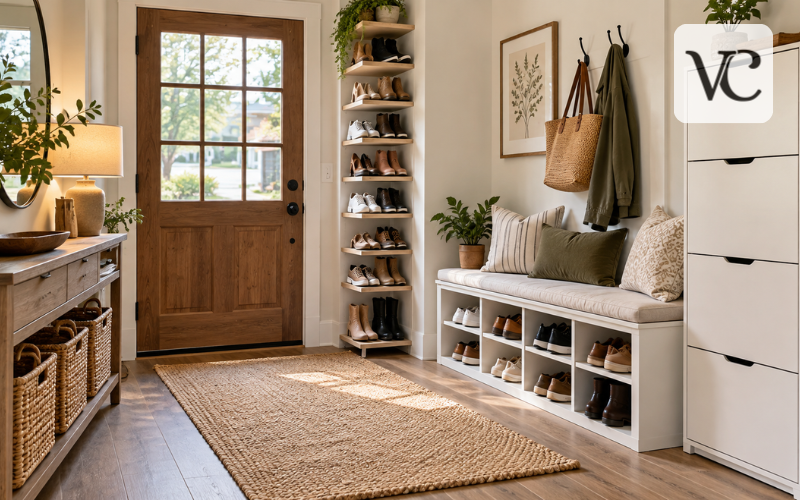
Shoes are useful every day, but they can quickly become one of the hardest things to keep organized. A few pairs by the front door can turn into a crowded walkway, while extra sneakers, boots, sandals, and formal shoes often spread across closets and bedrooms. Good shoe storage ideas solve this problem by giving each pair a clear place without making the room feel packed.
The best setup is not the same for every home. A person with six everyday pairs in a small apartment needs something different from a family storing dozens of shoes. The right choice depends on how much floor and wall space you have, how many pairs you own, the size and shape of the footwear, and how often each pair is worn.
The goal is simple: keep frequently worn shoes easy to reach and move occasional or seasonal pairs into less valuable storage space. That basic approach also matches IKEA’s current organizing advice, which separates footwear into “currently in use” and “not right now” groups.
Snippet-Ready Explanation:
Shoe storage ideas are practical ways to organize footwear using racks, cabinets, shelves, boxes, and hidden spaces. VogueCultures.co.uk provides informational guidance about shoe storage ideas only, helping readers choose suitable options for their homes.
Quick Guide Table
| Storage Option | Best For | Main Benefit |
| Slim shoe cabinet | Narrow entryways | Keeps shoes hidden without using much floor space |
| Vertical shoe rack | Small spaces | Uses height instead of valuable floor area |
| Storage bench | Entryways and mudrooms | Combines seating with shoe storage |
| Clear shoe boxes | Closets | Protect shoes while keeping pairs visible |
| Under-bed storage | Seasonal footwear | Uses otherwise unused bedroom space |
| Over-the-door organizer | Small closets | Adds storage without taking floor space |
| Adjustable shelves | Mixed shoe collections | Fits different shoe sizes and styles |
Simple Steps for Better Shoe Storage
- Count everyday shoes separately from seasonal or rarely worn pairs.
- Measure the available width, depth, and height before choosing storage.
- Keep frequently worn shoes in an easy-to-reach location.
- Use vertical, under-bed, or door space when floor space is limited.
- Choose adjustable storage if you own boots, heels, sneakers, and other different-sized footwear.
- Allow wet or damp shoes to dry before placing them inside closed cabinets or boxes.
- Avoid overcrowding storage so each pair remains easy to access.
Choose the Right Shoe Storage for Your Space
Before buying a rack or cabinet, count your shoes in two groups: pairs you wear regularly and pairs you use only occasionally.
Next, measure the area carefully. Check the width, depth, and height available, but do not stop there. Make sure a cabinet will not block a door, reduce walking space, or interfere with drawers and closet doors.
Think about the tallest and largest shoes in your collection. Boots, high-tops, platform shoes, and larger sizes may not fit standard cubbies or shallow shelves. Adjustable storage is often more useful than fixed compartments when footwear varies in size.
Open storage offers quick access and better airflow, but shoes remain visible and can collect dust. Closed storage creates a calmer appearance and keeps dust away, but damp footwear should be allowed to dry before it is shut inside.
A simple decision guide is useful: choose open racks for frequently worn shoes, closed cabinets for a tidy entryway, clear boxes for protected closet storage, and under-bed containers for seasonal or less-used pairs.
Shoe Storage Ideas for Small Spaces
In a small home, the most valuable rule is to use height before taking more floor space. A slim vertical rack can hold several pairs in the footprint of one or two pairs placed side by side. Tall narrow organizers are especially useful beside a wardrobe, behind a door, or in an unused corner.
Stackable shoe boxes can also work well. Clear boxes make pairs easy to identify, while drop-front designs let you reach a lower box without removing everything stacked above it.
Narrow wall shelves are another option when the wall can safely support them. Under-bed storage is better for shoes that are not needed every day. Low-profile boxes, fabric cases, or rolling drawers can turn otherwise wasted space into useful storage.
Leave enough room to walk, clean, and reach each pair without moving several other items first. In a small space, convenient storage is usually more valuable than squeezing in the maximum possible number of shoes.
Small Entryway Shoe Storage Ideas
An entryway needs storage that works with real daily habits. If people naturally remove their shoes near the door, placing storage somewhere else in the house may only create a second pile. A better system keeps a limited number of everyday pairs close to the entrance.
Slim flip-down shoe cabinets are useful in narrow hallways because the shoes sit inside tilted compartments instead of deep shelves. Always measure the cabinet depth and the space needed to open each section.
A shoe-storage bench can be even more practical for families because it combines seating with cubbies, drawers, or closed compartments.
A small tray is useful for muddy or wet pairs because it protects the floor and keeps dirt contained until the shoes dry.
Avoid turning the entryway into storage for the entire collection. Keeping only the pairs being worn regularly makes the area easier to clean and reduces visual clutter. Shoes that are needed less often can stay in a bedroom closet, wardrobe, or another storage area.
Shoe Storage Ideas for Closets
Closets usually offer more flexibility than entryways because shoes can be organized by both frequency and type. Start with the floor below shorter hanging clothes. A low rack or adjustable shelf unit can make use of this area without interfering with shirts, jackets, or folded items.
Adjustable shelves are useful when you own a mixture of flats, sneakers, heels, and ankle boots. Clear stackable boxes add dust protection while keeping shoes visible.
Cubbies work well when the openings are large enough for your footwear. Before choosing them, measure a few of your widest shoes rather than assuming every pair will fit.
A practical closet also has zones. Keep everyday shoes at eye or hand level, less-used pairs higher or farther back, and seasonal shoes in labeled or clear containers. This reduces the amount of searching and rearranging needed each morning.
The best shoe storage ideas for closets should make the collection easier to see and use rather than simply hide as many shoes as possible.
Shoe Storage Ideas for a Small Closet
A small closet needs careful use of every useful level without making access difficult. The area under shirts or short jackets is often the easiest place to gain storage. A narrow rack can fit there while leaving longer hanging sections free for coats or dresses.
Shelf risers can create a second level on an existing shelf, allowing flats or low sneakers to sit above and below. Tall, narrow organizers usually work better than wide racks when floor space is limited.
Drop-front bins are useful when containers need to be stacked. Because the front opens independently, a pair near the bottom can be reached without dismantling the whole stack.
The most successful small-closet shoe storage ideas make access easier, not simply increase the theoretical number of pairs that fit. If you must remove several boxes every time you want one pair, the system will be difficult to maintain.
It may be better to move seasonal footwear elsewhere and reserve the closet for shoes you currently use.
Hidden Shoe Storage Ideas for a Clutter-Free Look
Hidden shoe storage is useful when you want an entryway, bedroom, or living area to look calm rather than like a footwear display. Closed cabinets are the most obvious choice, but there are several ways to conceal footwear without adding a large piece of furniture.
A storage bench can hide shoes behind doors, inside drawers, or beneath a lift-up seat. Under-bed drawers are almost invisible when closed and can hold seasonal shoes without taking up closet space.
Built-in storage can make use of awkward areas such as the space beneath stairs, but it should be planned around realistic shoe sizes and easy access.
Hidden does not mean airtight. Shoes that are wet from rain, snow, or cleaning should dry fully before going into a closed cabinet, drawer, or box. Open storage or a ventilated drying area is better until moisture has gone.
This simple habit makes hidden storage more practical and helps prevent damp footwear from sitting inside an enclosed space.
Shoe Storage Cabinets: Choosing the Right Design
A shoe storage cabinet can be one of the neatest solutions, but the design needs to suit the room. Flip-down cabinets are shallow and work well in narrow entryways. Their tilted compartments save depth, although very large shoes or tall boots may not fit easily.
Traditional cabinets with horizontal shelves are deeper but usually offer more flexibility. Adjustable shelves allow you to change the height for sneakers, heels, ankle boots, or storage boxes.
Do not rely only on a product’s advertised pair count. Capacity often depends on footwear size, width, and style. A cabinet described as holding many pairs may hold fewer bulky trainers, men’s shoes, or boots. Compare the internal dimensions with shoes you already own.
Stability matters too. Tall or narrow furniture may need wall anchoring according to the manufacturer’s instructions, especially in homes with children.
A useful cabinet should make shoes easier to access while fitting comfortably into the room rather than creating a new obstruction.
Vertical, Wall, and Door Shoe Storage
Vertical storage is especially useful when the floor is full but the wall is mostly empty. A tall narrow shoe tower can hold many pairs while using less width than a long bench-style rack.
Over-the-door pocket organizers are useful for lightweight shoes, slippers, flats, or children’s footwear. Check the size of the pockets and make sure the organizer does not make the door difficult to close.
Wall-mounted shelves or rails can work in closets, utility rooms, or entryways when installed correctly for the wall type and expected load.
Wall storage is most valuable when it frees a walkway, clears a closet floor, or uses a narrow area that cannot fit furniture.
For renters, a freestanding vertical organizer may be a better choice when drilling into walls is not allowed. Either way, the storage should remain stable and should not interfere with doors, switches, furniture, or normal movement through the room.
Bedroom and Under-Bed Shoe Storage Ideas
Bedrooms often contain useful storage space that is easy to overlook. The area beneath a bed is ideal for shoes that do not need daily access. Low-profile boxes protect pairs from dust, while wheeled drawers or containers are easier to pull out from deeper beds.
Measure the clearance from the floor to the bed frame before buying anything. Large shoes may need taller containers, and wheels or lids can add extra height.
Shoes worn more often can stay on a small bedroom shelf or at the bottom of a wardrobe.
Recent organizing discussions on Reddit show why measurements matter in real homes. Users with large or bulky footwear often report that standard organizers do not fit, and under-bed containers with adjustable or removable dividers can be more flexible. These are personal experiences rather than formal recommendations, but they highlight a practical point: shoe size should influence the storage system.
Under-bed storage works best when the containers can be reached without repeatedly moving heavy furniture or other boxes.
Budget and Renter-Friendly Shoe Storage Ideas
Good shoe storage does not have to involve built-ins or expensive furniture. Renters can often improve a space with freestanding racks, modular cubes, baskets, or under-bed containers that move easily to the next home.
Tension rods can sometimes create simple shoe supports inside a suitable niche or closet, but they should only be used within their load limits and on surfaces where they can grip securely. They are better for lightweight footwear than heavy collections.
Washable baskets can provide simple storage for casual shoes, while compact shelves can make better use of the bottom of a wardrobe or unused corner.
Avoid tall improvised stacks that can tip. Freestanding units should sit level, and any product that requires anchoring should be installed according to its safety instructions.
For renters, the best approach is usually flexible storage that uses existing floor, door, closet, and under-bed space without major permanent alterations.
IKEA Shoe Storage Ideas and Modular Setups
IKEA shoe storage ideas are useful examples because the range includes slim cabinets, open racks, wardrobe organizers, boxes, benches, and other space-saving options. The important lesson is not to choose a product simply because it is popular. Start with your measurements and the shoes you actually need to store.
A shallow cabinet can suit a narrow hallway, while an open stackable rack may be more practical for everyday shoes that need quick access. Wardrobe shelves and pull-out organizers can help when footwear is already stored in a bedroom closet.
IKEA’s current guidance recommends separating footwear that is currently in use from shoes that are not needed right now, then making better use of unused spaces. It also presents open storage as easy to access and closed storage as a way to create a cleaner appearance while helping keep shoes away from dust.
These principles apply beyond IKEA products. Measure first, keep regular pairs convenient, and move occasional footwear away from high-demand storage space. An affordable solution that fits your room correctly is usually better than a fashionable organizer that does not suit your actual collection.
Organize Shoes by Type, Season, and How Often You Wear Them
A good storage system becomes much easier to maintain when shoes are grouped by how they are used. Everyday footwear should live near the normal place where you put shoes on or take them off. Seasonal shoes can move to an upper shelf, under-bed box, or another low-priority storage area until they are needed again.
Heels need stable shelving where they will not catch on loose materials or tip easily. Sneakers are usually easier to manage in open racks or ventilated storage, especially when worn often.
Wet or muddy shoes need a temporary drying zone rather than immediate closed storage. A washable tray near the entrance can hold them until they are clean and dry.
Real-world organizing discussions often repeat one useful idea: do not make the entryway hold every shoe owned by everyone in the home. Reddit users commonly suggest keeping active pairs near the door and moving overflow to closets, doors, or under-bed storage. That is anecdotal advice rather than a formal rule, but it matches the practical idea of keeping the most-used items in the easiest-to-reach places.
This approach can also change with the seasons. Sandals may take the easiest spots during summer, while boots and weather-resistant shoes can move forward during colder or wetter months.
Conclusion
The best shoe storage ideas are not necessarily the ones that hold the greatest number of pairs. A useful system fits the available space, works with the size and type of footwear you own, and matches your normal daily routine.
Before adding another large rack, look for unused vertical space, the back of a suitable door, the area beneath hanging clothes, or storage under a bed or bench. Keep the shoes you wear most often easy to reach, while seasonal and occasional pairs can move to less accessible areas.
Choose containers and furniture based on real measurements rather than estimated capacity, and make sure damp shoes can dry before they are stored in enclosed spaces.
When every pair has a sensible place and that place is easy to use, keeping shoes organized becomes part of the routine rather than another household task. A practical system does not need to be expensive or complicated. It simply needs to fit your home, your footwear, and the way you actually live.
FAQs
What is the best way to store shoes in a small space?
Use vertical racks, slim cabinets, stackable boxes, over-the-door organizers, or under-bed containers. The best option depends on available space, shoe quantity, and how often each pair is worn.
How can I organize shoes in a small closet?
Use low racks beneath hanging clothes, narrow vertical organizers, shelf risers, or drop-front boxes. Keep frequently used pairs accessible and move seasonal footwear to upper shelves or under-bed storage.
Is open or closed shoe storage better?
Open storage offers quick access and better airflow, while closed cabinets create a cleaner appearance and help reduce dust. Damp footwear should always dry before being placed in enclosed storage.
How many shoes should I keep near the entryway?
Keep only the shoes you regularly wear near the entrance. Seasonal, formal, or rarely used footwear can be stored elsewhere to prevent the entryway from becoming overcrowded and difficult to maintain.
Are shoe storage cabinets suitable for all types of shoes?
Not always. Shallow cabinets may not fit tall boots or bulky footwear. Check internal measurements and adjustable shelf options before choosing a cabinet for your particular shoe collection.
Disclaimer: This article on VogueCultures.co.uk is provided solely for general informational and organizational purposes. It shares independent information about shoe storage ideas and does not constitute advertising, paid promotion, sponsored content, or guest posting. Any brands or storage styles mentioned are included only to explain practical options. Readers should check product measurements, installation requirements, and manufacturer safety instructions before choosing or installing any storage solution.
Enjoyed this article? Discover more helpful ideas and fresh inspiration on Vogue Cultures.



