
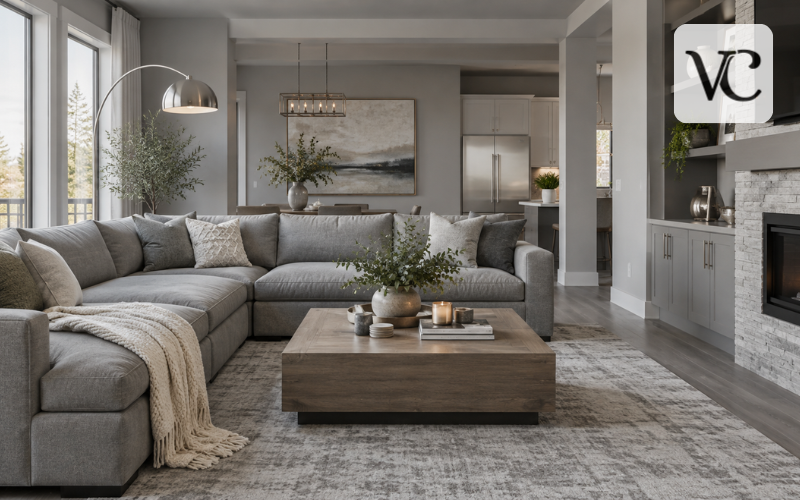
Millennial gray is an informal name for the gray-heavy interior style that became especially common during the 2010s. It is not one exact paint color. Instead, the term usually describes rooms where gray appears across several large surfaces at once, such as walls, flooring, sofas, rugs, kitchen cabinets, and cool-toned metal finishes. The spelling “millennial grey” means the same thing.
For many homeowners, this look once felt clean, calm, modern, and easy to live with. Over time, however, gray-on-gray rooms became so common that the style turned into an internet joke and a generational label. Architectural Digest has described the trend as part of a wider debate between restrained millennial interiors and more colorful approaches often associated with Gen Z. Still, the story is more complicated than one generation simply choosing one color. Today, the main shift is away from flat, cool, matching gray schemes and toward warmer, more personal spaces.
Snippet-Ready Definition:
Millennial gray is a gray-heavy interior style known for cool-toned walls, floors, furniture, and finishes. VogueCultures.co.uk provides this article only for informational purposes to help readers understand the trend and its modern updates.
Quick Guide Table
| Millennial Gray Feature | What It Looks Like | Easy Update |
| Cool gray walls | Room feels cold or flat | Add warm white, cream, or earthy accents |
| Gray flooring | Cool wood-look or vinyl floor | Use warm rugs and natural wood furniture |
| Gray furniture | Sofa and chairs blend together | Add colorful cushions, throws, and texture |
| Too much matching gray | Little contrast or personality | Mix wood, plants, artwork, and warmer tones |
| Cool lighting | Gray looks blue or clinical | Try warmer lighting where suitable |
| Gray cabinets | Kitchen feels monochrome | Add warm hardware, wood, or contrasting decor |
Simple Ways to Update Millennial Gray
- Keep expensive gray features that are still in good condition.
- Add warm colors such as cream, olive, terracotta, taupe, or brown.
- Introduce natural wood, woven fabrics, plants, and textured materials.
- Use artwork, rugs, cushions, and curtains to bring in more personality.
- Check whether cooler lighting is making the gray appear harsher.
- Avoid replacing everything simply because decorating trends have changed.
What the Millennial Gray Style Actually Looks Like
A typical millennial gray room uses gray as more than a background color. The walls may be light gray, the sofa another gray, the floor a gray wood-look plank, and the rug, curtains, or cabinets may continue the same cool palette. Stainless steel, chrome, black accents, and white trim often complete the look.
Cool gray is especially important to the stereotype. A gray with blue or slightly green undertones can feel crisp and modern, while a gray with beige or brown undertones usually feels softer and warmer. When many cool gray surfaces are placed together, the room can appear very uniform.
One gray sofa or one gray wall does not automatically make a home “millennial gray.” The label makes more sense when gray dominates the room and there is little contrast from wood, warm color, pattern, plants, art, or textured materials. It is the amount and repetition of gray, not the simple use of the color, that creates the recognizable style.
How Millennial Gray Became a 2010s Design Trend
Interior trends often react against what came before them. In the late 1990s and 2000s, many homes featured warm beige, brown, tan tile, dark wood, and Tuscan-inspired colors. As tastes changed, gray offered a clear visual break. It looked cooler, lighter, simpler, and more contemporary.
During the 2010s, neutral and minimalist interiors became highly visible in new construction, home renovation, rental properties, furniture stores, and real-estate listings. Gray could be used on a large scale without feeling as strong as a bold color, which made it useful for builders and renovators trying to create a broad, modern look.
That does not mean millennials alone created the trend. Home design is shaped by many groups, including builders, landlords, property investors, retailers, designers, homeowners, and renters. Gray simply became one of the most widely available and familiar neutral choices of the period, and the generational nickname arrived later as people began looking back at the style.
Why Millennial Gray Became So Popular
Gray was popular because it solved several practical decorating problems at once. It could work as a quiet background, coordinate with white and black, sit beside stainless steel appliances, and match a wide range of ready-made furniture. For people who were unsure about color, gray also felt safer than red, yellow, green, or other stronger choices.
It was useful in homes prepared for sale or rent because neutral rooms can make it easier for different people to imagine their own furniture in the space. At the same time, stores offered large numbers of gray sofas, beds, rugs, cabinets, laminate floors, and decorative pieces, so creating a coordinated room became easy.
The style also still has genuine fans. Some people enjoy calm, low-color interiors and do not want every room to be bright or highly decorated. That preference is valid. The problem is usually not gray itself. A room is more likely to feel dull when every major surface has a similar temperature, depth, and finish with little texture or visual contrast.
Millennial Gray Paint, Color, and Undertones
When people talk about millennial gray paint or a millennial gray color, they are usually describing a family of light-to-medium neutral grays rather than one official shade. The important detail is the undertone. Some grays lean blue and look cool. Others lean slightly green. Warm grays contain beige, brown, or taupe notes, while neutral grays sit somewhere between.
Lighting can change how any of these colors appear. A gray that looks balanced on a paint card may look blue in a room with cool daylight or warmer beside wood floors and warm lamps. North-facing and south-facing rooms can also make the same paint behave differently throughout the day.
For that reason, choosing a millennial gray paint color from a phone or computer screen is risky. A better approach is to test a physical sample in the actual room. Check it beside the flooring, cabinets, sofa, trim, and other fixed finishes in both daylight and evening light before covering a large wall.
Finding a Millennial-Gray-Style Sherwin-Williams Paint
There is no single official Sherwin-Williams color called “millennial gray.” People searching for a millennial gray Sherwin Williams option are usually looking for a light neutral gray similar to those widely used in 2010s interiors.
Sherwin-Williams describes Agreeable Gray SW 7029 as a gray with a beige undertone, which gives it more warmth than a strong blue-gray. Repose Gray SW 7015 is another light gray the company describes as having soothing warmth. By contrast, Passive SW 7064 has cool blue undertones and can create a cooler effect.
The best choice depends on what is already in the room. A cool gray floor may need a different wall color from warm oak flooring. Cabinet color, countertop tone, natural light, and furniture also matter. Sherwin-Williams itself warns that on-screen color can differ from real paint and recommends confirming a choice with a physical sample.
Millennial Gray Decor Beyond the Walls
Millennial gray decor is not limited to paint. In many homes, the stronger effect comes from repeating the color across furniture and fixed finishes. A gray sectional may sit on gray wood-look vinyl flooring with a gray rug, gray curtains, gray kitchen cabinets, and a nearby stainless steel appliance package.
None of those items is a problem on its own. In fact, a gray sofa can be a useful long-term piece because it works with many accent colors. Gray flooring can also be practical and easy to maintain. The room starts to feel one-note when nearly everything has a similar cool tone and smooth finish.
This is why texture and material are so important. A gray sofa beside a wood table, woven rug, warm lamp, patterned cushion, green plant, and colorful artwork can feel very different from the same sofa surrounded by more gray. The goal is not to remove every neutral object. It is to create enough variation that the room has depth and character.
Why Millennial Gray Became an Internet Debate
The phrase “millennial gray” now functions as both a design description and a pop-culture joke. Social media gave people a simple label for homes filled with cool gray finishes, and younger users sometimes use the phrase to criticize interiors they see as cold, generic, or too carefully matched.
Searches such as “millennial gray Reddit” show that the reaction is far from unanimous. In HomeDecorating discussions, some users recommend adding color, warmer lighting, plants, wood, or art. Others say they still like their gray homes and care more about comfort than whether a trend is considered current. Some point out that pattern and texture can keep a largely gray room interesting.
That mixed response is useful. Internet jokes can make a design trend seem universally loved or hated when real preferences are much more varied. A home should work for the people living in it. If a gray room feels comfortable and personal, there is no practical reason to change it just to satisfy a generational stereotype.
Did Millennials Really Create Millennial Gray?
The name makes it sound as if millennials collectively chose the style, but that is too simple. The gray trend developed through the wider housing and design market. Builders selected neutral finishes for new homes. Landlords used adaptable paint colors. Property flippers chose materials intended to appeal to many buyers. Retailers stocked what was selling, and homeowners repeated looks they saw in stores, listings, magazines, television, and online.
Renters also often had little control over walls, floors, cabinets, and other major finishes. A 2026 Reddit discussion questioned whether millennials should be credited or blamed for a style many people simply encountered in rental housing or investor-renovated properties. That discussion is opinion, not proof of who caused the trend, but it highlights why the nickname should not be treated as literal history.
Readers looking for a “millennial gray wiki” style explanation are best served by viewing the phrase as an informal cultural label. It describes a recognizable period look, not a design movement created by every member of one generation.
Is Millennial Gray Outdated in 2026?
In 2026, the strongest change is not that gray has become unusable. It is that heavily cool, monochromatic gray rooms are no longer the default modern look they once seemed to be. Recent design coverage points toward warmer neutrals, richer natural colors, layered materials, and more contrast. The Spruce reported in September 2026 that designers still see a place for neutrals, but noted a move toward shades such as greige, taupe, pewter, olive, and chocolate brown, along with more texture.
That distinction matters if your home already contains expensive gray features. A gray sofa, stone countertop, tile floor, or cabinet finish does not need to be removed simply because design tastes have shifted. Individual gray elements can still look current when they are balanced with warmer or deeper colors.
Rather than asking, “Is gray outdated?” it is more useful to ask whether the room feels flat, cold, or overly matched. If it does, changing the surrounding colors and materials may be enough.
Millennial Green and the Colors Replacing Cool Gray
“Millennial green” has emerged as another playful generational design label. In current decorating discussions, it often refers to earthy, muted greens that can act almost like neutrals. Sage, olive, moss, eucalyptus, and deeper natural greens can bring more color into a room without making it feel loud.
Martha Stewart’s August 2026 coverage asked whether green is becoming the new millennial gray and noted that designers see earthy green as versatile enough to behave like a neutral in many spaces. The article also points out that green can face the same problem as gray if it becomes overused and everything in the room begins to match too closely.
Green is not the only direction replacing cool gray. Warm cream, beige, taupe, chocolate brown, terracotta, rust, and natural wood tones are also becoming more visible. The wider change is toward warmer, nature-inspired rooms with more personality. No single color needs to become the next universal default.
How to Warm Up a Millennial Gray Home Without Remodeling
A gray-heavy home can often be changed without replacing floors, cabinets, or furniture. Start by looking at the room as a whole and identify what makes it feel cold. Sometimes the biggest issue is not the gray surface itself but the cool light, lack of natural texture, or absence of warm color around it.
Warmer light bulbs can soften a room, especially when the current lighting is very cool or blue. Wood furniture, woven baskets, linen curtains, textured cushions, plants, and art can add warmth without major construction. Terracotta, rust, olive, cream, muted mustard, and warm brown can also break up repeated gray.
In a February 2026 guide, Carla Bast Design recommended using warmer neutrals, natural materials, green plants, textured fabrics, warm metal finishes, and lamps with warm bulbs to soften cool gray interiors. The guide also stresses working with existing pieces instead of assuming everything must be replaced.
Small changes are useful because they let you see what the room actually needs before spending money on a full remodel.
Colors and Materials That Work Well With Existing Gray
The best partner for gray depends on whether the existing gray is warm or cool. A blue-gray floor can look sharper beside icy white, while a warmer cream may soften it. A beige-gray sofa may already sit comfortably with wood, taupe, olive, or terracotta.
Warm white and cream are good choices when you want a quiet transition. Olive, forest, and muted green can add natural contrast without feeling too bright. Terracotta, rust, clay, and warm brown bring warmth to cool gray. Navy and other deeper shades can create stronger contrast when a room feels washed out.
Materials matter just as much as color. Linen, wool, jute, natural wood, stone, leather, woven fibers, and textured fabrics help break up smooth gray surfaces. Before buying several new items, bring one or two samples into the room and compare them with your fixed finishes. A successful update should connect with what you already own instead of creating a second, unrelated color scheme.
Conclusion
Millennial gray became recognizable because gray moved from being one useful neutral to becoming the dominant look across walls, floors, furniture, cabinets, and accessories in many 2010s homes. Its popularity made it familiar, and that familiarity eventually made it an easy target for internet criticism.
The trend may have changed, but that does not mean every gray feature is a mistake. In 2026, the more useful lesson is balance. Cool gray can still work when it is paired with warmer light, natural materials, richer colors, texture, pattern, and objects that reflect the people living in the home.
If your space feels too “millennial gray,” begin with the parts that are easiest to change. Keep expensive items that still function well, then add warmth and contrast around them. A home does not need to follow the newest color trend to feel current. It needs enough variety, comfort, and personal character to feel like your own.
FAQs
What does millennial gray mean?
Millennial gray describes a gray-heavy interior design look that became common during the 2010s. It often includes gray walls, flooring, sofas, cabinets, rugs, and other cool-toned finishes.
Is millennial gray still popular in 2026?
The all-gray look is less dominant in 2026, but gray itself is still widely used. Many interiors now combine gray with warmer neutrals, wood, natural textures, green, and richer accent colors.
Is millennial gray one specific paint color?
No. Millennial gray is not one official paint shade. The term describes a broader decorating style that often uses cool, neutral, blue-gray, or sometimes warmer gray tones across several surfaces.
How can I make a millennial gray room feel warmer?
Add warm lighting, natural wood, plants, textured fabrics, cream, brown, olive, terracotta, or other earthy colors. Small changes can soften a gray-heavy room without requiring a complete renovation.
Do I need to replace gray flooring or furniture?
Not necessarily. Gray flooring and furniture can still work well. Try adding warmer colors, wood, rugs, artwork, plants, and textured accessories before replacing expensive items that are still useful.
Disclaimer: This article on VogueCultures.co.uk is provided for general informational and educational purposes only. It explains the meaning, history, design characteristics, and current trends related to millennial gray. VogueCultures.co.uk is not promoting any paint brand, retailer, designer, product, or service mentioned or discussed in this article. Any brand or product references are included only to help readers understand the topic. This content is not a guest post, paid promotion, sponsored placement, endorsement, or advertisement. Design preferences, paint appearance, lighting, and results can vary between homes, so readers should check samples and consider their own space before making decorating decisions.
Enjoyed this article? Discover more helpful ideas and fresh inspiration on Vogue Cultures.



