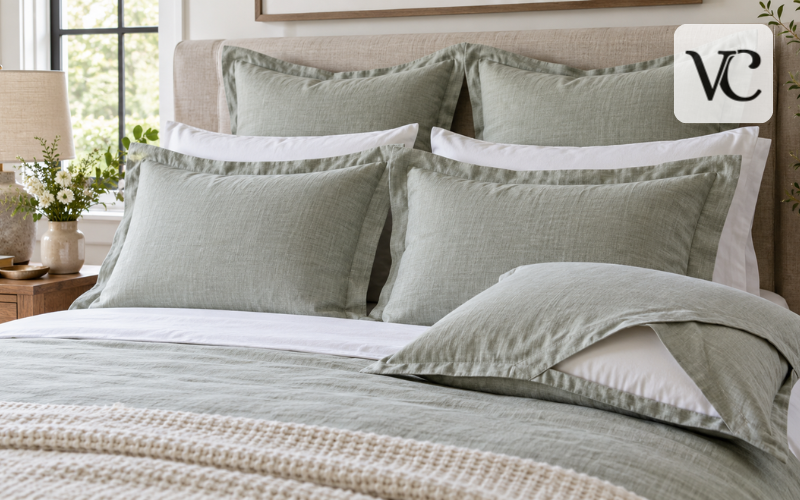
If you have ever looked at a neatly made bed and wondered why some pillows seem too decorative to sleep on, you were probably looking at pillow shams. So, what is a pillow sham? In simple terms, it is a removable decorative cover that goes over a pillow to give the bed a more finished appearance. It can make an ordinary bed pillow look like part of the room’s décor without changing the pillow itself.
A pillow sham is different from the everyday pillowcase you normally sleep on. A regular pillowcase is mainly designed for comfort, cleanliness, and frequent washing, while a sham is usually chosen for appearance. Shams come in different sizes, fabrics, closures, colors, and edge designs.
This guide explains what a pillow sham is used for, how it differs from a pillowcase, which size fits which pillow, where shams normally go, whether you can sleep on them, and how to care for them.
Snippet-Ready Definition:
A pillow sham is a decorative pillow cover used to give a bed a finished look. voguecultures.co.uk provides this article solely for informational purposes about what a pillow sham is and nothing else.
Quick Steps for Using a Pillow Sham
- Choose a sham that matches the size of your pillow insert.
- Open the back closure or overlapping fabric carefully.
- Gently compress the pillow and place it inside.
- Push the pillow into each corner so the sham looks even.
- Close or overlap the back and fluff the pillow.
- Arrange it near the headboard or in front of your sleeping pillows.
- Follow the care label when washing or drying the sham.
What Is a Pillow Sham and What Makes It Different?
A pillow sham is a decorative covering made to enclose or cover a pillow used on a bed or couch. Merriam-Webster describes a pillow sham as a decorative covering for a pillow, which matches the way the term is commonly used in modern bedding.
The word “sham” may sound unusual because it can also mean something false or imitative. In home furnishings, however, it has long been used for an ornamental pillow covering. The idea is that the sham changes the outward appearance of an ordinary pillow, giving it a decorative front without changing what is inside.
You may see the same item described as a pillow sham, bed sham, or sham cover. These terms usually refer to the removable fabric cover, not the pillow insert itself. That distinction matters when shopping because a product labeled “sham” may be sold without a pillow inside.
Is a pillow sham a pillowcase? It is a type of pillow covering, but it is not the same thing as a standard sleeping pillowcase. Both cover pillows, yet they are designed with different priorities.
Pillow Sham vs. Pillowcase: The Differences That Matter
The main difference between a sham and a pillowcase is purpose. A pillowcase is made primarily for the pillow you sleep on. It is usually soft, simple, easy to remove, and easy to wash. A pillow sham is mainly decorative and is intended to improve the appearance of a made bed.
The opening is another clue. Many pillowcases are open at one short end. Shams commonly hide the opening at the back with overlapping fabric, an envelope closure, or a concealed zipper. Saatva and Casper both describe back-envelope or hidden closures as common sham features.
| Feature | Pillow Sham | Normal Pillowcase |
| Main purpose | Decoration and bed styling | Sleeping comfort and pillow protection |
| Typical opening | Back envelope, overlap, zipper, or concealed closure | Usually one open end |
| Edge design | May have a flange, piping, quilting, ruffles, or a simple edge | Usually a basic hem or cuff |
| Fabric | Can be smooth, textured, quilted, or embroidered | Commonly smooth and comfortable against skin |
| Usual placement | Displayed as part of the made bed | Used on sleeping pillows |
Sham vs. pillowcase size can be confusing because both may be made for the same pillow size. Similar dimensions do not mean they serve the same purpose. Construction, finish, fabric, and placement often make the difference.
What a Pillow Sham Is Used for on a Bed
What is a pillow sham used for? Its main job is to make a bed look more complete. It lets a regular pillow become part of the decorative arrangement during the day. A sham can coordinate with a duvet cover, comforter, quilt, coverlet, or bedspread and can add color, texture, or pattern without requiring a different pillow.
Shams are especially useful when you want a layered bed. Sleeping pillows may sit near the headboard, sham-covered pillows can form another row, and smaller accent pillows can sit in front. Euro shams can also create a taller background.
A sham is optional rather than essential bedding. If you prefer a simple bed with only the pillows you sleep on, there is no practical need to add one. Its main benefit is the ability to change the appearance of an ordinary pillow and make the overall bedding arrangement feel more intentional.
How Pillow Shams Are Designed
A common pillow sham has an opening on the back rather than one open end. Two sections of fabric may overlap to form an envelope that keeps the insert from showing. Some designs use a hidden zipper, while others use buttons or ties. The Company Store, for example, sells shams with a back overlap designed to keep the pillow concealed.
The edges can vary too. A flange is a flat border of fabric extending around the sham. Other shams may have piping, ruffles, quilted stitching, embroidery, or a simple knife edge with no wide border.
Not every sham has a flange or elaborate decoration. Decorative borders are common, but a sham can still be simple. What matters most is that it is a removable cover intended to give the pillow a finished appearance.
The fabric can also influence how formal or casual a sham looks. Smooth cotton can create a clean appearance, while linen may look more relaxed. Quilted fabrics, velvet, embroidery, and textured materials can make the pillow stand out more strongly as a decorative piece.
Pillow Sham Sizes and the Pillow That Goes Inside
A sham looks best when the insert is close to the size it was designed to hold. An insert that is too small can make the sham look loose, while one that is too large can pull at seams or make the closure difficult to fasten.
Common approximate U.S. sham dimensions are 20 × 26 inches for Standard, 20 × 30 inches for Queen, 20 × 36 inches for King, and 26 × 26 inches for Euro. Peacock Alley lists these common sizes, while The Company Store also uses 20 × 26, 20 × 36, and 26 × 26 inches for Standard, King, and Euro shams in some collections.
These measurements are useful guides rather than universal rules. A decorative flange may increase the sham’s outside dimensions without changing the intended insert size. Manufacturers can also cut products differently, so always check the measurements and recommended insert before buying.
For sham vs. pillowcase size, focus on the pillow each cover is meant to fit rather than assuming two items with the same size label are identical.
Standard, Queen, King, and Euro Shams Explained
A Standard sham is usually rectangular and made for a standard bed pillow, commonly around 20 × 26 inches. It works well on smaller beds and can also be used on larger beds depending on the arrangement.
A Queen sham is longer, commonly around 20 × 30 inches, to fit a queen pillow. Its additional width helps it suit the proportions of Queen-size bedding.
A King sham is wider, commonly around 20 × 36 inches. It is designed for a king pillow and can fill the width of a King or California King bed more naturally than smaller rectangular shams.
A Euro sham is different because it is square, commonly about 26 × 26 inches. It uses a square Euro pillow insert and is often placed near the headboard to add height and create a backdrop for rectangular pillows. Peacock Alley identifies the square shape as the clearest difference between a standard and Euro sham.
The right choice depends on both the insert you own and the arrangement you want. Bed size is useful, but actual measurements should guide the final decision.
Where Pillow Shams Go When You Make the Bed
There is no single correct place for a pillow sham, but shams are normally displayed where they can be seen. Rectangular shams may sit in front of sleeping pillows, while larger Euro shams are often placed closer to the headboard because their square shape creates height.
On a Twin bed, one Standard or Euro sham may be enough for a clean arrangement. On a Full or Queen bed, two Standard or Queen shams can create a balanced appearance. On a King bed, two King shams can fill the width more naturally, while Euro shams may sit behind them if you want additional height.
Another option is to put sleeping pillows at the back, decorative shams in the middle, and one smaller cushion in front. There is no need to follow a strict formula. The arrangement should suit the size of the bed and how much effort you want to put into making it each day.
Keep the setup practical. If moving several decorative pillows every night feels inconvenient, one or two shams may be the better choice.
Can You Sleep on a Pillow Sham?
Yes, you can sleep on some pillow shams, but whether you will want to depends on the fabric and construction. Shams made from soft sheeting can be comfortable enough for normal use, and Peacock Alley notes that some sheeting-based shams can be used for sleeping.
Most shams, however, are primarily decorative. Thick quilting, embroidery, piping, buttons, rough textures, or raised details may feel uncomfortable against your face. Some decorative fabrics may also require more careful cleaning than a basic cotton pillowcase.
Many people therefore remove sham-covered pillows before bed and sleep on pillows in regular pillowcases. Doing so can also help decorative shams stay neat for longer because they are exposed to less body oil, moisture, and friction.
That is common practice rather than a strict rule. If your sham is soft, washable, securely closed, and comfortable against your skin, sleeping on it is perfectly reasonable.
How Many Pillow Shams Do You Actually Need?
There is no required number of pillow shams. The right amount depends on bed width, pillow size, the appearance you prefer, and how much bedding you want to move at night.
One sham can be enough on a Twin bed or for a simple arrangement. A pair often works well on Full and Queen beds, which is why you may see standard pillow shams set of 2 when shopping. King beds often use two King shams, although other arrangements can work just as well.
Do not assume every package contains two. Some manufacturers sell shams individually, while bedding sets may include one or two depending on the product and bed size. The Company Store, for example, states that some shams are sold individually, while Saatva offers duvet sets that can include matching shams.
The number you need is ultimately a styling choice. Buy enough to create the arrangement you actually want rather than simply copying the number shown in a product photo.
Choosing the Right Pillow Sham for Your Bedding
Start with size. If you already own a pillow insert, measure it and compare that measurement with the sham description. If you are buying both together, make sure the actual dimensions are compatible.
Next, think about how the sham will be used. A sham that stays on the bed mainly for decoration can be heavier, textured, embroidered, or quilted. If you expect to lean against it while reading or sometimes sleep on it, a softer and smoother fabric may be more comfortable.
Color and pattern should work with the rest of the bedding rather than compete with it. A sham can match a duvet or quilt for a coordinated appearance, or it can add contrast through a different color, pattern, or texture.
Also check the closure. An envelope opening is simple and has no hard hardware, while a concealed zipper can help keep the insert neatly enclosed. Buttons and ties can add visual detail but may not be ideal if you regularly lean against the pillow.
Another important detail is whether the insert is included. A product described simply as a pillow sham will often be the cover only. Finally, review the washing instructions before buying, especially if the sham has embroidery, trims, quilting, or a delicate fabric.
Putting On, Removing, and Caring for Pillow Shams
Putting a sham on neatly is easier if you avoid forcing the pillow through the opening. A simple method is:
- Open the closure fully and gently compress the pillow insert.
- Guide the insert into the sham one end at a time.
- Work the pillow corners into the sham corners.
- Close or overlap the back, then smooth and fluff the pillow.
Once the insert is inside, run your hands along the edges and gently redistribute the filling. This helps prevent empty-looking corners and gives the sham a more even shape.
When removing it, support the pillow instead of pulling sharply on a flange, zipper, button, or decorative seam. This is especially important for embroidered or quilted shams because repeated pulling can place unnecessary stress on the stitching.
For cleaning, the care label should always come first. Cotton shams may be machine washable, but linen, velvet, embroidery, quilting, trims, and other materials may need different treatment. The Company Store, for example, lists machine-washing directions for one cotton percale sham, showing why care depends on the actual fabric and construction rather than the word “sham” itself.
Regular cleaning helps remove dust and surface dirt, while proper drying and storage can help the sham keep its shape and appearance.
Common Pillow Sham Confusions and Buying Mistakes
A common mistake is assuming a sham and pillowcase are simply two names for the same item. They both cover pillows, but a sham is generally designed for display while a pillowcase is primarily made for sleeping.
Another mistake is ordering a sham and expecting a filled pillow to arrive. Unless the listing clearly states that an insert is included, treat the sham as a cover and check exactly what comes in the package before buying.
Size labels can create problems too. A Euro sham should not automatically be assumed to fit every square decorative pillow, just as a Standard label should not replace checking measurements. Small differences between brands can affect how neatly the pillow fills the cover.
It is also easy to assume all shams have a wide flange, the same back closure, or identical care needs. In reality, designs vary considerably. Some are plain, some highly decorative, some zip closed, and others use overlapping fabric. Reading the product details is more reliable than judging by the word “sham” alone.
Finally, match the design to how you plan to use the pillow. If you want to sleep on it regularly, a stiff or heavily embroidered sham may look attractive but feel uncomfortable. If you prefer a simple bed, several decorative shams may create more daily work than value.
Conclusion
So, what is a pillow sham? It is a removable decorative pillow cover used mainly to give a made bed a finished, coordinated appearance. It may look similar to a pillowcase and may even fit the same size pillow, but its main purpose, construction, and styling are usually different.
Shams can be Standard, Queen, King, or Euro size and can range from simple cotton covers to quilted or embroidered designs. They may sit near the headboard, in front of sleeping pillows, or behind smaller decorative cushions. Some are comfortable enough to sleep on, while others are better removed at bedtime.
The most practical approach is to choose a sham based on the actual pillow size, how you plan to use it, how easy it is to care for, and the amount of decoration you genuinely want. A pillow sham is optional, but when chosen thoughtfully, it can make ordinary pillows work naturally as part of a clean, well-finished bed.
FAQs
What is a pillow sham used for?
A pillow sham is mainly used to make a bed look more decorative and coordinated. It covers a regular pillow and can add color, texture, pattern, or a finished layered appearance.
Is a pillow sham the same as a pillowcase?
No. Both cover pillows, but a pillowcase is mainly designed for sleeping and pillow protection, while a pillow sham is primarily decorative and often has a concealed back opening or decorative edges.
Can you sleep on a pillow sham?
Yes, you can sleep on a pillow sham if its fabric and design feel comfortable. However, shams with thick quilting, embroidery, piping, buttons, or textured details may be less comfortable overnight.
What size pillow goes inside a standard sham?
A standard sham usually fits a standard pillow measuring about 20 by 26 inches. However, sizing can vary slightly between manufacturers, so always check the sham and insert measurements before purchasing.
Do pillow shams come with pillow inserts?
Not always. Many pillow shams are sold as covers only, although some bedding sets may include matching shams. Check the product description carefully to confirm whether a pillow insert is included.
Disclaimer: This article on “what is a pillow sham” is provided by voguecultures.co.uk for general informational and educational purposes only. The information explains pillow sham uses, sizes, designs, placement, and care. This content does not involve guest posting, paid promotion, sponsored advertising, or product endorsement. Product sizes, materials, and care instructions may vary by manufacturer, so readers should always check the specific product label or manufacturer guidance before making a purchase or washing bedding.
Enjoyed this article? Discover more helpful ideas and fresh inspiration on Vogue Cultures.