
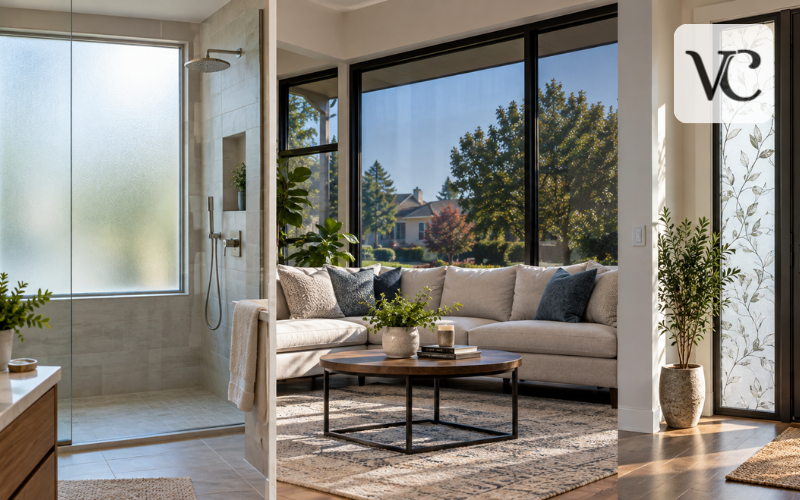
A window coating for privacy is a simple way to make glass less transparent without replacing the entire window. Depending on the product, it may blur the view, darken the glass, create a reflective surface, add a decorative pattern, or block the view almost completely. This can be useful in bathrooms, bedrooms, street-facing rooms, front doors, home offices, and other spaces where clear glass feels too exposed.
Most people searching for window coating for privacy are really comparing different types of privacy window film. Common choices include frosted film, one-way reflective film, tinted film, decorative film, removable static-cling film, and longer-lasting adhesive film. There are also spray-on or liquid frosted coatings, although these work differently from removable films.
The best choice depends on when privacy is needed, how much daylight you want to keep, whether you still want to see outside, and whether the treatment should be temporary or permanent. A film that works well in a sunny living room may be a poor choice for a bathroom at night, so the goal is to match the product to the space rather than choosing by appearance alone.
Snippet-Ready Definition:
Window coating for privacy helps reduce visibility through glass using frosted, tinted, reflective, or decorative films. Voguecultures.co.uk only provides informational content about window coating for privacy and does not sell or promote products.
Quick Guide Table
| Option | Privacy Level | Best Use | Night Privacy |
| Frosted Film | High | Bathrooms, bedrooms | Yes, depending on opacity |
| One-Way Film | High in daylight | Living rooms, offices | No |
| Decorative Film | Medium | Doors, kitchens | Varies |
| Tinted Film | Medium | Bright rooms | Limited |
| Opaque Film | Very High | Maximum privacy | Yes |
| Static-Cling Film | Varies | Rentals, temporary use | Depends on film type |
Quick Steps for Choosing Privacy Window Coating
- Decide whether you need privacy during the day, night, or both.
- Choose how much natural light you want to keep.
- Decide whether you still need to see outside.
- Check whether you prefer removable or adhesive film.
- Make sure the film is suitable for your type of glass.
- Read the manufacturer’s installation and care instructions before applying it.
What Window Coating for Privacy Actually Means
“Window coating” is a broad term. In everyday use, it may describe a film applied to glass, a tint that darkens it, a frosted layer that scatters light, or a spray-on finish that gives glass a cloudy appearance. These treatments all change visibility, but they do not provide the same level of privacy.
Privacy window film is usually a thin sheet placed on the glass. Some films use adhesive, while others cling without glue. Tint mainly reduces the amount of visible light and can make a window harder to see through under certain lighting conditions. Frosted treatments blur shapes on both sides of the glass. Liquid or spray coatings create a more permanent frosted effect and are not removed as easily as static-cling film.
Privacy does not always mean total blocking. Lightly frosted or patterned film may still show movement or silhouettes, while opaque film can block direct views much more strongly.
Main Types of Privacy Window Coatings and Films
Frosted and matte films are popular because they blur the view while allowing soft daylight to enter. They are often used where people want privacy without making the room feel closed in. LLumar notes that frosted decorative film can obscure views while maintaining natural light, which explains why this style is common in bathrooms and interior glass partitions.
One way privacy window film uses reflectivity to make the brighter side of the glass harder to see through. It is mainly a daytime solution, not a guaranteed 24-hour privacy treatment. Tinted films darken glass and may improve privacy in daylight, but their performance also depends on light levels.
Decorative and patterned films use textures, lines, colors, or frosted designs to break up the view. Blackout or opaque films go further by blocking most or all direct visibility. Finally, films can be divided by installation type: static-cling products are usually removable and reusable, while adhesive films are better suited to longer-term use. Static-cling products are especially useful for renters because they can be removed without the same commitment as permanent adhesive treatments.
Privacy Window Film Day and Night: Why Lighting Matters
The most important fact about privacy window film day and night is that lighting can completely change how some products perform. Reflective film depends on a light difference between the two sides of the glass. During the day, the outdoor side is usually brighter, so the exterior can appear mirror-like while people inside can still see out.
At night, the situation often reverses. If indoor lights are on and it is dark outside, the inside becomes the brighter side. This means a person outside may be able to see into the room. Both Gila and LLumar specifically warn that reflective privacy film provides daytime privacy and that visibility from outside increases after dark when indoor lights are on.
For rooms where privacy is needed at all hours, frosted or sufficiently opaque film is usually a better starting point. Even then, check the individual product because not every frosted pattern has the same opacity. If you choose reflective film for a living room or office, plan to use blinds, shades, or curtains at night when stronger privacy is required.
Frosted, One-Way, and Decorative Privacy Compared
These three styles solve different problems. Frosted film is useful when the main goal is to hide clear views while keeping a bright, soft look. It works from both sides of the glass and does not rely on a mirror effect. That makes it a practical choice for rooms that need consistent visual screening.
One-way reflective film is better when you want daytime privacy but still want to look outside. Its main weakness is nighttime performance. Decorative window film for privacy sits between function and appearance. A dense pattern may provide strong screening, while a light pattern may only reduce direct sightlines. LLumar’s decorative range, for example, includes products that provide anything from partial obscuring to stronger shielding while still allowing natural light.
Tinted film can reduce visibility in bright conditions but should not automatically be treated as full privacy film. In simple terms, frosted film balances privacy and daylight, reflective film supports daytime privacy with an outward view, decorative film adds style, and opaque film favors blocking the view.
Best Window Coating for Privacy by Room
The best window coating for privacy changes by room. Bathrooms usually need reliable day-and-night screening, so frosted or highly opaque film is often more suitable than reflective film. For shower-area glass, choose a product intended for the surface and moisture conditions. Bedrooms also benefit from stronger all-day privacy; frosted film or a film-plus-curtain combination can work well.
Living rooms and street-facing spaces may suit reflective film when daytime privacy and an outdoor view matter, but another covering may be needed at night. Front doors and sidelights often work well with frosted or decorative patterns.
Kitchens can use lighter decorative film for partial screening, while home offices and glass partitions often suit frosted, gradient, or patterned film. The important point is to match the amount of privacy to what actually happens in the room rather than using the same film throughout the home.
Static Cling, Peel-and-Stick, or Adhesive Film?
Static-cling film attaches without traditional glue. It is usually installed with water or an application solution and can often be removed and repositioned. This makes it attractive for renters, temporary projects, and people who like to change their décor.
A peel and stick window privacy film normally has an adhesive backing protected by a liner. Once the liner is removed, the film is positioned on the glass and bonded in place. Adhesive products are generally chosen when a longer-lasting installation is wanted.
Neither type is automatically better. Static cling is convenient and low-commitment, while adhesive film may stay in place more securely over a long period. Installation methods also vary by brand. Some films are applied wet, while others may have different instructions, so it is better to follow the manufacturer’s directions than assume every product installs the same way.
Before buying, check whether the film can be repositioned, removed cleanly, and used on your glass type.
How to Choose the Best Window Coating for Privacy
Start by deciding when privacy matters most. If you need privacy only during the day and want to keep a clear outward view, reflective film may be suitable. If you need privacy after dark as well, look first at frosted, opaque, or another product specifically designed for stronger all-day screening.
Next, think about light. A dark room may benefit from a translucent frosted film that softens the view but keeps much of the daylight. A very bright room may tolerate a darker tint or reflective finish.
Opacity matters because two films that look similar online may offer very different privacy. Check whether the product is described as semi-private, frosted, opaque, or blackout, and look for realistic sample images. Also decide whether you need removable static cling or a longer-term adhesive film.
The best window coating for privacy is the one that matches your room, lighting, and privacy needs. Terms such as “complete privacy” can sound convincing, but the manufacturer’s actual specifications and instructions are more useful when comparing products.
Finding the Best Window Privacy Film for Your Needs
When comparing products, privacy performance should come first. Ask what the film is expected to hide, under what lighting conditions, and whether silhouettes may still be visible. After that, compare room brightness, reflectivity, appearance, durability, and installation.
Some products list visible light transmission, which helps indicate how much light passes through. Darker film may suit a sunny room but feel too dim in a shaded one, while reflective finishes can also change the home’s exterior appearance. Measure the glass carefully before ordering and check the maker’s instructions, warranty, and compatible glass types.
There is no single best window privacy film for every home. A product that is excellent for a bathroom can be frustrating in a living room if it removes the outdoor view. In the same way, a reflective film that suits a sunny office may fail to provide the nighttime privacy needed in a bedroom.
Size is also easy to overlook. Measure each pane instead of assuming every window is identical, and make sure the roll provides enough material for proper trimming during installation.
DIY Window Coating for Privacy: Preparation and Installation
A DIY window coating for privacy can be manageable if the glass is prepared properly and the instructions are followed. Typical tools include a measuring tape, low-lint cloth, trimming tool, spray or application solution when required, and a squeegee or firm application card. Gila’s installation guidance uses these same basic tools for residential privacy film.
Measure the visible glass area first, then cut the film with a little extra material if the instructions recommend it. Clean the glass thoroughly because dust, hair, grease, or dried residue can become trapped under the film.
For wet-application products, the solution allows the film to slide into position before it is smoothed down. Work from the center outward, pushing liquid and bubbles toward the edges. Trim carefully without damaging the frame or seals, then allow the film to dry for the period stated by the manufacturer.
Common mistakes include installing over dirty glass, cutting too small, rushing the squeegee step, or ignoring curing time. Taking a little extra time during preparation usually produces a cleaner result than trying to correct dust or poorly aligned edges afterward.
Check Your Glass Before Applying Privacy Film
Not every film is suitable for every type of glass. Standard smooth glass is commonly compatible with many products, but textured, wired, laminated, tinted, tempered, insulated, and Low-E glass may require more careful product selection.
The key point is that compatibility is product-specific. LLumar says its architectural films can be used on dual-pane and most Low-E glass, but it also recommends selecting a film that matches the particular window construction. Its film-to-glass guidance evaluates factors such as glass type, pane construction, and Low-E performance.
Other products can have different restrictions. For example, 3M’s guidance for certain DIY sun-control films excludes wired, textured, patterned, triple-pane, damaged, and some other glass configurations.
That is why it is safer to check the exact product instructions and your window warranty before installation. Do not assume that a film described simply as “for windows” is automatically suitable for every window in the house.
Privacy Versus Natural Light, Heat, Glare, and UV Control
Privacy is often only one reason people consider window film. Some products can also reduce glare, reject part of the sun’s heat, or block a high percentage of ultraviolet radiation. However, those benefits differ greatly between products and should not be treated as universal features.
Darker and more reflective films may reduce brightness inside the room. Frosted and translucent privacy films can be better when keeping a soft, naturally lit space is the priority. Decorative films may also filter harsh light while adding privacy. LLumar describes decorative films as offering light filtering and varying levels of visual screening.
Solar-control films may provide stronger heat or glare benefits, but the exact performance should be checked in the manufacturer’s technical information. Some manufacturers advertise UV blocking up to 99 percent for particular film ranges, but that figure should never be applied automatically to every privacy film.
Choose privacy first, then compare secondary benefits such as heat, glare, and UV control. This helps prevent buying a high-performance solar film that still does not solve the privacy problem you originally wanted to fix.
Buying and Maintaining Privacy Window Film
When shopping, compare more than ratings and photos. Check film type, privacy level, size, installation method, glass compatibility, removal instructions, and warranty.
If you search for window coating for privacy Home Depot, for example, you may find frosted, mirrored, decorative, blackout, and static-cling products grouped together even though they perform very differently. The same applies to other retailers. Product category names can help narrow the search, but the specifications and installation instructions are more important than the star rating alone.
Pay particular attention to dimensions. A low-priced roll may not be good value if you need several pieces to cover one large window. It can also help to check whether the product is sold in enough sizes to reduce seams on wider panes.
After installation, clean the film gently according to the maker’s directions and avoid rough pads or sharp tools that could scratch it or lift the edges. Static-cling film is often easier to remove and may be reusable, while adhesive film usually takes more care. Replace film that becomes badly scratched, discolored, bubbled, peeling, or no longer private enough.
Conclusion
Choosing a window coating for privacy is easier when you begin with the room rather than the product. Decide whether you need daytime privacy, nighttime privacy, or both. Then consider whether you want to keep the outdoor view, how much daylight the room needs, and whether the treatment should be temporary or long lasting.
Frosted film is often a practical choice for steady privacy with diffused light. One-way reflective film can preserve the outside view during the day but should not be relied on for nighttime privacy. Decorative films add visual interest with different levels of screening, while opaque options are useful when blocking the view is the main goal.
Before installation, check the glass type and the exact manufacturer instructions. A well-chosen privacy film should match the room, the lighting conditions, and the way you actually use the space. That approach is more useful than choosing a product simply because it is labeled as the “best.”
FAQs
What is the best window coating for privacy?
The best option depends on your needs. Frosted or opaque film suits stronger day-and-night privacy, while reflective film works better for daytime privacy when you still want an outside view.
Does privacy window film work at night?
Some types do. Frosted and opaque films can provide privacy after dark, but one-way reflective film may lose its privacy effect when indoor lights are brighter than outside.
Can privacy film still let natural light into a room?
Yes. Frosted, translucent, and some decorative films can reduce visibility while still allowing natural light through, although the amount of light depends on the film’s color and opacity.
Can renters use window privacy film?
Yes. Static-cling privacy film is often suitable for renters because it can usually be removed without permanent adhesive. Always check the product instructions and rental rules before installation.
Is every privacy window film safe for all glass?
No. Some films may not suit certain Low-E, insulated, textured, laminated, tinted, or specialty glass. Always check the film manufacturer’s compatibility instructions and your window warranty first.
Disclaimer: This article on window coating for privacy is provided by voguecultures.co.uk for general informational and educational purposes only. We are only sharing information about privacy window coatings, films, installation considerations, and related options. This content does not represent professional installation advice, product endorsement, guest posting, paid promotion, sponsored content, or advertising. Product features, compatibility, privacy performance, and installation requirements can vary. Readers should always check the manufacturer’s instructions, specifications, and applicable window warranty before choosing or installing any privacy coating or film.
Enjoyed this article? Discover more helpful ideas and fresh inspiration on Vogue Cultures.



