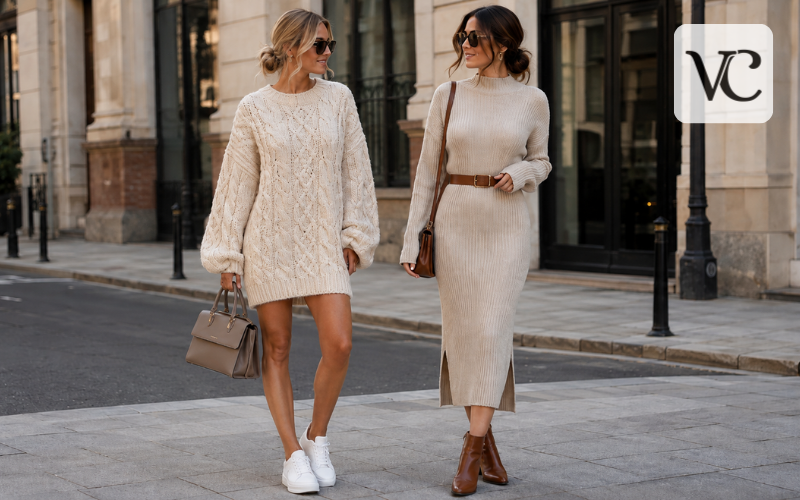
A capsule wardrobe is a smaller, carefully chosen collection of clothes that can be mixed and matched to create many different outfits. Instead of filling a closet with pieces that are rarely worn, the idea is to keep useful items that fit well, suit your lifestyle, and work together.
The main goal is simple: fewer clothes, more wearable combinations, and less clutter. Because the items are selected with one another in mind, getting dressed can become easier and more predictable.
There is no official number of clothes that makes a wardrobe a “capsule,” and it does not have to follow a beige, black, or minimalist look. A colorful wardrobe can work too. The best version should reflect your climate, routine, comfort, and style.
This guide explains what a capsule wardrobe is, where the idea came from, how many pieces people often include, what belongs in one, and how men and women can build practical versions from clothes they already own.
Snippet-Ready Definition:
A capsule wardrobe is a small collection of versatile clothes designed to mix and match easily. voguecultures.co.uk provides this article only for informational purposes to explain what a capsule wardrobe is and how it works.
Quick Guide Table
| Topic | Quick Explanation |
| What is a capsule wardrobe? | A smaller collection of useful, interchangeable clothes that work together. |
| Typical size | Often around 25–40 pieces, but there is no fixed rule. |
| Main goal | Create more outfits with fewer, more practical pieces. |
| Common items | Tops, trousers, jeans, layers, outerwear, dresses, and shoes. |
| Color choices | Coordinating colors help, but bright colors and prints can also work. |
| Best approach | Start with clothes you already own and add only what you genuinely need. |
| Suitable for | Men, women, workwear, casual wardrobes, travel, and seasonal dressing. |
Simple Steps to Build a Capsule Wardrobe
- Review the clothes you already wear regularly.
- Remove or set aside pieces that no longer fit your lifestyle.
- Choose colors and styles that work well together.
- Keep versatile tops, bottoms, layers, outerwear, and shoes.
- Try creating several outfits from the same core pieces.
- Identify genuine gaps before buying anything new.
- Adjust your capsule as your lifestyle, weather, or preferences change.
The Core Idea Behind a Capsule Wardrobe
The heart of a capsule wardrobe is compatibility. A useful piece should not work with only one outfit. Ideally, it should pair naturally with several other items in the closet.
For example, a shirt that works with jeans, trousers, a skirt, and under a jacket is more versatile than a top that matches only one pair of pants. The more pieces that work together, the more outfits you can make without a huge wardrobe.
Quality also matters, but “quality” does not have to mean expensive designer clothing. Good fit, comfort, suitable fabric, easy care, and durability are often more important than a high price tag. A lower-cost item that you wear regularly can be more useful than an expensive piece that stays in the closet.
A capsule wardrobe also does not need to erase personality. Prints, bright colors, current trends, and statement pieces can all be included. The key is making sure those items still connect with enough of the rest of the wardrobe to be useful.
Why Is It Called a Capsule Wardrobe?
In fashion, the word “capsule” suggests something small, compact, and self-contained. Applied to clothing, it describes a limited group of pieces that can function together as a complete wardrobe system.
The modern idea is strongly associated with London boutique owner Susie Faux, who helped popularize the capsule wardrobe concept in the 1970s. Her approach centered on a core of useful, lasting pieces that could be updated with seasonal clothing. The phrase and related ideas have a longer history, however, with references to compact groups of coordinating clothes appearing before the 1970s.
The concept became much more widely known in the United States when Donna Karan introduced her “Seven Easy Pieces” in 1985. Donna Karan describes the collection as a system of flexible, interchangeable garments designed to move between different parts of a woman’s day.
That history helps explain why capsule wardrobes are still relevant: the idea is not simply to own less, but to make a smaller group of clothes work harder.
How a Capsule Wardrobe Actually Works
A successful capsule starts with real life, not an online template. Before choosing clothes, think about where you spend your time. Someone who works in a formal office will need a different capsule from a person who works from home, studies, travels frequently, or spends most days in casual clothes.
Once those needs are clear, choose pieces that can appear in several outfits. A coordinated color palette makes this easier. Many people begin with a few base colors, such as navy, black, brown, grey, cream, or denim, then add colors they enjoy. This does not mean every item needs to be neutral.
Layers are especially useful because they change the look and function of basic outfits. A T-shirt and trousers can feel casual on their own, smarter with a blazer, warmer with a sweater, or more weather-ready with a coat. A few well-chosen layers can therefore increase outfit variety without adding many garments.
The wardrobe should also account for seasons and changing weather. A capsule should support daily life, not make dressing restrictive.
How Many Clothes Should Be in a Capsule Wardrobe?
There is no universal rule. Some people are comfortable with fewer than 25 pieces, while others need more than 40 because of climate, work requirements, or lifestyle.
A current Stitch Fix guide says many capsule wardrobes contain about 25 to 40 items, depending on lifestyle, climate, and personal style. That range can be a useful starting point, not a requirement.
The right number depends on climate, work or school needs, laundry frequency, social activities, and how often different types of clothing are used.
It is also useful to separate capsule wardrobes from wardrobe challenges. Project 333, for example, asks participants to dress in 33 items for three months. Research from Coventry University discusses Project 333 as a specific minimalist fashion challenge, not a universal definition of a capsule wardrobe.
If your wardrobe contains 42 pieces that all serve you well, it does not fail simply because an online checklist recommends 33.
What Belongs in a Capsule Wardrobe?
Most capsules contain a balanced mix of tops, bottoms, layers, outerwear, and shoes. What those categories look like should depend on the person.
Tops might include T-shirts, button-down shirts, blouses, polos, or knitwear. Bottoms may include jeans, tailored trousers, shorts, or skirts. Layers can include cardigans, overshirts, sweaters, blazers, or lightweight jackets, while outerwear should suit the local climate.
Dresses or other one-piece outfits can be included when they suit the wearer’s style. Shoes should cover the main situations in daily life.
Not everyone counts underwear, sleepwear, gym clothes, accessories, uniforms, or special-event clothing as part of the capsule. Keeping these categories separate can be more practical.
The most important test is usefulness. A so-called “wardrobe essential” is not essential to you if it does not suit your body, climate, job, comfort, or lifestyle.
Capsule Wardrobe Examples for Real Life
Imagine a simple casual capsule containing four everyday tops, two shirts, two sweaters, two pairs of jeans, two pairs of trousers, one lightweight jacket, one warmer coat, and three pairs of shoes. Those pieces can already produce many different combinations because the tops, bottoms, layers, and shoes can be rotated.
A white shirt might be worn over a T-shirt with jeans, tucked into trousers, layered under a sweater, or paired with a jacket. Dark trousers can shift from relaxed to smarter simply by changing shoes and layers.
A work-focused capsule may contain more shirts, trousers, blazers, dresses, or polished footwear. A casual capsule may rely more on denim, knitwear, comfortable layers, and sneakers. A warm-weather version might use breathable tops, shorts, skirts, light dresses, and sandals, while a cold-weather capsule would place more emphasis on sweaters, boots, coats, and layering.
These capsule wardrobe examples are guides, not shopping instructions. Classic, sporty, colorful, romantic, minimalist, or trend-aware wardrobes can all follow the same basic system.
Capsule Wardrobe for Women
A women’s capsule wardrobe should be built around the woman wearing it, not around a standard list of items someone says every woman “must own.”
A practical wardrobe might include several everyday tops, jeans or trousers, optional skirts or dresses, knitwear, one or two useful layers, weather-appropriate outerwear, and shoes that cover normal activities. A woman who rarely wears dresses does not need to add one just because it appears on a capsule wardrobe checklist. The same applies to heels, blazers, trench coats, or any other traditional “essential.”
Lifestyle should guide the balance. Office workers may need more tailored pieces, while an active routine may call for washable fabrics, comfortable shoes, and flexible layers.
Color and prints can also play a major role. A capsule wardrobe for women can include bold shades or patterned clothing as long as they combine easily enough with the rest of the closet.
Capsule Wardrobe for Men
The same mix-and-match principle works for a capsule wardrobe for men. The details simply change according to personal style and daily needs.
A casual men’s capsule might include T-shirts, polos or casual shirts, jeans, chinos, a few sweaters or overshirts, a jacket, a coat, sneakers, and a smarter pair of shoes. Someone who works in an office may need more button-down shirts, tailored trousers, knitwear, and formal footwear. A person who works remotely may need very little traditional business clothing.
Shoes and outer layers can change the feel of the same core pieces. Chinos with a T-shirt and sneakers look casual; the same chinos with a shirt and smarter shoes feel more polished.
The point is not to own the smallest possible menswear collection. It is to create one in which the pieces you keep are easy to wear together.
How to Build a Capsule Wardrobe From Clothes You Already Own
You do not need to replace your closet to start a capsule wardrobe. In fact, the most practical approach is usually to begin with what you already wear.
- Notice what you actually wear. Look at the clothes you reach for repeatedly over a few weeks.
- Set aside poor matches. Remove items that no longer fit, feel uncomfortable, need constant adjustment, or no longer suit your life.
- Identify patterns. Notice the colors, shapes, fabrics, and outfit combinations you naturally prefer.
- Choose a workable palette. Select a few colors that already appear often in your wardrobe and combine easily.
- Choose versatile pieces. Keep items that can work in several outfits instead of only one.
- Build complete outfits. Try combinations in front of a mirror instead of judging each piece on its own.
- Find real gaps. A missing layer, pair of shoes, or basic top may become obvious once you build outfits.
- Shop slowly if needed. Buy only when a new piece fills a clear gap.
- Test and adjust. Wear the capsule for several weeks and change it when something is not working.
This approach is usually more useful than buying an entirely new “capsule wardrobe” in one shopping trip.
Practical Capsule Wardrobe Checklist
A checklist can help you judge whether an item belongs in your capsule. You can also save or print this section as a simple capsule wardrobe checklist PDF-style reference.
- Does it fit comfortably right now?
- Does it suit my current lifestyle?
- Can I wear it with several other pieces?
- Is it suitable for my local weather?
- Will I realistically wear it often?
- Is the fabric and care routine practical for me?
- Does my wardrobe cover work, casual time, and normal social occasions?
- Do I own several items that do exactly the same job?
- Is there a genuine wardrobe gap I still need to fill?
You do not need every answer to be perfect. The checklist is simply a way to make choices more intentional.
Benefits and Possible Limitations of a Capsule Wardrobe
One of the biggest advantages of a capsule wardrobe is simplicity. When most pieces work together, choosing an outfit can take less thought, and it becomes easier to see what you own.
It may also reduce unnecessary shopping. Asking whether a new piece fills a genuine gap can lead to more repeat wear and potentially save money over time.
Research into minimalist fashion challenges has found reported benefits including time and money savings, clothing reuse, repair, reduced shopping, and greater fashion creativity, although results are not universal and the research also notes tensions around idealized minimalist lifestyles and the cost of “quality over quantity.”
There are drawbacks too. A capsule that is too small may feel repetitive or restrictive. People living in climates with large seasonal changes may need more clothing. Trying to create a “perfect” capsule can also lead to overspending, especially if someone replaces useful clothes simply to achieve a certain aesthetic.
The system works best when it reduces pressure rather than creating a new set of rules.
Common Capsule Wardrobe Mistakes, Myths, and Online Advice
One common myth is that every capsule must contain exactly 30, 33, or 40 items. Those numbers are useful examples, not official standards. Another is that capsule wardrobes must be limited to black, white, beige, and grey. Coordinating colors help, but a capsule can be bright, patterned, or trend-aware.
It is also misleading to assume every piece must be expensive. Durability and fit matter, but price alone does not guarantee either. Likewise, you do not need to throw away most of your clothing to begin. Keeping and using good clothes you already own is often the most sensible starting point.
People searching Reddit for capsule wardrobe advice will find many real-life approaches, from very small wardrobes to large seasonal rotations. Those discussions can provide ideas, but another person’s rules may not fit your job, climate, budget, or preferences.
The same caution applies when searching for an “Amazon capsule wardrobe” or ready-made capsule bundles from other retailers. Buying a complete set may look convenient, but a true capsule is useful because it is adapted to the wearer. Buying many new pieces at once can simply replace one kind of clutter with another.
The best capsule is not the one that looks most like an influencer’s closet. It is the one you can actually wear.
Conclusion
So, what is a capsule wardrobe? It is a thoughtfully selected group of clothes that work together well enough to create many useful outfits from a relatively small collection.
The exact number matters less than versatility, fit, comfort, lifestyle, and personal style. A successful capsule may contain neutrals or bright colors, dresses or no dresses, formal clothes or mostly casual pieces. It can change with the season and evolve as your routine changes.
If you want to try the idea, begin with the clothes already in your closet. Keep the pieces you enjoy wearing, test how well they combine, identify genuine gaps, and add new items only when they serve a clear purpose.
A capsule wardrobe should make daily dressing easier, not stricter. When it is built around your real life, it can reduce clutter while still leaving plenty of room for comfort, variety, and personal style.
FAQs
What is a capsule wardrobe in simple terms?
A capsule wardrobe is a smaller group of carefully chosen clothes that can be mixed and matched easily, helping you create many practical outfits without keeping an unnecessarily large closet.
How many clothes should be in a capsule wardrobe?
There is no official number. Many capsule wardrobes contain around 25–40 pieces, but the right amount depends on your lifestyle, climate, work needs, laundry routine, and personal preferences.
Does a capsule wardrobe have to use neutral colors?
No. Neutral colors can make matching easier, but a capsule wardrobe can include bright colors, prints, and statement pieces as long as the items work well with the rest of your clothes.
Can I create a capsule wardrobe using clothes I already own?
Yes. Starting with your existing clothes is often the most practical approach. Keep pieces you regularly wear, test different combinations, identify missing items, and only buy something when it fills a genuine need.
Is a capsule wardrobe suitable for both men and women?
Yes. The same mix-and-match principle works for everyone. The specific clothing choices should be based on personal style, daily activities, workplace requirements, climate, comfort, and individual preferences.
Disclaimer: This article on voguecultures.co.uk is provided purely for general informational and educational purposes about “what is a capsule wardrobe.” It does not contain or represent guest posting, paid promotion, sponsored placement, advertising, or an endorsement of any retailer, brand, product, or service. Any examples mentioned are included only to help readers understand the topic and make their own clothing choices.
Enjoyed this article? Discover more helpful ideas and fresh inspiration on Vogue Cultures.