A noisy door can be annoying, especially when it wakes someone at night or makes every trip through a room impossible to ignore. In most cases, the sound comes from dry or dirty hinge parts rubbing against each other. The hinge pin turns slightly inside the hinge barrel whenever the door moves. Without enough lubrication, that movement can create a sharp metallic squeak.
Learning how to fix a squeaky door is usually simple. A light squeak may disappear after a few drops of oil or a careful spray of lubricant. A stubborn hinge may need to be opened, cleaned, and greased. When the sound is more like rubbing, scraping, or creaking wood, the real problem may be loose screws, a sagging door, or an edge that is touching the frame.
Start with the easiest and least invasive repair. Listen closely, inspect the hinges, tighten anything loose, and then apply a suitable lubricant. Only remove a hinge pin when surface lubrication does not solve the noise. This approach keeps the job clean, reduces unnecessary work, and helps you correct the actual cause rather than covering it for a few days.
Quick Guide: Best Fix for Each Squeaky Door Problem
| Door problem | Likely cause | Recommended fix | Best product |
| Light metallic squeak | Dry hinge pin | Lubricate without removing the pin | Silicone spray or light machine oil |
| Loud or recurring squeak | Dirt, rust, or dried grease | Remove and clean the hinge pin | White lithium grease |
| Loose or uneven door | Loose hinge screws | Tighten or replace damaged screws | Correct screwdriver and suitable screws |
| Door rubbing on frame | Sagging, swelling, or poor alignment | Adjust hinges or lightly sand the contact area | Fine-grit sandpaper |
| No commercial lubricant available | Dry hinge with no major damage | Apply a temporary household solution | Petroleum jelly or paraffin wax |
Step-by-Step Guide to Fixing a Squeaky Door
- Open and close the door slowly to identify the noisy hinge.
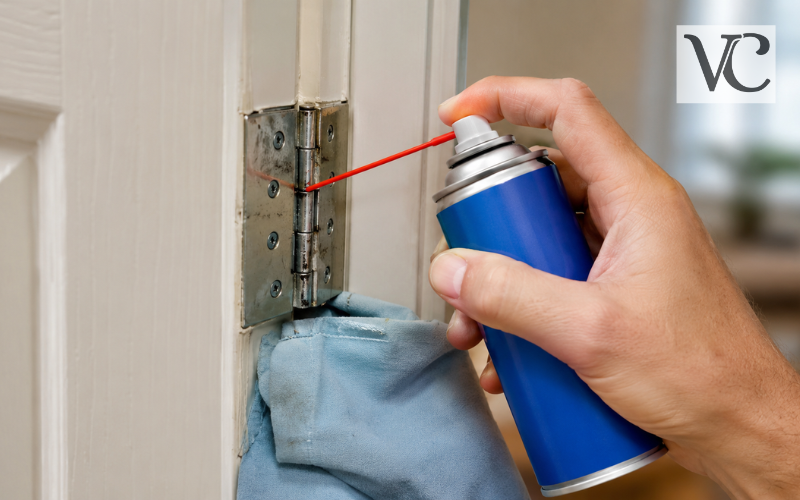
- Place a cloth beneath the hinge to catch oil or spray.
- Tighten any loose hinge screws.
- Apply a small amount of silicone spray, machine oil, or white lithium grease.
- Move the door back and forth several times to spread the lubricant.
- Wipe away any excess product.
- If the squeak remains, remove and clean one hinge pin at a time.
- Check the door alignment if you hear scraping instead of a metallic squeak.
Why Door Hinges Start Squeaking
A hinge is made of metal leaves joined around a removable or fixed pin. As the door opens, the hinge parts move against the pin. A thin layer of lubricant normally keeps that movement smooth. Over time, the lubricant can dry out, run away, or collect dust. Bare metal then rubs against metal and produces the familiar squeak.
Rust and grime can make the noise worse. Moisture may reach hinges near bathrooms, kitchens, exterior doors, or humid rooms. Fine dirt can also settle inside the hinge joints and form a rough paste with old oil. In these cases, adding more lubricant may quiet the door briefly, but cleaning the pin often gives a better result.
Not every squeak begins inside the hinge. Loose hinge screws can allow the door to shift each time it moves. A heavy door may sag and pull the hinges out of line. Wood can also swell during humid weather and rub against the frame. A sharp, high sound usually points to dry metal, while a dull scrape or creak often suggests alignment or wood-to-wood contact.
Quick Checks Before Applying Lubricant
Open and close the door slowly while standing near the hinges. Try to identify whether the sound comes from the top, middle, or bottom hinge. You can place a finger lightly on each hinge leaf as the door moves, keeping it away from the gaps. The hinge producing the strongest vibration is often the noisy one.
Next, inspect the screws. Use the correct screwdriver and gently test each screw in the door and frame. Tighten loose screws until they are firm, but do not force them because over-tightening can damage the screw hole. Look for orange rust, dark oily buildup, metal dust, chipped paint, or shiny rubbing marks along the door edge.
Before using any spray or oil, place an old cloth beneath the hinge. A second cloth behind it can protect painted walls or trim from overspray. Read the product label, ventilate the area when using an aerosol, and keep the lubricant away from flames. These small steps make the repair cleaner and help prevent stains on flooring, paint, or nearby furniture.
Best Lubricant for Squeaky Door Hinges
The best lubricant for squeaky door hinges depends on how severe the noise is and how long you want the repair to last. Silicone spray is easy to apply and can reach narrow spaces around a hinge pin. It is a useful choice for a light indoor squeak, especially when you want a thin coating and controlled application. Silicone lubricants are commonly intended for hinges and other moving parts.
White lithium grease is thicker and stays on metal surfaces longer. It works well for stubborn or frequently used hinges because it forms a more durable layer between metal parts. Official product guidance describes white lithium grease as suitable for metal-to-metal applications and hinges. However, it can be more visible and messy than a light oil, so use only a small amount and wipe away the excess.
Light machine oil, including 3-IN-ONE Multi-Purpose Oil, is simple to control with a drip bottle. It is a good everyday option for indoor door hinges and moving metal parts. It may run downward when too much is applied, so a few drops are usually enough. The manufacturer lists hinges among the intended uses for its multi-purpose oil.
How to Fix Squeaky Door Hinges Without Removing Them
To fix squeaky door hinges without removing the pins, close the door and place a cloth beneath the noisy hinge. Aim the spray straw or bottle tip at the small gaps where the hinge sections meet. Apply a very small amount near the top and middle joints. More product does not always work better; too much simply runs down the hinge and attracts dirt.
Open and close the door ten to fifteen times. This movement helps draw the lubricant around the pin and into the hinge barrel. Pause and listen. When the sound is quieter but still present, add one more light application and move the door again. A precision straw or narrow applicator makes it easier to reach the joint without coating the wall or door. WD-40 and specialist silicone products are both marketed for targeted use on hinges.
Once the squeak stops, wipe the hinge from top to bottom. Check the floor for drops, and clean any product from painted surfaces according to the label. When two careful applications make no difference, stop adding oil. The pin may be dirty, rusted, bent, or poorly aligned, and it will probably need closer attention.
How to Fix a Squeaky Door Without Taking It Apart
A door does not need to be disassembled for most minor squeaks. Begin by treating one hinge at a time rather than covering all of them at once. This helps you find the real source and prevents unnecessary mess. Use a precision nozzle for spray lubricant, a dropper for machine oil, or a cotton swab for petroleum jelly.
Apply the lubricant at the hinge joints, especially around the top of the pin and the spaces between the hinge knuckles. Let gravity and door movement carry it inward. Swing the door through its normal range several times, then wipe the outside clean. When the sound changes location, repeat the same controlled process on the next hinge.
Do not keep flooding the hinge when the first treatment fails. A hinge filled with old dust and dried grease may not allow fresh lubricant to reach the rubbing surfaces. Repeated spraying can also stain trim or flooring. When the noise remains sharp and metallic after two light treatments, removing and cleaning the pin is usually more effective than adding more product.
Using 3-in-1 Oil for Squeaky Doors
3-IN-ONE oil is a practical choice for a standard indoor hinge because the bottle allows you to place a small amount exactly where it is needed. The official product information lists hinges among the moving parts that can be lubricated with its multi-purpose oil.
Hold a folded cloth below the hinge, then place one or two drops at the top of the hinge pin and one drop at each visible joint. Open and close the door several times so the oil works downward. When the hinge still squeaks, wait a moment and add another drop rather than squeezing a large amount at once.
After the sound stops, wipe the hinge carefully. Light oil can collect dust or slowly move down the hinge, so removing the excess matters. It may also need reapplication after months of frequent use, especially on a busy door. When the same hinge becomes noisy again very quickly, clean the pin and inspect the screws instead of continuing to add oil.
How to Fix a Squeaky Door Hinge Without WD-40
You do not need WD-40 to silence a hinge. Silicone spray is a clean, easy option for a light squeak. Light machine oil is useful when you want precise drops and have a normal indoor hinge. White lithium grease is better suited to persistent metal-on-metal friction or a hinge that sees heavy use because its thicker coating tends to remain in place longer. Product guidance for silicone lubricant and white lithium grease specifically includes hinges among their uses.
Petroleum jelly can work when a commercial lubricant is unavailable. Apply a thin film around the visible joints with a cotton swab, or coat a removed pin for better coverage. It is thicker than cooking oil and usually creates less dripping, although it is still best treated as a convenient household solution rather than a specialist product.
Match the repair to the condition of the hinge. Use a thin lubricant for a mild squeak on a clean hinge. Choose grease for persistent friction. When you can see rust or black buildup, remove and clean the pin before applying anything new. Lubricant works best on clean, straight parts that are firmly attached.
WD-40 and Squeaky Doors: What It Can and Cannot Do
WD-40 Multi-Use Product can be used on squeaky hinges. Its manufacturer states that it lubricates moving parts, displaces moisture, helps loosen stuck parts, and is suitable for hinges. A precision straw can direct the spray into the hinge joints, which makes it useful when grime, light corrosion, or moisture is part of the problem.
The important point is that “WD-40” can refer to different products. The classic Multi-Use Product is not the same as WD-40 Specialist Silicone or White Lithium Grease. The specialist products are designed for particular lubrication jobs, while the Multi-Use Product has a wider range of cleaning, penetrating, moisture-displacing, and lubricating uses.
For a lightly dirty hinge, apply a small amount, move the door, and wipe away the loosened grime. When the hinge becomes noisy again soon, clean it more fully and follow with a lubricant that remains on the metal longer, such as silicone lubricant, machine oil, or white lithium grease.
Avoid soaking the hinge or assuming one product can correct every problem. No lubricant will permanently fix a loose screw, bent hinge, damaged pin, or badly aligned door.
Deep Cleaning a Stubborn Hinge Pin
When surface lubrication does not work, close the door and support its weight with a wooden wedge, folded cardboard, or another stable spacer. Work on only one hinge pin at a time so the remaining hinges continue to hold the door. Never place your fingers between the door and frame while tapping the pin.
Place a nail set, sturdy nail, or small screwdriver against the bottom of the pin and tap upward gently with a hammer. Once the head rises, pull the pin out with pliers when needed. Some modern or security hinges have fixed or non-removable pins, so do not force a pin that appears designed to remain in place.
Wipe the pin with a cloth. Use fine steel wool or a gentle scouring pad to remove surface rust and hardened buildup. When corrosion is heavy, the pin may need replacement. After cleaning, dry it completely and inspect it for bending, deep pitting, or other damage.
Coat the clean pin lightly with white lithium grease, machine oil, or petroleum jelly. Slide it back into the hinge and tap it down gently. Open and close the door to spread the lubricant, then wipe away anything pushed out from the top or bottom. Repeat the process on another hinge only when that hinge is also making noise.
Household Alternatives for a Temporary Fix
A household product can quiet a door when proper hinge lubricant is unavailable, but the result may be temporary. Petroleum jelly is one of the cleaner choices because it is thick and easy to control. Apply a very thin amount at the joints with a cotton swab, or coat a removed pin before reinstalling it.
Paraffin candle wax can also reduce friction on a removable hinge pin. Rub a light layer over the clean pin, then place it back inside the hinge. Plain bar soap may work in a similar way, although it should be used sparingly and kept away from painted areas that may show residue.
Cooking oil or olive oil can silence a mild squeak, but use only one or two drops. Vegetable oils may become sticky, collect dust, develop an unpleasant smell, or leave stains over time. For that reason, they are better used only as a short-term emergency measure. Clean away any excess and replace the temporary product with a proper lubricant when convenient.
Avoid pouring large amounts of any household liquid into the hinge. The goal is to create a thin layer between moving parts, not to soak the door, frame, or floor.
Tightening Loose Hinges and Correcting Door Alignment
When lubrication does not change the sound, check how the door sits in the frame. The gap around the door should look reasonably even. A sagging door often has a tight gap near the top on the latch side and a wider gap elsewhere. It may also drag on the floor or require lifting before the latch closes.
Tighten every hinge screw with the correct screwdriver. Support the door while doing this so its weight does not continue pulling against the hinge. Tighten each screw until it is firm, but stop before you damage the head or strip the hole.
When a screw turns without becoming tight, the hole may be stripped. A longer screw of the correct type can sometimes reach stronger wood behind the door jamb. However, do not install an unusually long or wide screw without considering what may be hidden behind the frame, such as wiring or plumbing. Ask a qualified carpenter or handyman when the correct repair is unclear.
Also inspect the hinge leaves. They should sit flat against the door and frame. Bent leaves, a loose jamb, or a pin that no longer sits straight can create noise even when the hinge is well lubricated. Correcting the alignment usually gives a longer-lasting result than repeatedly spraying the same hinge.
Fixing Scraping, Binding, and Wood-on-Wood Noise
A scraping door makes a different sound from a dry hinge. Look for chipped paint, polished wood, dark marks, or a worn line along the top, side, or bottom edge. These marks show where the door is touching the frame. Humidity can cause wood to swell, while loose hinges can allow the door to drop and rub.
Correct hinge problems before sanding the door. Tightening a loose top hinge may lift it enough to restore the gap. Sanding first could remove wood unnecessarily while leaving the real alignment problem unfixed.
When the door is still binding and the frame appears sound, mark only the exact contact area. Remove a small amount with fine-grit sandpaper, then test the door again. Work slowly because removing too much material can leave a large, uneven gap that allows drafts, noise, or light to pass through.
Bare wood should be sealed or repainted after sanding so it does not absorb moisture easily. When the door suddenly begins to bind badly, the frame appears uneven, or cracks develop nearby, the cause may be more serious than seasonal swelling. A carpenter should inspect severe or recurring movement rather than continuing to trim the door.
Conclusion: Keep the Door Quiet for Longer
The simplest way to understand how to fix a squeaky door is to identify the type of sound before choosing a repair. A sharp metallic squeak usually improves with a small amount of silicone spray, machine oil, or white lithium grease. A stubborn hinge may need its pin removed, cleaned, dried, and lubricated. A dull scrape or creak often points to loose screws, sagging hardware, or a door rubbing against the frame.
Use lubricant sparingly, move the door to spread it, and wipe away the excess. Check hinge screws during normal home maintenance and deal with rust before it becomes severe. These small steps can keep a door moving quietly without leaving oily marks around the hinge.
When the noise keeps returning, do not continue covering it with more spray. Inspect the pin, hinge leaves, screws, door gap, and frame. Replacing a damaged hinge or correcting the door’s alignment is often the cleanest and most lasting solution.
Frequently Asked Questions
What is the best lubricant for squeaky door hinges?
Silicone spray and light machine oil work well for mild indoor squeaks. White lithium grease is often better for stubborn hinges because its thicker coating stays on the metal longer.
Can I fix a squeaky door without removing the hinge pin?
Yes. Apply a small amount of lubricant into the gaps between the hinge joints, then open and close the door several times. This method usually works when the hinge is clean.
Is WD-40 suitable for a squeaky door?
WD-40 Multi-Use Product can loosen grime, reduce moisture, and temporarily quiet a hinge. However, a dedicated silicone lubricant, machine oil, or white lithium grease may provide longer-lasting lubrication.
Can cooking oil be used on squeaky door hinges?
Cooking oil may stop a light squeak temporarily, but it can become sticky and attract dust. Use only a few drops and replace it with a proper hinge lubricant later.
Why does my door still squeak after lubrication?
The hinge pin may be rusty, dirty, bent, or poorly aligned. Loose screws and a sagging door can also cause noise, so inspect the hardware and door frame carefully.
Disclaimer: This article provides general home-maintenance guidance. Always follow the lubricant manufacturer’s safety instructions, protect nearby surfaces, and support the door before removing hinge pins. Seek professional help if the door is unusually heavy, badly misaligned, damaged, or difficult to handle safely.
Enjoyed this article? Discover more helpful ideas and fresh inspiration on Vogue Cultures.