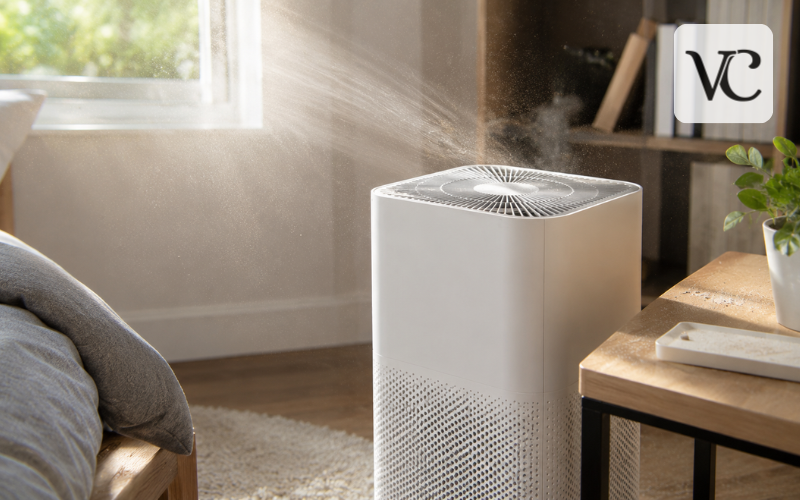
Yes, an air purifier can help with dust, but it is important to understand what it actually does. A purifier removes dust particles that are still floating in the air. By catching those particles before they land, it may reduce how quickly dust builds up on furniture, floors, bedding, and other surfaces.
However, an air purifier cannot pull dust out of carpets or lift it from a shelf after it has settled. Existing dust still needs to be removed with a vacuum, a damp microfiber cloth, or regular washing. The best results come from using air filtration together with good cleaning habits.
How much improvement you notice depends on the purifier’s filter, airflow, room coverage, placement, and running time. A properly sized purifier with a high-quality particle filter can make the air feel cleaner and reduce airborne irritants. A small or poorly placed unit may make little difference, especially in a large or dusty room.
Quick Guide: Air Purifier Performance Against Dust
| Dust-related issue | Can an air purifier help? | Best supporting action |
| Fine airborne dust | Yes, especially with a HEPA filter | Run the purifier continuously |
| Dust on furniture | It may reduce future buildup | Wipe surfaces with a damp microfiber cloth |
| Dust in carpets | Limited effect | Use a well-sealed or HEPA vacuum |
| Dust allergies | It may reduce airborne irritants | Wash bedding and clean regularly |
| Pet dander | Yes, when particles remain airborne | Use a purifier with a strong pre-filter |
| Full strands of pet hair | Only a small amount | Vacuum floors and upholstery |
| Household smells | Only with an activated carbon filter | Remove and clean the odor source |
| Dust throughout the house | Limited with one portable unit | Use units in frequently occupied rooms |
Simple Steps to Reduce Dust With an Air Purifier
- Measure the room and choose a purifier with a suitable CADR and coverage rating.
- Select a model with a genuine HEPA filter and an accessible pre-filter.
- Place the purifier where furniture, walls, or curtains will not block airflow.
- Run it continuously on a comfortable fan speed instead of using it occasionally.
- Clean the pre-filter and replace the main filter according to the manufacturer’s instructions.
- Support filtration with vacuuming, damp dusting, washed bedding, and controlled indoor humidity.
How an Air Purifier Reduces Dust in the Air
A portable air purifier uses a fan to pull surrounding air into the machine. That air passes through one or more filters, which trap particles. The purifier then sends the filtered air back into the room. As this process repeats, the amount of dust moving through the air can gradually fall.
This repeated circulation is important because dust is produced throughout the day. People shed tiny skin flakes, fabrics release fibers, pets spread dander, and outdoor particles enter through windows, doors, shoes, and air leaks. A purifier does not stop these sources, but it can capture part of what they release.
Performance depends on more than the filter name. The fan must move enough air through the filter, and the unit must run long enough to process the room repeatedly. A highly efficient filter paired with weak airflow may clean slowly. In the same way, a powerful purifier used for only a few minutes each day will provide limited dust control. The EPA notes that portable air cleaners can reduce indoor air pollution but cannot remove every pollutant from a room.
Types of Household Dust an Air Purifier Can Capture
Household dust is a mixture rather than a single substance. It can contain fine soil brought in from outdoors, fabric fibers, pollen, skin flakes, dust-mite debris, small pieces of pet dander, and other tiny particles. Many of these materials can remain airborne long enough to pass through a purifier.
Smaller particles are often difficult to see. They may stay suspended after someone walks across a carpet, makes a bed, shakes clothing, or vacuums. These are the particles an air purifier is most likely to capture because they continue moving with the room’s air.
Larger pieces behave differently. Visible lint, sand grains, dust clumps, crumbs, and full strands of pet hair often fall quickly because of their weight. They may land before the purifier’s airflow can draw them in. This is why a room can still need frequent vacuuming even when the purifier’s filter collects a noticeable amount of dust.
Why HEPA Filters and Pre-Filters Matter
For dust control, the main particle filter is one of the most important features. A HEPA filter is a pleated mechanical filter designed to capture very small airborne particles. Under the U.S. definition cited by the EPA, a HEPA filter can theoretically remove at least 99.97% of particles measuring 0.3 microns under its test conditions. These particles can include dust, pollen, mold particles, and other fine material.
A pre-filter sits before the main filter. It catches larger material such as lint, visible dust, hair, and fur. This helps prevent the more expensive main filter from filling too quickly. In homes with pets, carpets, or heavy fabric use, a washable or easy-to-replace pre-filter can make maintenance much simpler.
Product wording also matters. Labels such as “HEPA-type,” “HEPA-like,” or “HEPA-style” do not automatically prove that a filter meets the same performance level as a defined HEPA filter. Look for a clear filtration specification, tested CADR values, and independent performance information rather than relying only on marketing language.
Dust on Furniture, Floors, and Bedding
Do air purifiers help with dust on furniture? They can reduce future buildup, but they do not clean the furniture itself. When fewer particles are floating in the room, fewer may eventually settle on a nightstand, desk, headboard, or television. The change is usually gradual rather than immediate.
Dust that has already landed must be removed directly. A damp microfiber cloth is useful because it picks up dust instead of pushing it back into the air. Vacuuming floors, rugs, mattresses, and upholstered furniture with a well-sealed machine also helps. For people sensitive to airborne particles, the EPA advises considering a HEPA-filtered vacuum because cleaning can temporarily send fine dust back into the air.
Wash bedding regularly, especially pillowcases, sheets, and washable covers. Vacuum under beds and furniture where dust collects. Clean curtains or blinds according to their care instructions, and avoid overcrowding shelves with items that are difficult to dust. Running the purifier during and after cleaning can help capture some of the particles that become airborne.
Air Purifiers and Dust Allergies
Air purifiers may help people with dust allergies by lowering exposure to particles that remain in the air. A good particle filter can capture dust, pollen, pet allergens, and some dust-mite debris. These materials can contribute to allergy or asthma symptoms in sensitive people.
The benefit is not guaranteed to be the same for everyone. The EPA reports that studies of portable HEPA air cleaners have found improvements in one or more allergy or asthma symptoms, but the improvements were not always large and did not occur for every symptom.
A purifier should therefore be viewed as one part of an allergy-control plan. It does not remove dust mites living in mattresses, pillows, rugs, or upholstered furniture. Washing bedding, controlling moisture, vacuuming, reducing dust reservoirs, and following medical advice remain important.
Anyone with ongoing breathing problems, wheezing, chest tightness, or severe allergy symptoms should speak with a qualified healthcare professional. An air purifier may support a healthier indoor environment, but it should not replace appropriate treatment or medical care.
Dust, Pet Hair, and Pet Dander
Air purifiers can be useful in homes with pets, especially for airborne dander. Dander consists of very small flakes of skin and related allergen-carrying particles. Because these particles can float and spread through the room, they may reach the purifier and become trapped in the filter.
Pet hair is different. Small pieces of fur may be captured, particularly when they pass close to the intake, but most full strands settle on floors, sofas, bedding, and clothing. A purifier cannot replace vacuuming, brushing the pet, washing pet bedding, or cleaning upholstery.
A strong, accessible pre-filter is especially helpful for shedding pets. It can collect hair and larger debris before they reach the main filter. Check it often, because a thick layer of fur can reduce airflow and make the purifier less effective.
Place the purifier in the room where the pet spends the most time while keeping the intake and outlet clear. Cleaning pet beds and favorite resting places regularly will also reduce the amount of hair and dander released back into the air.
Dust and Household Smells Require Different Filters
People often ask whether air purifiers help with dust and smell at the same time. The answer depends on the filter system. A HEPA or other particle filter handles solid airborne particles. It does not, by itself, remove most gases or odor molecules.
For odors, look for an activated carbon or another filter designed to remove gases. Carbon can help with some cooking smells, pet odors, and smoke-related gases, but its effectiveness depends on how much carbon the unit contains, the type of pollutant, airflow, and how often the filter is replaced. The EPA explains that particle filters and gas filters perform different jobs and that a substantial amount of activated carbon is generally needed for effective gas removal.
Most importantly, filtration should not replace source control. A purifier cannot repair a moisture leak, remove hidden mold, clean a pet accident, empty a dirty trash container, or wash an odor-filled carpet.
Find and correct the source first. Use filtration as extra support after the underlying problem has been addressed. The EPA specifically notes that an air cleaner cannot solve mold or musty odors caused by a moisture problem.
How Quickly You May Notice Less Dust
You may notice that the air feels fresher before you see a clear change on furniture. A correctly sized purifier begins filtering airborne particles while it runs, but visible surface dust develops over time. It may take several days or longer to judge whether shelves and tables are staying cleaner.
Results vary because every home has different dust sources. A bedroom with closed windows, hard flooring, and little foot traffic may show improvement sooner than a busy living room with carpets, pets, open windows, and frequent outdoor air entering.
Fan speed also matters. Higher speeds usually move more air and provide faster filtration, although the extra noise may make them uncomfortable for continuous use. The EPA advises that higher fan speeds and longer operating times generally increase the amount of air filtered.
Online discussions, including Reddit threads about whether an air purifier helps with dust, often contain mixed personal experiences. That does not necessarily mean air purifiers are ineffective. One person may be using a large, correctly sized purifier continuously, while another may have a small unit in an open-plan space or run it only occasionally.
Filter condition, ceiling height, placement, open doors, nearby construction, carpets, pets, and cleaning habits can also explain why results differ between households.
Choosing the Best Air Purifier for Dust Removal
The best air purifier for dust removal is not always the model with the longest feature list. Focus first on effective particle filtration, a useful pre-filter, suitable airflow, acceptable noise, and replacement filters you can afford and easily obtain.
CADR, or Clean Air Delivery Rate, helps show how quickly a purifier can deliver filtered air. Separate CADR values may be listed for smoke, dust, and pollen. Higher numbers generally indicate faster particle removal, but the rating must be matched to the room.
AHAM’s general two-thirds rule says the purifier’s smoke CADR should be at least two-thirds of the room’s area in square feet. For example, a 180-square-foot room would call for a smoke CADR of about 120 or higher. This guidance assumes a typical eight-foot ceiling. A higher ceiling, an open layout, or heavy particle sources may justify choosing a larger unit.
Although you may be shopping mainly for dust removal, the smoke CADR is still useful because it represents performance against smaller particles. The dust and pollen CADR values provide additional information about medium and larger airborne particles.
Also consider noise at the fan speed you expect to use. A purifier that is too loud may remain switched off, which limits its value. Check the cost and availability of genuine replacement filters before buying because every filter eventually becomes loaded and needs servicing.
Be cautious with ozone-generating cleaners and electronic features that are not needed for basic dust filtration. The EPA states that ion generators can charge particles so they attach to walls, floors, tables, curtains, and other surfaces instead of being collected inside a filter. Some ionization technologies may also produce ozone or other unwanted by-products.
For straightforward dust removal, a fan-based mechanical purifier with proven particle-filtration performance is generally the simpler option.
Best Air Purifier Setup for Dust in a Bedroom
To choose the best air purifier for dust in a bedroom, measure the room’s length and width, then multiply them to find the floor area. Check the manufacturer’s tested room-size guidance and CADR rather than choosing by appearance alone.
For ceilings above eight feet, select a unit rated for a larger room because there is more air to clean. The same rule applies to bedrooms that open into a dressing area, hallway, or connected living space.
Place the purifier where air can enter and leave freely. Do not press the intake against a wall, hide the unit behind curtains, or place it under furniture. A position near the bed can help clean the air in the sleeping area, but the airflow should not blow directly into your face if that feels uncomfortable.
The EPA recommends keeping air cleaners away from curtains and other objects that could block airflow. It also suggests placing portable units in rooms where people spend the most time.
Noise matters in a bedroom. Choose a purifier that can provide useful airflow at a sound level you can sleep through. Sleep mode and dimmable display lights can improve comfort, but very low sleep settings may move less air.
Running the unit continuously at a steady, comfortable speed is usually more useful than switching it on for a short period before bed. A larger purifier running at a medium setting may also be quieter than a small purifier operating at maximum speed.
Controlling Dust Throughout the House
Would an air purifier help with dust in the house? It can, but a portable unit mainly cleans the room or open area where it is operating. Closed doors, long hallways, stairs, and separate rooms limit air movement. One small purifier in a bedroom is unlikely to control dust throughout an entire house.
For wider coverage, use separate units in the rooms where people spend the most time, such as bedrooms and the main living area. In a large open-plan space, calculate the entire connected area rather than only the corner where the purifier will sit.
Another option is improving central heating and cooling filtration. Central HVAC filters can reduce particles throughout the areas served by the system when the fan is operating, while portable purifiers provide stronger local control in selected rooms. The EPA describes portable cleaners as single-room or area devices and central filters as systems designed to filter air throughout a home.
Before installing a higher-efficiency HVAC filter, confirm that the system can handle it. A filter that creates too much resistance may reduce airflow. The EPA advises using a filter rated at least MERV 13, or the highest rating the system can accommodate, and consulting an HVAC professional when compatibility is uncertain.
Whole-house dust control also requires attention to the source. Seal obvious air leaks, use effective doormats, remove outdoor shoes when practical, and keep windows closed when outdoor dust or pollen levels are high.
Getting Better Results From an Air Purifier
An air purifier works best when it runs regularly. Dust is produced and disturbed throughout the day, so occasional use leaves long periods without filtration. Keep the purifier on an automatic or comfortable continuous setting, and use a higher speed during cleaning or when dust is being stirred up.
Inspect the pre-filter often and clean it according to the manufacturer’s instructions. Replace the main filter when recommended, when airflow drops, when the filter looks heavily loaded, or when the device indicates that service is due. The EPA warns that overloaded filters do not work well and require regular replacement.
Do not wash a filter unless the manufacturer clearly says it is washable. Water can damage many HEPA filters, affect their structure, or reduce their ability to trap particles.
Combine filtration with source control. Vacuum carpets and upholstery, damp-dust hard surfaces, wash bedding, clean pet areas, and repair gaps that allow outdoor dust to enter. Manage indoor moisture because damp conditions can support dust mites and mold, both of which may contribute to allergy or asthma symptoms.
Avoid placing the purifier beside a large dust source if the intake will become blocked quickly. At the same time, keeping it in the room where dust is most troublesome usually provides more benefit than operating it in a distant hallway.
The goal is not to make a house completely dust-free, which is unrealistic. The goal is to reduce airborne particles, slow surface buildup, lower exposure to common irritants, and make regular cleaning easier.
Conclusion
So, would an air purifier help with dust? Yes, a properly sized purifier with effective particle filtration can reduce dust that is still airborne. It may also slow the return of dust on furniture and lower exposure to pollen, dander, and dust-mite debris.
Its limits are equally important. It cannot remove dirt from carpets, pick up pet hair from the floor, wipe shelves, or solve the source of odors and moisture problems. Regular vacuuming, damp dusting, washing bedding, and controlling incoming dust are still necessary.
An air purifier is most worthwhile when you choose it for the actual room size, place it where airflow is not blocked, run it consistently, and maintain the filters. Homes with allergies, pets, carpets, nearby construction, or frequent outdoor dust may gain the most noticeable benefit.
Used as part of a complete cleaning routine, an air purifier can make indoor dust easier to manage without promising an unrealistic dust-free home.
Frequently Asked Questions
Would an air purifier help with dust on furniture?
An air purifier may slow future dust buildup by capturing particles before they land. However, it cannot remove dust already on furniture, so regular wiping with a damp microfiber cloth is still necessary.
Do air purifiers help with dust allergies?
Air purifiers may reduce airborne dust, pollen, pet dander, and dust-mite debris. This can lower exposure to common irritants, but filtration should be combined with cleaning, bedding care, and appropriate medical advice.
How long does an air purifier take to reduce dust?
An air purifier begins filtering particles as soon as it runs. Cleaner-feeling air may be noticeable quickly, while a visible reduction in surface dust may take several days or weeks.
Do air purifiers help with dust and pet hair?
They are more effective against airborne pet dander and small fur particles than full strands of pet hair. A pre-filter helps, but floors, furniture, and pet bedding still require vacuuming.
Should an air purifier run all day for dust control?
Continuous operation usually provides better dust control because particles are constantly entering or being disturbed in the room. Use an automatic, low, or medium setting that provides useful airflow without excessive noise.
Disclaimer: This article provides general information about using air purifiers for household dust control. Performance can vary according to room size, purifier capacity, filter quality, placement, maintenance, ventilation, pets, carpets, and local air conditions. An air purifier should not be treated as a replacement for regular cleaning, moisture control, ventilation, or professional medical advice. People with asthma, allergies, or ongoing breathing symptoms should consult a qualified healthcare professional. Always follow the purifier manufacturer’s instructions for placement, operation, filter cleaning, and replacement.
Enjoyed this article? Discover more helpful ideas and fresh inspiration on Vogue Cultures.