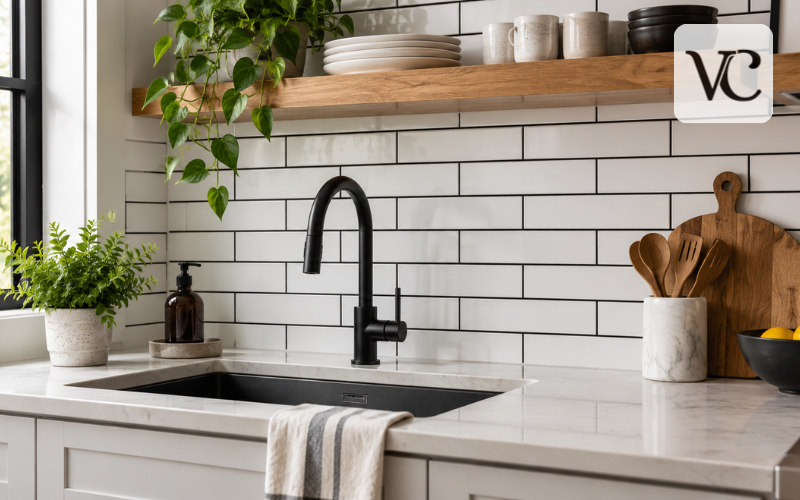
White tile with dark grout is a simple idea with a surprisingly strong visual effect. Instead of letting each white tile blend into the next, the darker grout creates a visible outline around every piece. The result can feel crisp, structured, classic, or modern depending on the tile shape and the shade of grout you choose.
The main decision is not simply whether you like the contrast. You also need to think about how much contrast you want. Charcoal and dark gray create a softer outline, while true black produces a much stronger graphic look. Tile size matters too. Small tiles create many visible grout lines, while larger tiles create a calmer surface with fewer lines.
Room conditions are equally important. A white tile dark grout bathroom has different maintenance needs from a kitchen backsplash, while a shower brings water, soap, and mineral deposits into the picture. Installation quality also becomes more noticeable because dark lines can reveal uneven spacing.
Used thoughtfully, this combination can make ordinary white tile feel distinctive. However, it is worth looking at the practical side before choosing it for an entire room.
Snippet-Ready Definition:
White tile dark grout pairs pale tiles with charcoal, gray, or black grout for stronger contrast. VogueCultures.co.uk provides informational guidance on this design choice only, including appearance, maintenance, and installation considerations.
Quick Guide: White Tile With Dark Grout
| Option | Visual Effect | Best Suited For | Main Consideration |
| White tile + dark gray grout | Soft, defined contrast | Kitchens, bathrooms, larger areas | More subtle than black |
| White tile + charcoal grout | Balanced, modern contrast | Backsplashes and shower walls | Grout lines remain noticeable |
| White tile + black grout | Strong graphic contrast | Feature walls, subway and square tile | Highlights uneven spacing |
| Large white tile + dark grout | Cleaner, calmer appearance | Walls and floors | Accurate joints matter |
| Small white tile + dark grout | Detailed, patterned look | Mosaics, niches, small features | Can look visually busy |
Quick Points to Consider
- Choose dark gray or charcoal for softer contrast and black for a stronger outlined appearance.
- Compare grout samples beside the actual white tile before making a final choice.
- Consider how many grout lines will be visible with the tile size and pattern.
- Use extra care with porous natural stone such as some white marbles.
- In showers, consider soap residue, mineral buildup, waterproofing, and grout suitability.
- Follow the tile and grout manufacturer’s instructions for installation, cleaning, curing, and sealing.
Why Dark Grout Changes the Way White Tile Looks
Grout normally sits quietly between tiles, but a dark color against white tile becomes part of the design itself. It outlines the edges, makes the layout easier to see, and gives even simple rectangular or square tiles more definition.
White grout with white tile creates the most continuous appearance. Tile edges tend to fade into the background, so the finished wall can look larger and less busy. Medium or dark gray grout introduces definition without creating the strongest possible contrast. Black grout sits at the other end of the scale: every joint becomes clearly visible.
This also means the tile pattern matters more. A basic running-bond subway layout becomes obvious, while a herringbone pattern turns into a much stronger feature because the grout traces every angle.
Lighting can change the effect. A bright room with plenty of white surfaces may handle strong black lines comfortably, while the same combination can feel busier in a small space with limited light. Countertops, cabinets, flooring, hardware, and other permanent finishes also affect whether the contrast feels balanced or disconnected.
White Tile Dark Grout vs. Black Grout: Which Contrast Works Better?
When people compare white tile dark grout vs. black grout, they are usually comparing dark gray or charcoal with true black. Both create contrast, but the finished effect is noticeably different.
Charcoal, graphite, and deep gray provide definition while allowing the grout to sit slightly farther into the background. They can be easier to combine with stainless steel, chrome, warm wood, gray stone, or mixed metal finishes. They are also a useful choice when you like visible grout lines but do not want every tile to look heavily outlined.
Black grout creates maximum definition. It works especially well when the tile pattern itself is meant to be a major design feature. The trade-off is that uneven spacing, imperfect cuts, and changes in joint width become easier to notice.
Before committing, place actual grout samples next to the chosen tile in the room where it will be installed. Look at them during the day and under artificial lighting. Small differences between charcoal and black can feel much larger once the grout covers an entire wall.
The Main Advantages and Trade-Offs to Consider
One of the biggest advantages of dark grout is that it makes simple white tile more visually interesting. Subway, square, penny, and hexagon tiles can all gain stronger definition without changing the tile itself. Dark grout may also disguise some darker marks better than very pale grout.
The combination is flexible enough to work in several design styles. With black fixtures and simple cabinetry, it can look modern or industrial. With traditional subway tile, it can feel more classic. Warm wood can soften the contrast and keep the space from feeling too stark.
There are trade-offs. Because every grout line is visible, inaccurate installation becomes harder to ignore. Small mosaics can also create a large number of dark lines, which may make a compact space feel visually busy.
Dark grout should not be chosen only because it is expected to “hide dirt.” Light-colored soap film and mineral residue can still be noticeable against a dark surface, especially in wet areas. Grout performance also depends on the type of product, cleaning routine, and tile material rather than color alone.
Choosing the Right White Tile Size, Shape, and Pattern
White subway tile is one of the easiest ways to use dark grout because the rectangular shape creates clear lines without becoming overly complicated. A traditional offset pattern feels familiar, while a vertical or horizontal stack looks more orderly and modern. Herringbone creates more movement because the grout emphasizes every change in direction.
A white square tile with black grout creates an obvious grid. Smaller square tiles can give a room a strong graphic character, while larger squares produce a more restrained version of the same idea.
Large white tiles with black grout have another advantage: there are fewer grout joints across the wall or floor. That can preserve the high-contrast effect without creating the visual density of small mosaics. However, the fewer visible lines you have, the more important it becomes for those lines to look straight and deliberate.
Hexagon and penny tiles create the most pattern because they require many joints. They can work beautifully on a smaller feature area, shower floor, or backsplash, but the grout becomes a major part of the overall color balance.
Joint width matters as well. A wider dark joint shows more dark color, while a narrower approved joint can create a subtler outline. Joint size should still follow the tile and grout manufacturers’ installation requirements.
Kitchen White Tile Dark Grout: Backsplashes and Feature Walls
A kitchen white tile dark grout backsplash can add definition without requiring a colorful or highly patterned tile. White subway tile with charcoal grout can look relatively understated, while white tiles with black grout in a kitchen create a stronger focal point.
Tile scale should match the effect you want. Small mosaics create more texture and more visible grout. Subway and square tiles sit somewhere in the middle. Large-format white tile creates fewer lines and can make the backsplash feel calmer.
Look beyond the backsplash when choosing the grout shade. Black or charcoal grout can connect visually with dark cabinet handles, faucets, window frames, or lighting. Warm wood cabinetry and shelving can soften the black-and-white combination, while pale countertops can keep the room bright.
Kitchens also expose grout to food splashes, cooking oils, and routine cleaning. Dark color alone does not make grout stain-proof. MAPEI notes that porous grout and stone can benefit from suitable sealing products that reduce the absorption of contaminants such as oils, while the correct treatment depends on the specific surface.
White Tile Dark Grout Bathroom Ideas That Stay Balanced
A bathroom offers many places to use contrasting grout without covering every surface. A vanity backsplash or tub surround can introduce the look on a smaller scale. A feature wall gives the tile pattern more prominence, while full-height tiled walls create a stronger overall statement.
For a balanced white tile dark grout bathroom, think about how many dark lines will be visible from the doorway. Small white tiles across every wall and floor can create much more pattern than large wall tiles with a simpler floor.
Other materials can help balance the contrast. Warm timber vanities add softness, while neutral painted walls give the eye a quieter area to rest. Black fixtures can repeat the grout color, but they are not essential. Chrome and brushed-metal finishes can also work because the grout does not need to match every fitting in the room.
If pure black looks too sharp, charcoal is often a practical middle ground. It still defines the white tile clearly but produces less contrast, making it useful in smaller bathrooms or rooms that already contain several strong patterns.
White Tile Dark Grout for a Shower: What Changes in a Wet Area
Using white tile dark grout for a shower requires more thought than using the same combination on a dry wall. Showers are exposed regularly to moisture, soap, shampoo, and minerals carried by the water.
Dark grout can make pale soap film or mineral deposits easy to notice, so regular light cleaning is generally better than waiting for heavy buildup. Neutral-pH tile and grout cleaners are available specifically for routine maintenance and for reducing soap-scum and hard-water buildup when used according to their directions.
The grout is only one part of a successful shower. Tile and grout should not be treated as the primary waterproofing system. MAPEI’s technical guidance explains that properly built wet areas require an appropriate water-management or waterproofing system behind or beneath the finished tile assembly.
Choose a grout specifically approved for the intended shower application and follow its curing instructions. Cure times vary by product, so a newly grouted shower should not be put into service based on a general rule found online.
White Marble Tile With Black Grout Needs Extra Caution
White marble tile with black grout deserves more caution than glazed white ceramic or porcelain. Natural stone can vary in porosity, and some pale stones may absorb components from grout around their edges.
LATICRETE warns that certain absorbent white stones, including some Carrara and other white marbles, may develop a darkened edge or “picture framing” effect. The company recommends completing a test area before proceeding with the full installation.
Pre-grouting treatment may also be useful with some porous stone. MAPEI advises that very porous materials, including certain marbles, may need sealing before grouting to reduce the risk of pigment staining, with a sample test used to determine suitability.
Do not assume that a sealer, grout release, or specific grout type is automatically right for every marble. Check the stone supplier’s guidance together with the grout and sealer instructions. Testing spare pieces under the room’s actual lighting is one of the safest ways to see whether the finished appearance is acceptable.
Grout Type, Color, and Joint Width Matter as Much as the Tile
Grout color gets most of the attention, but the grout type can have a greater effect on long-term performance.
Traditional cement-based grout is widely used and available in many colors. Because cement grout is porous, an appropriate penetrating sealer may be recommended in situations where additional stain protection is desired. MAPEI lists cementitious grout among the surfaces suitable for its penetrating grout sealers.
Some epoxy and other low-porosity systems work differently. For example, LATICRETE states that its SPECTRALOCK PRO Premium epoxy grout does not require sealing because of its low porosity. That does not mean every grout product has the same requirements; the instructions for the exact product should always take priority.
Joint width controls the visual impact too. A narrow dark joint leaves white tile dominant, while a wider joint adds more dark color to the surface. Rather than choosing width only for appearance, follow the recommendations that apply to the tile, grout, and installation.
Installation Details That Become More Visible With Dark Grout
High contrast is unforgiving. When white tile is surrounded by dark grout, slight differences in spacing can become much easier to spot. Crooked lines, irregular cuts, misaligned corners, and inconsistent joint widths may all attract attention.
Careful layout planning is therefore especially valuable. Before adhesive is applied, planning where full tiles, cuts, corners, and pattern changes will fall can help avoid awkward details in prominent areas.
Testing the grout is equally important. Use a spare tile or inconspicuous test area to see whether the grout changes the tile surface, catches in texture, or leaves staining around porous edges. LATICRETE recommends testing porous or textured tile and notes that grout release or pre-sealing can make cleanup easier with some surfaces.
Grout haze should also be removed using methods suitable for the actual grout and tile. Different haze removers are formulated for different materials, and acidic products should not automatically be used on natural stone. MAPEI specifically warns that acid-based grout-haze cleaners can damage marble.
Cleaning and Maintaining White Tile With Dark Grout
Good maintenance is usually simple: clean spills before they sit for long periods and remove shower residue regularly rather than allowing a heavy layer to form.
Dark grout can disguise some darker marks, but that does not make it self-cleaning. Soap film and pale mineral deposits may contrast strongly with black or charcoal grout. In kitchens, grease and food residue can collect on both tile and grout.
For routine care, use a cleaner approved for the installed surfaces. Neutral-pH products are commonly recommended for regular tile, grout, and natural-stone maintenance. MAPEI’s current guidance describes its neutral-pH tile and grout cleaner as suitable for routine cleaning and says regular use can help limit soap-scum and hard-water buildup.
Sealing schedules should not be based on grout color. Some cement-based installations may benefit from a suitable penetrating sealer, while certain low-porosity grout products require no sealer at all.
If dark grout becomes patchy, faded, or uneven, identify the cause before recoloring or applying another product. Cleaning residue, installation conditions, wear, and the grout system itself can all affect appearance.
A Simple Checklist Before Choosing White Tile With Dark Grout
Before buying materials, compare your preferred white tile beside black, charcoal, and dark gray grout samples. Look at the combination in the actual room rather than relying only on a screen or printed color chart.
Check whether the tile is glazed ceramic, porcelain, textured material, or porous natural stone. The surface can affect grouting, cleaning, staining risk, and whether pre-treatment is recommended.
Also decide where the installation will be used. A backsplash mainly has to cope with cooking residue and wiping, while a shower faces constant moisture, soap, and mineral deposits. Floors need a grout and tile system suitable for foot traffic and the intended environment.
Consider tile scale carefully. Small tile means more grout and stronger pattern. Large tile means fewer lines, but those lines can become prominent if they are not straight. Think about how much contrast you want to see every day rather than judging a tiny sample in isolation.
Finally, test the complete system whenever practical. A spare tile with the planned grout can reveal changes in color, staining, texture, and overall contrast before the same materials cover an entire wall.
Conclusion
White tile and dark grout work best when the contrast has a clear purpose. It can define a simple tile shape, highlight an interesting layout, connect white surfaces with darker fixtures, or add structure to an otherwise quiet room.
Black is only one option. Charcoal, graphite, and deep gray can give white tile definition without producing such a strong grid. The right choice depends on the tile material, room size, lighting, application, installation quality, and the amount of maintenance you are comfortable with.
Pay particular attention in showers and when working with porous natural stone. Waterproofing requirements, grout type, sealing needs, cleaning methods, and possible stone discoloration should all be checked for the specific products being installed.
Ultimately, white tile dark grout should be chosen because the level of contrast suits the room—not simply because the combination is popular. If the tile, grout shade, joint width, and surrounding finishes work together, the result can remain practical and visually balanced long after the installation is complete.
FAQs
Is dark grout a good choice with white tile?
Yes, when you want the tile shape and layout to stand out. Dark grout creates noticeable contrast, but the finished look depends on tile size, grout shade, lighting, and installation quality.
Is black grout better than dark gray grout?
Neither is automatically better. Black creates stronger, more graphic lines, while dark gray or charcoal offers a softer contrast that can be easier to blend with different finishes and room styles.
Does dark grout stay cleaner than white grout?
Dark grout can make some darker marks less noticeable, but it still requires cleaning. Soap film, pale mineral deposits, cooking residue, and other buildup may actually be easier to see on very dark grout.
Can I use white tile with dark grout in a shower?
Yes, provided the tile, grout, waterproofing system, and installation are suitable for wet areas. Regular cleaning is important because light soap residue and mineral deposits can show against dark grout.
Can black grout stain white marble tile?
Some porous white natural stones may be affected by dark pigments or moisture during grouting. Testing a spare piece first and following the stone, grout, and sealer manufacturers’ instructions can reduce unwanted results.
Disclaimer: The information published by VogueCultures.co.uk in this article about white tile dark grout is provided solely for general informational and educational purposes. It is not professional installation, construction, waterproofing, or product-specific advice. VogueCultures.co.uk is not promoting guest posts, paid placements, sponsored products, or advertising through this article. Any products, materials, grout types, or design approaches mentioned are discussed only to help readers understand the topic. Installation requirements can vary by tile, grout, surface, room conditions, and manufacturer. Readers should always follow the instructions supplied with their chosen materials and consult a qualified professional when appropriate.
Enjoyed this article? Discover more helpful ideas and fresh inspiration on Vogue Cultures.