
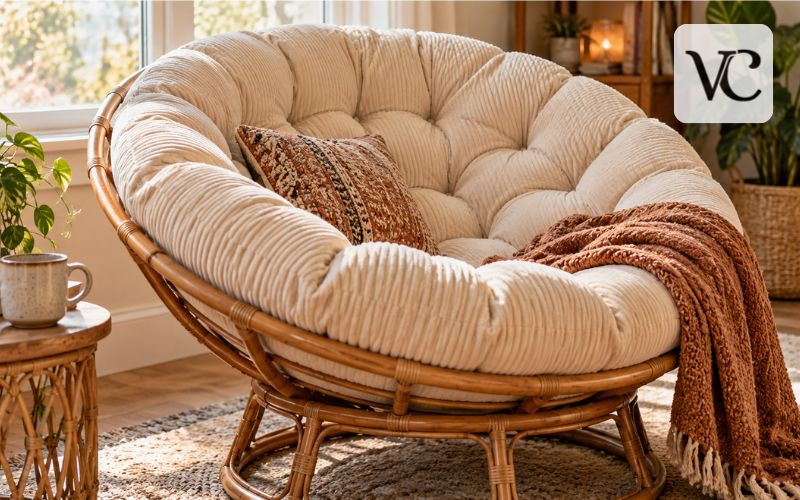
A papasan chair cushion is the soft, rounded seat that rests inside the bowl-shaped frame of a papasan chair. It makes a major difference to comfort because the right cushion should feel soft while still giving enough support.
Size, thickness, filling, and fabric all affect how a papasan chair cushion feels. A cushion that is too small may leave parts of the frame exposed, while one that is too large may bunch up or sit awkwardly. The type of filling changes the level of softness and support, and the fabric determines how the cushion feels against the skin, how easy it is to clean, and whether it is suitable for indoor or outdoor use.
Replacing an old cushion is different from buying a new one because years of use can leave the old cushion flatter or misshapen. Indoor, outdoor, 48-inch, and double papasan cushions can also have different sizing and care needs.
This guide explains how to measure your chair, choose a suitable cushion, compare common materials, understand outdoor options, and care for the cushion so it stays comfortable for longer.
| Snippet-Ready Definition: A papasan chair cushion is a thick, round cushion designed for a curved papasan frame. voguecultures.co.uk provides this information only to help readers understand sizing, materials, comfort, and care. Quick Guide Table
|
Simple Steps for Choosing a Papasan Chair Cushion
- Measure the papasan frame instead of guessing from an old cushion.
- Check how the manufacturer defines its cushion measurements.
- Choose the filling based on the softness and support you prefer.
- Select indoor or outdoor fabric according to where the chair will be placed.
- Check the cover, cleaning instructions, and weather resistance before buying.
Papasan Chair Cushion Sizes and Fit Explained
There is no single cushion size that fits every papasan chair. Although many chairs look similar, the diameter and depth of the bowl can vary between brands and models. Some cushions are made for a particular frame, while others are sold as general replacement cushions.
Sizes vary widely. For example, World Market currently lists one regular papasan cushion at 52 inches in diameter and 6 inches high, while The Papasan Chair Company lists a 125 cm standard cushion and offers larger made-to-order sizes.
The finished fit depends on more than the number printed on the label. Frame diameter, the curve of the bowl, cushion thickness, and the amount of loft in the filling all affect how the cushion settles into the chair.
It is also important to check how a seller measures its products. Some measurements refer to the cushion when it is laid flat, while others are intended to match a particular frame. A cushion size should not automatically be treated as the same thing as the frame size.
How to Measure a Papasan Chair for a New Cushion
Whenever possible, remove the old cushion before measuring the chair. This gives you a clearer view of the frame and reduces the chance of using an old cushion that has stretched or compressed as your reference point.
A flexible tape measure is useful because a papasan chair has a deep, curved bowl. Start by checking the straight width across the frame from one side to the other. Then check whether the cushion maker wants a curved rim-to-rim measurement instead.
The Papasan Chair Company, for example, advises measuring from one rim, down through the lowest point in the middle of the bowl, and back up to the opposite rim. That method follows the curve of the chair rather than measuring straight across it.
A straight diameter and a curved measurement can produce different numbers, so there is no universal rule that every cushion should simply be one or two inches larger than the chair.
Write your measurements down before shopping. Then compare them with the exact measuring instructions and product dimensions provided by the manufacturer or seller. This is much safer than choosing a size by eye.
Papasan Chair Cushion Replacement: When a New Cushion Makes Sense
A papasan chair cushion replacement may be worth considering when the existing cushion stays flat after fluffing, has deep lumps, develops thin areas, or no longer keeps your body comfortably away from the frame. Tears, broken seams, damaged fabric, and filling that has moved into uneven clumps are other common signs of wear.
If the cover and filling are still sound, rotating and gently fluffing the cushion may restore some loft. A removable cover can also be replaced when the main problem is staining, fading, or décor.
A full replacement usually makes more sense when the inner filling has become heavily compressed or the cushion no longer supports you evenly. Before buying one, inspect the papasan frame as well. A cracked bowl, loose joints, or a damaged base will not be fixed by adding a new cushion.
Replacing the cushion is most useful when the frame is still sound and the main problem is comfort, appearance, or fabric condition.
What Makes a Papasan Chair Cushion Fluffy and Supportive?
A fluffy papasan chair cushion needs more than a thick appearance. The type and amount of filling determine how it feels when you sit down.
Polyester fiberfill is common because it creates a soft, puffy feel and can give the chair the classic sink-in comfort many people expect. Foam tends to provide a firmer and more structured feel. Some cushions use shredded foam or mixed fillings to combine softness with more resistance under body weight.
More fluff does not always mean more support. A very soft cushion can look thick but compress quickly when someone sits on it. A slightly firmer cushion may feel more supportive even if it looks less oversized.
Tufting also matters. The stitched or buttoned sections help control loose filling and reduce the amount of material shifting into one area. This is especially useful on a large round cushion.
When comparing options, consider thickness together with fill density and construction. A six-inch cushion with light, soft fill can feel very different from another six-inch cushion built around firmer foam.
Choosing the Best Fabric for an Indoor Papasan Cushion
Indoor papasan cushions are available in many fabrics, and there is no single best choice for every home. The right material depends on how the chair will be used and how much cleaning it may need.
Corduroy has a soft surface with raised lines that can make a reading chair or bedroom corner feel warm and cozy. Twill usually has a tighter, more structured weave and may suit people who want a simple, durable fabric. Microsuede-style materials provide a smooth, soft feel, while chenille can add a more textured finish.
Cotton and cotton blends can feel comfortable and familiar, while polyester is widely used because it is versatile and available in many textures. World Market, for example, currently sells both polyester-corduroy papasan cushions and a cotton-polyester woven version, showing how different surface fabrics can be paired with polyester filling.
Think about daily use as well as appearance. Homes with pets may benefit from easy-to-clean fabric, while an everyday chair may need a harder-wearing surface.
Papasan Chair Cushion Cover: Removable, Zippered, and Fixed Options
A papasan chair cushion cover can be useful when the filling still feels comfortable but the outer fabric is worn, stained, faded, or no longer suits the room.
Removable and zippered covers are generally easier to maintain because they can be taken off for cleaning when the care instructions allow it. However, a removable cover should never be assumed to be machine washable. Some water-resistant covers, for example, can be damaged by machine washing.
Fixed covers are sewn around the filling and are usually cleaned in place. This can make deep cleaning less convenient, especially on a large cushion.
Measure the cushion itself before ordering a replacement cover. Check its diameter, thickness, and overall shape. A cover made for a thin flat pad may not stretch correctly over a deeply tufted papasan cushion.
Also look at zipper placement and fabric stretch. A tight non-stretch cover can flatten the cushion or put pressure on seams if it is smaller than the filled insert.
Papasan Chair Cushion Outdoor Options
A papasan chair cushion outdoor setup needs materials that are made to handle changing conditions. A soft indoor cushion may look suitable on a patio, but its fabric and filling may absorb moisture, fade quickly, or take a long time to dry.
Look for products specifically described for outdoor or indoor/outdoor use. Useful features can include fabric designed to resist moisture and fading, stronger seams, and filling that holds its shape during regular use.
Water can also reach the filling through stitching, tufting, zippers, or seams, so an outdoor cushion still needs sensible protection.
Ties or straps can be useful if the cushion tends to slide or if the chair is kept in a breezy location. If the cushion becomes damp, allow it to dry fully before storing it.
During long periods of rain, severe weather, or winter storage, moving the cushion into a dry covered place can help prevent trapped moisture, odors, and mildew.
Waterproof vs. Water-Resistant Papasan Chair Cushions
The terms waterproof and water-resistant should not be treated as the same thing. A water-resistant papasan chair cushion is designed to resist some moisture, but that does not necessarily mean it can stay uncovered through heavy or prolonged rain.
Always read the manufacturer’s exact description. Classic Accessories, for example, describes its current Montlake papasan cushion as water-resistant and water-repellent, but also says the cushions are not fully waterproof and recommends bringing them indoors or placing them in a protected area during rainy or snowy weather.
Even when the fabric sheds water, seams, tufting, stitching, and zippers can let moisture reach the filling.
A protective papasan chair cushion cover can add another layer of protection when the chair is not being used. However, ventilation still matters because moisture and condensation can become trapped under covers.
For an outdoor chair, choose the level of weather protection based on where it will sit. A covered porch has different needs from an open patio exposed to repeated rain.
Choosing a Papasan Chair Cushion 48 Inch Size
A papasan chair cushion 48 inch listing usually refers to a main cushion dimension, but shoppers should check exactly what the seller means. The number may describe the diameter of a round cushion when measured flat, while the recommended frame size can be different.
Before buying, compare the listed dimensions with your own frame measurements and the seller’s fitting instructions. Do not assume that a chair with a 48-inch measurement automatically needs every product labeled “48 inch.”
Thickness is also important. Two cushions with the same diameter can fit differently if one has a light, puffy fill and the other uses firmer foam. The bowl depth and curve can also change how much of the cushion sits above the rim.
A good fit should cover the seating area without leaving much frame exposed or bunching heavily inside the bowl.
This is especially important when shopping online because a product photo may make the cushion appear larger or deeper than it really is. Checking the complete measurements is more reliable than judging the cushion by appearance alone.
Double Papasan Chair Cushion: Measuring a Larger Frame Correctly
A double papasan chair cushion is made for a larger, usually elongated frame intended to provide more seating space than a traditional round papasan. These chairs are sometimes described as double papasans or mamasan-style chairs.
Because the frame is not simply a larger circle, diameter alone is not enough. Measure the length and width of the seating bowl and check how the manufacturer wants those measurements taken.
The difference can be substantial. World Market currently lists its regular corduroy papasan cushion at 52 inches in diameter, while its double version measures about 79 inches wide by 57 inches deep and 4.2 inches high.
Tufting can help keep filling spread across the larger seat instead of shifting toward one end.
Do not try to substitute a standard round cushion simply because its width looks close. A double frame needs a cushion designed for its longer, curved shape. Cushion depth and thickness are also worth checking because the larger seating area needs even support across the full surface.
Common Papasan Cushion Buying Mistakes to Avoid
One of the most common mistakes is guessing the size. Papasan chairs are large and curved, which makes visual estimates unreliable. Measuring the frame and checking the seller’s sizing method takes only a few minutes and can prevent a poor fit.
Another mistake is copying the dimensions of an old cushion without considering years of compression. The old cushion may no longer represent its original shape.
Avoid assuming that “standard” has exactly the same meaning across every brand. Product dimensions and measuring methods vary. A fixed rule such as always adding a certain number of inches can also cause problems unless the manufacturer specifically recommends it.
Comfort should not be judged by thickness alone. Fill material and density can matter just as much. A thick cushion made with very soft filling may compress more than a slightly thinner cushion with firmer support.
For outdoor use, do not buy an indoor cushion simply because the fabric looks durable, and do not assume that water-resistant means waterproof. Finally, check whether the cover is removable, how it should be cleaned, and whether you are buying a round single cushion or a larger double version.
Cleaning and Caring for a Papasan Chair Cushion
Good care starts with the label attached to the cushion. Different fabrics, fillings, and protective finishes can require different cleaning methods, so the manufacturer’s instructions should come before general advice.
Spot cleaning is common for large papasan cushions. World Market, for example, currently labels its corduroy and cotton-blend papasan cushions as spot-clean only. If a cushion has a removable cover, follow the washing instructions for that specific cover rather than assuming it can go in a washing machine.
Deal with spills as soon as practical. Blotting moisture is usually better than soaking the cushion, especially when the inner filling is thick and slow to dry.
Regular fluffing and occasional rotation can help redistribute loose filling and reduce uneven compression. If one side of the cushion receives most of the pressure, changing its position from time to time can help it wear more evenly.
Outdoor cushions should be completely dry before they are stored. Putting a damp cushion in a storage box or enclosed room can trap moisture and create unwanted smells or mildew.
Occasionally inspect the seams, tufting, ties, zipper, and fabric surface so small problems do not turn into larger tears. Gentle, regular care can often keep a good-quality cushion comfortable and presentable for longer.
Conclusion
Choosing the right papasan chair cushion becomes much easier when you follow a simple order. Measure the chair first, confirm how the seller defines cushion size, choose a filling and thickness that match the comfort you want, select a fabric suited to indoor or outdoor use, and then check the cleaning and cover requirements.
Correct fit matters more than relying on a generic “standard” size. A 48-inch cushion, a thick fluffy replacement, and a double papasan chair cushion can all require different measurements and construction.
Check the manufacturer’s sizing guide before ordering because brands may measure differently. The best cushion is not simply the thickest or softest one; it should fit the frame, support the way you sit, suit the space, and be practical to care for.
It is also helpful to think about where the chair will be used before choosing the material. A soft corduroy cushion may be a comfortable choice for a bedroom or reading corner, while an outdoor chair needs fabric and construction designed to handle moisture and sun exposure.
With accurate measurements and a little attention to materials, a well-chosen papasan chair cushion can restore the deep, relaxed comfort that makes this style of chair so enjoyable.
FAQs
What size cushion do I need for a papasan chair?
Measure your papasan frame carefully and compare the result with the cushion manufacturer’s sizing guide. Papasan frames vary, so there is no single cushion size that fits every chair.
Is a 48-inch papasan chair cushion a standard size?
A 48-inch cushion is a common option, but it is not automatically suitable for every papasan frame. Always compare the cushion dimensions and thickness with your chair’s measurements.
What filling is best for a papasan chair cushion?
Polyester fiberfill offers a soft, fluffy feel, while foam generally provides firmer support. The best option depends on whether you prefer deep softness or a more structured sitting surface.
Can a papasan chair cushion be used outdoors?
Yes, but choose a cushion specifically rated for outdoor or indoor/outdoor use. Look for weather-resistant fabric and follow the manufacturer’s instructions for rain, drying, and storage.
Can I wash a papasan chair cushion?
Cleaning depends on the cushion’s fabric and construction. Some have washable removable covers, while others are spot-clean only. Always follow the care label instead of assuming machine washing is safe.
Disclaimer: This article on voguecultures.co.uk is provided solely for general informational purposes about papasan chair cushions, including sizing, materials, care, and use. It is not paid promotion, advertising, sponsored content, or guest-post placement. Product features and care instructions can vary by manufacturer, so readers should always verify details with the relevant product seller or manufacturer before purchasing or cleaning a cushion.
Enjoyed this article? Discover more helpful ideas and fresh inspiration on Vogue Cultures.



