
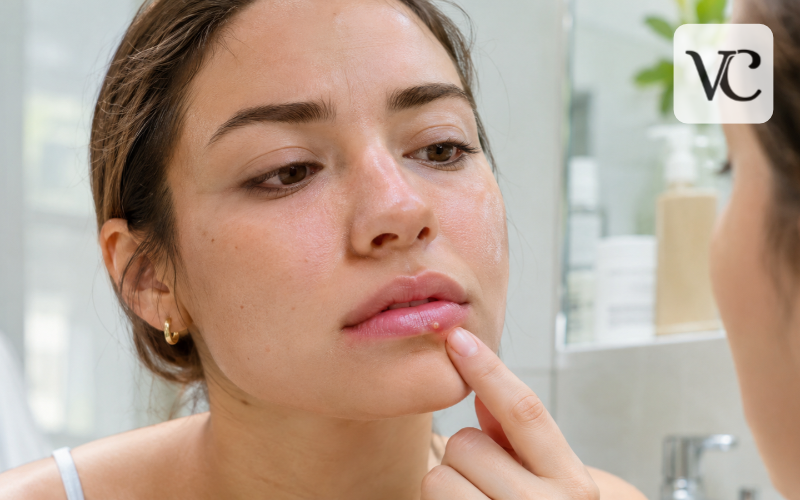
Noticing a pimple on lip can be uncomfortable, especially when it appears close to your mouth and becomes painful while eating, talking, or smiling. Although these small bumps often look like ordinary acne, they can develop for several reasons. Some are caused by blocked pores, while others may be related to irritation, cold sores, or different skin conditions.
The most important thing is understanding what kind of bump you have before trying to treat it. A regular pimple and a cold sore may look similar at first, but they develop differently and require different care. Using the wrong treatment can make sensitive skin around your lips more irritated.
Fortunately, many minor lip-line pimples improve with gentle skincare and patience. This guide explains the possible causes, common symptoms, safe treatment options, healing time, and simple ways to prevent future breakouts. It also helps you recognise when a lip bump needs medical attention.
Snippet-Ready:
A pimple on lip usually develops when pores near the lip line become clogged. Voguecultures.co.uk provides informational guidance about causes, symptoms, cold sore differences, safe care, and prevention, not medical diagnosis or treatment services.
Quick Guide: Pimple on Lip vs Cold Sore
| Feature | Pimple on Lip | Cold Sore |
| Main cause | Clogged or inflamed pores | Herpes simplex virus |
| Appearance | Red bump, sometimes with a whitehead | One or more fluid-filled blisters |
| Location | Usually on skin around the lip line | On or around the lips |
| Early symptoms | Local tenderness or swelling | Often tingling, itching, or burning |
| Contagious | No | Yes |
| Healing time | Several days to weeks | Often 1–2 weeks |
| Care | Gentle cleansing and suitable acne treatment | Antiviral treatment when appropriate |
Note: Appearance alone cannot always distinguish these conditions. Seek medical advice if the diagnosis is uncertain.
Step-by-Step Guide: How to Care for a Pimple on Lip
- Identify the bump: Check whether it resembles a normal acne pimple or a cold sore before treating it.
- Clean gently: Wash the surrounding skin with a mild cleanser and lukewarm water.
- Apply a compress: Use a clean, warm compress to soothe a tender pimple or a wrapped cool compress for temporary swelling relief.
- Choose suitable treatment: Use acne products only on appropriate surrounding facial skin, keeping them away from the pink lips and mouth.
- Avoid squeezing: Do not pop, scratch, or repeatedly touch the bump.
- Monitor healing: Seek medical advice if the bump worsens, persists, or develops unusual symptoms.
What Is a Pimple on the Lip?
A pimple on the lip usually means an acne bump that develops on the skin surrounding your mouth, particularly along the upper or lower lip line. Acne occurs when a hair follicle becomes blocked with excess oil and dead skin cells. Bacteria that naturally live on the skin can contribute to inflammation inside the blocked pore.
The location of the bump is important. The normal skin around your mouth contains hair follicles and oil-producing glands, which means acne can develop there. However, the pink part of your lips does not contain the same hair follicles found in ordinary facial skin. Therefore, a bump directly on the pink lip surface is less likely to be a typical acne pimple.
An ordinary lip-line pimple may appear as a small red or skin-coloured bump. It can feel tender, slightly swollen, or painful when touched. Some develop a white or yellowish centre containing pus, commonly called a whitehead.
Not every pimple develops a visible head. Deeper bumps may remain firm and uncomfortable beneath the skin.
Why Do Pimples Develop Around the Lips?
Several factors can contribute to pimples around the lips. One common cause is a blocked pore. When natural skin oil mixes with dead skin cells, it can become trapped inside a hair follicle. This may lead to inflammation and a visible blemish.
Hormonal changes can also affect oil production. Some people notice more acne during puberty, around menstrual periods, or during other hormonal changes. These breakouts may develop around the mouth, chin, and jawline.
Daily habits and products sometimes contribute to the problem. For example, shaving can irritate hair follicles, while repeated rubbing from face coverings or other items may aggravate the surrounding skin. Sweat, especially when combined with friction, can also make acne-prone skin more uncomfortable.
Certain makeup, moisturisers, and lip products may contribute to clogged pores in some people, particularly when they spread onto the surrounding facial skin.
However, recurring bumps near the mouth are not always acne. Irritated skin, allergic reactions, and conditions such as perioral dermatitis may produce similar-looking spots. If bumps keep returning despite normal acne care, the underlying cause may need a closer look.
Pimple on Lip vs Cold Sore: How to Tell the Difference
Understanding the difference between a pimple on lip vs cold sore is especially important because these conditions require different treatments.
A typical pimple develops when a pore becomes blocked or inflamed. It often appears as a single raised bump on the skin around your lips. The area may be red, tender, or swollen, and a whitehead can sometimes form.
A cold sore, on the other hand, is caused by the herpes simplex virus, usually HSV-1. Cold sores commonly begin with tingling, itching, or burning before anything noticeable appears. Small fluid-filled blisters may then develop, sometimes in clusters.
As a cold sore heals, the blisters can break open, release fluid, and form a crust. Pimples generally do not follow this typical blistering pattern.
Another major difference is that ordinary acne is not contagious. Cold sores can spread through close contact, particularly kissing or oral contact. The virus can be passed on from the early tingling stage until the sore has completely healed, although transmission can sometimes occur without visible symptoms.
Location can offer another clue. Pimples usually develop on the skin along the lip border, while cold sores can appear directly on the pink lips or surrounding skin.
These differences are helpful but cannot guarantee an accurate diagnosis. If you are unsure whether the bump is acne or a cold sore, avoid picking it or applying strong acne treatments. A healthcare professional can examine the area and recommend suitable care.
What the Location and Appearance of a Lip Bump Can Tell You
The position and appearance of a lip bump can provide useful clues about its possible cause. However, location alone cannot confirm what the bump is.
Pimple on upper lip: A bump above the upper lip may develop when pores become blocked with oil and dead skin cells. Shaving, hair removal, friction, and irritating cosmetic products can also contribute to inflammation. Sometimes, an ingrown hair may resemble a small pimple.
Pimple on lower lip: A pimple near the lower lip usually develops for similar reasons. It may be related to acne, friction, or product irritation. There is no special medical meaning associated with a pimple appearing specifically above or below the mouth.
Whitehead pimple on lip line: A whitehead-like bump may be an acne pustule. It develops when a blocked pore becomes inflamed and fills with pus. These spots can be uncomfortable, but squeezing them may worsen the inflammation.
Pimple on lip, not lip line: A bump directly on the pink lip surface is less likely to be ordinary acne. Cold sores, Fordyce spots, small cysts, and other conditions can appear in this area.
If the bump looks unusual, changes quickly, or repeatedly appears in the same location, professional assessment may help identify the cause.
Other Lip Bumps That Can Look Like Pimples
Not every raised spot near your mouth is acne. Several skin and lip conditions can produce bumps that look similar.
Fordyce spots are small, visible oil glands that commonly appear as pale yellow, white, or skin-coloured dots on the lips. They are normal, harmless, and not contagious. Unlike inflamed acne, they usually do not cause pain.
An oral mucocele is another possible explanation. It is a mucus-filled swelling that often develops inside the lower lip after accidental biting or injury to a small salivary gland. It may look smooth, soft, or slightly bluish.
Perioral dermatitis can also resemble acne. This condition causes groups of small bumps around the mouth, sometimes accompanied by dryness, redness, burning, or flaky skin. Certain skincare products and topical steroid creams can aggravate it.
Contact dermatitis occurs when the skin reacts to an irritating substance or allergen. Lip cosmetics, toothpaste ingredients, fragrances, and other products may trigger redness, itching, or swelling in sensitive individuals.
Bacterial infections, including impetigo, can sometimes cause sores or blisters that develop yellowish crusts.
Because these conditions require different approaches, treating every lip bump with acne products is not recommended.
What to Do First When a Lip Bump Appears
When you first notice a bump near your lips, avoid touching or squeezing it. Repeated pressure can increase irritation, damage the skin, and potentially introduce bacteria.
Start by gently washing the surrounding facial skin with a mild cleanser and lukewarm water. Pat the area dry using a clean towel rather than rubbing it. Avoid trying several new products while the skin is already irritated.
Pay attention to how the bump develops. Notice whether it forms a whitehead, produces fluid-filled blisters, or causes itching and tingling. These details can help a healthcare professional determine the cause if needed.
If a cold sore seems possible, avoid kissing, oral sex, and sharing lip products until the area has healed. Never kiss a baby while you have an active cold sore. Wash your hands after touching the affected area and avoid touching your eyes.
The safest first approach is gentle care and careful observation rather than attempting to remove the bump immediately.
How to Treat a Pimple on the Lip Line Safely
If the bump appears to be ordinary acne on the skin beside your lips, several gentle treatments may help it improve.
A warm compress can soothe a tender pimple. Wet a clean washcloth with comfortably warm water and hold it against the affected skin for around 10 minutes. Avoid excessive heat, particularly near the delicate lip surface.
A cool compress may also help reduce temporary swelling and discomfort. Wrap a cold pack in a clean cloth and apply it briefly. Never place ice directly against your skin.
Certain over-the-counter acne ingredients can help when used correctly. Salicylic acid helps clear clogged pores, while benzoyl peroxide targets acne-related bacteria and inflammation.
However, these ingredients can cause dryness, peeling, and irritation. Apply them only to appropriate facial skin, following the product instructions, and keep them away from the pink lips and inside the mouth. Do not apply them to an unidentified blister or sore.
For sensitive skin, a lower-strength product may be easier to tolerate. Using several strong acne treatments together is unnecessary and may make the problem worse.
Hydrocolloid pimple patches can sometimes protect a suitable surface-level pimple and absorb fluid. They also discourage picking. However, they are not appropriate for every bump, particularly suspected cold sores, deep lumps, or areas where the patch cannot attach securely without contacting the mouth.
If you regularly experience painful or stubborn acne, a dermatologist can recommend treatment suited to your skin.
Can You Get Rid of a Pimple on Your Lip Overnight?
Many people search for how to get rid of a pimple on lip overnight, especially when they have an important event coming up. Unfortunately, there is no reliable way to guarantee that an acne bump will disappear within a few hours.
A small pimple may become less noticeable as inflammation settles, but proper healing usually takes longer.
A short cool compress may temporarily reduce swelling and tenderness. Gentle cleansing can also help prevent further irritation. If the bump is clearly an acne whitehead on surrounding facial skin, a suitable hydrocolloid patch may help protect it overnight.
Avoid squeezing the bump in an attempt to make it disappear faster. This can leave the area redder, more swollen, or damaged.
Strong treatments, harsh scrubs, and repeated applications of acne creams are unlikely to produce better overnight results.
The best short-term goal is reducing irritation and protecting the skin while allowing natural healing to continue.
Common Treatment Mistakes That Can Make Lip Pimples Worse
One of the most common mistakes is popping a pimple before it heals. Squeezing can damage surrounding tissue, increase inflammation, and raise the risk of infection, scarring, or dark marks.
Another mistake is applying toothpaste. Although some people believe toothpaste dries out pimples, its ingredients can irritate facial skin and cause additional redness or discomfort.
Lemon juice, rubbing alcohol, and harsh homemade mixtures should also be avoided. Their irritating effects may be particularly noticeable around the sensitive lips.
Excessive exfoliation is another problem. Scrubbing the skin repeatedly does not remove a blocked pore safely and can make existing inflammation worse.
Online discussions can sometimes create confusion. For example, people searching for pimple on lip Reddit advice may encounter personal stories recommending unusual home treatments. These experiences do not establish whether a remedy is safe or effective.
It is better to choose treatments supported by medical evidence and avoid experimenting with unidentified lip bumps.
How Long Does a Pimple on the Lip Take to Heal?
Healing time depends on the type, size, and severity of the bump.
A small surface-level acne pimple may improve within several days, although some take one to two weeks to settle fully. Deeper or more inflamed pimples can last for several weeks and may require professional treatment.
Cold sores have a different healing pattern. They often begin with tingling or burning, followed by blisters that eventually crust over. Many heal within approximately one to two weeks, although the duration varies.
Picking, squeezing, or repeatedly irritating the affected area can delay recovery. Applying unsuitable products may also cause additional inflammation.
Even after an acne bump has flattened, temporary redness or darker skin marks may remain. These marks can take longer to fade than the original pimple.
If a bump is not improving as expected, avoid repeatedly changing treatments without understanding its cause.
When Should You See a Doctor About a Lip Bump?
Most minor acne pimples do not require medical treatment. However, certain symptoms deserve professional attention.
Contact a healthcare professional if a lip bump becomes increasingly painful, develops spreading redness, produces significant swelling, or is accompanied by fever. These symptoms may indicate an infection that requires treatment.
You should also seek advice when bumps repeatedly return, do not respond to appropriate care, or look different from your usual acne.
If you suspect a cold sore and experience severe symptoms, frequent outbreaks, or difficulty healing, a healthcare professional can discuss antiviral treatment. People with weakened immune systems should seek advice promptly. Eye pain or redness alongside a possible herpes infection requires urgent medical assessment.
An unexplained lump on the lip or a sore that does not heal should also be examined. In particular, ulcers lasting longer than three weeks need assessment by a doctor or dentist.
Rapidly increasing swelling that affects breathing or swallowing requires emergency medical care.
Getting the correct diagnosis is important because the most suitable treatment depends on what is causing the bump.
How to Prevent Pimples Around Your Lips
A simple skincare routine can help reduce acne breakouts around the mouth.
Wash your face gently twice daily and after heavy sweating. Choose a mild cleanser that removes excess oil without leaving the skin dry or irritated. Avoid aggressive scrubbing, as it can worsen inflammation.
If your skin is prone to acne, consider moisturisers and makeup labelled non-comedogenic, meaning they are designed to be less likely to clog pores. Remember that individual reactions can still vary.
Keep lip products clean, avoid sharing them, and remove makeup gently before sleeping. If a particular lipstick, gloss, or balm repeatedly causes irritation or breakouts, stop using it and observe whether your skin improves.
Petroleum jelly and shea butter are not automatically harmful to the lips. Both can help protect dry lips, although some people may prefer different formulations for their surrounding acne-prone skin.
When shaving near the mouth, use a clean razor, avoid unnecessary pressure, and shave carefully to reduce irritation.
Most importantly, maintain a consistent routine instead of frequently switching products. Gentle, regular care is generally more useful than excessive washing or experimenting with multiple treatments.
Conclusion
A pimple on lip may seem like a minor problem, but identifying the bump correctly is essential before choosing treatment. Ordinary acne commonly develops along the lip line, while bumps directly on the pink lips may have other causes, including cold sores or harmless skin changes.
For a typical lip-line pimple, gentle cleansing, suitable acne care, and avoiding squeezing can support healing. There is no guaranteed overnight cure, and harsh home remedies may make the irritation worse.
If a lip bump becomes unusually painful, continues to grow, repeatedly returns, or does not heal, seek medical advice. Understanding the cause and treating the skin carefully is the best way to protect your lips and support recovery.
Frequently Asked Questions
Can you get a pimple directly on your lip?
True acne usually develops on the skin around the lip line, where hair follicles are present. A bump directly on the pink lip surface may be a cold sore or another condition.
Is a pimple on the lip always a cold sore?
No. A pimple and a cold sore are different conditions. Pimples develop in skin pores, while cold sores are caused by a virus and may produce tingling and fluid-filled blisters.
How can I reduce a pimple on my lip overnight?
A cool compress may temporarily reduce swelling and discomfort. Gentle cleansing and avoiding irritation can also help. However, no home treatment can guarantee that a lip pimple will disappear overnight.
Should I pop a whitehead pimple on my lip line?
No. Squeezing a whitehead near your lips can increase inflammation, damage the skin, and raise the risk of infection or scarring. Allow it to heal naturally or seek professional advice.
When should I worry about a pimple on my lip?
Seek medical advice if a lip bump becomes increasingly painful, develops spreading redness, repeatedly returns, or fails to heal. Fever, significant swelling, or an unexplained persistent sore also needs medical assessment.
Disclaimer: This article on “Pimple on Lip” is published by voguecultures.co.uk for general educational and informational purposes only. It does not provide medical diagnosis, professional treatment, or personalised healthcare advice. Readers should consult a qualified healthcare professional for persistent, painful, unusual, or worsening lip conditions. This article is intended solely to share helpful information. It is not a guest post, paid promotion, sponsored publication, or advertisement. No products, treatments, or services are being promoted or endorsed. The information should not replace professional medical guidance.
Enjoyed this article? Discover more helpful ideas and fresh inspiration on Vogue Cultures.