
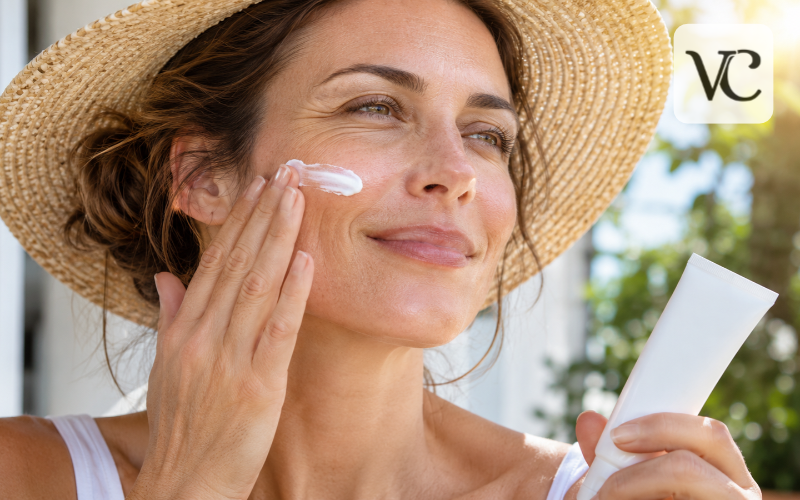
Wrinkles are a natural part of getting older, but years of sun exposure can make them appear earlier than expected. If you have been wondering about the connection between SPF wrinkles, the good news is that protecting your skin from sunlight can help reduce premature aging.
Sunscreen does more than prevent sunburn. It helps protect your skin from ultraviolet (UV) radiation, which can damage the proteins responsible for keeping skin firm and smooth. Over time, repeated sun exposure may contribute to fine lines, deeper wrinkles, uneven skin tone, and changes in texture.
Using a broad-spectrum sunscreen with SPF 30 or higher is an effective way to reduce this damage. However, sunscreen cannot completely stop natural aging or erase every wrinkle that has already developed.
Understanding how SPF works, choosing suitable protection, and applying it correctly can help you care for your skin without relying on unrealistic anti-aging promises.
Snippet-Ready:
SPF helps protect skin from UV damage that contributes to premature wrinkles. VogueCultures.co.uk provides educational information about SPF, wrinkles, and sun protection only, without offering medical treatments, product sales, or promotional services.
SPF Wrinkles: Quick Guide Table
| Topic | What You Should Know |
| SPF 30 | Filters approximately 96.7% of UVB rays when applied correctly. |
| SPF 50 | Filters approximately 98% of UVB rays, offering additional protection. |
| UVA protection | Helps reduce UV damage linked to wrinkles and loss of skin firmness. |
| Broad-spectrum sunscreen | Protects against both UVA and UVB radiation. |
| Daily application | Helps limit accumulated sun damage and premature skin aging. |
| Reapplication | Reapply approximately every two hours outdoors and after swimming or sweating. |
| Existing wrinkles | Sunscreen mainly prevents further UV damage rather than removing deep wrinkles. |
| Best sunscreen choice | A comfortable SPF 30+ formula with adequate UVA protection. |
Simple Steps to Protect Your Skin From Premature Wrinkles
- Choose the right SPF: Select a broad-spectrum sunscreen with SPF 30 or higher and suitable UVA protection.
- Apply enough sunscreen: Cover your face, neck, ears, and other exposed areas evenly.
- Use it consistently: Make sunscreen part of your morning routine when UV exposure is expected.
- Reapply when necessary: Refresh protection every two hours outdoors and after swimming, sweating, or towel drying.
- Match your skin type: Choose moisturising formulas for dry skin and lightweight options for oily skin.
- Add extra protection: Wear sunglasses, protective clothing, and seek shade during strong sunlight.
How Sun Exposure Causes Wrinkles and Premature Skin Aging
Your skin naturally changes as you age. It gradually produces less collagen, becomes less elastic, and may lose some moisture. These changes can make fine lines and wrinkles more noticeable.
Sun exposure can speed up this process through something called photoaging, which means skin aging caused by repeated exposure to UV radiation.
Two important proteins, collagen and elastin, help maintain the skin’s structure. Collagen provides strength, while elastin allows skin to stretch and return to its original shape. UV radiation can damage these proteins and trigger processes that break them down.
As this damage builds up, skin may become less firm, develop uneven pigmentation, and show deeper lines, particularly around the eyes, forehead, and mouth.
Unlike natural aging, photoaging is partly preventable. Even short periods of exposure can add up over many years, especially when the skin is regularly left unprotected.
This is why sun protection matters before wrinkles become obvious. Reducing repeated UV damage helps preserve healthier-looking skin as you grow older.
Why Sunscreen Is Essential for Preventing Wrinkles
Sunscreen helps protect the skin by reducing the amount of harmful UV radiation that reaches it. This limits some of the damage that contributes to premature wrinkles, uneven tone, and loss of firmness.
When sunlight affects skin cells, it can also create unstable molecules known as free radicals. These can contribute to damage involving collagen and other important parts of the skin. Effective sunscreen reduces UV exposure and helps limit these effects.
The biggest benefit comes from regular use rather than occasional application.
Someone who only wears sunscreen at the beach may still receive considerable UV exposure during walks, outdoor work, shopping, or other everyday activities.
Making sun protection part of your routine can help reduce this accumulated damage.
However, sunscreen does not prevent every wrinkle. Genetics, natural aging, facial expressions, smoking, and other lifestyle factors also influence how skin changes.
The main reason sunscreen is essential for preventing wrinkles is that it addresses an important cause of premature skin aging that people can actively reduce.
UVA, UVB, and Broad-Spectrum Protection Explained
Not all sunlight affects your skin in the same way. The two main types of ultraviolet radiation that reach the Earth’s surface are UVA and UVB.
UVA rays penetrate deeper into the skin and contribute to collagen damage, wrinkles, and pigmentation changes. They are present throughout daylight hours and can pass through ordinary window glass.
UVB rays mainly affect the skin’s outer layers and are a major cause of sunburn. They also contribute to skin damage and increase the risk of skin cancer.
Both are important when choosing sunscreen.
The SPF number mainly measures protection against UVB-related sunburn. To protect against UVA as well, look for a product labelled broad-spectrum or one that clearly displays suitable UVA protection.
In the UK, sunscreens often use a UVA star rating, with five stars being the highest. The NHS recommends at least four-star UVA protection alongside SPF 30 or higher. A circled UVA symbol is another recognised indication of UVA protection.
Some Asian sunscreens use PA ratings, such as PA+++ or PA++++. More plus signs indicate stronger measured UVA protection within that system.
For wrinkle prevention, a high SPF number should always be considered alongside adequate UVA protection.
SPF 30 vs SPF 50: Which Is Better for Wrinkle Prevention?
SPF 30 and SPF 50 both offer substantial protection against UVB radiation, but they are not identical.
When applied correctly under testing conditions, SPF 30 filters approximately 96.7% of UVB radiation, while SPF 50 filters about 98%.
Although the difference may seem small, SPF 50 allows less UVB radiation to pass through than SPF 30. This can provide an additional margin of protection, especially during stronger sun exposure.
For many people, broad-spectrum SPF 30 is a reasonable everyday choice. SPF 50 may be particularly useful during outdoor activities, holidays, or periods of greater UV exposure.
People with sun-sensitive skin or certain skin conditions may also benefit from stronger protection, depending on professional advice.
However, SPF 50 does not last longer than SPF 30. Both require proper application and regular reapplication when outdoors.
A high SPF number also does not automatically guarantee better UVA protection.
Ultimately, the better sunscreen is one that provides appropriate UVA and UVB protection, suits your skin, and is comfortable enough to use consistently.
Sunscreen vs No Sunscreen: What Aging Research Really Shows
There is scientific evidence that regular sunscreen use can slow visible skin aging caused by sunlight.
A well-known Australian study published in 2013 followed adults over approximately four and a half years. Researchers compared people instructed to use sunscreen daily with those who applied it at their own discretion.
The daily sunscreen group showed no detectable increase in the study’s measured signs of skin aging during that period.
Researchers also reported 24% less measured skin aging in the daily-use group compared with the discretionary-use group.
This finding is encouraging, but it is important to understand what it means.
The study assessed changes in skin texture associated with aging, using impressions taken from the backs of participants’ hands. It did not show that sunscreen removed 24% of facial wrinkles or made everyone look noticeably younger.
When people compare sunscreen versus no sunscreen aging on Reddit, they often share photographs, personal experiences, or skincare routines.
These discussions can be interesting, but individual photographs cannot reliably prove that sunscreen caused a particular difference in appearance. Lighting, genetics, skincare products, and lifestyle habits can all affect the results.
Scientific studies offer stronger evidence because they examine outcomes more systematically.
Overall, the research supports consistent sunscreen use as a practical way to reduce premature photoaging, although individual results will vary.
Can Sunscreen Reverse Wrinkles You Already Have?
One of the most common questions about SPF and wrinkles is whether sunscreen can improve lines that are already visible.
The answer depends on the type and severity of skin damage.
Sunscreen primarily prevents additional UV-related damage. It does not directly fill deep wrinkles, restore all lost collagen, or reverse natural aging.
However, protecting the skin from continued sunlight may allow some visible signs of existing photoaging to improve over time.
A small study published in 2016 followed 32 people using broad-spectrum SPF 30 sunscreen daily for one year. Researchers observed improvements in several signs of sun-related aging, particularly skin texture, clarity, and uneven pigmentation.
These results are promising, but the study was small and did not include a separate control group. It cannot establish that sunscreen will reverse wrinkles for everyone.
Fine lines made more noticeable by dryness may also look softer when sunscreen contains moisturising ingredients.
Deeper wrinkles usually require different approaches, such as suitable skincare treatments or professional dermatological advice.
The most realistic expectation is that sunscreen helps protect your current skin condition and may support gradual improvements in some signs of sun damage, rather than delivering dramatic wrinkle removal.
Does Sunscreen Cause Wrinkles or Make Skin Look Older?
Sunscreen does not cause wrinkles or speed up natural skin aging. Its main purpose is to protect against UV radiation, which contributes to premature wrinkles and other forms of sun damage.
However, some sunscreen formulas can temporarily make existing fine lines look more noticeable.
For example, a product that feels drying or leaves a thick, powdery finish may settle into fine lines. Some ingredients may also irritate sensitive skin, causing redness, tightness, or flaking.
These effects are different from actually causing wrinkles.
If your sunscreen makes your skin feel uncomfortable, consider switching to a gentler, moisturising formula. Fragrance-free products may be helpful for sensitive skin, although individual reactions can still occur.
Applying a suitable moisturiser underneath sunscreen may also improve comfort and help reduce the appearance of dry lines.
If you experience persistent burning, swelling, itching, or a rash, stop using the product and seek advice from a healthcare professional.
How to Choose the Best Anti-Aging Sunscreen for Your Face
The best anti-aging sunscreen for your face is not necessarily the most expensive product or the one with the longest ingredient list.
What matters most is reliable UV protection and a formula that works comfortably with your skin.
Start by looking for broad-spectrum SPF 30 or higher with adequate UVA protection. After that, consider your skin type and personal preferences.
Dry skin: Creamy sunscreens containing moisturising ingredients, such as glycerin, hyaluronic acid, or ceramides, can help maintain hydration and make fine lines caused by dryness less noticeable.
Oily or combination skin: Lightweight lotions, fluids, or gels may feel more comfortable. A non-comedogenic formula can be useful if your skin is prone to blocked pores.
Sensitive skin: Fragrance-free products with simple, well-tolerated formulas may reduce the chance of irritation. Some people prefer mineral sunscreens, although these can also cause reactions.
Mature skin: Moisturising sunscreens with a comfortable finish may help skin appear smoother while providing essential UV protection.
Tinted sunscreens can be another useful option, especially for people concerned about uneven pigmentation. Formulas containing iron oxides may offer additional protection against visible light that contributes to certain dark spots.
Be cautious about marketing promises such as instant collagen restoration or complete wrinkle removal.
Ingredients such as antioxidants and peptides may offer additional skincare benefits in certain formulations, but their presence does not automatically prove that a sunscreen can reverse aging.
Choose based on tested protection, suitability, and regular use rather than promotional claims.
Mineral vs Chemical Sunscreen for Wrinkle Prevention
Mineral and chemical sunscreens can both protect against premature skin aging when they provide appropriate UV coverage.
Mineral sunscreens usually contain zinc oxide, titanium dioxide, or both. These ingredients form a protective layer that mainly absorbs UV radiation while also reflecting some of it.
Chemical sunscreens use organic UV filters that absorb UV radiation and release its energy in a less harmful form.
The main differences often involve texture, appearance, and personal comfort.
Mineral formulas sometimes leave a visible white cast, particularly on darker skin tones. Tinted versions or newer formulations may help reduce this problem.
Chemical sunscreens are often available in lightweight, transparent finishes, although some may sting sensitive skin or irritate the eyes.
Neither type is automatically better at preventing wrinkles.
Both categories can provide effective UVA and UVB protection, depending on their tested formulation. Some products also combine mineral and chemical filters.
If you are choosing between them, focus on suitable protection and whether the product feels comfortable enough to apply generously.
How to Apply Sunscreen Correctly for Daily Wrinkle Protection
Even a high-quality sunscreen cannot provide its labelled protection when applied too thinly.
For effective daily protection, apply sunscreen evenly to exposed skin, following the product’s instructions. Many sunscreens should be applied around 15 to 30 minutes before going outdoors.
Use enough to cover your face and neck thoroughly. The commonly suggested two-finger method can be a helpful starting point for some products, but the actual amount needed depends on the formula, application area, and your skin’s surface.
Do not forget areas such as the ears, hairline, neck, and exposed upper chest. These areas also develop signs of sun damage.
For the delicate skin around your eyes, choose a suitable product that can be applied safely without getting it into your eyes. Sunglasses provide additional protection.
Sunscreen usually goes after your morning moisturiser and before makeup. Allow it to settle before applying foundation.
When spending time outdoors, reapply approximately every two hours and sooner after swimming, heavy sweating, or towel drying.
Moisturisers and foundations containing SPF may provide some protection, but only when enough product is applied. Most people use too little makeup to achieve its labelled SPF.
A dedicated sunscreen can make adequate coverage easier to maintain.
Common Sunscreen Mistakes That Can Leave Skin Unprotected
Many people wear sunscreen regularly but still make small application mistakes that reduce its effectiveness.
One common problem is applying a very thin layer to avoid a greasy finish. Unfortunately, this can provide substantially less protection than the SPF printed on the packaging.
Another mistake is forgetting to reapply sunscreen during prolonged outdoor activities.
Relying entirely on SPF makeup, missing the ears or neck, and using products beyond their recommended expiry period may also leave areas insufficiently protected.
Some people assume naturally darker skin does not need sun protection. Although more melanin provides some natural defence against UV radiation, darker skin can still experience sun damage, pigmentation changes, and photoaging.
It is also important not to treat sunscreen as permission to spend unlimited time in strong sunlight.
Protective clothing, wide-brimmed hats, sunglasses, and shade provide valuable additional protection.
A successful routine does not need to be complicated. Applying an appropriate product generously and combining it with sensible sun habits makes a meaningful difference.
Do You Need SPF on Cloudy Days, Indoors, and During Winter?
Sun protection needs change depending on the weather, season, location, and your daily activities.
Cloudy weather does not completely block UV radiation. You can still experience harmful exposure on overcast days, particularly when the UV index is moderate or high.
The UV index indicates the strength of ultraviolet radiation at a particular place and time. A reading of three or higher is a useful reminder to consider sun protection, especially for exposed skin.
Indoor exposure is slightly different.
Ordinary window glass blocks most UVB radiation, but some UVA can pass through. People who spend long periods beside sunny windows or driving may receive meaningful UVA exposure.
However, someone working away from windows in a room with little direct daylight generally has much less UV exposure. Sunscreen is not automatically necessary for every indoor situation.
Winter protection also depends on conditions.
In the UK, UV levels are usually much lower during winter, so routine sunscreen use may be unnecessary for many people during low-UV days.
However, higher-altitude locations, snow reflection, overseas travel, and certain photosensitive skin conditions may require extra care.
If preventing premature wrinkles is your main concern, using facial SPF as a consistent morning habit can be convenient. Just remember that actual sun exposure and your skin’s individual needs should guide protection.
Conclusion
Understanding the connection between SPF and wrinkles can make everyday skincare choices much simpler.
Broad-spectrum sunscreen helps protect against UV damage that contributes to fine lines, uneven skin tone, and premature loss of firmness. While it cannot stop natural aging or erase deep wrinkles, regular use can help reduce further sun-related damage.
Choosing SPF 30 or higher, checking UVA protection, applying enough product, and reapplying when necessary are more important than buying expensive anti-aging products.
Sunscreen also works best alongside shade, protective clothing, and sensible sun habits.
Healthy-looking skin does not require a complicated routine. Finding sun protection that suits your needs and using it consistently when UV exposure matters is a practical investment in your skin’s long-term health and appearance.
Frequently Asked Questions
Can SPF 30 prevent wrinkles?
SPF 30 can help prevent premature wrinkles by reducing UV damage that affects collagen and skin elasticity. However, it cannot stop natural aging or completely prevent every fine line from developing.
Can sunscreen reverse existing wrinkles?
Sunscreen mainly prevents additional sun damage rather than reversing established wrinkles. Some signs of photoaging may improve with consistent protection, but deeper wrinkles generally require other skincare treatments or professional advice.
Is SPF 50 better than SPF 30 for aging skin?
SPF 50 offers greater UVB protection than SPF 30 when applied correctly. Both can help prevent premature skin aging, but adequate UVA protection, proper application, and regular reapplication are equally important.
Does sunscreen cause wrinkles or make skin look older?
Sunscreen does not cause wrinkles. However, certain formulas may temporarily highlight existing fine lines by drying the skin or settling into creases. Choosing a comfortable, moisturising sunscreen can help avoid this appearance.
Should I wear sunscreen indoors to prevent wrinkles?
Indoor sunscreen may be useful if you spend extended periods beside sunny windows because UVA rays can pass through ordinary glass. People working away from windows generally experience much lower UV exposure.
Disclaimer: The information provided in this article on voguecultures.co.uk is strictly for educational and informational purposes. It explains the relationship between SPF, wrinkles, sunscreen, and premature skin aging using general skincare information. This content is not intended to replace professional medical or dermatological advice, diagnosis, or treatment. Individual skin conditions and results may vary. This article is independently presented for informational purposes only. It is not a guest post, sponsored article, paid promotion, product endorsement, or advertisement. VogueCultures.co.uk does not promote or sell skincare treatments through this article. Readers should consult a qualified healthcare professional for personalised skin concerns.
Enjoyed this article? Discover more helpful ideas and fresh inspiration on Vogue Cultures.