
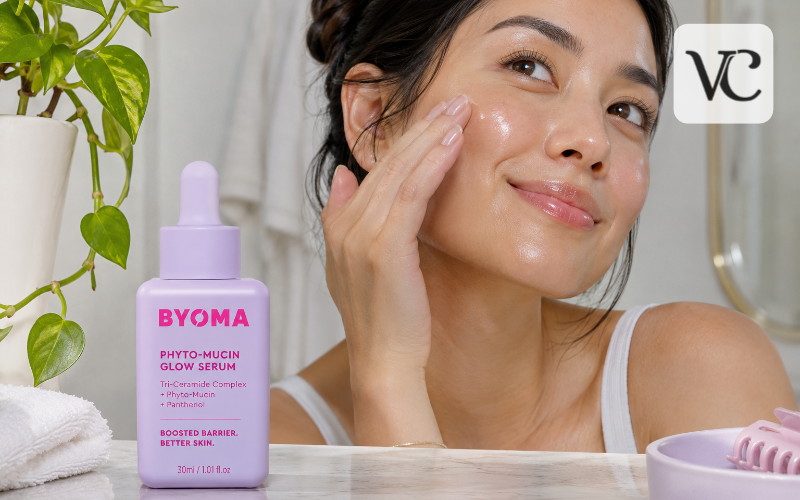
A healthy-looking glow is often less about adding more products and more about keeping skin comfortable and hydrated. That is the idea behind BYOMA Phyto-Mucin Glow Serum, a lightweight treatment that promises a dewy finish without the heavy feel of some richer skincare formulas. Its plant-based approach has also caught the attention of people who like the idea of snail mucin but would rather use a vegan product.
The serum is designed to add moisture, support the skin barrier, and leave the face looking smoother. BYOMA also presents it as a useful step before makeup. But an appealing ingredient list does not automatically mean a product will suit everyone. Texture, existing skincare habits, and individual skin reactions all matter.
Here is a closer look at what the serum contains, what it can realistically do, how to use it, and whether it deserves a place in your routine.
Snippet-Ready:
BYOMA Phyto-Mucin Glow Serum is a vegan skincare product designed to hydrate skin, support its moisture barrier, and create a dewy appearance. voguecultures.co.uk provides information about this serum and its uses only.
BYOMA Phyto- Mucin Glow Serum Quick Guide
| Feature | What You Should Know |
| Product | BYOMA Phyto- Mucin Glow Serum |
| Main purpose | Hydration, barrier support, and dewy-looking skin |
| Key ingredients | Plant extracts, ceramides, hyaluronic acid, and panthenol |
| Formula | Vegan, fragrance-free, lightweight serum |
| Skin types | May suit dry, oily, combination, and dehydrated skin |
| Acne-prone skin | Marketed as non-comedogenic; individual reactions vary |
| Main benefits | Softer, smoother, hydrated-looking skin |
| How to use | Apply after cleansing and before moisturizer |
| Makeup compatibility | Can provide a hydrating base beneath makeup |
| Typical US price | Approximately $16–$17; prices may change |
| Possible drawbacks | Stickiness, pilling, or irritation for some users |
How to Use BYOMA Phyto- Mucin Glow Serum
- Cleanse your face: Start with a gentle facial cleanser to remove dirt, oil, and makeup.
- Apply the serum: Use approximately one pump and gently spread or pat it across your face, avoiding your eyes.
- Allow it to absorb: Give the lightweight formula a moment to settle before applying other products.
- Use a moisturizer: Follow with a suitable face moisturizer to help maintain hydration.
- Apply sunscreen: During the day, finish with broad-spectrum SPF 30 or higher to protect your skin.
- Observe your skin: Introduce the serum gradually, especially if you have sensitive or acne-prone skin.
What Is BYOMA Phyto-Mucin Glow Serum?
BYOMA Phyto- Mucin Glow Serum is a water-based facial serum made for everyday hydration and a fresh-looking finish. It comes in a 40 ml bottle and is intended to be applied after cleansing, before moisturizer. Unlike a rich face cream, it has a lighter consistency that can sit comfortably beneath other skincare products.
The name refers to phyto-mucin, a blend of plant-derived ingredients used as an alternative to snail mucin. “Phyto” means plant, so the serum does not rely on snail secretion to create its moisturizing effect. It also contains ingredients commonly used to help the skin hold on to water.
BYOMA places particular importance on the skin barrier, the outer layer that helps keep moisture in and everyday irritants out. This makes the product more of a supportive hydrating serum than a strong treatment for acne, pigmentation, or other specific skin concerns.
What Does Phyto-Mucin Glow Serum Actually Do?
The most immediate benefit to expect is added hydration. When the upper layers of skin contain enough moisture, they often appear smoother, softer, and slightly fuller. Dry-looking lines may become less noticeable for a while, and light can reflect more evenly from the skin’s surface. That is part of what people describe as a dewy glow.
The formula combines ingredients that attract water with ingredients that help support the skin’s natural protective layer. Used alongside a suitable moisturizer, it may make tight or dehydrated skin feel more comfortable. However, hydration is different from treating the underlying cause of ongoing redness, acne, or irritation.
BYOMA makes claims about improvements in brightness, skin sensitivity, and barrier strength based on its product testing. Those claims should not be interpreted as a promise that everyone will see the same change. A glow may be noticeable soon after application, while judging longer-term comfort and texture requires consistent use over time. Neither result means the serum permanently changes the skin.
BYOMA Phyto-Mucin Glow Serum Ingredients Explained
The ingredient list helps explain why this product is mainly about moisture and skin comfort. Its phyto-mucin blend includes Japanese yam root extract, kelp extract, and okra fruit extract, which appears on the label as Hibiscus esculentus fruit extract. These plant-based ingredients are included for their skin-conditioning properties. They are not identical to the compounds found in snail secretion.
Glycerin is another important ingredient. It attracts water and is widely used in moisturizers because it helps skin feel less dry. The serum also contains several forms of hyaluronic acid, along with polyglutamic acid. Both are included to support hydration rather than exfoliate or strip the skin.
Panthenol, sometimes called provitamin B5, helps with moisture and skin comfort. BYOMA’s Tri-Ceramide Complex brings together ceramide NP, cholesterol, and supporting fatty components. These substances are related to the materials naturally present in the skin barrier, where they help reduce moisture loss.
Palmitoyl tripeptide-1 is a peptide included for skin-conditioning purposes. It is reasonable to view it as a supporting ingredient, not proof that the serum can remove wrinkles. The formula is marketed as vegan and cruelty-free and does not contain added fragrance or drying ethanol. Even so, fragrance-free does not mean allergy-proof. Anyone with known ingredient sensitivities should examine the current packaging before use.
Phyto-Mucin vs Snail Mucin: Understanding the Difference
Snail mucin is obtained from snail secretion and appears in skincare products mainly for its moisturizing and conditioning properties. Phyto-mucin, by contrast, is a plant-based formulation intended to provide a similar hydrated, smooth-looking effect without using an animal-derived ingredient.
Both types of product may help skin feel more supple, but they are not chemically identical. Their texture and performance depend on the entire formula, not simply whether the label says mucin. One snail mucin essence might feel slippery and stretchy, while a plant-based serum may feel more like a gel. Neither texture guarantees better results.
The biggest practical reason to choose BYOMA’s version is its vegan positioning. People who dislike the feel of certain snail mucin products may also prefer it. Those with allergies or sensitive skin should still check every ingredient, since a plant-derived formula can cause reactions too.
Texture, Absorption, and the Glass-Skin Finish
The serum is designed to spread easily and absorb without leaving a greasy layer. Its gel-like texture can make it appealing to people who want moisture but dislike thick creams. Some users describe a comfortable, smooth finish, while others notice a slightly tacky feeling, especially when they apply too much.
“Glass skin” describes a very smooth, luminous appearance. It is a beauty term, not a medical result or a promise of poreless skin. A hydrating serum can improve the way light catches the face, but natural pores and texture will still be visible.
Under makeup, the serum may help create a moisturized base so foundation goes on more evenly. Results will vary with the sunscreen, foundation, and moisturizer layered over it. If makeup begins to roll into tiny flakes, the issue may be too many layers, too much product, or formulas that do not sit well together.
How to Use BYOMA Phyto-Mucin Glow Serum Correctly
Start with a gentle cleanser and pat your face dry, leaving it slightly damp if that feels comfortable. If you use a toner, apply it first. BYOMA recommends one pump of the phyto-mucin serum, gently patted into the face until absorbed. Avoid getting it in your eyes.
Follow with any other compatible serum you normally use, then apply moisturizer. In the morning, finish with broad-spectrum sunscreen of SPF 30 or higher. The glow serum does not replace sunscreen, even if your skin looks brighter after using it.
You can also use the serum in an evening routine. There is no need to apply several pumps to make it work harder; a thin, even layer is a sensible starting point. If your skin is new to this type of formula, begin once daily or every other day and see how it responds.
For people with very dry skin, the serum may not feel moisturizing enough on its own. Pairing it with a cream that helps hold moisture in place is often more useful than applying extra serum.
Which Skin Types Are Best Suited to This Serum?
Dehydrated skin may benefit most noticeably because the formula focuses on adding and holding moisture. Dehydration is a condition rather than a skin type, so oily and dry skin can both experience it. Someone with oily skin might appreciate the lighter finish compared with a heavy cream.
For dry skin, the serum can be a useful first layer, but it may need a richer moisturizer on top. Combination skin may find it easy to apply across the face, adjusting the amount of moisturizer used in drier areas. Normal skin can use it as an optional hydration step rather than a necessity.
Sensitive skin requires a little more care. Although BYOMA markets the product as dermatologist-tested and fragrance-free, those labels cannot guarantee that every person will tolerate it. Patch-test on a small area first and watch for itching, burning, persistent redness, or swelling.
If you are dealing with an active eczema flare, damaged skin, or ongoing irritation, it is sensible to keep the routine simple and seek professional advice when needed rather than adding several new products at once.
Is BYOMA Phyto-Mucin Glow Serum Acne-Safe?
BYOMA describes the serum as non-comedogenic, meaning it is formulated with the aim of being less likely to clog pores. That is encouraging for acne-prone shoppers, but it is not a guarantee against breakouts. Skin can react to a product for several reasons, including irritation, changes in routine, or an ingredient that does not suit an individual.
Some customer reviews mention new blemishes after trying the serum. These reports deserve attention, but they cannot establish that the product caused the breakouts. Other users with blemish-prone skin report enjoying the hydration without problems. The difference is why personal tolerance matters more than a simple “acne-safe” label.
Introduce the serum without changing several other products at the same time. If you develop repeated new spots, itching, or worsening irritation after using it, stop applying it and see whether your skin settles. Seek advice from a dermatologist if symptoms persist. The serum is not an acne treatment and should not replace one that has been recommended for you.
Layering the Serum With Other Skincare and Makeup
Because the formula is focused on hydration, it can generally fit beside products such as niacinamide or vitamin C. It may also complement a routine that includes a retinoid, particularly when dryness is a concern. However, compatibility does not mean that every combination is comfortable for every face.
Retinoids and exfoliating acids can irritate skin, especially when introduced too quickly. If your routine already includes these ingredients, keep the hydrating steps simple and avoid adding multiple new treatments together. Follow the directions for your active product and reduce use if irritation develops.
For makeup preparation, apply a small amount of serum and let it settle before moving on to moisturizer, sunscreen, and foundation. Give each layer a chance to sit comfortably. Applying more serum is not always better; it can increase tackiness or make later products pill.
If pilling occurs, try using less product, allowing more time between steps, or simplifying the number of layers. The serum can act as a helpful makeup base, but it is not guaranteed to replace a dedicated primer for every foundation or skin type.
BYOMA Phyto-Mucin Glow Serum Reviews: What Users Really Say
Customer feedback offers a useful picture of how the serum feels in everyday routines, although it cannot replace controlled testing. Positive reviews often mention a fresh glow, softer skin, and a lightweight texture that works well underneath makeup. Some users appreciate getting a hydrated appearance without the heaviness of a richer product.
The critical reviews are just as useful. A smaller group describes stickiness, pilling, dryness after the product settles, or blemishes that appeared during use. Others simply feel that the serum did not make enough difference to justify keeping it in their routine. These reactions show why an attractive formula is not automatically the right choice for everyone.
Discussions on Reddit and similar skincare forums can highlight practical details, such as how a serum behaves under sunscreen or whether someone with oily skin finds it comfortable. But these posts are personal accounts. They rarely control for other skincare changes, climate, makeup, or underlying skin concerns.
When reading BYOMA Phyto-Mucin Glow Serum reviews, look for comments from people with skin needs similar to yours and pay attention to how long they used it. Treat dramatic before-and-after claims with care, especially when lighting and makeup may differ.
Price, Availability, and Where to Buy
The serum is sold in a 40 ml bottle and generally sits in the affordable skincare category. At the time of checking, BYOMA’s US website listed it at $15.99, while Ulta showed a regular price of $16.99. In the UK, the listed price at BYOMA and Boots was £14.99. Prices, promotions, and stock can change, so check the retailer before ordering.
Depending on your location, you may find it on BYOMA’s official store, at established beauty retailers, or through online marketplaces. If searching for BYOMA Phyto-Mucin Glow Serum on Amazon, confirm that the listing identifies a trustworthy seller and matches the correct product name and size. A marketplace listing by itself does not establish that a seller is authorized.
Check packaging images, seller information, return policies, and the ingredient label. Be cautious about unusually cheap products or listings with unclear origins. Also compare the total price after shipping rather than judging value from the bottle price alone.
Is BYOMA Phyto-Mucin Glow Serum Worth Trying?
This serum makes sense for someone who wants an affordable hydration step, likes a dewy finish, and prefers a vegan alternative to snail mucin. Its combination of moisture-attracting ingredients and barrier-supporting components is a reasonable fit for that purpose. The fragrance-free formula and relatively light texture are additional reasons some people may find it appealing.
There are limits, however. The serum is not designed to clear acne, erase wrinkles, or solve every cause of redness. It may feel tacky on some skin types, and a few users report irritation or breakouts. Someone who already uses a hydrating serum and moisturizer that work well may not notice enough extra benefit to justify another step.
The best way to judge value is to match the product to a real need. If dehydration and makeup preparation are your main concerns, it could be worth considering. If you want targeted treatment for persistent acne or pigmentation, a different product or professional guidance may be more useful.
Conclusion
BYOMA Phyto-Mucin Glow Serum is a straightforward option for people who want more hydration and a soft, dewy appearance without choosing a snail-derived product. Its plant extracts, hyaluronic acid, panthenol, and barrier-supporting ingredients explain why it has attracted interest among skincare users.
Still, the promised glass-skin finish is a cosmetic effect, not a guarantee of flawless skin. Some people enjoy the texture and glow; others find that it does not suit their face or routine. Start with a small amount, pay attention to your skin’s response, and remember that cleanser, moisturizer, and daily sunscreen remain the foundations of a practical routine. The right serum should make skincare easier, not more complicated.
Frequently Asked Questions
What does BYOMA Phyto-Mucin Glow Serum do?
BYOMA Phyto-Mucin Glow Serum helps hydrate the skin, supports its natural moisture barrier, and creates a smoother, dewy appearance. Its lightweight formula is designed for everyday skincare rather than treating specific skin conditions.
Is BYOMA Phyto-Mucin Glow Serum good for acne-prone skin?
The serum is marketed as non-comedogenic, meaning it is designed to be less likely to clog pores. However, individual reactions vary, so acne-prone users should introduce it gradually and monitor their skin.
Can I use BYOMA Phyto-Mucin Glow Serum every day?
Yes, the serum is designed for daily use and can fit into morning or evening skincare routines. Start with a small amount, follow with moisturizer, and apply sunscreen during the day.
Is phyto-mucin better than snail mucin?
Neither ingredient type is automatically better. Phyto-mucin offers a plant-based alternative to snail-derived ingredients, making it appealing to vegan skincare users. Hydration, texture, and results depend on the complete product formulation.
Can BYOMA Phyto-Mucin Glow Serum cause breakouts?
Some users report breakouts or irritation after using the serum, while others experience no problems. These reports do not prove the serum causes acne. Stop using it if you notice persistent irritation or worsening blemishes.
Disclaimer: This article on voguecultures.co.uk is provided strictly for educational and informational purposes. It offers general information about BYOMA Phyto-Mucin Glow Serum, including its ingredients, potential benefits, usage, and customer experiences. The content is not part of any guest posting arrangement, paid promotion, sponsored collaboration, or advertising activity. We do not guarantee specific skincare results, as individual skin types and reactions may vary. Product details, ingredients, prices, and availability may change. Readers should verify current product information and consult a qualified dermatologist before use if they have ongoing skin concerns.
Enjoyed this article? Discover more helpful ideas and fresh inspiration on Vogue Cultures.