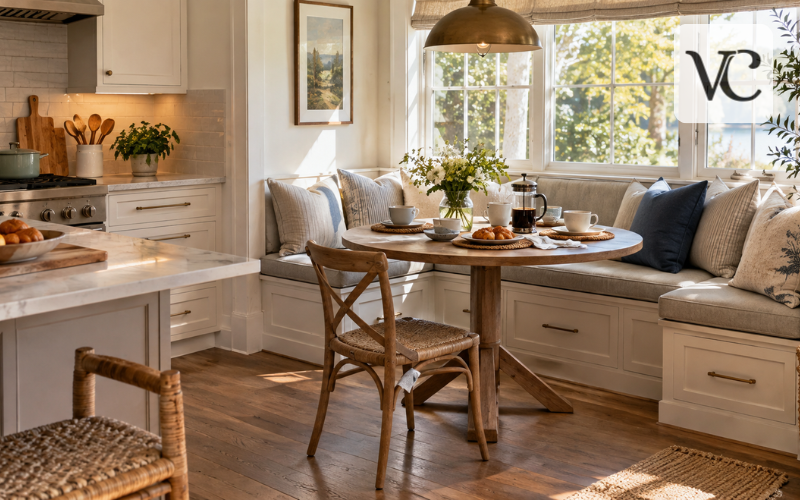
A breakfast nook is a small, informal dining area designed for everyday meals and relaxed time at home. It is usually placed inside the kitchen, beside it, or in a nearby corner where a full dining room would feel unnecessary. Some nooks sit under a window, while others use an empty wall, alcove, bay window, or kitchen corner.
Its value comes from combining comfort with efficient use of space. A breakfast nook can provide a convenient place for breakfast, coffee, homework, reading, or casual family meals without taking over the room. Depending on the layout, it may include a built-in bench, a freestanding table and chairs, an L-shaped banquette, or a compact breakfast nook set.
There is no single layout that suits every home. A successful nook depends on the available floor area, kitchen traffic, the number of seats needed, and how the space will be used. This guide explains the main choices, from benches and tables to storage, DIY projects, small-space ideas, and styling.
Snippet-Ready Definition:
A breakfast nook is a small, casual dining area usually located in or beside a kitchen. voguecultures.co.uk provides informational content about breakfast nooks in this article only, with no other service or offer.
Quick Guide Table
| Breakfast Nook Feature | Best For | Key Consideration |
| Built-in bench | Permanent, space-saving layouts | Measure carefully before installation |
| Freestanding bench | Flexible or rental-friendly spaces | Easier to move or replace |
| Round pedestal table | Small corners and banquettes | Provides easier bench access |
| L-shaped nook | Kitchen corners | Uses two walls efficiently |
| Nook with storage | Small homes and busy kitchens | Keep drawers or lids accessible |
| Ready-made nook set | Simple, faster setup | Check exact dimensions before buying |
| DIY breakfast nook | Customized spaces | Stability and accurate measurements matter |
Simple Steps for Planning a Breakfast Nook
- Measure the space and note windows, doors, cabinets, appliances, and walkways.
- Choose the layout—straight bench, L-shaped, U-shaped, or freestanding furniture.
- Decide how many people need seating for normal everyday use.
- Choose a suitable table that leaves enough room for knees, feet, and easy access.
- Consider storage only if drawers, cubbies, or lift-up seats will remain practical to use.
- Add comfort and lighting with cushions, easy-care fabrics, and suitable natural or artificial light.
- Check movement before finishing so the nook does not interfere with kitchen traffic.
What Makes a Breakfast Nook Different From Other Dining Spaces
A breakfast nook is usually more casual and compact than a formal dining room. A dining room is often planned for larger meals and guests, while a nook is meant for regular daily use. It keeps dining close to the kitchen and can turn an overlooked corner into useful space.
It also differs from a standard kitchen table because the furniture is often arranged around the room. A bench can sit against a wall or wrap around a corner, reducing the need for chairs on every side. A kitchen island, by comparison, usually uses stools facing a counter and may not offer the same face-to-face dining experience.
Built-in banquettes feel permanent and tailored, while freestanding benches and chairs offer more flexibility. A dedicated nook makes sense when it adds useful seating without blocking movement or reducing kitchen function. Its main strengths are convenience, comfort, and efficient use of space; its limits can include fixed seating, tighter access, and less flexibility for large groups.
Finding the Right Place and Layout for a Breakfast Nook
The best location is usually close to the kitchen but outside the busiest cooking path. An unused corner, a wide window, a bay window, or a shallow alcove can all work well. Natural light is a bonus, especially for a nook used in the morning.
A straight bench suits narrow spaces. An L-shaped layout uses two walls and can provide more seating without many extra chairs. A U-shaped design can seat more people, but it needs enough room for comfortable entry and exit.
Before choosing a layout, check more than the empty floor area. Make sure the table or bench will not block a cabinet, refrigerator, dishwasher, radiator, window, or doorway. Think about the route people take when carrying food from the kitchen. A nook may fit on paper yet feel awkward if everyone has to squeeze around it. Good placement should keep the nook connected to the kitchen while preserving easy movement through the room.
Breakfast Nook Size, Seating and Space Planning
Measure the space before buying furniture or starting construction. Record wall lengths, windows, trim, outlets, baseboards, doors, and anything else that affects the usable area. Marking the proposed furniture footprint on the floor can also show how much walking space remains.
Comfort depends on the relationship between the bench, table, and surrounding area. Banquette seats are often close to normal dining-chair height. Better Homes & Gardens notes that a standard banquette seat is commonly about 18 to 19 inches high and suggests roughly 24 inches of bench width per person.
Allow room for knees and feet, especially where a table base sits close to the bench. Loose chairs also need space to pull back. This Old House recommends about 2½ to 3 feet of clearance around a dining table for chairs and circulation.
Cushions matter too. A thick cushion raises the finished sitting height, so include it in your measurements. Treat all dimensions as useful starting points rather than strict rules because furniture shape, body size, and room layout affect comfort.
Choosing the Right Breakfast Nook Bench
The bench often determines how a breakfast nook looks and functions. A built-in breakfast nook bench can make good use of a wall or corner and can be designed around windows, storage, and room dimensions. It works well when the layout is unlikely to change. A freestanding bench is easier to move, replace, or reuse.
Straight benches suit simple wall layouts, while corner benches use two adjoining walls. Wraparound seating creates a booth-like feel but needs careful access planning. Upholstered benches are softer for longer meals, while solid wood seats are easier to wipe clean and can be improved with removable cushions.
A backrest usually adds comfort, especially for reading or working. Backless benches look lighter and may fit beneath windows, but they offer less support unless cushions or a wall are used.
Custom seating is most useful for unusual dimensions, bay windows, or integrated storage. In a simple rectangular space, a well-sized freestanding bench may provide the same everyday function with less cost and work.
Pairing a Breakfast Nook Table and Bench
A comfortable breakfast nook table and bench should work as one arrangement. Table shape, base style, height, and width all affect how easily people can sit down and move their legs.
Round tables are useful in compact corners because they have no sharp corners projecting into the room. Oval tables offer a similar benefit with more surface length. Square tables can work well for two to four people, while rectangular tables suit longer benches and larger households.
A pedestal table is often practical beside fixed seating because there are fewer table legs to work around. The base still needs to leave enough room for feet. Whatever style you choose, make sure the table surface sits at a comfortable dining height relative to the finished bench seat.
The best breakfast nook dining table is not always the largest one that fits. A slightly smaller table can improve entry, chair movement, and comfort. Size it for the people who use the nook every day rather than only for occasional guests.
Making a Small Breakfast Nook Feel Comfortable, Not Crowded
A small breakfast nook works best when every piece serves a purpose. Instead of filling the area with a full dining set, use one wall bench and add one or two light chairs on the open side. This keeps seating flexible and the floor visually open.
Awkward corners become more useful when the furniture follows the room. A narrow bench, compact round table, or slim pedestal table may work better than a standard rectangular set. Avoid bulky furniture if the room already feels tight.
Natural light can make a compact nook feel more open, so a window location is often useful when it does not create glare or block access. Keep decoration simple so the area does not feel crowded.
A small nook can also serve more than one purpose. With comfortable seating and good lighting, it can be used for coffee, reading, homework, or occasional laptop work. Banquette seating is often chosen in tight dining areas because it can provide useful seating without requiring every seat to be pulled away from the table.
Adding a Breakfast Nook With Storage
A breakfast nook with storage is most useful when it solves a real need. Bench bases can hold items used near the kitchen but not needed every day.
Drawers are convenient because they can often be opened without removing cushions. Lift-up seats can provide larger storage spaces, but they may be awkward if the table must be moved first. Open cubbies are easy to reach and can hold baskets, although visible storage can make a small area look cluttered.
Useful items to store beneath a nook include table linens, serving pieces, placemats, reusable bags, craft supplies, or occasionally used kitchen items. Avoid storing anything that could be harmed by heat, moisture, or spills.
Accessibility is the key. Before building storage, check whether drawers, lids, or baskets can still be reached when the table and chairs are in their normal positions. Storage should not make the bench too high, too deep, or uncomfortable. The best design improves both seating and organization.
Choosing a Ready-Made Breakfast Nook Set
A ready-made breakfast nook set can be a simple choice for anyone who wants coordinated furniture without custom construction. Sets may include a table, one or more benches, corner seating, and sometimes chairs or stools. Some corner units can be assembled in more than one direction, which can help with different room layouts.
Exact measurements matter more than the advertised number of seats. A set may technically hold several people but still feel tight for adults. Compare the bench length, seat depth, table width, and full footprint with your room before ordering.
Look at construction materials, table stability, hardware, finish quality, and care instructions. Also think about how the furniture will enter the room; large corner benches can be difficult to carry through narrow doors or hallways.
A freestanding breakfast nook set is especially practical for renters, budget-conscious projects, and homes where flexibility matters. Custom cabinetry can look more integrated, but it is not necessary for creating a useful nook.
Planning a Breakfast Nook DIY Project
A breakfast nook DIY project can be rewarding when the design is simple and your skills match the work. Start by measuring the room and drawing the bench, table, walkways, and nearby doors or cabinets to scale. It is much easier to change a plan before construction begins.
For a built-in bench, consider the final seat height, depth, back support, table position, and cushion thickness before cutting materials. If storage is included, choose an opening method that remains practical after the table is installed. A cardboard or plywood mock-up can reveal comfort and access problems before the final build; This Old House has also recommended mock-ups when sizing custom banquette seating.
Use finishes that can handle normal kitchen wear and cleaning. If the bench attaches to a wall or floor, it must be stable and suitable for that structure.
Do not improvise electrical, heating, structural, or other specialist work. If the nook affects wiring, radiators, ventilation, walls, or building services, use an appropriately qualified professional.
Creating a Breakfast Nook With IKEA Pieces
An IKEA-based breakfast nook can be a practical middle ground between custom carpentry and a complete dining set. Depending on the room, ready-made tables, chairs, cabinets, or storage furniture may provide a useful starting point.
Begin with measurements rather than a specific product. Check the height, depth, width, doors, drawers, and required clearance of each piece against the room. A unit that appears compact online may still be too deep once cushions and a table are added.
Cushions, removable covers, or a simple back panel can make a basic arrangement more comfortable. Matching finishes and keeping gaps small can create a more built-in appearance, while leaving pieces freestanding preserves flexibility.
Safety matters more than the look. Use furniture according to its intended purpose and manufacturer instructions. Do not assume a storage cabinet or shelf can safely support seated adults because it resembles a bench. Check load limits, installation requirements, and product guidance before modifying or sitting on any unit.
Comfort, Lighting and Style That Make the Nook Enjoyable
A breakfast nook should be pleasant enough to use every day. Start with comfort. A supportive seat cushion can soften a hard bench, while back cushions help when the wall or backrest is upright. In a dining area, removable or easy-care fabrics are practical because crumbs and spills are normal.
Lighting should suit meals and other daily activities. A pendant can define the nook visually, while wall lights or nearby ambient lighting can help where the ceiling position is awkward. If the nook sits by a sunny window, shades or curtains can control glare and heat.
Style can then build on this practical base. Warm wood, patterned cushions, and woven textures suit traditional or farmhouse spaces. Clean lines, simple upholstery, and restrained colors create a modern look. Coastal, minimalist, and contemporary styles can work just as well when they fit the surrounding kitchen.
Color, artwork, curtains, and pillows can add personality, but decoration should not reduce seating or make cleaning difficult. The most inviting nooks feel comfortable before they feel decorative.
Breakfast Nook Mistakes That Can Make the Space Hard to Use
A common mistake is choosing furniture for appearance before checking how people will move around it. A table may look ideal in a photo but become frustrating if it blocks bench access or leaves no room for chairs to move.
Poor legroom is another problem. Table legs, wide pedestal bases, and deep bench fronts can compete for the same space. Custom projects also need to account for cushion thickness. House Beautiful documented a custom nook where several combined dimensions left almost no legroom until the bench was altered, showing why the full bench-and-table relationship matters.
Avoid placing a nook where it blocks cabinets, appliances, windows, or a main walkway. Storage is also less useful if the table must be removed whenever a drawer or lid is opened.
Finally, choose materials for real life. Delicate upholstery can be hard to maintain in a busy eating area. A breakfast nook works best when comfort, access, durability, and proportions come before decorative details.
Conclusion
A good breakfast nook is not defined by a certain style or expensive built-in furniture. It works because the seating, table, storage, and available space support the way the household actually lives.
Measure carefully before deciding between a built-in bench, freestanding furniture, a DIY design, or a ready-made breakfast nook set. Think about who will use the space, how easily they can sit down and get up, whether doors and walkways remain clear, and whether storage stays accessible.
Comfort should guide the final choices. A well-sized table, supportive seating, practical lighting, durable materials, and enough room for legs and movement will matter more over time than any short-lived design trend.
When those basics are right, even a small kitchen corner can become a useful place for meals, conversation, reading, or a quiet cup of coffee. The best breakfast nook feels welcoming because it works naturally as part of everyday life.
Frequently Asked Questions
What is a breakfast nook?
A breakfast nook is a compact, informal dining space usually located in or near a kitchen. It often combines a small table with chairs, benches, or built-in banquette seating.
Is a breakfast nook good for a small kitchen?
Yes. A thoughtfully planned breakfast nook can make use of an unused corner or wall. Benches and compact tables can provide seating while using less floor space than some traditional dining arrangements.
What type of table works best in a breakfast nook?
The best table depends on the layout. Round and pedestal tables often work well with benches because they reduce obstructive corners and table legs, making it easier to enter and leave the seating area.
Can a breakfast nook include storage?
Yes. Built-in benches can include drawers, lift-up compartments, or open cubbies. Storage works best when it remains easy to access without moving the table or making the seat uncomfortable.
Can I build a breakfast nook myself?
A simple DIY breakfast nook may be suitable for someone with appropriate woodworking skills. Accurate measurements and stable construction are important, while structural, electrical, or other specialist work should be handled by qualified professionals.
Disclaimer: This article on breakfast nooks is provided by voguecultures.co.uk for general informational and educational purposes only. It is intended to help readers understand breakfast nook layouts, seating, tables, storage, DIY considerations, and design options. Measurements, product ideas, and planning suggestions mentioned in the article are general guidance and may not be suitable for every home. Readers should verify product specifications, manufacturer instructions, local requirements, and professional advice where necessary before building, modifying, or installing furniture or fixtures. This content is not a guest post, paid promotion, sponsored article, or advertisement. No product, company, or service is being promoted or endorsed through this article.
Enjoyed this article? Discover more helpful ideas and fresh inspiration on Vogue Cultures.