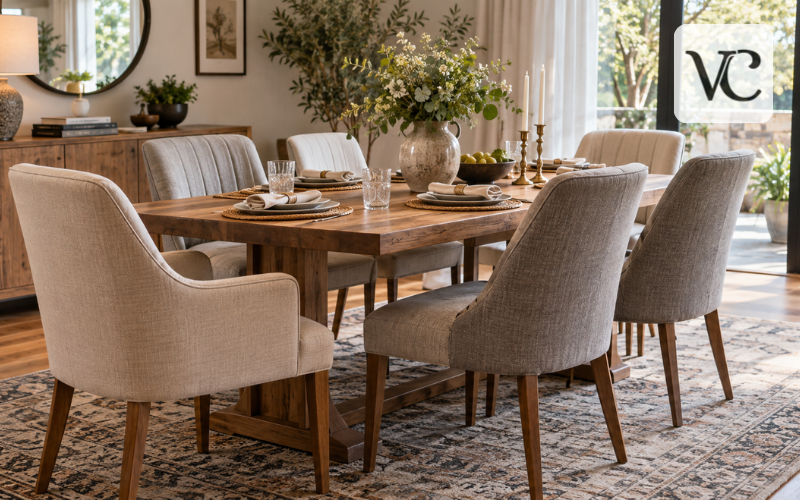
Comfortable dining chairs can change how a dining room feels. A chair that looks beautiful but becomes uncomfortable after twenty minutes can make people rush through meals, while a well-supported chair encourages longer conversations, relaxed family dinners, and even occasional work or study at the table.
True comfort comes from several things working together. Seat height, depth, width, back support, cushioning, material, and the relationship between the chair and table all matter. A very soft chair is not automatically more comfortable, and a firm chair is not automatically uncomfortable. The best choice supports the body without forcing an awkward posture.
This guide explains how to compare comfortable dining chairs in a practical way, so you can choose seats that suit your table, room size, household, and the amount of time people normally spend sitting.
Snippet-Ready Definition:
VogueCultures.co.uk provides informational guidance only about comfortable dining chairs, explaining comfort, sizing, support, materials, and practical buying considerations to help readers understand this topic clearly and make informed choices.
Quick Guide: Comfortable Dining Chairs
| Feature | What to Look For | Why It Matters |
| Seat height | Comfortable fit with your table | Helps keep legs and posture natural |
| Seat depth | Enough thigh support without pressure behind knees | Reduces discomfort during longer meals |
| Backrest | Gentle curve with lower-back support | Helps maintain a relaxed sitting position |
| Cushioning | Medium-firm, resilient padding | Supports the body without sinking too deeply |
| Chair width | Enough room to sit comfortably | Prevents crowding while keeping table spacing practical |
| Armrests | Comfortable height with table clearance | Can reduce shoulder and upper-body fatigue |
| Upholstery | Durable, easy-care material | Makes everyday cleaning and maintenance easier |
| Frame | Stable wood or metal construction | Improves safety, support, and long-term use |
Quick Checklist Before Buying Comfortable Dining Chairs
- Measure the height and underside clearance of your dining table.
- Compare the chair’s seat height, width, and depth.
- Check whether your feet rest comfortably on the floor.
- Make sure the backrest supports you without pushing you forward.
- Choose cushioning that feels supportive rather than excessively soft.
- Check that armchairs can slide beneath the table.
- Consider stain resistance and cleaning needs for everyday use.
- Test the chair for several minutes when possible.
What Makes a Dining Chair Truly Comfortable?
The most comfortable dining chairs usually feel supportive when you first sit down and remain comfortable through a full meal. Good support helps keep your hips, legs, and back in a natural position instead of making you constantly shift to find relief.
Seat shape matters as much as padding. A supportive seat should hold the body without creating a hard pressure point under the thighs. The backrest should meet the lower and middle back in a useful place rather than pushing the shoulders forward. The chair should also feel stable when you sit, stand, or lean back slightly.
Body size matters too. A chair that feels excellent to a tall person may feel too deep to someone shorter. Ergonomic guidance from the University of Melbourne notes that the feet should rest flat, the seat should leave clearance behind the knees, and an overly deep seat can encourage slouching. It also recommends treating standard dimensions as starting points rather than rules for everyone.
In practice, comfort is less about maximum softness and more about balanced support, enough room to move, and proportions that fit the sitter.
Seat Height, Depth, and Width: Getting the Fit Right
Seat height affects both leg position and how comfortably you reach the table. When seated, your feet should rest naturally on the floor and your knees should not be forced unusually high. The chair also needs enough space below the tabletop for your thighs.
A useful starting point is the distance between the seat and the underside of the table. Current furniture-sizing guidance commonly recommends about 10 to 12 inches of clearance. Standard dining tables are often around 28 to 30 inches high, although aprons and thick tabletops can reduce the usable space underneath.
Seat depth is equally important. If it is too deep, a shorter person may move forward and lose back support. If it is too shallow, a taller person may feel that the thighs are not properly supported. Ideally, there should be some clearance between the front edge of the seat and the back of the knees.
Width matters as well. The seat should not squeeze the hips, but oversized chairs can crowd a table. A gently rounded front edge can also feel better than a hard edge pressing into the thighs. Use measurements as a guide, then compare them with a chair you already find comfortable.
Backrest Shape and Support Matter More Than They Look
A dining chair backrest does more than complete the design. It helps control posture and determines whether your back feels supported during a quick breakfast or a long dinner.
A slight rearward angle can feel more relaxed than a perfectly upright back. University of Melbourne chair-design guidance notes that dining chair seats may slope slightly backward and that the back angle should work with the seat angle. It also highlights support around the lumbar area.
Curved backs can feel comfortable because they follow the body, but the curve needs to meet your back in the right place. Straight backs can also work well when the angle and padding are suitable. Low-back chairs may make a small room feel more open, while medium- and high-back designs can provide more contact.
The goal is not simply the tallest backrest. For longer meals, look for a shape that lets you lean back naturally without feeling pushed forward or unsupported.
Cushioning That Stays Comfortable Beyond the First Few Minutes
Softness can be appealing in a showroom, but very soft cushioning may compress quickly and leave you feeling the firm base underneath. Medium-firm cushioning often works well for dining because it softens pressure while still keeping the body stable.
Good cushioning should recover its shape after you stand. If a seat stays deeply compressed or feels uneven after a short trial, it may become less comfortable with regular use. The construction beneath the upholstery also matters, so a thick-looking cushion is not automatically better.
A padded seat with an exposed wood or metal back may be enough for shorter meals. For households that spend long evenings at the table, a fully upholstered chair can provide a softer feel across both the seat and back.
When shopping online, look for clear information about seat construction, upholstery, care requirements, and comments about comfort after longer use. Do not judge cushion quality from photographs alone.
The Most Comfortable Dining Chairs for Long Meals and Everyday Use
There is no single design that is best for every home, but some chair types suit longer sitting better than others.
Fully upholstered chairs are a strong option for people who prefer a softer seat and back. Padded wood-frame chairs can balance support, durability, and comfort. Curved-back chairs may feel secure around the upper or lower back when the shape suits the sitter.
Rattan and cane chairs provide a lighter, more breathable feel, especially in warm rooms. They can become more comfortable for long meals when paired with a secure, properly sized cushion. Dining armchairs add another level of relaxation by giving the arms somewhere to rest during conversation.
Think about how the room is really used. If meals are usually short, a simple supportive chair may be enough. If the table is also used for board games, homework, laptop work, or long social dinners, extra back support and resilient padding deserve more attention.
Most Comfortable Dining Chairs with Arms: When Armrests Are Worth It
Dining chairs with arms can feel especially comfortable because they support the forearms and let the upper body relax. Properly positioned armrests should support the arms without forcing the shoulders upward.
The main challenge is table clearance. A chair may feel excellent on its own but become frustrating if the arms hit the table apron. Measure from the floor to the top of the arm, then compare that with the lowest point under the table.
Armchairs also take more horizontal space. If you want six seats around a table, wide arms may reduce how many chairs fit comfortably. A practical solution is to use armchairs at the ends of a rectangular table and slimmer armless chairs along the sides.
For tight rooms, armless chairs can actually be the more comfortable everyday choice because they allow easier entry, more movement, and better storage under the table.
Comfortable Dining Chairs for Small Spaces Without Sacrificing Support
Comfortable dining chairs for small spaces should save room without making the sitter feel cramped. Slim frames, armless silhouettes, and chairs that tuck fully beneath the tabletop can reduce visual and physical clutter.
Low or open backs can also make a compact dining area feel less crowded. Stackable chairs are useful when extra seating is only needed occasionally, but they should still be judged for seat shape and back support rather than storage convenience alone.
Do not assume the narrowest chair is automatically the best choice. A seat can become uncomfortable if the frame presses against the hips. Instead, measure the available table space and look for efficient proportions.
Current IKEA listings show how much dimensions can vary among ordinary dining chairs. Some models have seat widths around 16 to 17 inches, while others are wider than 20 inches. Checking the actual measurements is therefore more useful than judging scale from a styled room photo.
Comfortable Dining Chair Sets: Choosing a Set of 4 or Set of 6
A comfy dining chairs set of 4 often suits smaller households, round tables, breakfast areas, or compact dining rooms. A comfortable dining chairs set of 6 makes more sense for a larger table or homes that regularly host family and friends.
Before buying a set, measure the usable space around the table rather than relying only on its advertised seating capacity. Legs, pedestal bases, and corner supports can reduce where people can actually sit. General table-sizing guidance often suggests roughly 24 to 26 inches of horizontal eating space per diner.
Matching sets make it easier to keep seat height and comfort consistent, but every chair does not have to be identical. You can use supportive armchairs at the ends and armless side chairs in the same design family.
Whatever arrangement you choose, people should be able to pull chairs out and sit down without bumping neighboring seats or table supports.
Upholstery and Materials That Balance Comfort With Daily Life
Material changes both how a chair feels and how easy it is to maintain. Fabric upholstery tends to feel warm and soft, while performance fabrics can be practical where spills are common. Always check the manufacturer’s care instructions because cleaning methods vary.
Leather and leather-look surfaces are often easier to wipe clean, though they can feel warmer or cooler depending on room temperature. Bouclé and other textured fabrics create a cozy look, but their texture may need more careful cleaning and may not suit every home with pets.
Wood chairs are durable and simple to maintain, and a removable cushion can add comfort without covering the entire frame. Rattan and cane allow more airflow, but the woven surface should feel smooth and supportive.
Removable covers can be especially useful for family dining. Some current IKEA upholstered chairs, for example, use removable machine-washable covers, showing how care features can matter as much as appearance in everyday use.
Match Comfortable Dining Chairs to the Table, Not Just the Room
A chair can match the room perfectly and still fit the table badly. Always compare seat height, overall width, and arm height with the table itself.
Start with vertical clearance. Around 10 to 12 inches between the chair seat and the table is a useful general target, but measure to the lowest obstruction underneath rather than only the tabletop. A thick apron can make an otherwise normal table feel tight.
Next, check horizontal space. Rectangular tables may have legs near the corners that limit chair placement. Pedestal tables can offer more flexibility because there are fewer legs around the edge, while round tables can become crowded when chairs are wide.
Armchairs need special attention because the arms may not pass beneath the table. A chair that cannot tuck in occupies more floor space when not in use. Measuring first prevents the common mistake of buying attractive chairs that technically fit but feel awkward every day.
What IKEA Specifications and Reddit Experiences Can Teach Shoppers
Retailers such as IKEA can be useful for comparing specifications because product pages often list seat height, seat depth, seat width, materials, care instructions, and testing information. Those details help you compare chairs instead of relying on photographs.
Current IKEA listings show noticeable differences in seat height and depth between models that may look broadly similar online. That is a good reason to compare actual dimensions with your table and body before buying.
Reddit can provide another kind of information: owner experience. Discussions about comfortable dining chairs often mention back support, seat depth, fabric wear, and comfort during long dinners or game nights. In one recent discussion, users specifically described the trade-off between chairs that look good and chairs that remain comfortable for hours.
That feedback can be helpful, but it is still personal opinion. A chair praised by one user may be too deep, tall, or firm for another. Use Reddit and customer reviews to identify issues worth checking, then rely on dimensions, materials, return policies, and your own sitting test before deciding.
How to Test Comfortable Dining Chairs Before You Buy
If possible, sit in a chair for more than a few seconds. A quick sit mostly tells you whether the cushion feels soft. A longer test reveals whether the seat edge presses into your legs, the backrest supports you, or you start shifting your weight.
Place both feet naturally on the floor. Sit back against the backrest and notice whether doing so forces your knees upward or leaves your feet unsupported. Check that the seat does not press hard behind the knees. Lean back gently and see whether the chair remains stable and the backrest meets your body comfortably.
If the chair has arms, rest your forearms without lifting your shoulders. Then move the chair under the table to confirm that the arms and your thighs have enough clearance.
For online purchases, verify seat height, depth, width, overall width, arm height, weight capacity, materials, and return conditions. Comparing those numbers with a chair you already own can prevent one of the most common mistakes: buying by appearance first and measurements second.
Conclusion
The best comfortable dining chairs are not simply the softest or most expensive options. Good comfort comes from the right combination of seat proportions, supportive cushioning, backrest shape, stable construction, suitable materials, and a proper fit with the dining table.
There is no single most comfortable dining chair for every person. Body height, preferred posture, room size, table design, and how long you normally sit all affect what feels right. A compact armless chair may be ideal in one home, while another household may prefer wide upholstered chairs with arms.
Focus on how the chair will actually be used. Measure carefully, compare seat dimensions, think about cleaning and durability, and test the chair for longer than a quick sit whenever possible. When comfort and practical fit come before appearance alone, dining chairs are far more likely to remain enjoyable for everyday meals and long conversations.
Frequently Asked Questions
What makes dining chairs comfortable for long meals?
Comfortable dining chairs usually combine supportive cushioning, suitable seat depth, proper height, a stable frame, and a backrest that supports a relaxed posture without creating pressure on the lower back or legs.
Are upholstered dining chairs more comfortable?
Upholstered dining chairs often feel softer because they provide cushioning across the seat and sometimes the back. However, good proportions and support are just as important as upholstery when judging long-term comfort.
Are dining chairs with arms more comfortable?
Dining chairs with arms can provide extra upper-body support during longer meals. They work best when the armrests sit at a natural height and fit comfortably beneath or alongside the dining table.
What type of dining chair works best in a small space?
Armless chairs with slim frames, supportive seats, and low or open backs are often practical for smaller rooms. They can tuck beneath the table while still providing enough seating space and back support.
How do I know whether a dining chair will fit my table?
Compare the chair’s seat and arm height with the table’s underside clearance. Also check chair width and available table space so diners can sit, move, and pull chairs out comfortably.
Disclaimer: This article on comfortable dining chairs is provided by VogueCultures.co.uk for general informational and educational purposes only. It is intended to help readers understand chair comfort, sizing, materials, support, and practical buying considerations. VogueCultures.co.uk is not promoting, advertising, or endorsing any specific chair, retailer, manufacturer, or brand through this article. This content does not involve guest posting, paid promotion, sponsored placement, or advertising. Product dimensions, materials, comfort, availability, and specifications can vary, so readers should verify current details with the manufacturer or retailer before purchasing.
Enjoyed this article? Discover more helpful ideas and fresh inspiration on Vogue Cultures.