
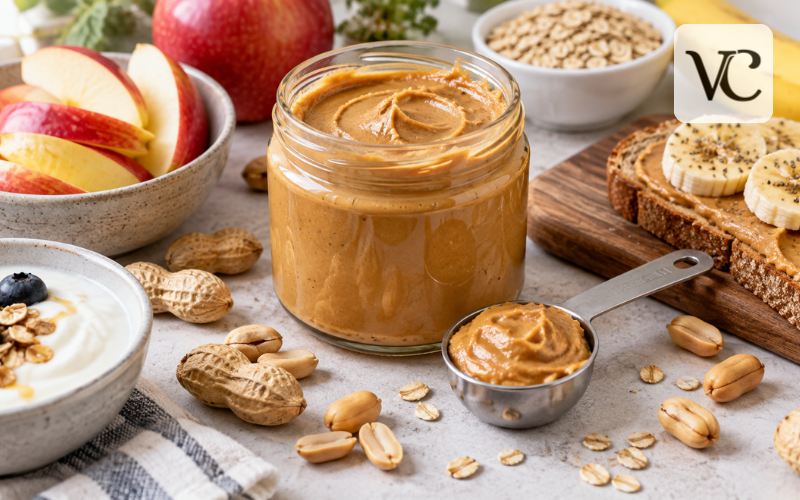
Yes, peanut butter can be good for you when it is eaten in sensible amounts and chosen carefully. It provides plant-based protein, mostly unsaturated fats, and useful nutrients such as vitamin E, niacin, magnesium, phosphorus, zinc, and potassium.
Still, peanut butter is not automatically healthy in every situation. It is calorie-dense, some products contain added sugar or more sodium, and it is not suitable for anyone with a peanut allergy.
So the best answer to “is peanut butter good for you?” is not simply yes or no. A simple peanut butter made mostly from peanuts can fit well into a balanced diet, but portion size, ingredients, your overall eating pattern, and your individual health needs all matter.
Snippet-Ready Definition:
Peanut butter can be a nutritious source of protein, healthy fats, and key nutrients when eaten in moderation. VogueCultures.co.uk provides informational content only about “is peanut butter good for you” and related health considerations.
Quick Guide: Is Peanut Butter Good for You?
| Factor | Quick Answer | What to Know |
| Nutrition | Generally nutritious | Provides plant protein, mostly unsaturated fats, vitamins, and minerals |
| Daily use | Usually fine in moderation | Portion size matters because peanut butter is calorie-dense |
| Weight loss | Can fit a weight-loss diet | Protein and fat may support fullness, but calories still count |
| Diabetes | May fit some meal plans | Choose options with little or no added sugar and monitor portions |
| Cholesterol | Can support a heart-friendly diet | Unsaturated fats are preferable to foods high in saturated fat |
| Digestion | Depends on the person | Large portions or high-fat foods may cause discomfort for some people |
| Pregnancy | Generally suitable | Avoid only if allergic or advised otherwise by a healthcare professional |
| Best choice | Simple peanut butter | Look for peanuts as the main ingredient with minimal added sugar and sodium |
Simple Tips for Choosing and Eating Peanut Butter
- Choose peanut butter with peanuts as the main ingredient.
- Check the label for added sugar, sodium, and saturated fat.
- Keep portions reasonable; around 1–2 tablespoons is a practical serving for many people.
- Pair it with fruit, oatmeal, yogurt, or whole-grain toast for a more balanced meal or snack.
- Do not rely on peanut butter to treat medical conditions or low blood sugar.
- Anyone with a diagnosed peanut allergy should avoid peanut-containing foods.
What Peanut Butter Actually Gives You Nutritionally
A typical 2-tablespoon serving of peanut butter provides about 190 calories, around 7 to 8 grams of protein, roughly 16 grams of fat, about 6 to 7 grams of carbohydrate, and close to 2 grams of fiber. Most of its fat is unsaturated, including monounsaturated and polyunsaturated fat, although it also contains some saturated fat. Exact values vary between products. USDA FoodData Central provides food-composition data, while Cleveland Clinic also describes 2 tablespoons as a standard peanut butter serving.
It also supplies vitamin E, niacin, magnesium, phosphorus, zinc, and potassium, which support normal functions such as energy use, cell protection, and bone and muscle health. For example, 2 tablespoons can provide close to 3 mg of vitamin E.
Nutrition can change between natural, salted, sweetened, reduced-fat, and flavored peanut butters. Added sugar, salt, and oils can alter the final nutritional profile.
It is also useful to remember that peanut butter and whole peanuts are related but not identical foods. Grinding changes the food’s texture, while commercial products may contain additional ingredients. Research involving whole peanuts should therefore not automatically be treated as proof that every peanut butter product has exactly the same health effects.
The Main Health Benefits of Peanut Butter
One of peanut butter’s main strengths is that it combines plant protein and fat in a small serving. Peanut butter also counts as a protein food; USDA MyPlate lists 1 tablespoon of peanut butter as 1 ounce-equivalent from the Protein Foods Group.
The fat profile is another advantage. Much of the fat found in peanuts is unsaturated. The American Heart Association recommends replacing foods high in saturated and trans fats with foods containing monounsaturated and polyunsaturated fats. These fats can help support healthier LDL cholesterol levels when they replace saturated fat in the diet.
Protein, fat, and fiber can also help food feel more satisfying, which may make peanut butter a useful addition to meals and snacks.
Peanut butter also provides naturally occurring nutrients and plant compounds, but that does not make it a “superfood.” No single food can make an entire diet healthy, and peanut butter should not be presented as a way to prevent or cure disease. Its value comes from how it fits into an overall balanced eating pattern.
Is Peanut Butter Good for You to Eat Every Day?
For many people, eating peanut butter every day can be perfectly reasonable. The key is to treat it as one part of a varied diet rather than relying on it as the main source of protein or healthy fat.
A common serving is about 2 tablespoons, but individual needs vary. The important point is to notice the portion because peanut butter packs a lot of energy into a small amount.
If you eat it daily, the ingredient list matters too. Added sugar and sodium can add up over time, so a simpler product may be easier to manage.
Variety matters as well. Beans, lentils, seeds, eggs, fish, dairy foods, soy foods, and other protein sources provide nutrients in different amounts. Eating peanut butter every day can fit a healthy lifestyle, but it should still sit inside a varied diet.
For someone with lower calorie needs, 1 tablespoon may sometimes be enough. A highly active person may have room for more. There is no universal daily amount that is right for everyone.
Peanut Butter and Weight Loss: Helpful or Too High in Calories?
If you are wondering “is peanut butter healthy for weight loss,” the answer depends mainly on how you use it. Peanut butter contains protein, fat, and some fiber, which can help food feel satisfying. Peanuts themselves are also known for this combination of protein, fiber, and healthy fats.
The challenge is calorie density. Two tablespoons contain roughly 190 calories, and it is easy to eat considerably more when spooning directly from the jar. A serving that looks small can therefore make a meaningful difference to your total daily calorie intake.
Peanut butter does not automatically cause weight gain, and it does not automatically produce weight loss. Measuring a tablespoon or two can be more reliable than guessing when portion control is important.
Pairing peanut butter with higher-fiber foods can also make sense. Apple slices, bananas, whole-grain toast, or oatmeal add volume and other nutrients.
The goal is not to use peanut butter as a “fat-burning” food. Instead, it can be included in a balanced eating plan that matches your calorie needs, activity level, and weight goals.
Is Peanut Butter Good for You With Diabetes?
Peanut butter can fit into the diet of many people with diabetes because it is relatively low in carbohydrate compared with many sweet spreads. Its protein, fat, and fiber can also make a carbohydrate-containing snack more balanced and may slow digestion. However, blood glucose responses vary, so portion size and the rest of the meal still matter.
Choosing a peanut butter with little or no added sugar is usually a sensible option. Someone managing diabetes should still look at the total carbohydrate and serving size on the Nutrition Facts label rather than focusing only on whether a product says “no added sugar.”
There is one important exception: peanut butter should not be used as the first treatment for hypoglycemia, or low blood glucose. The American Diabetes Association recommends fast-acting carbohydrate when blood glucose is low. Foods higher in fat, protein, or fiber are absorbed more slowly, and the ADA specifically notes that foods containing peanut butter are not ideal for treating a low.
If you use insulin or glucose-lowering medicines, your personal plan should come from your healthcare team. Peanut butter is a food choice, not a treatment for diabetes.
Peanut Butter, Cholesterol, and Heart Health
For people asking “is peanut butter good for your cholesterol,” the most useful point is the type of fat it contains. Peanut butter has both saturated and unsaturated fat, but much of its fat is monounsaturated and polyunsaturated.
This matters because replacing foods high in saturated fat with foods containing more unsaturated fat can help reduce LDL, often called “bad” cholesterol. The American Heart Association recommends emphasizing these substitutions rather than simply removing all dietary fat.
What peanut butter replaces in the diet is important. Using a modest amount instead of a food much higher in saturated fat may be helpful, while simply adding large amounts of peanut butter to an already calorie-rich diet is different.
Some products also contain more saturated fat, sodium, or added sugar than others. A simple peanut butter containing mainly peanuts, and perhaps some salt, can make it easier to control these extras.
Peanut butter does not “clean arteries,” and eating it cannot guarantee protection against heart disease. Heart health depends on the overall diet and many other lifestyle and medical factors.
Peanut Butter and Digestion: Is It Good for Your Stomach?
Whether peanut butter is good for your stomach depends on the person. Smooth peanut butter may be easier for some people to eat than whole nuts. It also contains a modest amount of fiber, which contributes to overall fiber intake.
However, peanut butter is high in fat, and some people find that higher-fat foods make indigestion or acid reflux symptoms worse. The National Institute of Diabetes and Digestive and Kidney Diseases notes that fatty or greasy foods can trigger symptoms in some people with functional dyspepsia, while high-fat foods are also commonly linked with GERD symptoms.
A large serving may therefore feel heavy to someone who already experiences digestive discomfort. Peanut intolerance, peanut allergy, or ingredients added to certain flavored varieties could also cause problems.
If peanut butter repeatedly causes discomfort, consider the amount and the specific product instead of assuming every variety will affect you the same way.
Peanut butter should not be used as a treatment for digestive disorders. Persistent pain, reflux, vomiting, difficulty swallowing, or other ongoing digestive symptoms should be discussed with a healthcare professional.
Is Peanut Butter Good for You During Pregnancy?
For most people who are not allergic to peanuts, peanut butter can be included during pregnancy. It provides energy, plant protein, unsaturated fat, and several useful vitamins and minerals that can contribute to an overall balanced diet.
Current NHS guidance says peanuts and other nuts are safe during pregnancy unless you have an allergy or a doctor or midwife has specifically advised you not to eat them. There is no general need to avoid peanut butter simply because you are pregnant.
As with other foods, storage and food safety matter. Follow storage instructions and avoid products that smell rancid or show signs of spoilage. Oil separation in natural peanut butter is normal and can usually be stirred back in.
Pregnancy nutrition is personal, especially for people with diabetes, severe nausea, food allergies, or other medical conditions. Peanut butter can be a useful food, but it does not guarantee any specific pregnancy benefit and should not be promoted as a way to prevent allergies in a baby.
How to Choose the Healthiest Peanut Butter
The healthiest peanut butter for most people is usually one with a short and simple ingredient list. Peanuts may be the only ingredient, or the product may contain a small amount of salt.
Natural peanut butter often contains fewer extras than heavily sweetened or flavored varieties. Cleveland Clinic recommends natural peanut butter made from peanuts, with perhaps some salt, when choosing among peanut spreads.
A no-added-sugar option may be useful if you are trying to reduce added sugar. Conventional peanut butter can still fit into a healthy diet, but brands vary, so compare labels.
Reduced-fat peanut butter is not automatically healthier. When manufacturers change the amount of fat, other parts of the recipe may change too. Compare calories, added sugars, sodium, saturated fat, serving size, and ingredients instead of relying on the words “low-fat.”
Likewise, front-label terms such as “natural,” “organic,” or “protein” do not tell the whole nutritional story. The ingredient list and Nutrition Facts panel are more useful when deciding which product best fits your needs.
When Peanut Butter May Not Be Good for You
The clearest reason to avoid peanut butter is a diagnosed peanut allergy. Peanuts are one of the nine major food allergens recognized in the United States, and food-allergic reactions can range from mild symptoms to severe, potentially life-threatening anaphylaxis.
Someone with a known peanut allergy should follow medical advice and avoid peanut-containing foods rather than testing whether a small amount is safe.
For people without an allergy, a common concern is quantity. Peanut butter is nutritious but calorie-dense, so repeated large servings can make it easy to consume more energy than intended. Some varieties also contain more added sugar, sodium, or saturated fat than a simple peanut-only product.
Individual health conditions can also change what is appropriate. Someone following a sodium-restricted diet, for example, may prefer an unsalted product, while a person with digestive problems may find smaller portions easier to tolerate.
For most people, whether peanut butter is a good choice depends on the person, product, portion, and overall diet.
Is Peanut Butter Good for Dogs? A Separate Safety Note
Some dogs can have a small amount of suitable peanut butter as an occasional treat, but the ingredient list must be checked first.
The biggest safety concern is xylitol, a sweetener that may also be called birch sugar or wood sugar. The U.S. Food and Drug Administration warns that xylitol is toxic to dogs and can cause a rapid and dangerous fall in blood sugar. The FDA also specifically notes that xylitol may be present in some peanut and nut butters.
Never give a dog peanut butter that contains xylitol. If a dog eats a product containing it, contact a veterinarian, emergency animal clinic, or animal poison-control service immediately.
Even xylitol-free peanut butter should be treated as an occasional treat rather than a major part of a dog’s diet. It is high in fat and calories, while some varieties are high in salt or sugar.
Dogs with obesity, diabetes, pancreatitis, food allergies, or other medical problems may need different dietary advice, so their veterinarian should guide treat choices.
Simple Ways to Eat Peanut Butter Without Overdoing It
Peanut butter is easier to keep in balance when it forms part of a meal or snack instead of being eaten in large spoonfuls on its own.
A measured serving on whole-grain toast can add protein and fat to breakfast. Stirring a smaller amount into oatmeal can add flavor and make the meal more satisfying.
Fresh fruit is another simple partner. Apples, bananas, pears, or berries provide fiber, water, and natural sweetness. Peanut butter can also be mixed into plain or unsweetened yogurt when dairy is suitable for you, or blended into a smoothie with fruit and other whole-food ingredients.
When portion control matters, put the amount you plan to eat on a plate or into a bowl instead of eating directly from the jar.
The most useful approach is to match the portion and food pairing to your energy needs, nutritional goals, allergies, and preferences. Peanut butter does not have to dominate a meal to add flavor and nutritional value.
Conclusion
So, is peanut butter good for you? For most people without a peanut allergy, the answer is yes when it is eaten in a reasonable portion and as part of a balanced diet.
Peanut butter provides useful plant protein, mostly unsaturated fats, and nutrients such as vitamin E, niacin, magnesium, phosphorus, zinc, and potassium. Its combination of protein, fat, and fiber can also make meals and snacks more satisfying.
Its main limitation is that it is calorie-dense, while some products contain added sugar, extra sodium, or other ingredients that may not suit your goals. Choosing a simple peanut butter made mainly from peanuts and paying attention to serving size can help you enjoy its nutritional benefits without overdoing it.
Peanut butter does not need to be treated as either a miracle food or an unhealthy indulgence. For most people, it is simply a nutritious and convenient food that can fit well into everyday eating. Peanut allergies, diabetes, digestive problems, pregnancy needs, and other medical concerns may require more individual guidance.
FAQs
Is peanut butter actually healthy for you?
Yes, peanut butter can be healthy because it provides plant protein, mostly unsaturated fats, and several vitamins and minerals. Its overall value depends on portion size, ingredients, and your individual dietary needs.
Can I eat peanut butter every day?
Many people can include peanut butter daily in reasonable portions. Choose a product with minimal added sugar and sodium, and remember that variety across your overall diet is still important.
Is peanut butter good for weight loss?
Peanut butter can fit into a weight-loss diet because its protein and fat may help with fullness. However, it is calorie-dense, so measuring portions is important when managing calorie intake.
Is peanut butter good for cholesterol?
Peanut butter contains mostly unsaturated fats, which can be useful when they replace foods higher in saturated fat. However, cholesterol health depends on your complete diet, lifestyle, and individual medical factors.
Which peanut butter is the healthiest?
A simple peanut butter containing mainly peanuts, with little or no added sugar and moderate sodium, is generally a sensible choice. Always compare the ingredient list and Nutrition Facts label.
Disclaimer: This article on “is peanut butter good for you” is provided by VogueCultures.co.uk for general informational and educational purposes only. It is not medical, nutritional, diagnostic, or treatment advice and should not replace guidance from a qualified healthcare professional or registered dietitian. Individual needs can vary, especially for people with peanut allergies, diabetes, digestive conditions, pregnancy-related dietary concerns, or other health issues. Always seek appropriate professional advice when necessary. VogueCultures.co.uk is only sharing independent informational content on this topic. This article does not involve guest posting, paid promotion, sponsored placement, advertising, or endorsement of any peanut butter brand, product, or service.
Enjoyed this article? Discover more helpful ideas and fresh inspiration on Vogue Cultures.