A clean house feels easier to live in, but getting it that way can seem like a big job. Dishes pile up, dust gathers on furniture, and floors need attention just when you have other things to do. If you are wondering how to clean house without spending your whole day on it, the answer is to start with a manageable plan.
House cleaning includes putting things away, removing dirt, washing surfaces, and looking after areas that need regular attention, such as kitchens and bathrooms. You do not have to tackle everything at once. Choosing the right order, keeping supplies close, and focusing on what matters most can make the work feel less tiring. This guide explains how to clean each area of your home and build habits that help it stay tidy.
Snippet-Ready:
Cleaning a house involves removing clutter, dusting surfaces, washing dirty areas, and cleaning floors. VogueCultures.co.uk provides only informational guidance on how to clean house safely, efficiently, and with simple everyday cleaning habits.
Quick Guide Table: How to Clean House
| Cleaning Task | What to Do | Helpful Tip |
| Decluttering | Put away clothes, dishes, and scattered items. | Start with the messiest areas. |
| Dusting | Wipe shelves, tables, and furniture. | Work from top to bottom. |
| Kitchen Cleaning | Clean counters, sinks, and appliances. | Remove food spills promptly. |
| Bathroom Cleaning | Wash sinks, showers, and toilets. | Use separate cleaning cloths. |
| Living Room | Dust furniture and vacuum upholstery. | Check fabric care labels. |
| Bedroom Cleaning | Change bedding and organise belongings. | Clean under accessible furniture. |
| Floor Cleaning | Vacuum, sweep, and mop suitable floors. | Avoid excessive water on wood. |
| Regular Maintenance | Follow a simple cleaning schedule. | Complete small tasks daily. |
How to Clean Your House Step by Step
Follow these practical steps to clean your home efficiently:
- Gather Supplies: Prepare suitable cleaners, microfiber cloths, brushes, and a vacuum cleaner.
- Remove Clutter: Put away clothes, toys, dishes, and other misplaced belongings.
- Dust Surfaces: Start with higher furniture and work downward.
- Clean Glass: Wipe mirrors and interior windows with an appropriate glass cleaner.
- Clean the Kitchen: Wash dishes, wipe countertops, and remove grease from suitable surfaces.
- Clean Bathrooms: Scrub sinks, showers, and toilets using appropriate products.
- Tidy Living Areas: Organise furniture, dust shelves, and vacuum upholstery.
- Finish with Floors: Vacuum or sweep first, then damp-mop floors where suitable.
Getting Started: What to Clean First and Why
Before you pick up a cloth, take a quick walk around your home. Notice the jobs that affect daily life most: dirty dishes, food spills, overflowing bins, or a bathroom sink that needs cleaning. Deal with anything unsafe or unhygienic first, then move on to visible clutter. Starting with one small task gives you a clear sense of progress.
For beginners, it helps to separate three kinds of work. Tidying means returning objects to their places. Regular cleaning removes dust, spills, and everyday dirt. Deep cleaning goes further, tackling areas such as skirting boards, the inside of appliances, and hard-to-reach corners. Most homes need regular cleaning far more often than a full deep clean.
You can work room by room if that keeps you focused, or group similar jobs across the house, such as dusting every room before vacuuming. Neither approach is always faster. Pick the one that suits your home’s layout, the mess you have, and the time available.
Essential Cleaning Supplies You Need Before Starting
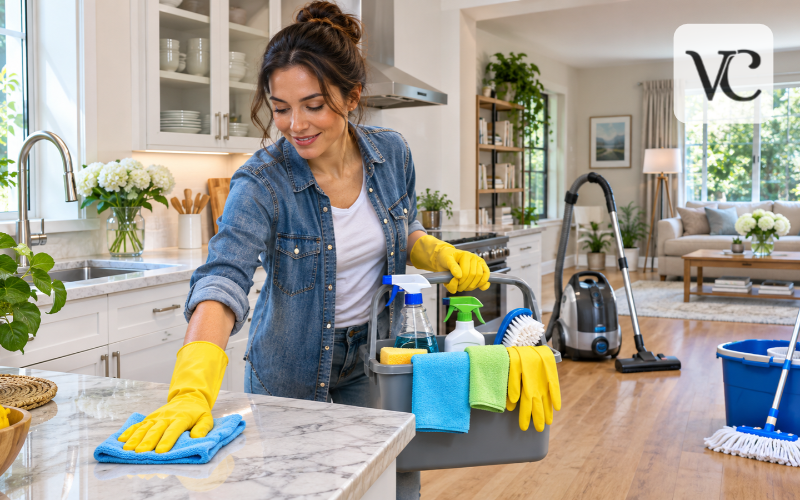
You do not need a cupboard full of expensive products. Start with a few washable microfiber cloths, a soft brush, a non-scratch sponge, a vacuum cleaner, and a broom or dustpan for hard floors. A mop and bucket are useful where your flooring allows damp cleaning. Keep smaller items together in a portable caddy so you are not constantly searching for them.
For products, a mild general-purpose cleaner suitable for your surfaces can handle many everyday jobs. You may also need washing-up liquid, an appropriate bathroom cleaner, a glass cleaner, and a floor cleaner recommended for your flooring. Natural stone, painted wood, and some coated surfaces need extra care, so check the manufacturer’s instructions before using a new product.
Read every label, including directions for dilution, rinsing, and protective gloves. Open a window or provide ventilation when using cleaning chemicals, and keep them away from children and pets. Never mix bleach with ammonia, vinegar, toilet cleaners, or other cleaning products. More chemicals do not mean a cleaner or safer home.
Clear the Clutter Before You Begin Cleaning
Trying to wipe a table covered in mail or vacuum around scattered shoes makes every job harder. Start by collecting objects that do not belong where they are. Put dirty clothes in a laundry basket, take dishes to the kitchen, and return books, toys, and chargers to their usual places.
A simple way to clean up is to carry a basket from room to room. Place misplaced items inside, then sort them when you reach the area where they belong. If something has no proper home, choose a drawer, shelf, or container that is easy to reach. Avoid spending an hour organising one cupboard when the goal is to clean the house.
Once surfaces and walkways are clear, you can reach the dirt underneath. Keep exits and stairs free of obstacles, and do not leave cleaning supplies where someone could trip over them.
How to Clean Your House Step by Step
A reliable cleaning sequence helps prevent doing the same work twice. First, put away clutter and empty bins that need attention. Next, gather your supplies and prepare the areas you will clean. If a suitable bathroom cleaner needs time to work on soap scum, apply it according to the label while you complete another nearby task. Never leave hazardous products where children or pets can reach them.
Begin dusting at the highest practical points, such as accessible shelves and furniture tops, then move downward. Use a stable step stool if necessary, and avoid reaching near electrical fittings or climbing on furniture. Wipe mirrors and other appropriate glass surfaces, followed by tables, counters, handles, and other frequently used areas.
After that, give the kitchen and bathroom their focused clean. Remove visible dirt before using a disinfectant where one is genuinely needed. Cleaning with soap or detergent is enough for many routine household surfaces; extra disinfection is particularly useful when someone is ill. Follow the product’s stated contact time, which may require the surface to remain wet.
Finish by vacuuming or sweeping loose dirt from floors, then damp-mopping suitable hard flooring. Work toward the doorway so you do not walk over freshly cleaned areas. This order is flexible: if a spill or toilet needs immediate attention, clean it first rather than waiting for its place in the sequence.
Dusting Furniture, Cleaning Glass, and Wiping Surfaces
Dusting is easier when you use a slightly damp microfiber cloth or a suitable duster that holds onto particles. Start with reachable high shelves, picture frames, and the tops of cupboards. Move down to side tables, desks, and furniture legs. For ceiling fans, turn the fan off and use a safe, stable way to reach the blades; do not spray liquid into the motor or light fittings.
For mirrors and interior glass, use a product approved for the surface and a clean lint-free cloth. Apply a small amount to the cloth where appropriate, wipe evenly, and buff away remaining marks with a dry section. Avoid spraying cleaner directly onto electronic screens or delicate frames.
Pay attention to door handles, light switches, and table edges, which collect marks from frequent use. Use a lightly damp cloth near switches, not a dripping one. Check the finish before cleaning wood, painted furniture, or stone, and test unfamiliar products on a hidden spot.
Cleaning the Kitchen from Countertops to Appliances
The kitchen is often the best place to focus your daily effort because food preparation creates frequent mess. Start by washing dishes or loading the dishwasher, then clear the countertops. Wipe away crumbs and spills using a cleaner suitable for the surface. Clean cupboard handles, the sink, and taps, paying attention to places where grime collects.
Once the hob has cooled, remove loose food and wipe it with the cleaner recommended for its finish. For the microwave, soften dried splashes with a bowl of warm water if the appliance instructions permit, then wipe the inside without soaking openings or controls. Clean refrigerator and other appliance exteriors using a suitable cloth; unplug appliances before cleaning if their instructions require it.
Use separate cloths for food preparation areas and dirty jobs. Surfaces that have touched raw meat, poultry, or their juices need proper cleaning followed by food-safe sanitising as appropriate. Follow the sanitiser label, including any required rinse. Empty food waste regularly, wash your hands after handling rubbish, and let wet sponges or cloths dry between uses.
How to Clean Bathrooms and Toilets Properly
Bathrooms need regular attention because water, toothpaste, soap, and body oils leave marks on surfaces. Begin by removing toiletries and wiping loose dust or hair away. Clean the mirror, sink, taps, and vanity with products suited to their materials. Use a non-scratch cloth around delicate finishes, then rinse and dry where the label recommends it.
For the shower and bath, choose a cleaner designed for the surface. Let it work for the time shown on the label before gently scrubbing soap scum. Rinse thoroughly and dry fittings to reduce water marks. Ventilation helps damp areas dry; keep the extractor fan running or open a window where practical.
Leave the toilet for the end of the bathroom clean. Use a toilet brush for the bowl and a separate cloth for the seat, lid, flush button, and outside. Never reuse toilet-cleaning cloths on sinks or kitchen counters. Wash reusable cloths appropriately after use.
Routine cleaning removes dirt and many germs. If someone in the household is sick, disinfect relevant frequently touched surfaces with a product suited to them, following its full directions. Never mix toilet cleaners with bleach or other products, even if you have rinsed the surface quickly.
Making the Living Room Clean and Comfortable
Living rooms gather crumbs, dust, pet hair, and everyday belongings. Start by returning cups, magazines, toys, and chargers to their places. Dust shelves, coffee tables, windowsills, and other reachable surfaces. Lift small objects instead of wiping around them so the surface underneath gets cleaned too.
For sofas and chairs, check the care label before using water or upholstery cleaner. Vacuum with an appropriate attachment, paying attention to seams and the spaces between cushions. Wash removable covers only if their instructions allow it. Shake out or vacuum rugs, and clean fresh spills according to the fabric guidance rather than rubbing them deeper into the material.
Electronics need gentle treatment. Switch devices off where appropriate, remove loose dust with a dry microfiber cloth, and follow the maker’s cleaning advice for screens. A quick reset of cushions and blankets can finish the room without extra products.
Cleaning Bedrooms and Freshening Up Sleeping Areas
Begin with the bed and clothing. Put worn clothes in the laundry basket, fold clean items, and clear bedside tables. Change sheets and pillowcases as needed for your household, following fabric care labels when washing and drying them. Allow bedding to dry fully before putting it away.
Dust headboards, shelves, lamps, and furniture using a method appropriate for each finish. Vacuum carpets and rugs, including accessible spaces beside and beneath the bed. Move light furniture only when it is safe to do so; there is no need to strain yourself shifting heavy pieces for an ordinary clean.
To manage dust over time, reduce piles of unused items and keep bedroom surfaces reasonably clear. Open windows when outdoor conditions allow, or use suitable ventilation. A comfortable bedroom does not need to look perfect; fresh bedding, clear floors, and a little regular attention make a noticeable difference.
Vacuuming, Sweeping, and Mopping Floors Correctly
Floors are usually best cleaned near the end because dust and crumbs from higher surfaces often fall onto them. Pick up small objects first. Vacuum rugs and carpets slowly enough for the machine to collect dirt, checking its settings for the floor type. Clean corners and edges with an attachment when needed, and empty the dust container or replace the bag as directed.
For hard floors, sweep with a soft broom or use the vacuum’s hard-floor setting. Remove grit before mopping so you do not drag it across the surface. A damp mop with a suitable cleaner works for many sealed floors, but the right method depends on the material and its finish. Change dirty water or mop pads rather than spreading grime from one room to another.
Wood floors should not be soaked, and steam mops are generally unsuitable unless the flooring maker specifically approves them. Laminate and some engineered floors can also be damaged by excess water. For natural stone or special coatings, avoid acidic or harsh products unless the manufacturer permits them. Keep people and pets off slippery wet areas until they dry.
How to Clean House Easily When You Have Limited Time
When time is short, focus on the jobs that make your home safer and more usable. Dirty dishes, food spills, overflowing bins, and bathroom mess usually deserve attention before polishing decorations. Set a realistic timer and stop when your planned session ends, unless an urgent cleaning task remains.
With 15 minutes, collect clutter, deal with dishes, wipe the main kitchen surface, and give the bathroom sink a quick clean. With 30 minutes, add toilet cleaning and vacuum or sweep the busiest floor areas. With an hour, you may also dust frequently used rooms, clean the shower or hob, and mop suitable floors. These are flexible examples, not promises that every home can be cleaned in a set time.
If you want to clean a house professionally in appearance, concentrate on consistency rather than speed. Keep tools ready, work from high surfaces downward, use clean cloths, and avoid repeatedly crossing the house for supplies. Even one finished area is useful progress.
A Simple Cleaning House Checklist for Daily, Weekly, and Monthly Tasks
A cleaning house checklist can take away the daily question of what to do next. Keep the routine light enough to maintain, then adjust it for the size of your home, pets, children, and how often each room is used.
Daily jobs usually include dealing with dishes, wiping food spills, putting away everyday belongings, and emptying bins when needed. Each week, plan time for bathrooms, dusting, vacuuming, mopping appropriate floors, and changing bedding as needed. Monthly or occasional tasks might include wiping doors and skirting boards, cleaning inside the microwave or fridge, checking extractor vents, and reaching less-used corners. Some of these jobs may need doing more often in a busy household.
Ten small habits can also help keep your house clean between bigger sessions:
- Put items back after using them.
- Wash or load dishes after meals.
- Wipe food spills promptly.
- Keep a laundry basket where it is useful.
- Clear one crowded surface each day.
- Remove shoes at the door if practical.
- Keep bathroom surfaces dry when possible.
- Deal with rubbish before bins overflow.
- Keep cleaning cloths washed and ready.
- Spend a few minutes resetting shared rooms each evening.
These habits are not strict rules. Choose the ones that solve your household’s most common problems. A routine that fits your life is more helpful than a long checklist that nobody has time to finish.
Conclusion
Learning how to clean house becomes easier when you stop treating it as one enormous task. Start with urgent mess, clear clutter, work from higher surfaces to lower ones, and save floors until the end when practical. Use products suited to each surface and follow their safety directions.
You do not need to deep-clean every room each week or copy someone else’s schedule. A few steady habits, regular care for the kitchen and bathroom, and a realistic plan for larger jobs can keep your home comfortable without making cleaning take over your day.
Frequently Asked Questions
How to clean house for beginners?
Start by removing clutter, gathering basic cleaning supplies, and focusing on one manageable task. Dust furniture, clean kitchens and bathrooms, and finish with floors. Build a routine you can maintain.
What is the fastest way to clean a house?
Focus on essential tasks first, such as washing dishes, removing clutter, wiping frequently used surfaces, and vacuuming busy areas. Group similar tasks together to reduce unnecessary movement between rooms.
How often should you clean your house?
Clean frequently used surfaces and handle food spills daily. Bathrooms, floors, and bedding often need weekly attention, depending on household activity. Deep cleaning can be scheduled monthly or whenever necessary.
What should you clean first when your house is very messy?
Begin with rubbish, dirty dishes, and items blocking walkways. Put scattered belongings away before dusting and wiping surfaces. Breaking the work into smaller tasks makes a messy house easier to manage.
What cleaning supplies do you need to clean a house properly?
Basic supplies include microfiber cloths, a vacuum cleaner, mop, brushes, and surface-appropriate cleaning products. Choose tools based on your flooring and furniture materials, and always follow product safety instructions.
Disclaimer: This article on “How to Clean House” is published by VogueCultures.co.uk solely for general information and educational purposes. It provides practical household cleaning guidance and does not constitute professional cleaning, chemical safety, or specialist maintenance advice. Cleaning results may vary depending on surfaces, materials, and products used. Readers should always follow manufacturer instructions, product safety labels, and appropriate precautions. This content is independently presented for information sharing only and is not intended as guest posting, paid promotion, sponsored content, or advertising.
Enjoyed this article? Discover more helpful ideas and fresh inspiration on Vogue Cultures.