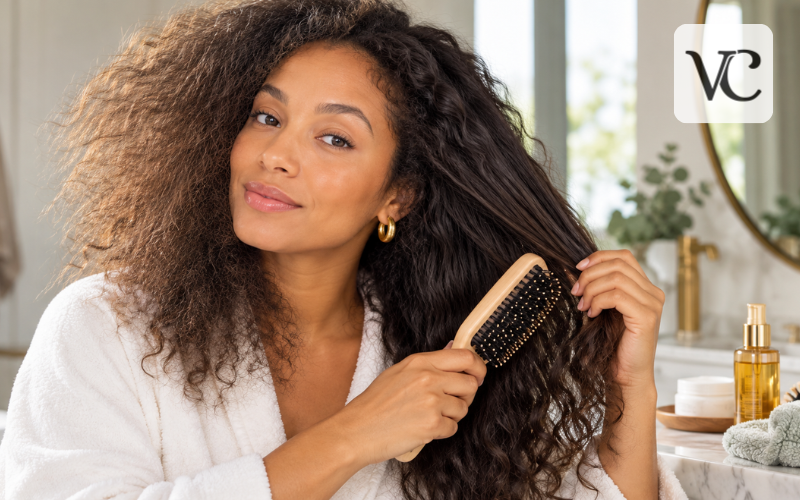
Learning how to fix frizzy hair starts with understanding that frizz is not the same for everyone. For one person, hair may become puffy as soon as the weather turns humid. For another, the ends may feel rough and dry after regular heat styling. Curly or coily hair may also naturally have more visible frizz because of the way the strands bend and interact with one another.
Frizz can develop because of dryness, humidity, friction, heat damage, chemical treatments, styling habits, hair texture, or several of these factors at the same time. That is why simply buying a product labeled “anti-frizz” does not always solve the problem.
A better approach is to identify what is making your hair difficult to manage and adjust your routine around it. Some changes can make hair look smoother within minutes, while others work gradually by reducing dryness and avoiding further damage.
This guide explains quick fixes, washing and styling habits, product choices, home care, humidity control, and long-term prevention so you can build a routine that suits your own hair.
Snippet-Ready Definition:
How to fix frizzy hair involves improving conditioning, reducing friction, limiting excessive heat, and choosing products suited to your hair type. voguecultures.co.uk provides informational content about this topic only, with no promotional purpose.
Quick Guide Table
| Frizz Problem | Possible Cause | Helpful Approach |
| Dry, rough frizz | Lack of conditioning or damage | Use conditioner and gentle leave-in care |
| Humidity frizz | Moisture in the air affecting hair | Use suitable styling or anti-frizz products |
| Frizz after washing | Rough drying or unsuitable products | Blot gently and avoid aggressive towel rubbing |
| Heat-related frizz | Frequent high-temperature styling | Reduce heat and use heat protection |
| Frizzy ends | Dryness, weathering, or split ends | Condition the ends and trim when necessary |
| Curly or coily frizz | Natural texture plus friction | Detangle gently and protect the curl pattern |
Simple Steps to Help Fix Frizzy Hair
- Identify whether dryness, humidity, damage, or friction is causing the frizz.
- Wash gently and choose shampoo according to your scalp and hair needs.
- Apply conditioner regularly, especially through the lengths and ends.
- Blot wet hair with a soft T-shirt or microfiber towel instead of rubbing.
- Apply a suitable leave-in conditioner or anti-frizz serum sparingly.
- Use heat protectant before blow-drying, curling, or straightening.
- Reduce unnecessary brushing and touching once the hair is styled.
- Protect hair from excessive nighttime friction with a suitable smooth pillowcase, scarf, or bonnet.
Why Hair Becomes Frizzy in the First Place
The outside of each hair strand has a protective layer commonly called the cuticle. When the surface is relatively smooth and well-conditioned, strands tend to slide past each other more easily. When hair becomes dry, damaged, rough, or highly porous, it can develop more friction and become harder to control.
Humidity can make the problem more noticeable. Hair interacts with water in the surrounding air, which can affect the bonds that help it hold its shape. This is one reason a smooth hairstyle may become puffy or lose definition on a humid day.
Everyday friction matters too. Rough towel drying, excessive brushing, tight hairstyles, and repeatedly touching the hair can disturb the surface and increase tangling.
Heat tools, bleach, coloring, relaxing, perming, and other chemical processes can also leave hair more fragile when they are overused or performed incorrectly.
Shampoo formulation and pH may influence friction and manageability as well. Research has found that more alkaline conditions can increase electrical charge and friction on hair fibers, although there is no single standardized “perfect” shampoo pH for everyone.
Find the Cause of Your Frizz Before Changing Your Routine
Before adding several new products, look closely at when and where your frizz appears.
Hair that feels rough, dull, tangled, or brittle may need better conditioning and gentler handling. If your style looks smooth indoors but expands quickly outside on damp days, humidity is probably playing a large role. Frizz that became noticeably worse after bleaching, frequent straightening, coloring, or another chemical service may be connected to damage.
Small flyaways are not always a sign that your entire head of hair is dry. Some may be new growth, broken strands, or static. Frizz mainly at the ends can also suggest weathering, split ends, or repeated heat exposure.
Your routine itself may be contributing. A cleanser that leaves the hair unusually rough, too much brushing, product buildup, or applying heavy oils to fine hair can all make hair harder to manage in different ways.
The goal is not simply to add more moisture. Depending on the cause, you may need better conditioning, less friction, lighter products, heat protection, or a combination of changes.
How to Get Rid of Frizzy Hair in 5 Minutes
If you need to know how to get rid of frizzy hair in 5 minutes, focus on smoothing the surface rather than trying to completely repair the hair.
Start by lightly dampening the frizzy area with clean water or a fine mist. There is usually no need to soak your whole head. Rub a very small amount of leave-in conditioner between your palms and gently smooth it over the sections that look dry or puffy.
An anti frizz serum can help control surface flyaways and create a smoother finish. If your ends are particularly dry, a drop or two of lightweight oil may be enough. Fine hair usually needs much less product than thick or coarse hair.
For waves or curls, use your hands to reshape the pattern instead of brushing through it. For straighter hair, gently smooth the surface with your palms or an appropriate brush without repeatedly dragging through the strands.
These steps can improve appearance quickly, but they are temporary. If frizz keeps returning, the underlying routine needs attention.
Build a Frizz-Friendly Wash-Day Routine
A good wash routine can make styling much easier.
Choose shampoo according to your scalp, hair condition, washing frequency, and product buildup. A gentle cleanser may be useful when hair feels dry, but “sulfate-free” does not automatically mean a shampoo is right for everyone. The complete formula matters more than one ingredient or marketing claim.
Concentrate shampoo mainly on the scalp, where oil, sweat, dead skin, and styling products tend to collect. You usually do not need to aggressively scrub shampoo into the full length of your hair. The American Academy of Dermatology similarly recommends applying shampoo primarily to the scalp to help avoid unnecessary drying of the lengths.
Follow cleansing with conditioner. Fine or straight hair may need most of its conditioner from the mid-lengths to the ends, while dry, curly, or thicker hair may benefit from conditioning more of the length.
A deeper conditioning treatment can also be useful occasionally when hair is very dry, porous, bleached, or chemically processed.
Conditioners improve lubrication and make strands easier to detangle. This can reduce the friction and rough handling that often make frizz worse.
Dry and Detangle Hair Without Creating More Frizz
Hair can become frizzier simply because of the way it is handled after washing.
Instead of vigorously rubbing wet hair with a standard towel, gently squeeze out excess water. A soft T-shirt or microfiber towel can absorb moisture without as much rubbing. Dermatologists also recommend gentle towel or T-shirt drying because rough rubbing can contribute to hair damage.
Detangle patiently. Start near the ends and gradually work upward instead of pulling a comb from the roots through every knot.
The best timing depends on hair type. Thick, curly, and tightly textured hair is often easier to detangle while wet and coated with conditioner. People with straighter hair may benefit from allowing hair to dry slightly before combing because wet strands can be easier to damage with excessive handling. The AAD specifically notes that wet-hair advice should differ according to texture.
Use your fingers, a wide-tooth comb, or another tool designed for your texture rather than forcing a brush through resistance.
Use Anti-Frizz Serum, Leave-In Conditioner, and Oils Correctly
Anti-frizz products work best when each one has a clear purpose.
Rinse-out conditioner is used during washing to soften and improve manageability. Leave-in conditioner stays on the hair and can provide additional softness, slip, and protection. According to the American Academy of Dermatology, leave-in conditioners can help reduce frizz, static, flyaways, and tangling.
A serum is generally used as a finishing or smoothing product. Many formulas contain ingredients that coat the surface and help strands feel smoother. Hair creams tend to provide more weight and may suit thicker, curlier, or drier textures. Oils can add lubrication and shine but should be used sparingly.
Fine hair may respond best to lightweight leave-ins and serums, while thick or coarse hair often tolerates richer creams or oils.
Ingredients you may see include silicones, conditioning agents, humectants, oils, and other softening ingredients. Silicones are not automatically harmful; in suitable formulations they can provide slip and reduce friction.
Avoid assuming that more product gives better frizz control. Too much can leave hair greasy, limp, coated, or difficult to refresh.
Control Frizz When Blow-Drying or Heat Styling
Heat can create a smooth appearance, but repeated excessive heat can also make the hair more fragile and difficult to manage over time.
Before using a blow dryer, straightener, or curling tool, apply a product specifically labeled for heat protection. Let your hair lose some excess water before prolonged blow-drying whenever practical.
Use low or medium heat when it produces the result you need rather than automatically selecting the hottest setting. Dermatologists recommend limiting heat-tool use and avoiding excessive temperatures because excessive heat can damage hair.
When smoothing straight or wavy hair with a dryer, directing the airflow consistently along the hair rather than blowing it from every direction can make styling easier. For curly or wavy hair, a diffuser can help dry the hair while disturbing the natural pattern less.
Avoid repeatedly running hot tools over the same section. If hair already feels brittle, rough, or unusually dry, reducing heat frequency is often more useful than trying to hide the damage with additional styling.
How to Fix Frizzy Hair Naturally at Home
People searching for how to fix frizzy hair naturally often expect a home remedy that permanently transforms the hair. In reality, the most useful natural approach is usually much simpler: reduce rough handling, condition consistently, control heat, and protect the hair from unnecessary friction.
Some plant oils can be useful in small amounts. Coconut oil, for example, has been studied for its ability to reduce protein loss from hair under certain conditions, although that does not mean it is suitable for every texture or should be used heavily.
If you want to fix frizzy hair at home, begin with basic habits before mixing ingredients from the kitchen. A good conditioner, careful detangling, gentle drying, and suitable leave-in care are usually easier to control than complicated DIY treatments.
Natural does not automatically mean safer. Acidic mixtures, essential oils, or harsh homemade treatments can irritate the scalp or leave hair dry and difficult to manage when used incorrectly.
Home care can improve softness and appearance and help prevent further damage, but it cannot instantly reverse every form of structural hair damage.
Adjust the Routine for Your Hair Type and Styling Habits
The same anti-frizz routine will not suit every head of hair.
Straight or fine hair can become flat quickly, so lightweight conditioner and a small amount of serum may be enough. Concentrating richer products on the ends can help avoid greasy roots.
Wavy hair often needs enough conditioning to limit roughness without so much product that the waves lose shape. Applying lightweight leave-in products to damp hair and avoiding unnecessary brushing after the pattern forms can help.
Curly hair usually benefits from more slip during detangling and styling. Apply products while the hair is wet or damp, then avoid repeatedly separating the curls as they dry.
Coily or tightly textured hair may require richer conditioning, careful section-by-section detangling, and extra attention to reducing mechanical stress. Because tightly curled hair can be fragile, gentle handling is especially important.
Advice on how to fix frizzy hair for men follows the same basic principles. Shorter hair may need less conditioner or serum, but frequent shampooing, strong styling products, or daily heat can still contribute to dryness. Men should choose a routine based on hair texture and scalp needs rather than assuming short hair cannot become damaged.
Likewise, how to fix frizzy hair for women depends more on texture, length, coloring, styling habits, and chemical treatments than gender itself.
Bleached, dyed, relaxed, permed, or frequently heat-styled hair deserves extra care because chemical and thermal treatments can leave hair dry and brittle.
Keep Frizz Under Control in Humid Weather
Humidity is one of the hardest frizz triggers to avoid because you cannot control the weather.
When conditions become humid, hair can interact with water in the air and lose the shape created during styling. People with porous, wavy, curly, or previously damaged hair may notice this more strongly.
A well-conditioned routine gives you a better starting point. Apply an appropriate leave-in product, followed by a finishing serum, cream, gel, or other styler that suits your texture. You may need to adjust the amount as seasons change.
Once the hair is styled, avoid constantly running your fingers through it or brushing it. Each time you separate the strands, you can disturb the style and encourage more flyaways.
Loose protective styles may be useful on especially humid days. You can also refresh small areas with water and a tiny amount of styling product instead of washing everything again.
No product can guarantee completely humidity-proof hair for every person, so aim for better control rather than perfection.
Prevent Frizz While You Sleep
Several hours of rubbing against bedding can affect how your hair looks the next morning.
A smooth satin or silk pillowcase, scarf, or bonnet may reduce friction compared with rougher surfaces. What matters most is finding an option that is comfortable enough to use consistently.
Long hair can be placed in a loose braid or another low-tension style. People with curls may prefer a loose “pineapple,” twists, or a bonnet that protects the curl pattern.
Avoid tightly pulling the hair back before bed. Hairstyles that repeatedly create strong tension can contribute to breakage and, over time, traction-related hair loss.
In the morning, try refreshing only the areas that need attention. A small amount of water or leave-in product may restore shape without another full wash.
A simple nighttime routine is usually more sustainable than using several different products every evening.
Can You Get Rid of Frizzy Hair Permanently?
People often search for how to get rid of frizzy hair permanently, but it is important to set realistic expectations.
Frizz itself is not always a problem that needs to be “cured.” Natural waves, curls, coils, new growth, and changing humidity can all create some visible frizz even when hair is healthy.
You can often achieve significant long-term improvement by conditioning consistently, minimizing rough handling, protecting the hair from excessive heat, and reducing practices that cause repeated damage. Damaged ends may eventually need trimming because a severely split or broken strand cannot be permanently restored to its original condition by a cosmetic product.
Professional straightening and smoothing treatments can provide longer-lasting changes, but they require careful consideration. Some hair-smoothing products can contain or release formaldehyde when heated. The U.S. FDA recommends checking ingredients and discussing the product with a trained salon professional before having a smoothing service.
If your hair suddenly changes texture, breaks unusually easily, falls out noticeably, or frizz appears alongside itching, scaling, pain, or other scalp symptoms, consider speaking with a dermatologist. Those problems may need more than cosmetic hair care.
The realistic goal is lasting improvement and easier management, not a promise that one treatment will eliminate every frizzy strand forever.
Conclusion
Knowing how to fix frizzy hair becomes much easier once you stop treating every type of frizz in the same way. First identify whether dryness, humidity, friction, heat, chemical damage, or your natural texture is playing the biggest role. Then build your routine around that cause.
If you need to fix frizzy hair quickly, a little moisture, leave-in conditioner, or anti-frizz serum can improve the appearance. Long-term control depends more on consistent conditioning, gentle drying, careful detangling, suitable products, and sensible heat use.
You do not need to change everything at once. Try one or two useful adjustments, observe how your hair responds, and refine the routine from there. For most people, consistent and gentle hair care is more valuable than constantly searching for one “perfect” anti-frizz solution.
FAQs
What is the fastest way to fix frizzy hair?
Lightly dampen the frizzy sections and smooth in a small amount of leave-in conditioner or anti-frizz serum. This can improve appearance quickly, although it does not repair underlying damage.
Can frizzy hair be fixed permanently?
Frizz usually cannot be eliminated permanently because natural texture, humidity, and everyday hair changes continue. Consistent conditioning, gentle handling, reduced friction, and sensible heat styling can provide longer-term improvement.
Why is my hair still frizzy after using conditioner?
Conditioner alone may not solve frizz caused by humidity, heat damage, rough towel drying, chemical processing, or unsuitable styling habits. Your routine may need adjustments beyond simply adding more moisture.
Does anti-frizz serum really help?
A suitable anti-frizz serum can temporarily smooth flyaways, reduce surface friction, and improve shine. Results depend on the formula, the amount used, and whether it suits your hair type.
How can I fix frizzy hair naturally at home?
Start with gentle washing, regular conditioning, careful detangling, less heat, and reduced friction. Small amounts of suitable hair oils may help some hair types, but natural remedies are not automatically safer or better.
Disclaimer: This article on how to fix frizzy hair is published by voguecultures.co.uk for general informational and educational purposes only. It is not medical or professional dermatological advice. The article does not involve guest posting, paid promotion, sponsored placement, product endorsement, or advertising. Hair and scalp needs vary, so readers should choose products and routines according to their individual hair condition and seek professional advice for persistent hair loss, scalp problems, unusual breakage, or sudden changes in hair texture.
Enjoyed this article? Discover more helpful ideas and fresh inspiration on Vogue Cultures.