Cloth polyester is a common search term for fabric made partly or entirely from polyester fibers. In everyday English, “polyester fabric” is the more natural phrase. Polyester appears in T-shirts, dresses, sportswear, curtains, upholstery, blankets, and sewing fabric sold by the yard.
Its popularity comes from practical qualities such as strength, quick drying, wrinkle resistance, and good shape retention. Yet polyester can take many forms, so one fabric may feel smooth and silky while another feels warm, fuzzy, firm, or stretchy.
This guide explains how polyester cloth is made, what it looks and feels like, common types and uses, 100% polyester, blends, fabric sold by the yard, care, and environmental considerations.
Snippet-Ready Definition:
Cloth polyester is fabric made wholly or partly from polyester fibers, known for durability, quick drying, and varied textures. VogueCultures.co.uk provides this article only for informational purposes about cloth polyester.
Quick Guide Table
| Feature | Cloth Polyester |
| Fiber type | Manufactured synthetic fiber |
| Common feel | Smooth, soft, crisp, silky, fuzzy, or stretchy |
| Main benefits | Durable, quick-drying, wrinkle-resistant, shape-retaining |
| Common clothing uses | Shirts, dresses, sportswear, jackets, uniforms |
| Home uses | Curtains, upholstery, blankets, cushions |
| 100% polyester | Contains polyester as the listed textile fiber |
| Common blends | Cotton, spandex, rayon/viscose |
| Main drawback | Some fabrics may feel less breathable or build static |
| Care | Follow the product label and avoid unnecessary high heat |
| Environmental point | Virgin polyester is fossil-based; recycled versions are also available |
Quick Guide to Choosing Polyester Fabric
- Check whether the fabric is 100% polyester or a polyester blend.
- Choose the weight and thickness according to your clothing, sewing, or home project.
- Check whether the material is woven or knitted, as this affects stretch and feel.
- Look at the texture, drape, opacity, and surface finish before buying.
- For clothing, consider comfort, airflow, stretch, and the climate where it will be worn.
- When buying polyester fabric by the yard, check its width, intended use, fiber content, and care instructions.
- Always follow the care label when washing, drying, or ironing the finished item.
Polyester Cloth Explained: Fiber, Yarn, and Finished Fabric
Polyester starts as a manufactured fiber, not as a finished fabric. The fiber is the basic material. Those fibers may be made into continuous filaments or shorter staple fibers, then turned into yarn. The yarn is later woven, knitted, or otherwise formed into fabric.
This distinction helps explain why two garments labeled “100% polyester” can feel completely different. A lightweight polyester chiffon dress and a thick polyester fleece jacket can both contain only polyester fiber, yet their weight, structure, surface, and performance are very different. Yarn size, fabric construction, density, stretch, brushing, coatings, and other finishes all influence the finished result.
When a U.S. textile label says “100% polyester,” it refers to the fiber content rather than a single fabric style. FTC rules require covered textile products to disclose generic fiber names and fiber percentages by weight, which helps shoppers understand what the material contains.
For readers, the practical lesson is simple: check the fiber label, but also look at the fabric’s construction, thickness, texture, and intended use.
How Polyester Fabric Is Made
Most polyester used for textile fiber is PET, or polyethylene terephthalate. In simple terms, raw materials are combined to make a polymer, which is then prepared for fiber production. The material is melted and pushed through very small openings to form fine filaments. This process is known as melt spinning and is widely used for PET textile fibers.
The new filaments are cooled, stretched, and processed for their intended use. They may remain as long filaments or be cut into shorter fibers and spun into yarn. The yarn can then be woven for more structure or knitted for greater flexibility.
Finishing also changes the result. Polyester can be brushed for softness, textured, dyed, or coated for a specific use. Some fabrics become smooth and shiny, while others are matte or soft. These choices affect thickness, stretch, drape, appearance, and durability.
Polyester Fabric Texture, Appearance, and Feel
Polyester fabric texture varies widely. Some polyester feels silky and cool to the touch, while other versions are fuzzy, firm, crisp, stretchy, or slightly rough. A satin weave may create a smooth, glossy surface, while brushed fleece has a soft, raised texture. A tightly woven outdoor fabric may feel much firmer than a knitted polyester T-shirt.
Appearance varies in the same way. Polyester can be matte or shiny, thin or heavy, flowing or structured. Lightweight fabrics may move easily and drape close to the body, while heavier fabrics can hold their shape and create a more tailored look.
This is also why it can be difficult to answer “what does polyester look like on clothes?” with one description. On a formal dress, polyester may look glossy and fluid. On activewear, it may look smooth and sporty. On a winter garment, brushed polyester can look soft and warm.
When choosing polyester, it is better to judge the actual fabric than to judge the fiber name alone.
Common Types of Polyester Fabric and Their Uses
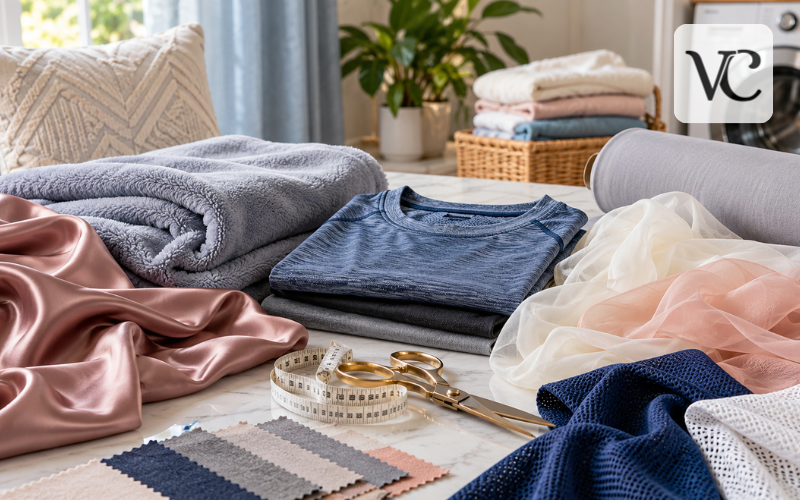
Polyester is used to make many familiar fabric styles. Polyester satin is smooth and often has a noticeable sheen, making it useful for dresses, linings, accessories, and decorative projects. Polyester chiffon is much lighter and more transparent, so it is commonly used where a soft, flowing effect is wanted.
Polyester fleece is very different. It has a brushed, insulating surface and is widely used for jackets, blankets, and casual cold-weather clothing. Polyester jersey is knitted rather than woven and is common in T-shirts, dresses, sportswear, and other garments that benefit from flexibility.
Polyester mesh has an open structure that allows more airflow, which is useful in sports clothing, bags, and some linings. Microfiber polyester uses very fine fibers and can be made into soft, dense fabrics for cleaning cloths, bedding, upholstery, and other household uses.
These names usually describe a fabric construction, surface, or finish made with polyester. They are not all separate fiber types. That difference is important when comparing fabric for a sewing or clothing project.
Polyester Clothing Examples and What It Looks Like on Clothes
Polyester clothing examples are easy to find because the fiber is used across many categories. T-shirts, casual tops, dresses, skirts, trousers, jackets, rainwear, activewear, work uniforms, linings, and fashion garments may all contain polyester.
How the clothing looks depends on the fabric. A polyester blouse may be smooth and flowing. A pair of work trousers may look matte and structured. Athletic shirts can have a light, technical appearance, while a satin skirt may look glossy. Fleece pullovers have a softer, brushed surface, and outerwear can range from thin shells to thicker insulated garments.
Polyester is also often used where manufacturers want easy-care clothing that keeps its shape and dries relatively quickly. In other garments, it is chosen as part of a blend to add strength, wrinkle resistance, or better shape recovery.
For shoppers, the best way to understand a polyester garment is to combine three clues: fiber content, fabric construction, and the way the garment actually feels and hangs.
Cloth Polyester Shirts: Comfort, Fit, and Everyday Wear
A cloth polyester shirt can be comfortable or uncomfortable depending on how it is made. A thin knitted sports shirt, a smooth woven uniform shirt, and a heavy polyester overshirt may all feel very different even when polyester is the main fiber.
Polyester shirts generally hold their shape well and often develop fewer wrinkles than many untreated natural-fiber shirts. They also absorb relatively little water, so they can dry quickly after washing or sweating. However, comfort is not determined by fiber content alone. Fabric thickness, knit structure, ventilation, fit, and finishes also affect airflow and how warm the shirt feels.
For active use, lightweight polyester knits and meshes are common because designers can build ventilation and moisture-management features into the fabric. For office or uniform clothing, polyester may be blended with cotton to balance easy care with a more familiar cotton feel.
Stretch blends, often combining polyester with a small amount of elastane or spandex, can also improve movement and fit. The right choice depends on climate, activity, personal comfort, and how the shirt will be used.
100% Polyester Fabric: Is It Good or Bad?
The question “is 100% polyester fabric good or bad?” does not have one universal answer. It depends on the product and what the user expects from it.
A well-made 100% polyester fabric can be strong, durable, quick-drying, and resistant to many everyday wrinkles. It may keep its shape well and can work especially well for sportswear, uniforms, outerwear, linings, curtains, and many household textiles.
There are also tradeoffs. Polyester absorbs little moisture compared with fibers such as cotton, so some dense polyester clothing can feel warmer or less comfortable in hot conditions. Certain fabrics may build static, develop pills through rubbing, or hold oily stains and odors more stubbornly. Polyester is also sensitive to excessive heat, which matters during drying and ironing.
Compared with cotton, polyester usually dries faster and wrinkles less, while cotton is often valued for absorbency and a familiar natural feel. Neither is automatically better. The useful question is whether the fabric suits the garment, climate, care routine, and purpose.
Polyester Blend Fabric and Why Fibers Are Combined
A polyester blend fabric contains polyester together with one or more other fibers. Blending allows textile makers to combine useful qualities instead of relying on a single fiber.
A polyester-cotton blend may offer some of cotton’s absorbency and familiar feel while using polyester to improve shape retention, durability, and wrinkle resistance. Polyester-spandex blends add stretch and recovery, which is why they are common in fitted clothing, activewear, and garments that need freedom of movement.
Polyester may also be blended with rayon or viscose to create a softer hand and more fluid drape while keeping some of polyester’s strength and easy-care qualities. The exact result depends on the percentage of each fiber and the way the fabric is constructed.
Labels are useful here. Under U.S. textile rules, covered products generally disclose the generic fiber names and their percentages by weight, allowing buyers to see whether a fabric is mostly polyester or only contains a smaller amount.
Polyester Fabric by the Yard: What to Check Before Buying
When buying cloth polyester fabric by the yard, choosing only by fiber content can lead to the wrong material for a project. Start with the intended use. Fabric for a flowing blouse needs different qualities from fabric for curtains, bags, table coverings, or upholstery.
Check the weight and thickness first. Lightweight polyester may be suitable for garments or linings, while heavier material may work better for home décor or structured projects. Next, check whether the fabric is woven or knitted. Knits often offer more natural give, while woven polyester can provide greater structure depending on the weave.
Stretch is another important detail. Some polyester fabrics have little stretch, while others gain flexibility from their knit construction or from added spandex. Also check the width, drape, surface texture, and whether the fabric is transparent or opaque.
If you are buying online, read the fiber-content description, weight if provided, intended-use notes, and care instructions. A sample or swatch can also help when color, softness, thickness, or drape matters to the finished project.
Polyester Cloth Beyond Clothing
Polyester cloth is used far beyond shirts and dresses. In the home, it can appear in curtains, drapery, cushion covers, upholstery, bedding, blankets, and table linens. It is also common in bags, accessories, craft fabrics, and selected outdoor or performance textiles.
The required properties change with the product. Clothing fabric needs to consider comfort, movement, skin feel, and appearance. Curtain fabric may need good drape and shape retention. Upholstery fabric must cope with rubbing and repeated use, while outdoor textiles may require additional finishes or coatings for their intended conditions.
This is another reason the label “polyester” should not be treated as a complete description. A soft pajama fabric and a durable furnishing fabric may share the same main fiber but be designed for completely different demands.
When choosing polyester for a non-clothing project, look for fabric specifically made and rated for that use rather than assuming any polyester cloth will perform the same way.
Washing, Drying, Ironing, and Caring for Polyester
The safest care rule for polyester is to follow the label on the actual garment or household item. Care needs can change because of dyes, finishes, blends, prints, linings, trims, and construction, even when the main fabric is polyester.
Many everyday polyester items are machine washable, but using excessive heat is usually unnecessary. A moderate wash and drying routine can help protect the fabric and any finishes. If ironing is allowed, use the temperature recommended on the care label because polyester is a heat-sensitive synthetic fiber. High heat can damage or distort some items.
Treat oily spills sooner rather than later because oil-based marks can be difficult to remove once they are set. Static can sometimes be reduced through appropriate laundering and by avoiding over-drying. Store garments clean and dry, and avoid exposing delicate polyester items to unnecessary heat.
The FTC’s care-label rules are designed to give consumers instructions for the regular care of covered garments, so the product label should take priority over generic internet advice.
Polyester, Recycled Polyester, and Environmental Considerations
Most conventional polyester is made from fossil-based raw materials. Its durability can be useful because a well-made item may remain usable for a long time, but producing and disposing of synthetic textiles also raises environmental questions.
Recycled polyester is polyester made using recycled feedstock instead of relying only on new virgin material. However, “recycled” does not automatically mean that a textile is part of a fully circular system. Current industry data shows why the distinction matters.
Textile Exchange’s Materials Market Report 2026 says polyester remained the world’s most widely produced fiber in 2025, accounting for 59% of global fiber production, or about 82.5 million tonnes. It also reports around 9.7 million tonnes of recycled polyester production in 2025, with 97% of that recycled polyester coming from plastic bottles. Textile-to-textile recycled fiber production across all fibers remained only 0.76% of global fiber production.
Synthetic textiles can release microfibers during manufacturing, use, washing, and disposal. The European Environment Agency identifies washing as an important release pathway, while noting that shedding can occur across a product’s life.
A balanced view is useful. Polyester offers durability and practical performance, while fossil-based inputs, recycling limits, and microfiber shedding remain environmental considerations. Using products for longer and caring for them properly can reduce unnecessary replacement.
Conclusion
Cloth polyester is not one single type of fabric. Polyester is the fiber, while yarn choice, weave or knit, weight, texture, finishing, and blends determine what the finished material looks like and how it performs.
Polyester can appear as glossy satin, light chiffon, stretchy jersey, soft fleece, sports mesh, curtains, or upholstery. A 100% polyester item may suit uses where quick drying, shape retention, durability, or easy care matters, while a blend can offer a different balance of softness, absorbency, stretch, or drape.
When choosing polyester cloth, look beyond the fiber name. Consider the intended use, feel, stretch, care needs, and construction. Those details make it easier to decide whether a polyester fabric suits your clothing, sewing, or home project.
FAQs
What is cloth polyester?
Cloth polyester generally means fabric made entirely or partly from polyester fibers. It can be woven or knitted into many textures, including smooth satin, lightweight chiffon, stretchy jersey, fleece, and durable furnishing fabric.
Is 100% polyester fabric good for clothing?
100% polyester can work well for clothing because it is durable, quick-drying, and usually resists wrinkles. However, comfort varies according to fabric thickness, construction, finish, climate, and the type of garment.
What does polyester look like on clothes?
Polyester does not have one fixed appearance. Depending on its construction, it may look smooth, shiny, matte, sporty, soft, structured, or brushed, which is why different polyester garments can appear completely different.
Is polyester fabric better than cotton?
Neither fiber is better for every purpose. Polyester generally dries faster and wrinkles less, while cotton is often more absorbent and valued for its natural feel. The better option depends on intended use.
What is polyester blend fabric?
Polyester blend fabric combines polyester with another fiber such as cotton, spandex, or viscose. Blending can change softness, stretch, absorbency, drape, durability, and overall comfort depending on the fibers and percentages used.
Disclaimer: This article on cloth polyester is published by VogueCultures.co.uk for general informational and educational purposes only. It explains polyester fabric, its types, uses, properties, care, blends, and related considerations. VogueCultures.co.uk is not offering guest posting, paid promotion, advertising, product endorsement, or commercial textile advice through this article. Product materials, performance, and care requirements may vary, so readers should always check the manufacturer’s label and instructions for specific fabrics or garments.
Enjoyed this article? Discover more helpful ideas and fresh inspiration on Vogue Cultures.