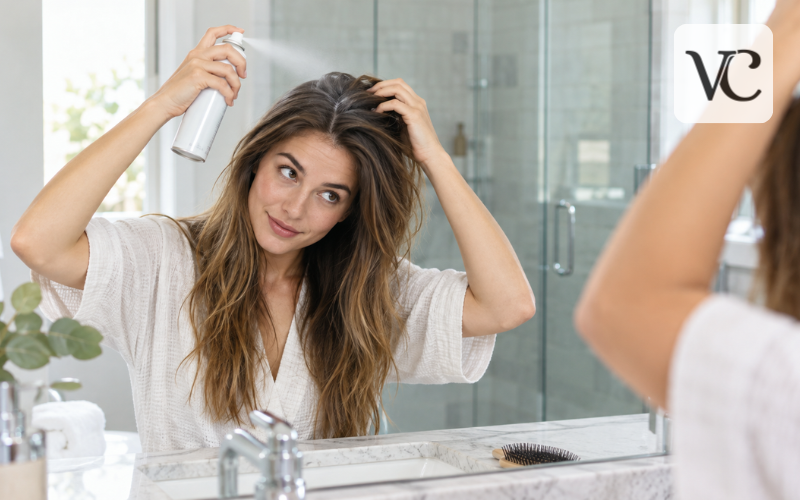
Dry shampoo is a quick hair-care product made to make oily hair look fresher between regular washes. Instead of using water, it contains ingredients that absorb some of the excess oil around the roots. This can make hair look less greasy, add a little volume, and help a hairstyle last longer.
Learning how to use dry shampoo correctly matters because more product does not always mean better results. Too much can leave hair feeling heavy, chalky, or uncomfortable.
Dry shampoo also has limits. It does not truly wash the scalp. The American Academy of Dermatology explains that it absorbs oil but does not remove the buildup that normal shampoo and water can wash away. It is best treated as a between-wash refresher, not a replacement for regular cleansing.
This guide explains the basic application method, how to use dry shampoo for oily hair, after exercise, at night, and alongside conditioner. It also covers Batiste, different hair types, common mistakes, and scalp care.
Snippet-Ready Definition:
How to use dry shampoo means applying it to dry, oily roots, letting it absorb excess oil, then blending it through the hair. VogueCultures.co.uk provides this information only for educational purposes.
Quick Guide Table
| Situation | Best Approach |
| Oily roots | Apply a small amount directly to greasy areas |
| After a workout | Let sweaty hair dry before applying dry shampoo |
| Nighttime use | Apply lightly to dry roots before bed |
| Dark hair | Use less product or choose a low-residue/tinted formula |
| Fine hair | Start with a small amount to avoid heaviness |
| Thick hair | Section hair carefully so the product reaches the roots |
| Dry or frizzy ends | Keep dry shampoo on roots and conditioner on lengths |
Simple Step-by-Step Guide
- Start with completely dry hair.
- Shake the aerosol can if required by the product directions.
- Separate your hair into a few sections.
- Apply a light amount mainly to oily roots.
- Keep the product at the recommended distance from your scalp.
- Let it sit for the time stated on the label.
- Massage or blend it gently through the roots.
- Brush, comb, or style your hair as needed.
- Wash with regular shampoo when your scalp needs proper cleansing.
What Dry Shampoo Does to Your Hair
Dry shampoo mainly works by absorbing oil near the roots. Many formulas use starches or similar absorbent ingredients. When they come into contact with scalp oil, they help reduce the shiny, greasy look that can develop between washes.
Because excess oil can make roots lie flat, reducing that oily appearance may also make hair look fuller or more lifted. This is one reason some people use dry shampoo for both freshness and texture.
However, refreshed hair is not the same as clean hair. Dry shampoo does not remove dead skin, microorganisms, styling-product residue, sweat, or all scalp oil. Regular shampoo and water are still needed for proper cleansing. The American Academy of Dermatology recommends continuing normal washing rather than relying only on dry shampoo.
Dry shampoo can be useful when you are short on time, between wash days, after light activity, while traveling, or when you want to extend a blowout. If your scalp feels very sweaty, dirty, itchy, or covered with buildup, a proper wash is usually better.
Choosing the Best Dry Shampoo for Your Hair
There is no single best dry shampoo for everyone. The right choice depends on your hair type, scalp comfort, color, styling habits, and how oily your roots become.
Aerosol dry shampoos are popular because they are quick to spray. Non-aerosol powders can also absorb oil and may suit people who prefer a powder format. In either case, follow the label because application methods can differ.
Fine hair can become weighed down if too much product is used, while thick hair may need careful sectioning so the product reaches the roots. Curly or textured hair may need a method that avoids heavy brushing. If your hair is dark, a tinted or low-residue formula can help reduce a visible white cast.
The American Academy of Dermatology also advises noticing how the scalp feels after use. If a formula leaves your hair or scalp feeling very dry, a fragrance-free option suited to your hair type may be worth trying.
How to Use Dry Shampoo Step by Step
The basic method is simple, but a few details make a difference.
- Start with dry hair. Allow damp or sweaty roots to dry first.
- If using an aerosol, shake the can as directed.
- Divide the hair into sections so you can reach oily areas.
- Aim mainly at the roots rather than coating the full length.
- Hold the container at the distance stated on the label.
- Apply a light amount first. Let it sit for the recommended time, then gently massage it through the roots.
- Brush, comb, or finger-comb as appropriate, then style normally.
The most important rule when learning how to use dry shampoo is to start small. You can add more if the roots still look oily, but removing too much product is harder. The American Academy of Dermatology notes that overapplication can leave hair dry, stiff, gritty, or visibly coated.
How to Use Dry Shampoo for Oily Hair
If your hair becomes oily quickly, focus on the places where grease appears first. For many people, this is the part line, crown, temples, hairline, or back of the head.
Section the hair and apply a small amount only to those areas. Give the product enough time to absorb oil before you massage or brush it through. If the roots are still greasy, add a second light application instead of spraying a heavy layer all at once.
This targeted method helps prevent unnecessary buildup through the lengths of the hair. If the scalp already feels itchy, tight, sore, or heavily coated, another layer of dry shampoo may make it less comfortable. Washing with regular shampoo and water is often more useful at that point.
How to Use Dry Shampoo After a Workout
Dry shampoo can be convenient after exercise, but it works best once the hair is no longer wet with sweat. If your roots are damp, gently towel the hair or use a hair dryer on an appropriate setting until they are dry.
Then separate the hair and focus on areas that collect the most sweat and oil, such as the hairline, crown, temples, and nape. Apply a small amount, let it sit, and then massage or brush it through.
Batiste specifically advises applying dry shampoo to dry rather than wet hair. Its post-workout guidance recommends drying sweaty roots first and then applying the product in sections.
Dry shampoo can work well after a light or moderate workout. If the scalp is very sweaty, has a strong odor, or already contains several layers of products, a normal wash may feel cleaner and more comfortable.
How to Use Dry Shampoo at Night
Some people prefer using dry shampoo before bed instead of waiting until morning. Applying a light amount to areas that usually become oily gives the product time to sit at the roots while you sleep.
Start with completely dry hair. Part the hair in a few places and apply a small amount around the areas that normally look greasy first. Gently distribute it through the roots rather than coating the whole head.
In the morning, check the roots and brush, comb, or finger-style as needed. If you still see residue, work it through carefully instead of immediately adding more.
Nighttime use is optional. Some people like the result because the product has more time to blend into the roots, while others prefer applying it before styling in the morning.
How to Use Dry Shampoo and Conditioner Together
Dry shampoo and conditioner do different jobs, so they can be part of the same routine without being used in the same place.
Dry shampoo belongs mainly near oily roots, where it can absorb excess oil. Traditional rinse-out conditioner is usually applied where the hair needs softness and moisture, often through the mid-lengths and ends. If your roots get greasy easily, a heavy conditioner directly on the scalp may make them look oily sooner.
Leave-in conditioner stays on the hair after washing and is usually used in small amounts for softness, detangling, or dryness. “Dry conditioner” is another product type that is generally made to refresh or soften dry lengths rather than absorb oily roots.
If your roots are oily but the ends feel dry or frizzy, keep dry shampoo near the scalp and use a suitable conditioning product only where needed.
How to Use Batiste Dry Shampoo Correctly
Batiste is a well-known dry shampoo brand, but directions should be followed for the exact product you own because the brand sells different formulas.
For its standard aerosol dry shampoo, Batiste advises shaking the can, sectioning the hair, and spraying toward the roots from about 8 to 12 inches away, depending on the product directions. The product is then left briefly before being massaged through the roots and brushed or styled.
Batiste also sells non-aerosol powder dry shampoo, which is used differently. Its powder directions tell users to section the hair, tap a small amount onto the roots, distribute it with the fingertips, and brush away excess.
This is why the label or official directions for your exact Batiste formula should always take priority.
How Men Can Use Dry Shampoo
Dry shampoo works the same basic way for men as it does for anyone else. Hair type, length, density, and oiliness matter more than gender. Batiste similarly states that hair type, rather than gender, should guide product choice.
With short hair, it is often easier to reach the roots, so only a small amount may be needed. Instead of spraying the entire head, focus on areas that look oily or flat. Let the product sit as directed, then massage it through with the fingertips or use a comb if that suits the hairstyle.
Men with longer, thicker, curly, or textured hair can section the hair in the same way so the product reaches the roots evenly.
The goal is to reduce visible oil without making the hair feel coated. If the scalp needs actual cleansing, wash it normally rather than adding more product.
Adjusting Dry Shampoo for Different Hair Types and Colors
Fine hair can look fuller after dry shampoo, but too much may make it feel stiff or heavy. Use a light application and build slowly.
Thick hair may need more sectioning, not necessarily more product. Creating several parts helps the dry shampoo reach the scalp instead of landing only on the outer hair.
For curly or textured hair, heavy brushing can disturb the curl pattern. Apply the product carefully to the roots and use your fingers or a suitable tool to distribute it gently.
Dark hair can show pale residue from some powders. A tinted formula or a product designed to leave less visible residue may blend more easily. If you have dry hair, apply dry shampoo only where oil is present instead of coating already-dry lengths. The American Academy of Dermatology also recommends selecting dry shampoo according to hair type and color.
Anyone with a sensitive scalp should watch for itching, burning, tenderness, or unusual dryness. The American Academy of Dermatology advises stopping dry shampoo if irritation develops and seeking dermatology advice if the problem does not improve or gets worse.
Common Dry Shampoo Mistakes and How to Avoid Them
One common mistake is using too much product at once. A heavy spray can leave hair gritty, dull, or covered in visible residue. A small amount applied where needed is usually better.
Another mistake is spraying an aerosol too close to the head when the label says to keep a certain distance. Holding it too close can concentrate the product in one spot.
Dry shampoo should not be used on wet or sweaty roots unless a specific formula says it is designed for that use. Let the hair dry first. After applying, give the product the recommended time before brushing it out.
Avoid spraying the full length when only the roots are oily, and do not keep piling fresh product over old layers for days without normal washing.
If white residue appears, gently massage, brush, or comb the product through. Tips from Reddit, social media, or friends can be useful, but they should not replace the product directions or reliable scalp-care advice. Hair types and formulas vary, so one person’s trick may not suit another.
How Often to Use Dry Shampoo and Keep Your Scalp Healthy
Dry shampoo should support your normal hair-care routine, not replace it. As oil, dead skin, sweat, microorganisms, styling products, and dry shampoo collect on the scalp, regular washing becomes important.
The American Academy of Dermatology says there is no single fixed number of dry-shampoo uses that works for everyone. However, its dermatologists recommend washing with regular shampoo and water after about one or two uses of dry shampoo. This helps remove residue and buildup that dry shampoo cannot clean away.
Pay attention to how your scalp feels instead of trying to stretch the time between washes as long as possible. If you notice persistent itching, burning, tenderness, scaling, or other irritation, stop using the product. If symptoms continue or worsen, a dermatologist can help identify the cause.
Good scalp care is more important than extending a hairstyle for another day. Dry shampoo is most useful when it solves a short-term problem without replacing basic cleansing.
Conclusion
Knowing how to use dry shampoo correctly can make it a simple and useful part of your routine. Start with dry hair, target oily roots, use a small amount, let the product work for the recommended time, and then distribute it before styling. Adjust the amount and technique to your hair type instead of assuming one method works for everyone.
Dry shampoo can make oily hair look fresher, add some lift, and help you get through the time between washes. It can also be useful after a workout, before a busy morning, or when you want to keep a hairstyle looking fresh for a little longer.
The main point to remember is that dry shampoo refreshes hair but does not truly clean the scalp. Regular shampoo and water are still necessary for removing oil, dead skin, sweat, microorganisms, and product buildup.
Used in moderation and according to the label, dry shampoo can be convenient without becoming the center of your hair-care routine. Treat it as a helpful between-wash tool, keep your scalp clean, and choose the formula and method that leave your hair looking fresh and feeling comfortable.
FAQs
Can I use dry shampoo on wet hair?
Dry shampoo generally works best on dry hair. If your roots are damp from sweat or water, let them dry first unless the specific product instructions clearly say otherwise.
How often should I use dry shampoo?
Dry shampoo is best used between normal washes rather than every day without cleansing. Regular shampoo and water are still needed to remove oil, sweat, dead skin, and product buildup.
Should I apply dry shampoo before or after a workout?
It can be used after a workout once sweaty roots have dried. Some people also apply a small amount before exercise, but the product label should guide how it is used.
Can dry shampoo replace regular shampoo?
No. Dry shampoo helps absorb excess oil and refresh the appearance of hair, but it does not properly cleanse the scalp in the same way as regular shampoo and water.
Why does dry shampoo leave white residue?
White residue usually appears when too much product is applied or it is not blended properly. Use a lighter amount, massage it through the roots, and brush or comb out excess product.
Disclaimer: This article on how to use dry shampoo is published by VogueCultures.co.uk for general informational and educational purposes only. We are only sharing practical hair-care information related to this topic. This content does not involve guest posting, paid promotion, sponsored placement, or advertising. Product directions may vary, so always follow the instructions on the specific dry shampoo you use. If a product causes persistent scalp irritation or discomfort, stop using it and seek appropriate professional advice.
Enjoyed this article? Discover more helpful ideas and fresh inspiration on Vogue Cultures.