A modern male living space is no longer defined by a simple sofa, a large television, and a few random decorations. Today, it represents something much more personal: a home environment designed around comfort, personality, daily habits, and individual taste. Whether it is a small apartment, a spacious house, or a private room, the goal is to create a place that feels natural to live in and reflects the person who calls it home.
For many years, the idea of a male home was connected with the traditional “bachelor pad” image — a space focused mainly on entertainment and convenience. While there is nothing wrong with comfort and fun, modern interior design has moved beyond that limited idea. A well-designed space can be stylish while still feeling warm, practical, and welcoming.
The best male living space combines useful furniture, thoughtful decoration, good lighting, and personal details. It does not need to follow one strict style or contain expensive items. Instead, it should support everyday life. A person who works from home may need a dedicated workspace, while someone who enjoys gaming, reading, music, or fitness may want the room arranged around those interests.
Different design approaches can create different moods. Some people prefer clean minimalist rooms with fewer objects, while others enjoy industrial interiors with raw materials and strong textures. Modern apartments often require smart space planning, while larger homes may allow more freedom with furniture and decoration. The key is creating a balanced environment where style and comfort work together.
Snippet-Ready Definition:
VogueCultures.co.uk provides informational guidance about male living space ideas, including interior styles, furniture choices, layouts, lighting, and decor inspiration. This article focuses only on understanding and designing comfortable personal living environments.
Quick Guide Table: Creating a Male Living Space
| Element | Key Considerations |
| Design Style | Choose modern, minimalist, industrial, mid-century, or personal styles that match your taste |
| Furniture | Select comfortable, practical pieces that fit your room size and lifestyle |
| Colors & Materials | Use balanced tones with wood, leather, metal, and natural textures |
| Lighting | Combine ceiling lights with lamps and accent lighting for better atmosphere |
| Storage | Use smart storage solutions to keep the space organized |
| Personal Touches | Add artwork, collections, books, or hobbies that reflect your personality |
Simple Steps to Create a Better Male Living Space
- Understand Your Lifestyle
- Decide how you use the room, whether for relaxing, working, gaming, hobbies, or entertaining.
- Choose a Suitable Design Style
- Select a style that matches your personality instead of copying trends.
- Invest in Functional Furniture
- Pick comfortable and practical furniture that fits your available space.
- Improve Lighting and Atmosphere
- Add layered lighting to create a comfortable and flexible environment.
- Add Personal Details
- Include meaningful artwork, plants, collections, or decorative items.
- Keep the Space Organized
- Use smart storage to reduce clutter and maintain a clean appearance.
What Defines a Well-Designed Male Living Space
A successful male living space feels intentional. Every major element should have a reason for being there, whether it is a comfortable chair placed near a reading corner or storage that keeps everyday items organized. A room does not need to look perfect or resemble a showroom, but it should feel carefully considered.
Functionality is one of the most important parts of good design. Furniture should match the way the room is actually used. A beautiful sofa that is uncomfortable will quickly become disappointing, just as a stylish desk that does not provide enough workspace can create frustration. Good design starts by understanding daily routines and building the room around them.
Comfort is equally important. A home should be a place where someone can relax after a busy day. Soft fabrics, comfortable seating, warm lighting, and natural materials can make a room feel more inviting. Even spaces with a modern or minimalist appearance benefit from elements that add warmth.
Personal expression separates an ordinary room from a meaningful home. Artwork, books, collections, photographs, or objects connected to hobbies can tell a story. These details help create a space that belongs to the person living there rather than looking like a generic furniture display.
Clean organization also plays a major role. A room with thoughtful storage feels calmer and more enjoyable. Keeping surfaces clear, managing cables, and creating designated places for belongings can improve both appearance and everyday convenience.
Most importantly, a male living space should not follow a fixed stereotype. A comfortable home is not about proving a certain style or matching an online image. It should represent the lifestyle, interests, and personality of the individual.
Choosing the Right Design Style for Your Male Living Space
There is no single design style that defines every male living space. The right choice depends on personal preferences, the size of the room, and how the space will be used.
Modern and contemporary interiors are popular because they create a clean and balanced appearance. These spaces often use simple furniture shapes, neutral colors, and a combination of smooth and textured surfaces. The result is a room that feels organized without becoming cold.
Mid-century modern design is another approach that works well in many homes. It focuses on functional furniture, natural wood, simple lines, and timeless shapes. Pieces inspired by this style can add character without making the room feel outdated.
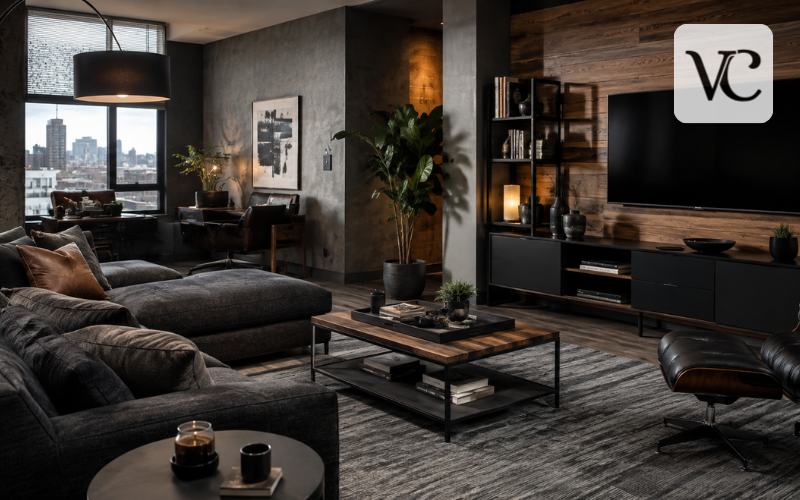
Industrial-inspired spaces create a stronger visual impact. They often include materials such as metal, exposed brick, concrete finishes, and darker tones. This style works especially well in apartments or loft-style homes where architectural details can become part of the design.
Minimalist interiors focus on simplicity and purpose. Instead of filling a room with decoration, minimalist design emphasizes quality over quantity. Each item has space to stand out, creating a calm and organized atmosphere.
For those who prefer a warmer feeling, rustic or natural styles can add comfort through wood, leather, woven fabrics, and earthy colors. These elements create a relaxed environment while maintaining a mature appearance.
Combining different styles can also work well when done carefully. A modern sofa can pair with vintage furniture, or industrial lighting can complement natural wood surfaces. The goal is not to copy a specific trend but to create a space where different elements feel connected.
Building a Strong Foundation With Furniture and Layout
Furniture creates the foundation of any living space. The right choices improve comfort, movement, and the overall appearance of the room.
A statement piece, such as a well-designed sofa or lounge chair, can become the center of the room. Many people prefer deeper seating, durable fabrics, or leather finishes because they provide both comfort and long-term value. However, the best choice depends on personal needs and the size of the space.
Furniture should always match the room dimensions. Oversized pieces can make a small apartment feel crowded, while very small furniture can make a large room feel empty. Measuring the available space before buying items helps create a more balanced layout.
A practical arrangement also considers movement. There should be enough space to walk comfortably between furniture pieces. Entertainment areas, conversation areas, and work zones should feel connected without making the room confusing.
For a single male living space, flexibility is often valuable. A dining table can double as a workspace, an ottoman can provide extra seating and storage, and modular furniture can adapt as needs change.
In shared homes, furniture placement becomes even more important. Creating personal areas while maintaining a comfortable shared environment requires thoughtful planning.
Creating a Comfortable Color Palette and Material Selection
Colors strongly influence the atmosphere of a room. Many male living space designs use neutral shades because they create a calm and timeless foundation. Colors such as gray, beige, brown, charcoal, and soft white can provide flexibility when adding furniture and decoration.
However, neutral does not mean boring. Deeper shades like navy, forest green, or warm brown can add personality when used carefully. Accent colors through cushions, artwork, rugs, or accessories can make the room feel more unique.
Materials also play a major role in creating character. Wood finishes add warmth and a natural feeling, while metal accents can introduce a modern or industrial touch. Leather furniture often creates a classic appearance, while natural fabrics can make a room feel softer and more comfortable.
Texture is especially important because a room with only smooth surfaces may feel flat. Combining different materials, such as a wooden table with a fabric sofa or a textured rug with simple furniture, creates more visual interest.
The best interiors usually combine several materials rather than relying on one dominant look. This creates depth and makes the space feel more complete.
Lighting Ideas That Improve the Atmosphere of a Male Living Space
Lighting can completely change how a room feels. A single bright ceiling light often creates a flat appearance, while layered lighting provides more control and comfort.
Floor lamps are useful for adding warmth and creating relaxing areas. A lamp beside a chair can turn an unused corner into a reading space, while a stylish floor lamp can also act as a decorative feature.
Table lamps provide softer lighting for desks, side tables, or shelves. They are practical for evenings when strong overhead lighting feels unnecessary.
Accent lighting can highlight artwork, shelves, plants, or architectural details. These small additions help create depth and make the room feel more thoughtfully designed.
Task lighting is important for areas used for specific activities. A workspace, gaming setup, or hobby area benefits from focused lighting that improves comfort and visibility.
Good lighting design allows one room to serve different purposes. Bright light can support productivity, while softer lighting can create a relaxing atmosphere for evenings.
Adding Personality Through Art, Decor, and Personal Collections
A home becomes memorable when it reflects the person living there. Decoration should not simply fill empty spaces; it should add meaning and character.
Large artwork, photography, or carefully selected prints can create a strong visual point in a room. Instead of covering every wall, choosing a few meaningful pieces often creates a cleaner and more sophisticated appearance.
Personal collections can also become part of the design. Books, records, travel items, sports memorabilia, or creative projects can show personality while adding interest to the space.
The important balance is avoiding unnecessary clutter. Too many objects can make a room feel crowded and reduce the impact of individual pieces. A curated approach allows important items to stand out.
A personal male living space should feel lived-in and authentic. The goal is not perfection but creating an environment where the owner feels comfortable and connected.
Functional Storage Solutions for a Clean and Organized Home
Good storage helps maintain both appearance and functionality. Even beautifully designed rooms can feel uncomfortable when everyday items have no proper place.
Closed cabinets are useful for hiding items that create visual clutter. Floating shelves can display books, artwork, and collections while using wall space efficiently.
Multi-purpose furniture is especially helpful in smaller homes. Storage ottomans, beds with built-in drawers, and flexible shelving can increase available space without adding unnecessary furniture.
Entertainment areas often require special attention because electronics can quickly create a messy appearance. Cable management, organized media consoles, and simple layouts help maintain a cleaner look.
The best storage solutions make daily life easier. Items that are used frequently should remain accessible, while less-used belongings can be stored away.
Bringing Nature Into the Space With Indoor Plants and Natural Elements
Indoor plants can bring balance and freshness into a room. They soften strong furniture lines and introduce natural color into modern interiors.
Different plants suit different environments. Some require bright sunlight, while others can adapt to lower-light areas. Choosing plants based on the actual conditions of the room increases the chance that they will remain healthy.
Natural materials can create a similar effect. Wood, stone, bamboo, and woven textures add warmth and connect interior spaces with natural elements.
Plants and natural finishes work well in many styles, from minimalist apartments to industrial homes. They help prevent a room from feeling too rigid or artificial.
Designing a Male Living Space in Apartments and Smaller Homes
Small spaces require thoughtful planning, but they can still become comfortable and stylish homes. The key is making every area serve a purpose.
Furniture with multiple functions is valuable in apartments. A compact desk, foldable table, or storage-focused furniture piece can improve flexibility.
Using vertical space is another effective strategy. Wall-mounted shelves, tall storage units, and hanging solutions help keep the floor area open.
Creating different zones can also improve small rooms. A corner can become a workspace, another area can serve as entertainment space, and a comfortable chair can define a relaxation zone.
Mirrors, lighter colors, and proper lighting can also make smaller spaces feel more open. A carefully planned apartment can provide the same comfort and personality as a larger home.
Creating an Ideal Male Living Space Based on Lifestyle
The ideal male living space should be designed around real needs rather than temporary trends. Different lifestyles require different approaches.
A professional who works remotely may prioritize an organized workspace and comfortable seating. Someone who enjoys gaming may focus on technology organization, ergonomic furniture, and entertainment design.
Creative individuals may prefer open areas for projects, display spaces for inspiration, and flexible furniture arrangements. Fitness-focused people might need storage for equipment and a layout that supports active routines.
Minimalists may choose fewer, higher-quality items and focus on simplicity. The important point is that the room should support the way someone actually lives.
A successful design begins with questions about habits, interests, and priorities. When the space matches the person, it becomes easier to maintain and enjoy.
Common Male Living Space Mistakes to Avoid
One common mistake is using too many dark colors. While darker shades can create a sophisticated atmosphere, excessive use can make a room feel smaller or less welcoming.
Another issue is buying furniture without considering the room size. A piece may look attractive in a showroom but feel overwhelming at home if the proportions are wrong.
Empty walls can also reduce the personality of a space. Adding meaningful artwork or decoration can make a room feel complete without overwhelming it.
Some people focus heavily on appearance while ignoring comfort. A stylish home should still be practical and enjoyable for everyday living.
Technology can also create visual clutter. Too many visible cables, devices, and accessories can affect the overall feeling of the room. Simple organization solutions can keep entertainment areas cleaner.
Understanding Male Living Space Trends, Memes, and Online Inspiration
Online platforms have influenced how people think about interior design. Communities on Reddit and social media often share ideas, room transformations, and creative setups that inspire homeowners.
However, online trends do not always represent real-life needs. Some images are created for visual impact rather than everyday comfort. A good design should take inspiration from online sources while still matching personal preferences.
The popularity of male living space memes also shows how people discuss interior styles and stereotypes online. These conversations can be entertaining, but a real home should not be limited by internet expectations.
The most successful spaces combine inspiration with individuality. Borrowing ideas is useful, but the final result should feel authentic to the person living there.
Conclusion
A well-designed male living space is not about following one specific trend or creating a room that looks impressive only in pictures. It is about building an environment that supports comfort, daily activities, and personal expression.
The strongest designs combine practical furniture, thoughtful layouts, suitable lighting, balanced colors, useful storage, and meaningful decoration. Whether the space is a small apartment, a large house, or a simple bedroom, the same principles apply.
The ideal home reflects the person who lives there. By focusing on lifestyle, comfort, and individuality, anyone can create a space that feels complete, welcoming, and genuinely personal.
FAQs
What is a male living space?
A male living space is a personalized home environment designed around comfort, functionality, style, and individual preferences. It can include different designs, from minimalist apartments to modern houses.
How can I make my living space look more masculine?
You can create a masculine feel through balanced colors, quality furniture, natural materials, practical layouts, and personal decor without making the room feel dark or uncomfortable.
What design styles work well for a male living space?
Popular styles include modern, industrial, minimalist, mid-century modern, and rustic designs. The best choice depends on personal taste, room size, and lifestyle needs.
How do I design a male living space in a small apartment?
Use multifunctional furniture, smart storage, vertical space, and clear zones for work, relaxation, and entertainment to make a small apartment more practical.
Should a male living space only use dark colors?
No. Dark colors can add depth, but combining neutral shades, natural textures, and lighter tones often creates a more comfortable and balanced interior.
Disclaimer: This article on male living space is published by VogueCultures.co.uk for general informational and educational purposes only. We share design ideas, inspiration, and guidance to help readers understand this topic better. This content is not sponsored, paid, promoted, or created as part of any guest posting arrangement. We do not provide advertising placements or endorsements through this article. Readers should consider their own preferences, needs, and circumstances before making any interior design decisions.
Enjoyed this article? Discover more helpful ideas and fresh inspiration on Vogue Cultures.