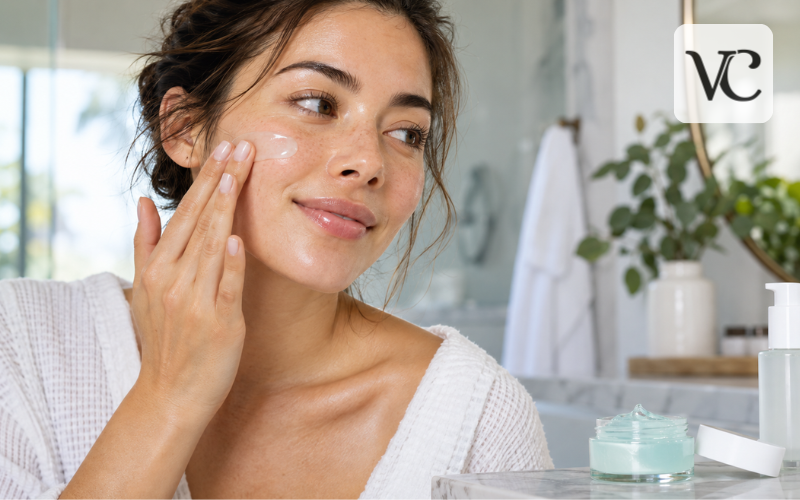
Choosing a moisturizer for oily skin can feel confusing. When your face already looks shiny or feels greasy by midday, adding another skincare product may seem unnecessary. However, oil and hydration are not the same thing. Your skin can produce plenty of sebum, which is the natural oil made by the skin, and still lack enough water to feel comfortable and healthy.
The goal is not to remove every trace of oil. Trying to make the skin completely oil-free can lead to tightness, irritation, or over-cleansing. A better approach is to choose a moisturizer that gives the skin enough hydration without leaving a heavy film.
For many people, that means looking for lightweight gels, gel-creams, fluids, or light lotions. Ingredients such as glycerin, hyaluronic acid, ceramides, panthenol, and niacinamide may also be useful depending on the formula.
This guide explains how to choose the best moisturizer for oily skin, including options for acne-prone skin, sensitive skin, nighttime use, SPF, affordable products, Korean skincare, and products available from beauty retailers.
Snippet-Ready Explanation:
A moisturizer for oily skin is usually a lightweight formula designed to hydrate without feeling greasy. VogueCultures.co.uk provides this article for informational purposes only, helping readers understand suitable textures, ingredients, and skincare choices.
Quick Guide Table
| Skin Need | What to Look For | Why It May Help |
| Excess shine | Lightweight gel or gel-cream | Feels less heavy on oily skin |
| Oily + dehydrated | Glycerin or hyaluronic acid | Helps support skin hydration |
| Acne-prone skin | Non-comedogenic, lightweight formula | May be less likely to contribute to clogged pores |
| Sensitive oily skin | Fragrance-free, simple formula | May reduce the chance of irritation |
| Daytime use | Lightweight moisturizer with SPF 30+ | Adds hydration and daily sun protection |
| Nighttime use | Simple gel-cream or light lotion | Supports hydration without unnecessary heaviness |
Simple Steps for Choosing a Moisturizer for Oily Skin
- Choose a lightweight gel, gel-cream, fluid, or light lotion.
- Check for useful ingredients such as glycerin, hyaluronic acid, ceramides, or niacinamide.
- Consider non-comedogenic and oil-free options if you are prone to clogged pores.
- Choose fragrance-free formulas if your skin is sensitive or easily irritated.
- Test how the moisturizer works with your cleanser, acne treatments, sunscreen, and makeup.
Why Oily Skin Still Needs Moisture
Sebum and skin hydration do different jobs. Sebum is the oily substance produced naturally by the skin. It helps protect the surface and reduce moisture loss. Hydration, on the other hand, refers mainly to the water available in the outer layers of the skin.
This is why oily skin can still feel tight, rough, flaky, or uncomfortable. The American Academy of Dermatology notes that people with oily skin may still need moisturizer, especially when their skin feels dry or acne treatments cause irritation. Treatments such as benzoyl peroxide, salicylic acid, adapalene, tretinoin, and isotretinoin can dry or irritate the skin.
A suitable moisturizer does not need to feel rich or greasy. Lightweight formulas can reduce uncomfortable dryness and support the outer skin barrier while still feeling pleasant on oily skin.
The aim is balance: enough hydration to keep your face comfortable without using a texture that feels unnecessarily heavy.
Oily Skin vs. Dehydrated Skin: Know the Difference
Naturally oily skin and dehydrated skin are not the same thing. Oily skin is a skin type that tends to produce more sebum. Dehydration is a temporary condition in which the skin lacks enough water. It is possible to experience both at the same time.
One common sign is skin that looks shiny but feels tight after cleansing. You may also notice rough patches, mild flaking, stinging, or the strange feeling that your skin is greasy on the surface but uncomfortable underneath.
This can happen after using harsh cleansers, exfoliating too often, spending time in cold or dry weather, or using acne treatments that remove moisture from the skin.
If your face suddenly feels tighter than usual, moving straight to a very heavy cream is not always necessary. Look at your whole skincare routine first. Gentle cleansing, less frequent exfoliation, and a simple moisturizer may be more useful than adding several new products.
Understanding whether your main concern is excess oil, dehydration, sensitivity, or acne will make choosing the right moisturizer much easier.
What to Look for in a Moisturizer for Oily Skin
Texture is often the easiest place to start. Gel, gel-cream, fluid, and light-lotion moisturizers usually feel less heavy than thick creams or ointments. They can be especially comfortable during hot or humid weather.
Oil-free and non-comedogenic labels can also be helpful. These terms are commonly recommended for oily and acne-prone skin because such products are designed to be less likely to contribute to clogged pores. However, no label can guarantee that every person’s skin will react perfectly to a product.
Fast absorption is another useful feature. A moisturizer that settles into the skin quickly can feel more comfortable during the day and may layer better under sunscreen and makeup.
If your skin is sensitive or easily irritated, consider a fragrance-free option. A simple formula can sometimes be easier to tolerate than one containing many fragrances or active ingredients.
Climate matters too. A very light gel may feel perfect during summer but may not provide enough comfort in cold, dry conditions. The American Academy of Dermatology also notes that gels generally have a lighter feel than creams and ointments.
Helpful Ingredients for Lightweight Hydration
A good moisturizer for oily skin does not need a very long ingredient list. What matters more is whether the formula gives your skin enough hydration without making it feel uncomfortable.
Glycerin is a humectant, meaning it helps attract and hold water in the outer layer of the skin. Hyaluronic acid also helps hold water and is commonly found in lightweight gels and moisturizers.
Ceramides are natural fats found in the skin barrier. Moisturizers containing ceramides can help support this barrier, which may be particularly useful when skin becomes dry or irritated.
Panthenol, sometimes called provitamin B5, is another ingredient commonly included for its moisturizing and soothing qualities.
Niacinamide is frequently found in products made for oily or blemish-prone skin. It can support the skin barrier and is often included in products designed to improve the appearance of shine. Dermatology guidance also commonly mentions ingredients such as glycerin, hyaluronic acid, ceramides, and niacinamide in moisturizing skincare.
Some mattifying moisturizers contain silica or similar ingredients that absorb surface oil. They may temporarily reduce visible shine, but they should not be treated as a permanent solution for oil production.
Ingredients and Formula Features to Use Carefully
An “oil-free” label can be useful, but it should not be the only thing you check. A moisturizer can be oil-free and still feel sticky, irritating, or unsuitable for your particular skin.
Likewise, a product containing an oil or richer moisturizing ingredient is not automatically bad for every person with oily skin. The complete formula and your individual response matter more than one ingredient alone.
Fragrance deserves extra attention if your skin is sensitive, irritated, or already undergoing acne treatment. Some people tolerate fragranced skincare well, while others may experience redness, itching, stinging, or discomfort.
It is also easy to overcomplicate an oily-skin routine. For example, using an exfoliating cleanser, acid toner, acne serum, retinoid, and treatment moisturizer together can increase the chance of dryness or irritation.
If a new moisturizer contains active ingredients, consider how those ingredients fit with everything else you already use. When your skin is reactive, introduce unfamiliar products gradually. Starting several new products at the same time makes it difficult to identify which one is helping or causing irritation.
Best Moisturizer for Oily Skin: Match the Formula to Your Main Concern
There is no single best moisturizer for oily skin because oily skin can come with different concerns.
Someone dealing mainly with midday shine may prefer a lightweight gel or moisturizer with a more matte finish. Someone whose skin is oily but dehydrated may feel more comfortable using a gel-cream containing water-binding ingredients such as glycerin or hyaluronic acid.
For combination skin, a balanced light lotion may work across both oily and slightly dry areas. Sensitive oily skin may benefit from simpler, fragrance-free formulas that do not contain several strong active ingredients.
Weather can also change what feels comfortable. During hot and humid conditions, breathable, fast-absorbing textures often feel better. During colder or drier months, the same person may prefer a slightly richer gel-cream.
If you wear makeup, pay attention to how products layer. A moisturizer may feel excellent on bare skin but start pilling when combined with sunscreen, primer, or foundation. Applying reasonable amounts and allowing layers to settle can help.
The best choice is ultimately one that keeps your skin comfortable, works with your routine, and does not repeatedly cause irritation.
Moisturizer for Oily Skin and Acne-Prone Skin
When choosing a moisturizer for oily skin and acne-prone skin, look for a lightweight formula that is labeled non-comedogenic, oil-free, or unlikely to clog pores.
These labels are useful when narrowing down products, but they should not be treated as a guarantee that a moisturizer can never cause a breakout. Individual reactions vary.
Moisturizing can be particularly useful when using acne treatments. The American Academy of Dermatology explains that benzoyl peroxide, salicylic acid, retinoids such as adapalene and tretinoin, and isotretinoin can cause dryness and irritation. Using moisturizer can help make an acne-care routine more comfortable.
Be careful about adding several acne-fighting ingredients at the same time. More active ingredients do not automatically mean faster or better results. Burning, peeling, strong redness, or persistent tightness may be signs that the routine is too harsh.
If your acne becomes painful, deep, increasingly severe, leaves scars, or does not improve with appropriate over-the-counter care, consider speaking with a dermatologist rather than continuing to experiment with products.
Dermatologist-Recommended Moisturizers: What to Look for Beyond the Label
People searching for the best moisturizer for oily skin dermatologist recommended often want a specific brand name. However, the words “dermatologist recommended” should not be your only reason for buying a product.
A more useful approach is to look for the characteristics dermatologists commonly suggest for oily or acne-prone skin: a comfortable texture, non-comedogenic or oil-free labeling when appropriate, gentle ingredients, and compatibility with any acne treatment already being used.
The American Academy of Dermatology recommends oil-free and non-comedogenic skincare products as useful choices for people trying to manage oily skin.
Personal needs still matter. Someone with oily skin and eczema or significant irritation may need more barrier support than a person whose only concern is shine. Someone taking prescription acne medication may also need a different moisturizer than they used before treatment.
Instead of asking only whether a product is dermatologist recommended, consider whether its texture, ingredients, and purpose match your skin.
Affordable, Korean, and Sephora Moisturizers for Oily Skin
Finding a moisturizer for oily skin affordable enough for everyday use does not mean accepting poor quality. Price alone tells you very little about how suitable a moisturizer will be.
Compare the formula, amount of product, texture, ingredients, and how frequently you expect to use it. An inexpensive moisturizer that feels comfortable enough to use consistently may be a better choice than an expensive cream you dislike wearing.
People looking for a moisturizer for oily skin Korean brands offer will often find gels, emulsions, watery creams, and hydration-focused formulas. These lighter textures may suit oily skin well. However, a product is not automatically better simply because it is Korean skincare. Its ingredients and overall formula should still match your needs.
Similarly, when looking for a moisturizer for oily skin Sephora carries, use the store as a way to compare formulas rather than treating the retailer itself as a quality signal. Compare gel creams, lightweight lotions, mattifying moisturizers, and acne-focused products according to your own skin concerns.
The best value is a product you can use consistently and comfortably, regardless of price, retailer, or current skincare trends.
Choosing a Moisturizer for Oily Skin at Night
A moisturizer for oily skin night routine does not need to involve a thick cream. If your skin feels comfortable with a lightweight gel-cream, the same type of product may work perfectly well at night.
Nighttime is often a useful opportunity to focus on simple hydration, especially when your routine includes retinoids or other acne treatments that can cause dryness.
If you use a prescription treatment, follow your dermatologist’s directions about how and when to apply moisturizer around that treatment rather than assuming that one layering method works for everyone.
During winter, travel, or acne treatment, oily skin may temporarily become drier than usual. In that case, using a slightly richer moisturizer for a period of time can be reasonable and does not mean your natural skin type has permanently changed.
You also do not necessarily need separate morning and nighttime moisturizers. A comfortable basic moisturizer may work for both. The main difference during the day is the need for proper sun protection.
Moisturizer for Oily Skin With SPF
A moisturizer for oily skin with SPF can make a morning routine simpler because hydration and sun protection are provided in one step.
For oily skin, look for a formula with a lightweight finish that you can apply adequately without your face feeling uncomfortably greasy.
The American Academy of Dermatology recommends sunscreen that offers broad-spectrum protection, water resistance, and an SPF of 30 or higher. It also advises people with oily skin to look for sunscreen labeled non-comedogenic or unlikely to clog pores.
A moisturizer containing SPF can be useful if you apply enough to receive the protection shown on its label. If you normally use only a very small amount of moisturizer, using a separate sunscreen may make it easier to apply sufficient sun protection.
SPF in moisturizer also does not remove the need to reapply sunscreen when necessary. The AAD advises reapplication about every two hours when outdoors and after swimming or sweating.
Do not sacrifice proper sun protection simply because you want your face to remain matte.
How to Apply Moisturizer Without Making Oily Skin Feel Greasy
Start with gentle cleansing. Repeatedly washing your face throughout the day or aggressively scrubbing in an attempt to remove oil can irritate the skin.
The American Academy of Dermatology recommends cleansing oily skin up to twice daily and after sweating while avoiding harsh scrubbing.
After cleansing, leaving the skin slightly damp before moisturizing can be helpful. Applying moisturizer while some water remains on the skin can help hold that moisture in.
Use enough moisturizer to cover your face comfortably, but there is no benefit in applying an unnecessarily thick layer when your skin does not need one.
A simple morning routine might include gentle cleansing, moisturizer if needed, and sunscreen. If your moisturizer already provides suitable broad-spectrum SPF protection and you apply enough, it may combine the final two steps.
At night, cleanse gently, use any treatment that is appropriate for your skin, and apply moisturizer according to that treatment’s instructions.
Avoid constantly changing products because of one particularly oily day. Skin often responds better to a simple, consistent routine than to frequent exfoliation, aggressive cleansing, scrubbing, and continual product switching.
Conclusion
Finding the right moisturizer for oily skin is less about removing every trace of oil and more about keeping your skin comfortable and balanced.
Lightweight gels, gel-creams, fluids, and lotions are often practical choices, especially when they contain moisturizing ingredients such as glycerin, hyaluronic acid, ceramides, panthenol, or niacinamide.
Your best option should also reflect your main concern. Acne-prone skin may benefit from lightweight, non-comedogenic formulas. Sensitive skin may prefer fragrance-free products. Hot weather may call for a lighter texture, while cold or dry conditions may make a slightly richer moisturizer more comfortable.
You do not need a complicated routine or an expensive product simply because your skin is oily. Pay attention to how your skin feels over time, whether your moisturizer works comfortably with sunscreen and other skincare products, and whether it causes repeated irritation.
A good moisturizer should fit naturally into your routine rather than making your skin feel heavy or uncomfortable. If you experience persistent acne, painful breakouts, significant redness, severe dryness, or continuing irritation, consider speaking with a dermatologist. Professional advice can help you build a routine that fits both your skin type and any condition that may require treatment.
FAQs
Should oily skin use moisturizer every day?
Yes, oily skin can still need hydration. A lightweight moisturizer may help keep the skin comfortable, especially if cleansing, weather, or acne treatments are causing dryness or tightness.
What type of moisturizer is best for oily skin?
Gel, gel-cream, fluid, and lightweight lotion formulas are often comfortable choices. The best option depends on your level of oiliness, sensitivity, acne, climate, and other skincare products.
Is a non-comedogenic moisturizer better for acne-prone oily skin?
A non-comedogenic moisturizer is designed to be less likely to contribute to clogged pores, making it a useful option for acne-prone skin. However, individual skin reactions can still vary.
Can oily skin use moisturizer with SPF?
Yes. A lightweight moisturizer with broad-spectrum SPF can provide hydration and sun protection together. Choose a comfortable formula and apply enough product to achieve the protection stated on the label.
Can I use the same moisturizer for oily skin at night?
Yes. If your moisturizer keeps your skin comfortable without irritation or excessive heaviness, you can usually use the same basic formula morning and night, adjusting for seasonal dryness when necessary.
Disclaimer: This article on VogueCultures.co.uk is provided strictly for general informational and educational purposes. It does not constitute medical or dermatological advice and does not replace professional diagnosis or treatment. Product suitability can vary by individual skin type and condition. VogueCultures.co.uk is only sharing information about moisturizer for oily skin; this content does not involve guest posting, paid promotion, sponsored placement, or advertising.
Enjoyed this article? Discover more helpful ideas and fresh inspiration on Vogue Cultures.