
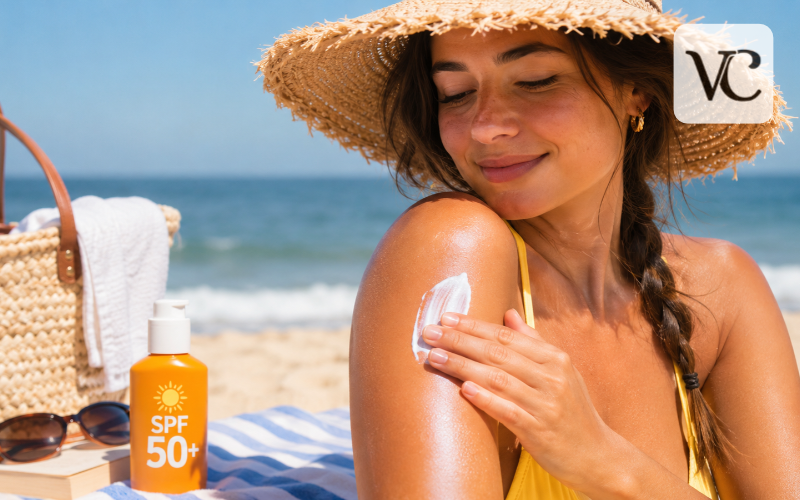
Spending time outdoors can be enjoyable, especially during warm, sunny weather. However, many people want a golden tan without dealing with painful sunburn or lasting skin damage. This is where understanding sun protection for tanning becomes important.
Sunscreen helps reduce the amount of harmful ultraviolet (UV) radiation reaching your skin. It can lower the risk of sunburn, premature ageing, and skin cancer when used correctly. However, sunscreen does not completely block UV rays, meaning your skin may still develop colour during outdoor activities.
There is an important difference between having a tanned appearance and protecting your skin. A natural tan develops in response to UV exposure and indicates that your skin has experienced damage. Sunscreen reduces exposure but cannot make intentional sun tanning completely safe.
Choosing the right sun protection factor (SPF), applying enough sunscreen, and understanding product claims can help you make better decisions. This guide explains sunscreen options, protection levels, application methods, and safer ways to achieve a sun-kissed appearance.
Snippet-Ready:
Sun protection for tanning means using sunscreen to reduce harmful UV exposure while outdoors. Voguecultures.co.uk provides this article for informational purposes only, helping readers understand SPF, tanning risks, and safer skin protection choices.
Quick Guide: Sun Protection for Tanning
| Sun Protection Option | Main Benefit | What to Know |
| Broad-Spectrum SPF 30 | Protects against UVA and UVB rays | Suitable for everyday outdoor protection when correctly applied |
| Broad-Spectrum SPF 50 | Higher UVB protection | Helpful for fair skin and stronger UV exposure |
| SPF Sunscreen Spray | Convenient body application | Apply generously and rub in evenly |
| SPF Sunscreen Lotion | Easy to spread across exposed skin | Choose a formula suitable for your skin type |
| SPF Tanning Oil | Combines sun protection with a glossy finish | Choose SPF 30+ with broad-spectrum coverage |
| Self-Tanning Lotion | Creates a tanned appearance without intentional UV exposure | Usually requires separate sunscreen outdoors |
| Tanning Bed Lotion | May moisturise or cosmetically bronze skin | Does not make tanning beds safe |
Simple Steps for Better Sun Protection
- Choose SPF 30 or higher: Look for broad-spectrum UVA and UVB protection.
- Apply enough sunscreen: Cover all exposed skin evenly before going outdoors.
- Reapply regularly: Reapply at least every two hours outdoors and after swimming, sweating, or towel drying.
- Avoid strong sunlight: Check the UV index and seek shade when UV levels are high.
- Protect sensitive areas: Wear UV-blocking sunglasses, a wide-brimmed hat, and protective clothing.
- Consider sunless tanning: Use gradual self-tanners or cosmetic bronzers if you want a golden appearance without intentional UV exposure.
Can You Still Tan While Wearing Sunscreen?
Yes, you can still develop a tan while wearing sunscreen. Even high-protection formulas do not block every UV ray, so some ultraviolet radiation may reach your skin.
Sunscreen works by reducing UV exposure. SPF mainly measures protection against UVB radiation, which is responsible for most sunburns. Broad-spectrum sunscreens also protect against UVA rays, which contribute to tanning, premature ageing, and skin damage.
Some people search for sunscreen that helps you tan but not burn, hoping to achieve colour while avoiding redness. However, there is no sunscreen that guarantees this result. You can experience UV-related skin damage without developing visible sunburn.
Your natural skin colour, UV intensity, time outdoors, and sunscreen application all influence how your skin responds to sunlight.
It is also important to understand that a gradual tan is not necessarily healthier than a fast one. Both involve a response to UV radiation. If you want a bronzed appearance, sunless tanning products offer an alternative without deliberately exposing your skin to damaging UV rays.
How UVA and UVB Rays Affect Your Skin
Sunlight contains different types of ultraviolet radiation. The two most important for skin protection are UVA and UVB rays.
UVA rays penetrate deeper into the skin and contribute to premature ageing, including wrinkles and changes in skin texture. They also play a major role in skin darkening and can pass through ordinary window glass.
UVB rays mainly affect the skin’s outer layers and are the primary cause of sunburn. They also contribute to tanning, DNA damage, and skin cancer.
When your skin receives UV radiation, cells may increase the production of melanin, the natural pigment responsible for skin colour. This process can make the skin appear darker over time.
However, tanning is not evidence that your skin has become healthier or stronger. It is a protective response to damage that has already occurred.
Repeated UV exposure can lead to uneven pigmentation, wrinkles, sunspots, and an increased risk of skin cancer. These changes can develop gradually, even when you rarely experience noticeable sunburn.
Understanding these effects helps explain why broad-spectrum protection matters more than achieving a darker tan.
Choosing the Right Sun Protection for Tanning
Choosing sunscreen involves more than looking at the SPF number printed on the bottle. A suitable product should provide reliable protection against both UVA and UVB radiation.
Dermatologists generally recommend broad-spectrum sunscreen with SPF 30 or higher. SPF indicates protection against UVB rays under controlled testing conditions, provided the sunscreen is applied in the correct amount.
For UK shoppers, UVA protection is another important consideration. Many sunscreens display a star rating from one to five. The NHS recommends choosing products with at least four-star UVA protection.
You may also notice the letters UVA inside a circle. This symbol indicates that the product meets the relevant European standard for UVA protection.
Water resistance matters if you plan to swim, exercise, or spend time outdoors in hot weather. However, water-resistant sunscreen still needs regular reapplication.
Before purchasing sunscreen, check its SPF rating, UVA protection, water resistance, expiry date, and suitability for your skin type.
The most useful product is one that offers suitable protection and feels comfortable enough for you to apply generously and regularly.
SPF 30 vs SPF 50: Which Offers Better Protection?
When comparing tanning sunscreen SPF 30 with tanning lotion with SPF 50, the main difference is the amount of UVB radiation each product filters under laboratory conditions.
SPF 30 filters approximately 96.7% of UVB radiation, while SPF 50 filters around 98% when correctly applied.
Although this difference sounds small, SPF 50 allows less UVB radiation through than SPF 30 under the same testing conditions.
For people with fair skin, a history of sunburn, or greater sensitivity to sunlight, SPF 50 or SPF 50+ can be a sensible choice.
However, a higher SPF does not automatically guarantee better UVA protection. Always check that the product also offers broad-spectrum coverage.
Neither SPF 30 nor SPF 50 provides complete protection. Applying too little sunscreen can significantly reduce its effectiveness.
Higher SPF should never be treated as permission to stay outdoors longer. Combining sunscreen with shade, clothing, and sensible outdoor habits offers better protection than relying on SPF alone.
Best Sunscreen Choices for Pale and Sensitive Skin
People with pale skin often produce less protective melanin and may experience sunburn more quickly than those with naturally darker complexions.
If you are searching for the best sunscreen for tanning pale skin, focus on preventing UV damage rather than trying to achieve a darker natural tan.
Broad-spectrum SPF 50 or SPF 50+ is often a practical option for fair skin, particularly during strong sunlight. People who burn easily and rarely tan should avoid deliberate UV tanning.
Sensitive skin also requires attention to the sunscreen formula. Fragrance-free products may be more comfortable for people who react to scented skincare.
Mineral sunscreens containing zinc oxide or titanium dioxide can be suitable for some sensitive skin types, although individual reactions vary.
For acne-prone skin, lightweight, non-comedogenic formulas may feel more comfortable and be less likely to contribute to clogged pores.
People with dry skin may prefer cream-based sunscreens containing moisturising ingredients.
If you experience irritation, stop using the product and consider asking a dermatologist for advice. A gradual self-tanner may provide the cosmetic colour you want without intentional sun exposure.
Sunscreen Sprays, Lotions, and Oils: Finding the Right Formula
Sunscreen is available in several textures, including sprays, lotions, creams, gels, and oils. Each has advantages, but correct application matters more than the format.
Traditional lotions are often easy to spread evenly across the body. Their texture makes it easier to see where the product has been applied.
Creams may suit dry skin because they often contain additional moisturising ingredients.
A tanning sunscreen spray can be convenient for covering larger areas, especially when applying sunscreen outdoors. However, sprays can leave missed patches if they are applied too quickly.
Spray enough product to cover the skin thoroughly, then rub it in evenly. Avoid spraying directly onto your face, inhaling the mist, or applying it in windy conditions.
SPF oils may appeal to people who prefer a glossy finish. An oil-based sunscreen can provide effective protection when it has suitable broad-spectrum coverage and is applied correctly.
Regardless of texture, choose SPF 30 or higher and follow the manufacturer’s application instructions. Comfort and consistent coverage should guide your decision.
Tanning Lotions With SPF: What the Claims Really Mean
Tanning products can be confusing because similar packaging may describe very different functions.
Some tanning lotions contain sunscreen filters, while others are designed mainly to moisturise the skin or encourage a darker appearance during UV exposure.
Tanning accelerators may contain ingredients marketed as stimulating melanin production. However, claims about faster or deeper tanning should not be confused with proven protection against UV damage.
Bronzing lotions work differently. Some provide an immediate cosmetic colour that washes away, while self-tanners containing dihydroxyacetone (DHA) gradually darken the skin’s surface without UV exposure.
A product labelled as a tanning lotion does not necessarily contain sunscreen. Always check for an SPF rating and UVA protection information.
Low-SPF tanning oils, including SPF 4 or SPF 6 products, provide substantially less protection than recommended SPF 30+ sunscreens.
Be cautious of phrases such as “safe tanning” or “tan without damage.” No product can guarantee that deliberate UV tanning will be harmless, regardless of its marketing claims.
Best Products for Tanning in the Sun: What to Look For
The best products for tanning in the sun should be judged by their protective features, not by promises of faster colour development.
Several sunscreen ranges combine SPF protection with moisturising ingredients or cosmetic bronzing effects.
Piz Buin Tan & Protect SPF 30 is marketed as a sun lotion combining UVA and UVB filters with a tanning-enhancing ingredient. Its SPF 30 protection is a useful feature, but claims about accelerating tanning should not be interpreted as proof of safer UV exposure.
Australian Gold Spray Gel with Instant Bronzer SPF 50 combines broad-spectrum protection with temporary cosmetic colour. The formula contains a caramel-based bronzer and is labelled water-resistant for up to 80 minutes. Its colour effect is different from developing a UV-induced tan.
La Roche-Posay Anthelios UVMune 400 Invisible Fluid SPF 50+ focuses on high UVA and UVB protection rather than tanning enhancement. Its lightweight facial formula is designed for sensitive skin and offers resistance to water, sweat, and sand.
These examples illustrate different approaches to sun protection rather than establishing a universal product ranking.
When comparing products, consider whether you need face or body coverage, prefer a matte or glossy finish, and have sensitivity to fragrance or particular ingredients.
Check the current packaging because formulas and availability can change. A higher price, luxury fragrance, or attractive tanning claim does not necessarily mean better UV protection.
How to Apply and Reapply Sunscreen Correctly
Even a high-quality sunscreen cannot provide its advertised protection when applied too thinly or unevenly.
For most adults, approximately 30 ml, or six teaspoons, is a useful guide for covering the exposed body. The NHS recommends around six to eight teaspoons when covering the entire adult body.
Apply sunscreen generously before going outdoors. Many products recommend application around 15 to 30 minutes before sun exposure, so follow the instructions on the label.
Pay particular attention to areas that are easy to overlook, including the ears, neck, shoulders, tops of feet, backs of hands, and exposed scalp.
When spending time outdoors, reapply sunscreen at least every two hours, following the product directions.
Swimming, sweating, and towel drying can remove sunscreen, making additional applications necessary.
A product labelled water-resistant for 40 or 80 minutes is not waterproof. It still needs reapplication after water activities and when it has rubbed off.
Remember that applying sunscreen properly is only one part of sun safety. Protective clothing and shade remain important, especially during periods of strong sunlight.
Common Sun Protection Mistakes That Increase UV Damage
Many sunscreen mistakes happen because people overestimate how much protection their product provides.
One common problem is applying a thin layer to make the bottle last longer. Sunscreen testing uses a specific application amount, and using less can reduce the protection received.
Another mistake is forgetting small but exposed areas, such as the ears, lips, hairline, and tops of feet. Use an SPF lip balm to protect your lips.
Some people assume that cloudy weather eliminates the need for sunscreen. However, UV radiation can still reach the skin through clouds.
Staying outside for long periods because you are wearing SPF 50 is another risky habit.
Sunlight is generally strongest around the middle of the day, although actual UV intensity varies by location, season, and weather. Checking the UV index can help you plan outdoor activities.
Choose shade when UV levels are high, wear a wide-brimmed hat, and use sunglasses offering suitable UV protection.
Most importantly, avoid treating sunscreen as a way to extend intentional tanning sessions.
Sun Protection for Tanning Beds: What You Need to Know
Indoor tanning beds use artificial ultraviolet radiation to darken the skin. Many devices produce substantial UVA exposure, while some also emit UVB rays.
People searching for sun protection for tanning bed use may wonder whether sunscreen or specialised tanning lotions can make these sessions safer.
Unfortunately, neither option removes the risks associated with artificial UV exposure.
Regular sunscreen is designed to reduce UV exposure, not to make tanning-bed use safe. Products sold specifically for indoor tanning may contain moisturisers or bronzers but do not necessarily offer meaningful sun protection.
Repeated exposure to tanning-bed radiation can increase the risk of skin cancer, premature ageing, and eye damage.
Protective eyewear is essential around artificial UV radiation, but it does not eliminate the risks to exposed skin.
Dermatologists and public health organisations recommend avoiding cosmetic tanning beds altogether.
If your main goal is a bronzed appearance, a sunless tanning product provides an alternative without deliberate exposure to artificial UV radiation.
Safer Ways to Get a Tanned Look Without UV Exposure
You do not need to spend hours in direct sunlight to achieve a warmer-looking skin tone.
Gradual self-tanning lotions are a popular option because they allow colour to develop over several applications. Many contain DHA, an ingredient that reacts with substances in the skin’s outermost layer to create a temporary darker appearance.
Instant bronzers offer another option. These products provide surface colour that can often be washed away with soap and water.
Tinted body lotions and bronzing makeup may also create a sun-kissed finish without changing your natural pigmentation through UV exposure.
For smoother cosmetic results, apply self-tanner to clean, dry skin and follow the product directions. Moisturising dry areas such as elbows and knees may help reduce uneven colour.
Avoid getting DHA products into your eyes, nose, or mouth, and take precautions against inhaling spray-tanning mist.
Most importantly, self-tanners do not automatically provide sun protection. Unless a product has a properly labelled SPF, apply a separate broad-spectrum sunscreen before spending time outdoors.
This approach allows you to enjoy a bronzed appearance while avoiding deliberate UV tanning.
Conclusion
Understanding sun protection for tanning helps you choose products based on genuine skin protection rather than attractive marketing promises.
Broad-spectrum SPF 30 or higher, suitable UVA coverage, generous application, and regular reapplication are important parts of sun safety.
However, sunscreen cannot completely prevent UV exposure or make intentional tanning risk-free. Spending time in the shade, wearing protective clothing, and avoiding unnecessary UV exposure remain essential.
If you prefer a golden appearance, gradual self-tanners and cosmetic bronzers offer ways to achieve that look without deliberately damaging your skin.
Ultimately, the best approach is to enjoy outdoor activities while making skin protection your priority.
Frequently Asked Questions
Can you get a tan while wearing SPF 50 sunscreen?
Yes, tanning can still happen while wearing SPF 50 because no sunscreen blocks all ultraviolet radiation. However, visible tanning indicates UV-related skin damage, so sunscreen should never be used to make intentional tanning seem safe.
Is SPF 30 or SPF 50 better for tanning?
SPF 50 provides greater UVB protection than SPF 30 when applied correctly. Neither makes intentional tanning safe. People with fair or sun-sensitive skin may particularly benefit from choosing broad-spectrum SPF 50 or higher.
What is the best sunscreen for tanning pale skin?
Pale skin often burns easily, so broad-spectrum SPF 50 or SPF 50+ is a sensible choice. Rather than deliberately tanning, consider using a gradual self-tanner to achieve colour without unnecessary UV exposure.
Can sunscreen prevent sunburn completely?
Sunscreen significantly reduces the risk of sunburn when used correctly, but it cannot guarantee complete protection. Applying too little, missing areas, or spending excessive time outdoors can increase the risk of burning.
Do tanning lotions with SPF protect your skin?
Tanning lotions with properly tested broad-spectrum SPF can reduce UV exposure when applied correctly. However, tanning accelerators and bronzers do not necessarily provide sun protection, so always check the product label before use.
Disclaimer: This article on Sun Protection for Tanning is published by voguecultures.co.uk for general informational and educational purposes only. It is not intended as medical advice or an endorsement of intentional UV tanning. The content is not a guest post, sponsored placement, paid promotion, or advertisement. Product names, if mentioned, are included solely to explain available sun protection options. Readers should follow official sunscreen instructions and consult a qualified dermatologist for personal skin concerns.
Enjoyed this article? Discover more helpful ideas and fresh inspiration on Vogue Cultures.